Switched On – Julianna Barwick: Healing Is A Miracle (Ninja Tune)

reviewed by Ben Hogwood

What’s the story?

Julianna Barwick has enjoyed a near-constant stream of productivity in the last decade, but for many reasons Healing Is A Miracle feels like a defining moment. Apart from being her first album for the Ninja Tune family it marks the point where, after 16 years, she moves from East Coast to West, from New York to Los Angeles.

The title is a reference to the ability of the human body to recover itself after sustaining damage, Barwick marvelling at the way cuts and bruises heal themselves – and it appears to be a metaphor for the next stage of her life too. The recording methodology was also different, using monitors instead of headphones for the first time, which proved a revelation.

Healing Is A Miracle includes three collaborations, each with a close friend.

What’s the music like?

Barwick makes some of the most emotive ambient music you can imagine. While some producers opt for the distanced approach, allowing their music all the room it needs to operate away from human contact, Healing Is A Miracle offers further evidence of a rare ability to make ambient music right from the heart.

Despite the intimacy she achieves with the vocal material in particular, her studies in reverberation have resulted in enormous, cathedral-like textures. Inspirit, the first track on the album, is a softly recurring chant but with a big, surrounding echo, and when Barwick adds the bass sounds to the mix the music stops you in your tracks with its heart stopping beauty.

The collaborations are really nicely judged. Jónsi’s voice works in close harmony with Barwick on In Light, the Sigur Rós vocalist just below the melody but closely matched, before the big beats open the music outwards, seemingly toward the stars. Oh, Memory has a greater delicacy in the company of Mary Lattimore, its weightless vocals hanging on the wind, while Nod, with Nosaj Thing, builds layers on a breathy loop before adding beats, after which it pans out again to a consoling coda.

The title track has long, sustained keyboard sounds that hang on just a bit longer than the vocals, giving an even greater feeling of space. Flowers has striking sonorities, scaling mountainous heights but with an earthbound bass presence too, which grows to take over the track completely.

Does it all work?

Yes. With Julianna Barwick the listener really does inhabit a whole new world, and if escapism or mental clarity is what you are searching for then you have definitely come to the right place.

Is it recommended?

Wholeheartedly. Even within the output of one of the most consistent ambient artists, Healing Is A Miracle is a touchstone, an album where everything falls into its natural place. For an emotive out of body experience, you would really struggle to do better.

Stream

Buy

Listening to Beethoven #43 – Rondino in E flat major


The Lobkowitzplatz, Vienna by Bernardo Bellotto (18th century)

Rondino in E flat major WoO 25 for wind octet (2 oboes, 2 clarinets, 2 horns and 2 bassoons) (1793, Beethoven aged 22)

Dedication
Duration 6’30”

Listen

Background and Critical Reception

The Rondino is thought to have been written around the same time as the Octet for wind Op.103, and may even be a discarded movement from it, given that it shares the same key (E flat major), instrumentation and composition period (either very late in the Bonn period or 1793).

It is for a pair each of oboes, clarinets, horns and bassoons, with the horn writing in particular coming in for special mention. Martin Harlow, writing in the booklet notes for the Albion Ensemble’s recording on Hyperion, describes the Rondino as ‘a marvellously economical work whose brevity belies the intensity of invention contained within’.

The Unheard Beethoven website’s entry for the work notes its close relationship to Mozart’s Serenades, ‘at one level with his masterpiece for the same instruments’ and sharing the same instrumentation. The conclusion is that the Rondino is an ‘amazing, early masterpiece’.

Thoughts

How lovely it is to hear the sonorities of a wind ensemble in the Beethoven listening. This is a lovely piece, the strong implication being that the composer has already mastered writing for such a group but this is the first we properly hear of it.

The title (given by the publisher after Beethoven’s death, possibly) conjures up ideas of a light, frivolous piece, but in the event this Rondino is a tender affair. Its main theme is an attractive one, and lingers in the memory, but the middle sections are elegiac and quite sorrowful, moving as they do through minor keys.

The colours are beautiful, the use of horns particularly masterful – Beethoven seemingly one of the first to use mutes on the instrument as a form of expression. It may be small, but this is a perfectly formed and rather gorgeous piece.

Recordings used

Netherlands Wind Ensemble (Deutsche Grammophon)
L’Archibudelli (Sony Vivarte)
Sabine Meyer Bläserensemble (Warner Classics)
The Albion Ensemble (Helios)

Four fine versions here. The L’Archibudelli version – on instruments of the period – feels slightly woolly with its recorded sound to begin with, before the ensemble passages blossom. It is taken at a slower tempo than the other versions. Both the Sabine Meyer Bläserensemble and The Albion Ensemble are notable for their affection for the piece.

Spotify links

L’Archibudelli

Netherlands Wind Ensemble

Sabine Meyer Bläserensemble

You can chart the Arcana Beethoven playlist as it grows, with one recommended version of each piece we listen to. Catch up here!

Also written in 1793 Haydn Andante with variations in F minor HXVII:6(

Next upOctet in E flat major Op.103

Listening to Beethoven #42 – 12 Variations on ‘Se vuol ballare’

Wolfgang Amadeus Mozart (left) and the young Ludwig van Beethoven

12 Variations on Mozart’s aria ‘Se vuol ballare’ WoO40 for piano and violin (1793, Beethoven aged 22)

Dedication Elenore von Breuning
Duration 12’30”

Listen

What’s the theme like?

Mozart’s theme is from the first act of Le nozze de Figaro – Se vuol ballare being an aria for Figaro himself, on discovering the count’s schemes.

Background and Critical Reception

‘I should never have written down this kind of piece, had I not already noticed fairly often how some people in Vienna after hearing me extemporize of an evening would note down on the following day several peculiarities of my style and palm them off with pride as their own. Well, as I foresaw that their pieces would soon be published, I resolved to forestall these people’.

Beethoven’s statement, made in a letter in 1794, confirms he was now in Vienna – and already attracting great interest. In the covering note with the piece, he also makes reference to the extra prominence for the violin in the work – now seen alongside the piano. ‘The variations will be rather difficult to play, and particularly the trills in the coda. But this must not intimidate or discourage you. For the composition is so arranged that you need only play the trill and can leave out the other notes, since these appear in the violin part as well.’

Nigel Fortune, writing in The Beethoven Companion, suggests Beethoven included these features in his work to embarrass the pianists who tried to play his music, giving them music of extra difficulty.

Thoughts

Beethoven’s statement of the theme is unusual, choosing to announce the tune through pizzicato violin with the softest of piano accompaniments. In this way he imitates a guitar, mirroring the way the tune is first heard in the opera.

As the variations unfold the piano takes the lead, particularly in a thrilling fourth variation which has the mood of a Bach sonata with its bubbling counterpoint, passed back and forward between the instruments. The fifth variation enjoys subtle humour with the figure of a trill exchanged, but then the mood darkens.

The sixth variation moves to the minor key, and the violin plays a mournful melody as the piano adopts a slow, bell-like toll. The roles are reversed for the seventh variation, the music still in the minor key but with a few longer dissonances. Soon the sun returns, the music flowing forward through variations eight and nine, the latter generating terrific energy in its fast moving writing for piano alone, the violin taking a brief rest.

The final variations find the instruments close together, the music flowing and in affirmative mood, but then in the coda Beethoven unexpectedly moves into a new key (D major), which takes the listener by surprise and opens up the music completely. This is however shortlived, the false ‘departure’ quickly coming home to rest with a rather touching finish led by soft trills on the piano.

Beethoven’s first Viennese work is a strong statement, and a very enjoyable one at that. Anyone wishing to capture his music on paper would have had a hard time, for his music is starting to show invention and imagination at every turn.

Recordings used

Yehudi Menuhin (violin), Wilhelm Kempff (piano) (Deutsche Grammophon)
Takako Nishizaki (violin), Jenő Jandó (piano) (Naxos)

Menuhin and Kempff are delightful in this piece, playing as though they were at the opera themselves. The minor key variation has a strong pull. Takako Nishizaki and Jenő Jandó are excellent, too – they pull the tempo around less but that works well in the longer scheme of things.

Spotify links

Yehudi Menuhin, Wilhelm Kempff

Takako Nishizaki, Jenő Jandó

Also written in 1793 Haydn Piano Trio in G major Hob.XV:32

Next up Octet in E flat major Op.103

Listening to Beethoven #41 – 8 Lieder Op.52


Peanuts comic strip, drawn by Charles M. Schulz (c)PNTS

8 Lieder Op.52 for voice and piano (1790-92, Beethoven aged 21)

Urians Reise um die Welt (poet: Matthias Claudius)
Feuerfarb’ (Sophie Moreau)
Das Liedchen von der Ruhe (Hermann Wilhelm Franz Ueltzen)
Mailied (Johann Wolfgang von Goethe)
Mollys Abschied (Gottfried August Bürger)
Lied (Gotthold Ephraim Lessing)
Marmotte (Johann Wolfgang von Goethe)
Das Blümchen Wunderhold. (Gottfried August Bürger)

Dedication not known
Text as above
Duration 15’30”

Listen

Background and Critical Reception

Beethoven’s Op.52 is effectively an anthology of eight songs thought to have been written before he left Bonn for Vienna, with no exact dates of composition. They set six poets in all, and in publication at least are arranged in a logical sequence. That they are rarely performed in that sequence, or in a complete state, says much for the chequered reputation Beethoven’s songs continue to receive.

It has always been the case. To say these songs divided opinion early in their existence is to put it mildly – and as the (uncredited) booklet note for the complete songs as released by Capriccio notes, ‘the echo they met with in the musical criticism of the time is typical of the way the majority of Beethoven’s songs have been received critically up to the present day’. The example quoted is the Popular Music Newspaper in Leipzig, whose verdict in 1805 ran…’these eight songs. Is that possible? Comprehend it who can, that such thoroughly common, impoverished, dull and in parts even risible works can not only be produced by such a man, but also be presented to the public! Only the first of these songs (Urian’s Journey), as a result of the touch of the comic, and the seventh (Marmotte) as a result of a national element, which however, can be learned from any young marmot, are tolerable’.

In reality it is very unlikely the eight songs would be performed together from start to finish – performers would tend to take a song or two as part of a section of the concert dedicated to Beethoven songs. The songs vary greatly in character however. Urians Reise has 14 stanzas for its journey around the world, concluding in its various sufferings, and with a wry smile, that people are the same everywhere.

Mailied and Marmotte represent Beethoven’s first settings of a certain Johann Wolfgang von Goethe, the former complemented by Susan Dunn as ‘wonderful, a variation on the antique genret of the spring song’. Mollys Abschied and Das Blümchen Wunderhold set the verses of Gottfried August Bürger, the first a ballade on the tragic death of the poet’s sister-in-law, who died in childbirth a year after they were married, and the second ‘the epitome of the folk-like Lied’.

Feuerfarb’ is an unconventional poem from Sophie Moreau, while Das Liedchen von der Ruhe speaks of a forced parting which for Dunn ‘elicited a gently lovely song’ from the composer. Lied, from the pen of Gotthold Ephraim Lessing, would surely have chimed with Beethoven’s desire for a wife.

Thoughts

Once again, listening to Beethoven’s songs is a revealing exercise, and there is much in this set to note. Urians Reise is a long tale with a comedic twist – po-faced but also alternating between minor and major key in a rather more blatant manner than Schubert would eventually write. The many verses are dressed with a stentorian refrain. “There’s a thing! Well done, old chum, Er, what’s yer name, go on go on…”

Feuerfarb’ is softer, with flowing piano and a more sensitive line, and here a major-minor clash appears briefly but tellingly in the piano line. Das Liedchen von der Ruhe (A Reflection on Peace) depicts a tired, suffering man searching for the kind of rest he cannot have – with Elise – but still it looks anyway, dwelling on the thought of eternal rest and crossing into paradise.

Mailied, the first setting of Goethe, tells a first-hand account of an affair. It is bright, springlike and quite wordy, with a piano part chirping like the birds. Mollys Abschied also has a brighter tone but is a pained song, given as a farewell to ‘my man of joy and pain’. The piano is quite florid between verses – and there is definitely a sense that the piano is starting to contribute more to Beethoven’s songs, acting not just as an accompaniment but offering more comments on the text. This song is short but rather touching – and La Marmotte (Goethe again) is a quick and pictorial tale. Finally Das Blümchen Wunderhold is a song about the Wondrouswort flower, ‘more valuable than any jewel’ and with powers ‘no elixir on earth can match’. The music doesn’t perhaps reach those heights but still tells the story.

Recordings used

Dietrich Fischer-Dieskau (baritone), Jörg Demus (piano) (Deutsche Grammophon)
Hermann Prey (baritone), Leonard Hokanson (piano) (Capriccio)

Fischer-Dieskau is imperious in these songs, commanding in Urians Reise and larger than life in La Marmotte, which is cut to a tiny version but really nicely weighted in Die Liebe. Hermann Prey and Leonard Hokanson, meanwhile, employ a unison choir to sing the choruses in the lengthier Urians Reise, an effective tactic especially when alternating between men’s and women’s voices.

Spotify links

A playlist of three different versions of the 8 Songs can be found here:

Also written in 1792 Haydn Symphony no.97 in C major

Next up 12 Variations on ‘Se vuol ballare’ Woo40

Online music recommendations – Summer sessions in London

With the continued restrictions on live performance preventing orchestras from performing in the conventional sense, ensembles have been giving concerts and subscriptions online. Two of the biggest London orchestras have been running series through the summer which are highly recommended.

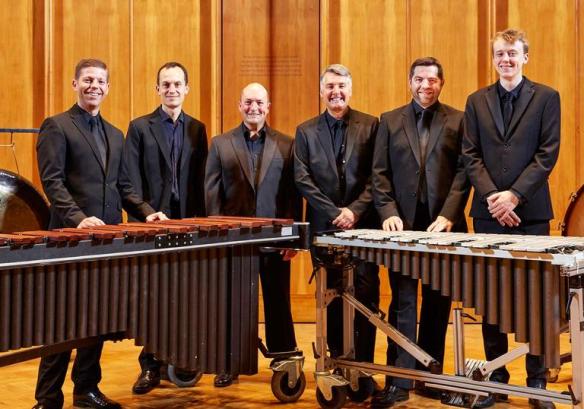
The London Symphony Orchestra have been giving a series of Summer Shorts at LSO St. Luke’s through July and August, and is set to conclude in thrilling fashion with a concert from the LSO Percussion Ensemble on Friday 21 August at 1pm. You can watch it on the LSO website here

The programme begins with Chick Corea’s Duet Suite, arranged by Simon Carrington, before two pieces from Gwilym Simcock – his Quintet, which the ensemble have already recorded, and the shorter piece Barber Blues.

Also available to watch is the concert from the Friday just gone, given by the piano trio Belinda McFarlane (violin), Jennifer Brown (cello) and pianist Elizabeth Burley. Their intriguing hour of music begins with Judith Lang Zaimont’s Nocturne, before A Winged Spirit, the new piece from Hannah Kendall. Wrapping things up is Rachmaninov’s passionate but seldom heard Trio élégiaque no.1:

Across town in the Henry Wood Hall, the different sections of the London Philharmonic Orchestra have been giving concerts for reduced forces. Their Summer Sessions began on July 15 with a rather lovely set for strings, including the Elgar Serenade for Strings, the first Concerto Grosso of the Op.6 set by Corelli and Grieg’s sunny Holberg Suite:

Then the winds stepped up on two weeks later, playing Rossini’s Sonata no.1, Mozart’s wonderful Serenade in E flat major K375 and Janáček’s Mládí:

Brass and percussion were next, with a program of fanfares and divertimenti featuring works by Sir Malcolm Arnold, Richard Bissill, Leonard Salzedo, Stanley Woods and Simon Carrington:

Finally the orchestra will celebrate the 250th anniversary of Beethoven’s birth with a vibrant program including the Septet in E flat major, the Quintet for piano and wind and the lesser known Trio for piano, flute and bassoon. You can catch that concert on the London Philharmonic Orchestra’s YouTube channel here