La Trénis, Contredanse by PIerre La Mésangère, British Museum
6 German Dances WoO42 for piano and violin (1796, Beethoven aged 25)
Dedication The ‘Countesses Thun’
Duration 5′
Listen
Background and Critical Reception
William Drabkin, writing in the booklet notes for the Complete Beethoven on DG, confirms the background behind these six short dances for violin and piano.
Beethoven describes them as ‘German dances, to which the two Countesses Thun and other people might dance on their heads and thereby think of their Ludwig Van Beethoven who honours them’. Drabkin confirms Beethoven sent the completed work to Vienna while he was on his concert tour of Berlin and Prague during 1795-96. He writes that ‘One of the two unnamed countesses Beethoven is likely to have intended in the dedication is Christiane, wife of his foremost patron during his first years in Vienna, Prince Karl Lichnowsky.’
The dances could be performed by piano alone, but the violin grows into its role as co-melodist as the dances progress.
Thoughts
Beethoven uses ‘safe’ homes for each of these short dances, all in a major key: F – D – F – A – D – G. They are all perky numbers that prove to be good fun, lightening the mood as they would doubtless have done of an evening.
Piano and violin share the load, the violin often using double stopping as in the drone of the rustic second dance or the attractive no.5. The fourth dance has a nice lilt to it, while no.6, the most substantial, finishes on a high.
Recordings used
David Garrett (violin), Bruno Canino (piano) (Deutsche Grammophon) James Ehnes (violin), Andrew Armstrong (piano) (Signum Classics)
Both performances are thoroughly enjoyable. Ehnes and Armstrong have their collective foot on the accelerator that bit more, dancing with quick feet!
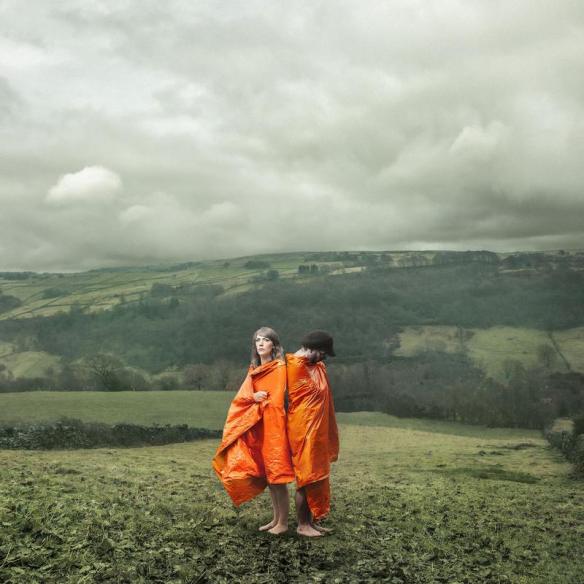
Cobalt Chapel, the duo of Cecilia Gage and Jarrod Gosling, release a second album of pop roots in psychedelia and folk music, focusing in on their home county.
It is, as they say, ‘music grounded in the Yorkshire earth; its people, the surrounding nature, landscape and its mythology, from the distant past to modern life’.
What’s the music like?
Both protagonists of Cobalt Chapel have varied backgrounds – Gosling as a one-time member of I Monster and Gage through her work with Maps and Matt Berry. Orange Synthetic celebrates these diversities, and its music proves to be unpredictable and inventive if occasionally loose in structure.
The duo start out with what sounds like a leftfield pop album, but gradually more psychedelic, woozy layers are revealed, along with an underlying haunting quality. Our Angel Polygon is responsible for the latter feeling. A striking track with slightly sinister lyrics and a melody from folklore, it was inspired by RAF Fylingdales, the distinctive early warning centre on the East coast of Yorkshire. Its enormous domes, like oversized golf balls, are evoked here in a song of windswept mystery.
In Company, the first song of the album, is a dark fairy tale seen through the eyes of writer Angela Carter. It comes in an exquisitely scored chamber-pop setting, with Gage’s deadpan vocal both affecting and unsettling.
Meanwhile the rolling beat of It’s The End, The End carries a bleak, apocalyptic message, while the haunting folksong of E.B. is head as though in a weird apparition.
At times the album is downbeat in its message but the elements of fantasy and mystery are key, as are the elements of late 1960s psychedelia in the production. These give an essential colour to the music.
Does it all work?
Largely. The musical freedom Cobalt Chapel allow themselves is refreshing, and it allows them to construct unusual and evocative songs, which translate themselves into striking pictures for the mind’s eye. The bleakness of the Yorkshire moors is successfully evoked but so is the wonder of those open spaces.
Is it recommended?
It is, but with the caveat that Orange Synthetic is a dark album for a dark time of the year. It is beautifully made and executed, and offers some haunting visions. Fans of Broadcast and Stereolab will undoubtedly find something to enjoy here.
“Ah, perfido!”, Op.65 for soprano and orchestra (1796, Beethoven aged 25)
1. Scena: Ah! perfido, spergiuro 2. Aria: Per pietà, non dirmi addio
Dedication Josepha Duschek Text Pietro Metastasio / Anonymous Duration 14′
Listen
Background and Critical Reception
Beethoven wrote Ah! Perfido as a two-part concert scene and aria, with the Czech soprano Josepha Duschek in mind. He met the singer and her husband on his visit to Prague in 1796, but in the end had to entrust the debut on 21 November to Countess Josephine Clary, because of a clash of engagements. Despite its relatively early genesis the work was not published until 1807, and it appeared on the programme of Beethoven’s famous Akademie concert in 1808.
Many commentators see the roots in Ah! Perfido from Mozart’s writing for voice and orchestra. Writing in The Beethoven Companion, Leslie Orrey sees a clear prototype for the work in Mozart’s Bella mia fiamma, K528 – itself a scene and an aria written for Duschek. Daniel Heartz, in his comprehensive appraisal of early Beethoven, is not so sure.
He writes in typically revealing detail. “Since the text is pathetic, his (Beethoven’s) choice of E flat is appropriate, and so is the form, that of the two-tempo rondo, still the height of fashion in 1796 and just the sort of piece a professional like La Duschek would want to sing. Its languid first part, Adagio in 3/4 time, has a theme that returns after contrast, while the second part, Allegro assai in common time, has a gavotte-like theme that also returns after contrast. The faster transition between the two parts, which appears later, is unusual. It has been claimed that Beethoven modelled Op.65 on Mozart’s Bella mia fiamma. Yet there is little in common between them aside from the form, which Mozart treats more freely still.”
Thoughts
Beethoven puts our emotions through the wringer with this dramatic scene. The orchestra’s brisk introduction sets the picture for our soloist, who is given some powerful and declamatory high notes. Seen live, the effect is arresting, the dialogue with the orchestra like a recitative from a Handel opera, with comments made in quick bursts.
Yet with the solo aria the mood changes markedly. A slow introduction from the orchestra leads to a beautiful melody from the soloist, which requires great control but fully conveys the emotion of the unknown author. Beethoven provides subtle orchestral complements from clarinet and woodwind, and in the middle of the aria we pull back to just the singer and soft pizzicato, a moving moment indeed. Our protagonist is resigned to a troubled end, with fresh drama through a burst from tremolo strings and another heartfelt plea. Finally the slow music returns, rather beautifully.
Recordings used
Elisabeth Schwarzkopf (soprano), Philharmonia Orchestra / Herbert von Karajan (EMI)
Janice Watson (soprano), English Chamber Orchestra / Matthew Best (Hyperion)
Chen Reiss (soprano), Academy of Ancient Music / Richard Egarr (Onyx)
Charlotte Margiono (soprano), Orchestre Révolutionnaire et Romantique / John Eliot Gardiner
Camilla Tilling (soprano), Gabrieli Players / Paul McCreesh (Archiv)
In her interview with Arcana, Chen Reiss talked about approaching Ah! Perfido from two different historical directions. Elisabeth Schwarzkopf brings the romantic drama in a commanding performance, singing with fulsome tone and vibrato. Herbert von Karajan’s sleek orchestral accompaniment makes the piece sound around 70 years younger.
By complete contrast, the leaner tones of the Academy of Ancient Music under Richard Egarr have the excitement of the new, as the strings burst from the blocks. Reiss’s voice is clear and urgent, the words still fresh off the page. Hers is a dramatic account indeed, and Egarr ensures the detail from the orchestra is beautifully shaded.
A mention, too, for Charlotte Margiono, whose clear singing matches John Eliot Gardiner’s detailed account – and for Camilla Tilling, who makes an excellent partnership with Paul McCreesh and the Gabrieli Players. Not quite as dramatic as Reiss and the AAM though!
Spotify links
This playlist collects most of the available versions mentioned above:
You can chart the Arcana Beethoven playlist as it grows, with one recommended version of each piece we listen to. Catch up here!
Also written in 1792 Cimarosa – Gli Orazi e i Curiazi



 Arcana.fm