Switched On – Plaid: Feorm Falorx (Warp Records)

Reviewed by Ben Hogwood

What’s the story?

Plaid have now been with Warp Records for 30 years, which is an astonishing length of time in electronic music. In that time they have established themselves as a consistent source of innovation and quality, with a distinctive musical style that evades categorisation but still provides a great deal of harmonic and colourful interest.

To say that the duo – Ed Handley and Andy Turner – are underrated would be judging it about right, for audiences have simply grown accustomed to their regular output of interesting and vital music. As with the previous ten albums, Feorm Falorx has a curious title, which relates to an imaginary performance at the Feorm festival on the planet Falorx, where musicians are removed from time, space and the physical limitations of their bodies.

The album is a proper concept, to be accompanied with visual content and a graphic novel.

What’s the music like?

Plaid’s music continues in a life all of its own, and true to form this album is a distinctive yet elusive set of compositions. Alternately serious and playful, their music still sounds incredibly fresh – and, appropriately, as though it has beamed in from another planet.

There is so much going on in a typical Plaid track, with so many nuances and instinctive changes of gear, that it takes several listens for thorough appreciation of what the pair achieve in the course of their tracks.

The fictional festival set bursts into life with Perspex, a rush of spring-like germination which also sounds like a set of melodic wind chimes. The following Modenet has a foursquare rhythm, but as with a lot of Plaid’s work there is syncopation in play, giving it a slightly quirky disposition.

Elsewhere, Wondergan is as close as Plaid will surely get to the disco, with its chirpy riffing and swinging rhythm, while the Mason Bee collaboration Nightcrawler has a momentum borne of Krautrock.

C.A. has an impressive scope and a longer, majestic line, going deeper in its emotion. Meanwhile Cwtchr starts brightly but gradually a shadow falls over its complexion through the darker shades of the bass. Speaking of bass, Bowl is appropriately named, powered by a sonorous and rounded lower line.

Return To Return reminds us of how many layers Plaid can get into a track, with rich sounds that are stripped away to reveal the workings of their rhythm section. Later on, as the set hits its peak, the stabbing riffs of Tomason and the increasingly sharp synth lines of Wide I cut through like otherworldly rave anthems.

Does it all work?

It does. There is a lot going on here, but as always with Plaid nothing is superfluous, and the sheer enjoyment of making electronic music comes through.

Is it recommended?

It is – and it really is time that we stopped taking Plaid for granted as much as they do. They continue to make exquisitely crafted music, beautifully shaped and richly coloured. Those on the planet of Falorx are in for a treat!

Listen

Buy

Switched On – Gold Panda: The Work (City Slang)

Reviewed by Ben Hogwood

What’s the story?

Derwin Dicker’s fourth album under the Gold Panda alias arrives with a new outlook from the producer on looking after his mental health.

In a refreshingly frank press release, he talks of the difficulty of looking after a new person with the birth of his first daughter, and the challenges that brought to his own self-care. In particular he refers to a eureka moment in a Japanese hotel, where he realised the destructive aftereffects of alcohol on his wellbeing. The album’s title The Work reflects the efforts made to look at things from a different perspective, and a self-help program including therapy, running, pilates and an osteopath.

Dicker has always been very open about his state of mind and its influence on his music, and now it looks as though he has arrived at a happy place. “I don’t know where I fit in”, he says, “and maybe that’s good.”

What’s the music like?

A breath of fresh air – but one that draws in oxygen from more than one continent.

After a gentle start on Swimmer, where electronic waves lap at an imaginary shore, The Dream introduces bright colours and easy beats, along with a vibrant harp solo that adds a distinctly Eastern colour.

This inter-continental approach has always been one of Gold Panda’s strongest qualities, and it proves to be the case once again here. Similarly his awareness of instrumental colour leads to consistently fresh approaches, giving his sound a bright treble and a wide, open-air perspective.

The beatless Anima reflects this with some lovely colours, while deeper shades run through Chrome. The Want is built on a distracted loop that acquires a jumpy, energetic rhythm and bass line, as though two songs have merged from different directions. One is drowsy and the other energetic, leading to a strange but invigorating tension in the middle, topped again by electronic harp.

I’ve Felt Better (Than I Do Now) is more club-based, powered by a four to the floor rhythm and with several interlocking hooks before cutting to slower, more exotic passage. Perhaps the best track is Plastic Future, a multi-layered track mixing percussive thoughts and a high harp line, shot through with warm keyboards in the centre – a feeling on which New Days and I Spiral capitalize.

Does it all work?

It does. Dicker’s music never feels too processed, with a freshness running through the textures akin to opening the curtains for the first time on a sunny day.

Is it recommended?

Yes, enthusiastically. The Gold Panda body of work is consistently stimulating, and this colourful album is one of Derwin Dicker’s finest achievements within that.

Listen

Buy

In concert – Music For Youth Proms 2022 @ Royal Albert Hall

Review and photos by Ben Hogwood

There is a justified amount of doom and gloom in the arts at present, with organisations striving for increases in attendance figures while clinging to the hope that their funding will not fall through the trapdoor, as it effectively has done in the recent Arts Council England announcements for English National Opera, Britten Sinfonia and London Sinfonietta, to name just a few.

Art forms are nothing if not resilient though, especially when powered by raw talent, enthusiasm and hard work – as this night of Music For Youth Proms clearly was. How inspiring it was to see hundreds of young performers create their own bookmark experiences at the Royal Albert Hall, delivering performances of power, confidence and poise, fuelled by a clear and sheer enjoyment of music.

There was no evidence of stage nerves as performers ranging from aged six to 25, from Gwent to Ukraine (via London) united together in music, each and every one of them doing themselves proud under the Music For Youth umbrella. The registered charity works, in its own words, ‘to provide young people aged 21 and under across the UK with free, life-changing performance and progression opportunities, regardless of background or musical style’.

The range of musical styles here was testament to this approach, creating an environment where genres can be celebrated rather than restrictive. The word ‘Proms’ may still conjure images of seated classical concerts, with a smattering of world music maybe, but here it stood for hip hop, soul, brass band, solo vocals, choir, classical for small and large orchestras and even jazz fusion bands.

To pick out a single performer would be unfair, as each one was fully deserving of their moment in the spotlight. For raw, upfront sass, the Sedgehill Academy Rap Collective from Lewisham excelled, especially when three soloists came forward to take the game to the audience, their sparky wordplay in original compositions making the Girls Rap Collective a thrilling live experience.

Illustrating the breadth of this country’s music, an affecting performance of Vaughan WilliamsFantasia on a theme of Thomas Tallis followed from Musica Youth Strings, the Huddersfield-based ensemble giving true depth of feeling in their cleverly abridged account.

Cantilena from the Abbey Junior School in Reading were next, utterly charming as they sang The Puzzle and Silver Moon. They were complemented in the second half by the remarkably accomplished singing of the Northamptonshire County Youth Choir, whose accounts of music by Bob Chilcott (The Isle is Full of Noises) and Ola Gjeilo (Northern Lights) were breathtaking in both accuracy and emotion.

The brass players excelled, too – Gwent Youth Brass Ensemble in 3 Brass Dances by Ryan Linham, and the Mountbatten Big Band bringing exuberant lines to their Brooklyn medley. That the ensemble made such a big impression after No Trixx, a London fusion band of formidable musical capability, said much for their spirit.

The lasting image of the first half was provided by Ukrainian students from LPMAM (The London Performing Academy of Music, above), cleverly working Queen’s The Show Must Go On into the torch song Melody, from Ukrainian composer Skoryk. The students are on permanent placements at LPMAM, thanks to an initiative headed by conductor Stefania Passamonte, whose initiative and drive continues to bring more funding to enable more students to come over and base themselves in London. Judging by this performance they are revelling in the experience – typified by oboist Lola Marchenko, whose solos in both songs stayed long in the memory.

The second half of the Proms was similarly spectacular, with hundreds of singers and orchestral players forming the Lincolnshire Massed Ensemble (above). They delivered a Beyoncé medley of eye-opening power and positivity, headed by a group of girls whose vocals and dance moves showed just what a positive influence the former Destiny’s Child singer has exerted on them. As a celebration of 30 years of the Boston Music Centre, this took some beating.

From hundreds to just two, and the Emeli Sandé-influenced duo Chris and Baaba, whose intimate odes to friendship struck a very different but equally affecting chord, drawing the audience in closer to the round of the Albert Hall. We then heard remarkably assured solos from the York Music Forum Youth Jazz Ensemble, their Blue Matter a collection of cultured solos. A bracing account of the Overture to Hérold’s opera Zampa followed, given an excellent account by the City of Belfast Youth Orchestra. Finally, The Spy Game brought us full circle back to rap with Wag1Fam, a Stormzy-esque anthem to which the group bounced across the stage, never missing a note or a word.

The finale, a specially composed song Back Together, united all artists in a celebratory mood, a show of resolve and unexpected defiance.

Clearly this country – in the face of apparent efforts from on high to downplay the importance of music education – continues to nurture music making of astounding ability and refreshing confidence. Music For Youth is the ideal platform from which these artists can grow – but what needs to happen now is for them to get the ongoing support their talent craves and deserves. Politicians take note – music is a force for so much good and should be treated as such.

In concert – Clara-Jumi Kang, CBSO / Elena Schwarz: Dukas, Prokofiev & Dvořák

Dukas L’apprenti sorcier (1897)
Prokofiev Violin Concerto no.2 in G minor Op.63 (1935)
Dvořák Symphony no.8 in G major Op. 88 (1889)

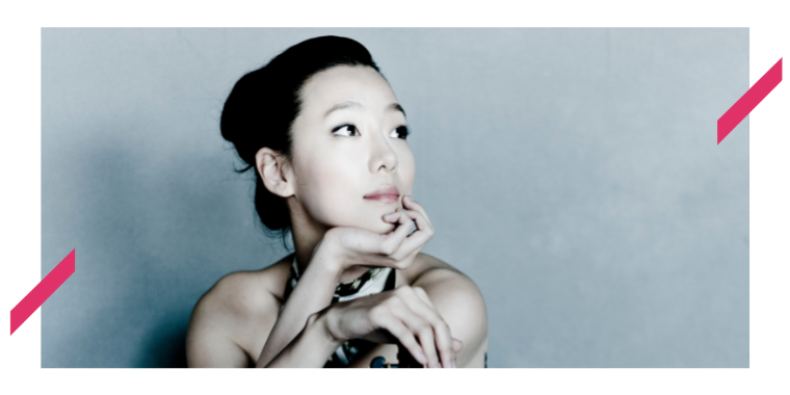
Clara-Jumi Kang (violin), City of Birmingham Symphony Orchestra / Elena Schwarz

Symphony Hall, Birmingham
Tuesday 15 November 2022 2.15pm

Reviewed by Richard Whitehouse

This afternoon’s concert by the City of Birmingham Symphony Orchestra followed the once customary format of overture, concerto and symphony for what was a compact but cohesive programme which duly highlighted the considerable conducting prowess of Elena Schwarz.

It may be a ‘symphonic scherzo’ rather than overture, but Dukas’s The Sorcerer’s Apprentice after an early ballade by Goethe makes for an ideal curtain-raiser and if Schwarz stressed its purely musical rather than evocative qualities (there being little sense of Fantasia goings-on), the piece still packed a fair punch. Other accounts might have brought out more of that sense of teetering on the brink of disaster during its climactic stages though, a couple of awkward transitions and premature entries aside, this was rarely less than gripping as a performance.

So, too, was Clara-Jumi Kang in Prokofiev’s Second Violin Concerto. Long a staple of the repertoire, the work’s appeal can often be undermined by an emotional disengagement over its course. There was no chance of that here – Kang alive to the opening Allegro’s interplay of ambivalence and eloquence as were barely resolved by the terse closing pay-off. Nor was there any absence of expressive poise in the Andante, Kang’s often astringent tone pointing up that uneasy lyricism such as characterizes so much of the composer’s music at this time.

Kang entered fully into the final Allegro’s bracing if often sardonic spirit. The main theme’s rhythmic undertow, accentuated by castanets on its returns, likely indicates no more than a generalized Spanish-ness rather than any Civil War premonition, but it does add an edginess to the music’s course right through to its peremptory signing-off. This was a performance to savour, and Kang responded to its warm reception with an encore – the soulful Grave from Bach’s Second Violin Sonata (BWV1003) – which seemed entirely appropriate in context.

Although this was her debut with the CBSO, Schwarz clearly found no mean rapport with the musicians, as was evident in Dvořák’s Eighth Symphony. Not all those tempo changes in the opening Allegro were equally well handled, but the unbridled verve with which the composer handles his material was sustained through to the effervescent coda. With its deft alternating between wistfulness and pathos, the Adagio is surely as finely achieved a slow movement as Dvořák wrote and such qualities were as evident here as was the raptness of its closing bars.

The other movements might represent a marginal falling-off of invention, but the Allegretto’s gentle lilt was delightfully inflected with its unexpected breezy coda made all of a piece with the foregoing. Similarly, the variation format of the final Allegro can easily become a formal strait-jacket – yet with a delectable response from the CBSO woodwind and Schwarz pacing its eventful progress ideally through the ruminative latter variations and on to a scintillating close, it rounded off this performance with no less conviction than was evident at the outset.

From a relatively traditional programme to one much freer – next week’s CBSO concert is devised and directed by Pekka Kuusisto, and features music by Sibelius, Vaughan Williams and Rautavaara as part of an ingenious sequence centred on the concept Birds of Paradise.

You can read all about the 2022/23 season and book tickets at the CBSO website. Click on the artist names for more on Elena Schwarz and Clara-Jumi Kang

Playlist – Daniel Barenboim

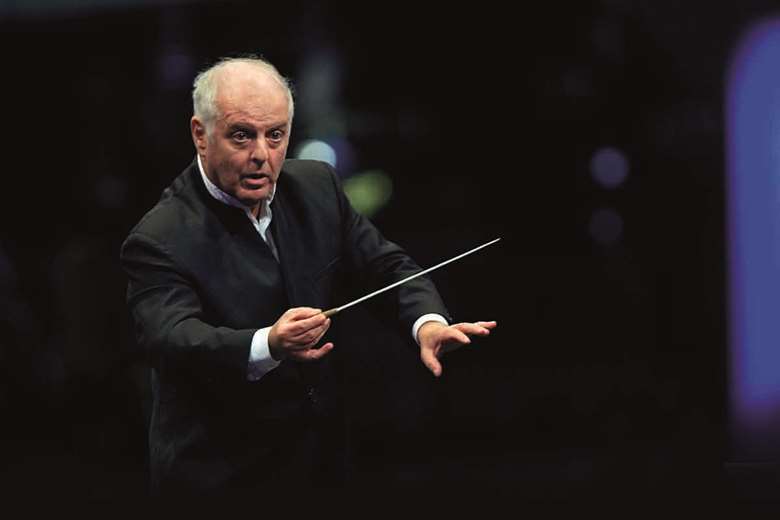
Yesterday marked the 80th birthday of the great pianist and conductor, Daniel Barenboim.

In celebration Arcana has compiled a playlist from just a fraction of his many, many recordings. There is so much from which to choose, as Barenboim’s discography runs from early days at EMI, and recordings with his late wife, cellist Jacqueline du Pré, through a substantial body of work for Warner Classics to his current ‘home’, Deutsche Grammophon.

Our small but perfectly formed playlist includes an extract from his most recent release of Schumann symphonies, with the Berlin Staatskapelle, but also some of those early recordings, including a Beethoven piano trio with du Pré and violinist Pinchas Zukerman: