
by Ben Hogwood
What’s the story?
Jozef Van Wissem is a musician whose music transcends time. His instrument, the lute, has an ancient tradition with a huge amount of music written for it in the Renaissance and Baroque periods. Yet, as the Dutch composer has shown, it has little trouble fitting in with contemporary styles and practices, showing its versatility with guitar-like figures and sounds but with a distinctive tone.
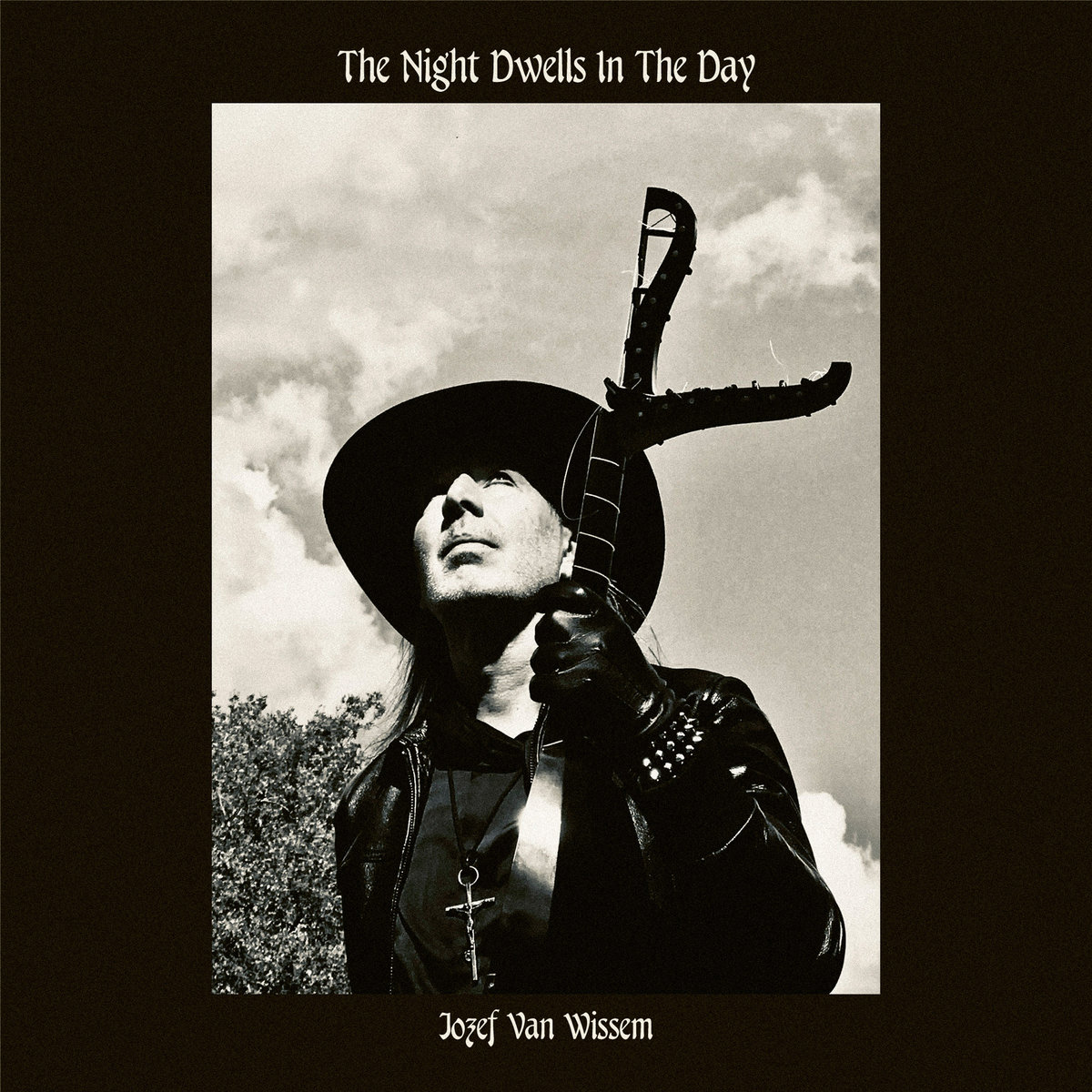
He has enjoyed collaborations with Jim Jarmusch and Tilda Swinton and written soundtracks for computers and films, the latest of which is Pierre Creton’s film A Prince last year. The Night Dwells In The Day began life in the pandemic, Van Wissem writing the standout track The Call Of The Deathbird, on which he makes a rare appearance as a vocalist alongside his guest Hilary Woods. The rest of the album charts the reaction of the world as it moved on, and the elements of darkness and light existing side by side.
What’s the music like?
Don’t expect anything too bright in the course of Van Wissem’s album…but don’t let that put you off, either. There are some truly unique musical colours that unfold during the course of this work, and a theatrical poise that gives the music a good deal of drama.
As you might expect, The Call Of The Deathbird is the album’s calling card. It is a startling piece of music, led by the lute with an urgent undulating figure. What proves even more striking than the lute, however, are the voices – Van Wissem’s tones with a sonority approaching Nick Cave. When Hilary Woods appears, almost off stage, the effect is genuinely ethereal, and the electronic effects give the effect of sonic displacement. The Day Of The Lord also has the feeling of a ritual, and here Van Wissem’s haggard, weather-beaten vocals carry it forward.
The lute proves to be a versatile instrument, capable of soft intonations but also coarse arpeggios, and when multiple layers are built up, as they are on In Exile Here We Wander, the effect is genuinely thrilling. When the electronics complement the acoustic material, which they often do with subtle effects, then there is plenty for the listener to get hold of. Slowly The Rays Of Daylight Fade takes on the form of the winter sun, a stark timbre for the instrument as the light drops over the horizon.
Does it all work?
A good deal of the time. On occasion the writing for lute does retreat into quite lengthy loops of arpeggios, which aids the meditative aspect of Van Wissem’s writing if the listener is in the moment, but they do sound repetitive as the album progresses.
Is it recommended?
It is – provided the mood is right. This is an imaginative album, dark but glinting at the edges, and with a protagonist who knows how to soundtrack a drama. Jozef Van Wissem has an unusual talent for blending ancient and modern at the same time.
For fans of… Nick Cave, Mark Lanegan, PJ Harvey, Gravenhurst
Listen
Buy
Published post no.2,061 – Friday 19 January 2024
 Arcana.fm