
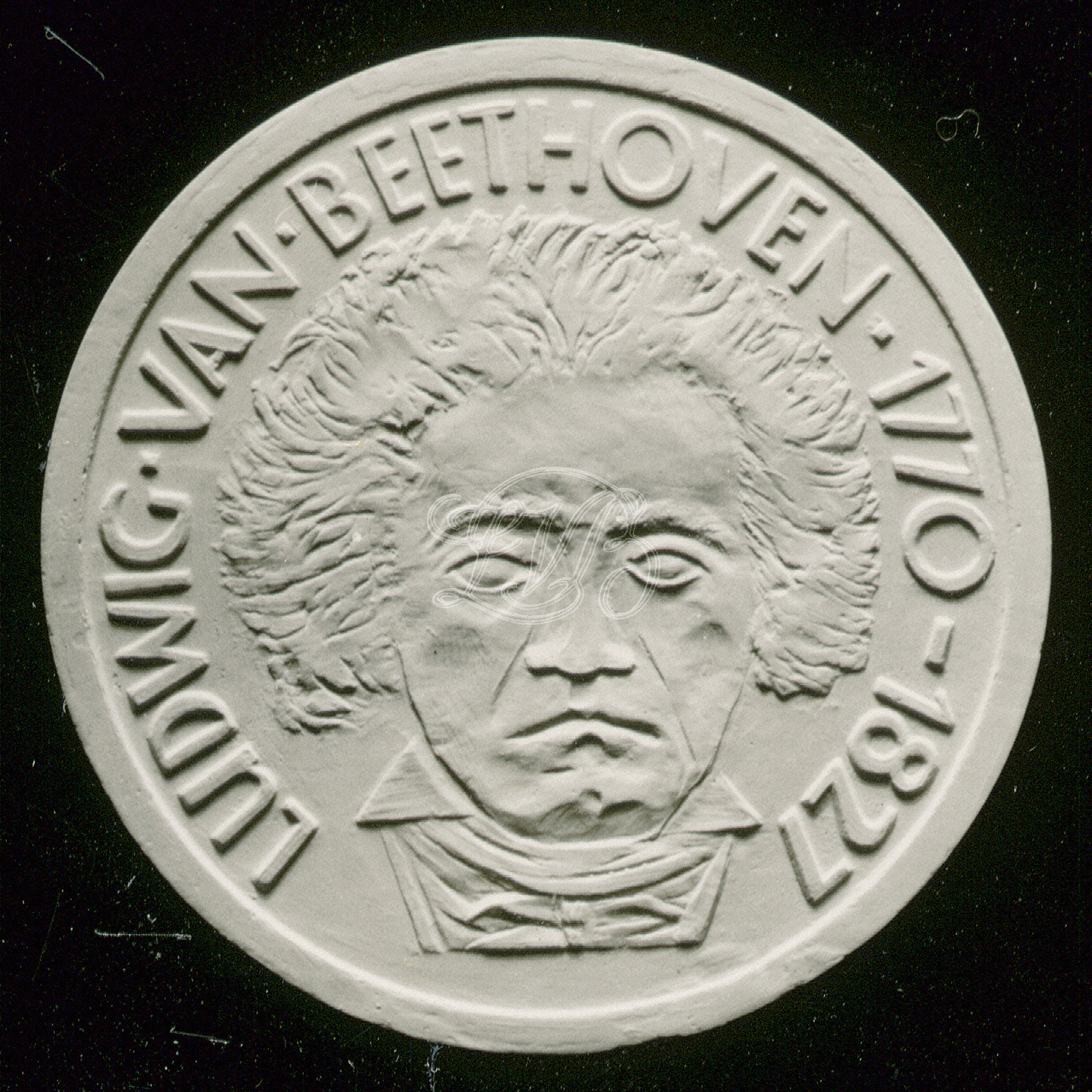
Design for a Beethoven commemorative coin for 5 German marks, 1969 – photograph of an unmarked model
6 Ecossaises WoO83 for piano (c1806, Beethoven aged 35)
Dedication unknown
Duration 2″
Listen
by Ben Hogwood
Background and Critical Reception
The general Wikipedia definition for an Ecossaise is ‘an energetic country dance in duple time in which couples form lines facing each other’. Keith Anderson, writing notes for Naxos, states that ‘the so-called Scottish dance was, in fact, a form of contredanse, a product of French imagination’.
Beethoven wrote a small number of these dances for piano, and according to the brief notes for the DG Beethoven Edition, ‘some of these were intended to be used in ballrooms to accompany actual dancing, as seems to have been the case with the ecossaises and waltzes WoO83-86.’
These examples were published in 1807, though there is some doubt over their authenticity.
Thoughts
These lively dances are a lot of fun – and Beethoven shows that even in supposedly minor works like this, he is still capable of writing a tune that will stay in the head. It is the refrain that ends the first dance, and then comes back for a repeat after each of the six little variant dances.
Anyone who had ventured on to the dance floor at the sound of the first dance will surely have stayed for the duration, and hoped for more of the same in successive works!
Recordings used and Spotify playlist
Ronald Brautigam (BIS)
Jenó Jandó (Naxos)
Olli Mustonen (Decca)
Alfred Brendel (Vox)
Wilhelm Kempff (DG)
Martino Tirimo (Hänssler)
Some lively recordings here, and some notably different approaches. Martino Tirimo is curiously stilted, while Brendel, Kempff and Jenó Jandó are typically elegant. Ronald Brautigam is brisk and lively, his dancers whirling around in circles.
Also written in 1806 Hummel 12 Minuets
Next up String Quartet no.7 in F major Op.59/1
 Arcana.fm