

New Year (1985-88)
Opera in Three Acts
Music and libretto by Sir Michael Tippett
Sung in English with English surtitles
Jo Ann – Francesca Chiejina (soprano), Donny – Sakiwe Mkosana (baritone), Nan – Sarah Pring (mezzo-soprano), Merlin – Lucia Lucas (baritone), Pelegrin – Joshua Stewart (tenor), Regan – Samantha Crawford (soprano), Presenters – Grace Durham (mezzo-soprano), Oskar McCarthy (baritone)
Keith Warner (director), Michael Hunt (associate designer), Mariana Rosas (chorus director), Nicky Shaw (designer), Simone Sandrini (choreographer), John Bishop (lighting designer), Matt Powell (video designer)
Birmingham Opera Company Chorus, Actors and Dancers, City of Birmingham Symphony Orchestra / Alpesh Chauhan
The Dream Tent @ Smithfield, Birmingham
Sunday 7 July 2024
reviewed by Richard Whitehouse Photos (c) Adam Fradgley
Around a decade ago, Birmingham Opera Company mounted a production of Tippett’s opera The Ice Break which vindicated this opera as a dramatic entity, so making its composer’s fifth and final opera New Year a logical further step in the rehabilitation of a latterly neglected and frequently derided dramatist. What was seen and heard tonight was typical of BOC only in its playing fast and loose with a work that, far from representing a creative decline, finds Tippett pushing – unequivocally even if erratically – against the boundaries of what may be feasible.
Since its staging at Houston in 1989 then at Glyndebourne the following summer, New Year has barely surfaced in considering what was a productive and diverse era for opera in the UK – occasional revivals of its suite a reminder of those riches that more than outweigh any dross. Much of the problem lies in just what this work is – a masque whose ‘‘primary metaphor’’ is dance. What better than to locate it in a ‘Dream Tent’, which here functions as the scenic and sonic environment where ‘‘Somewhere and Today’’ collides with ‘‘Nowhere and Tomorrow’’?

Keith Warner’s direction makes resourceful use of the space therein. At its centre, a circular platform enables the presenters to comment on the action, as well as a means of bringing its climactic aspects into acute focus. At either end are a house where the humans are domiciled, then a white cube that opens-up to reveal a spaceship from where the time-travellers emerge. Along either side are gantries for chorus and orchestra – the former as volatile in its comings and goings as the latter is inevitably static, but their synchronization was hardly ever at fault.
Above all, such an array allows free rein to Simone Sandroni’s choreography – as animated or visceral as the scenario demands and abetting a sense of the opera playing out in real-time to onlookers either side of the dramatic divide, which duly blurs in consequence. Both Nicky Shaw’s designs and Matt Powell’s video make acknowledgement of that period from which New Year emerged, while John Bishop’s lighting comes decisively through the haze of ‘dry ice’ to illumine the production and denote the proximity of this opera to the heyday of MTV.
Vocally there was little to fault. As the reluctant heroine Jo Ann, Francesca Chiejina overcame initial uncertainty for a rendition affecting in its vulnerability; to which the Donny of Sakiwe Mkosana was a telling foil in its reckless self-confidence and excess of adrenalin. They were well complemented by the Merlin of Lucia Lucas, duly conveying hubris poised on the brink of disaster, and the Pelegrin of Joshua Stewart whose growing desire to bring together these separate but not thereby competing worlds bore eloquent fruit in his love-duet with Jo Ann.

It was those other two main roles, however, that dominated proceedings. Sarah Pring gave a powerful while never inflexible portrayal of Nan, her innate fervency in contrast to the steely authority of Samantha Crawford (above) whose Regan approaches the human world with something between trepidation and disdain – not least in her confrontation with Donny, where Tippett’s would-be rap provoked some amusement. Splitting the role of Presenter worked effectively, Grace Durham and Oskar McCarthy (below) duly enhancing the stage-action with no little panache.
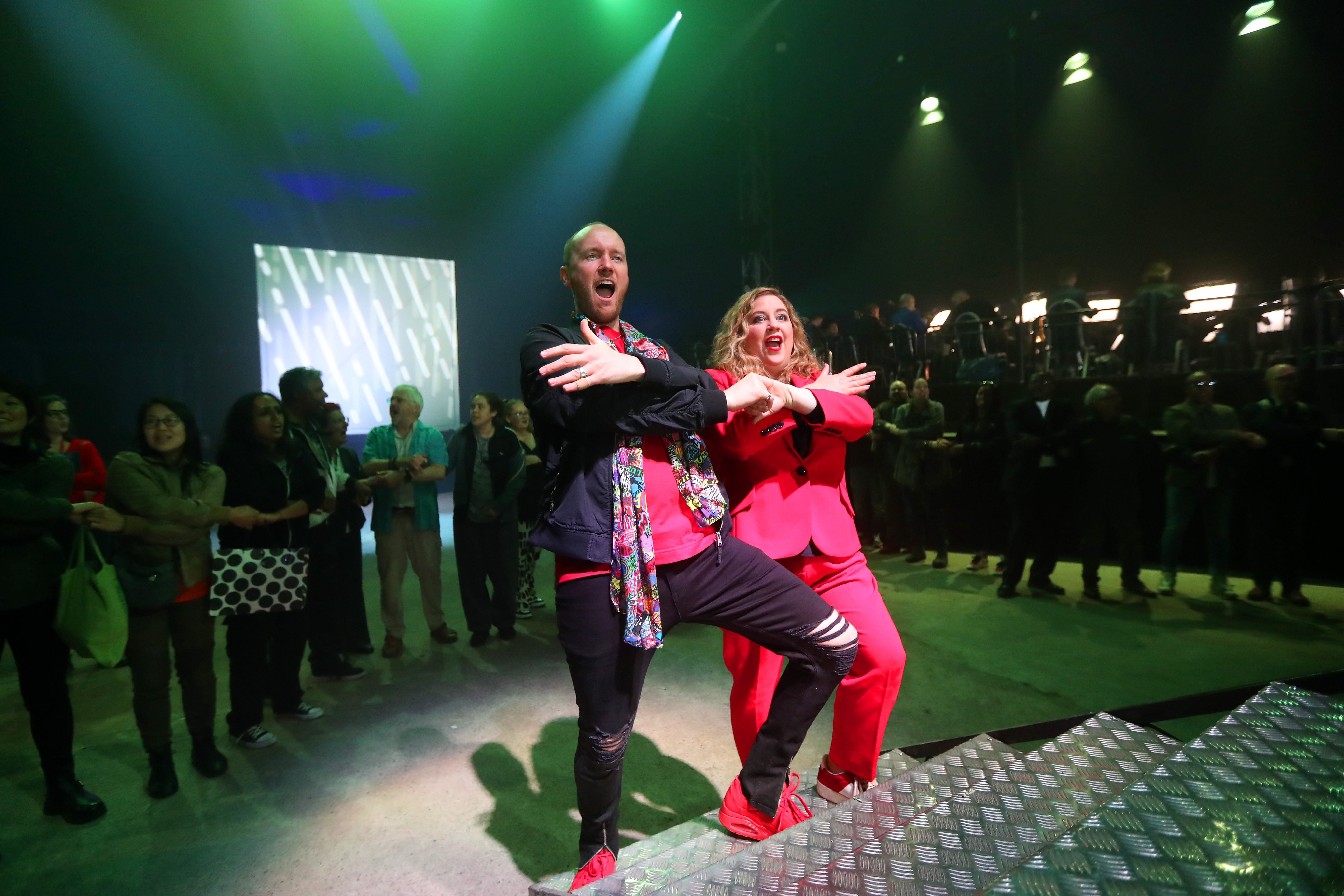
Not for the first time, BOC Chorus came into its own for what is among the most extensive and immediate of Tippett’s choral contributions to opera – the oft-favoured device of Greek Chorus afforded a visceral twist as it conveys the ominous and often violent attitudes of ‘the crowd’. That many of those involved have signed-up specifically for the occasion only adds to the rawness and physicality of its collective presence: something that the composer was at pains to capture, and which could not have been realized this directly in earlier productions.
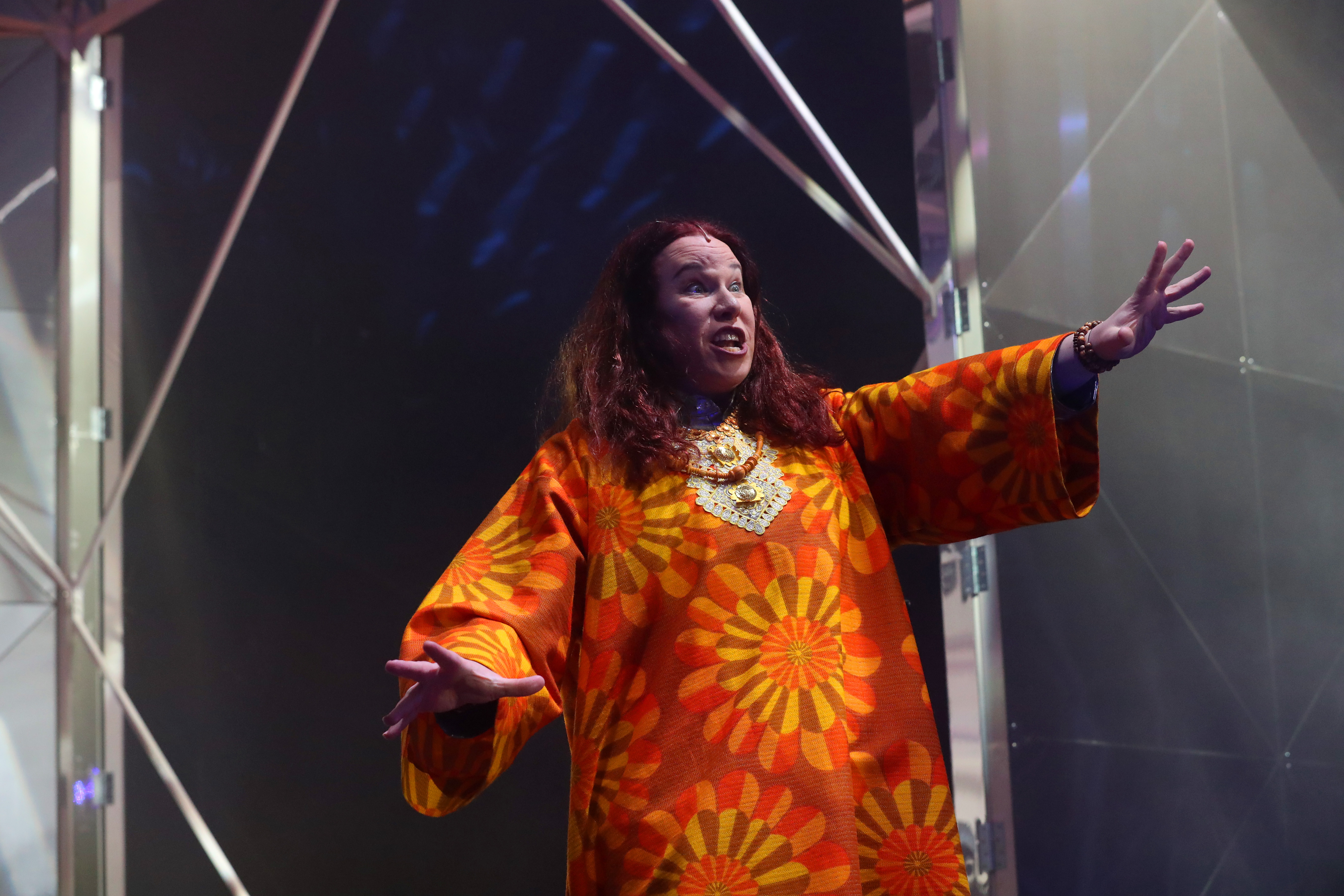
Conducting the City of Birmingham Symphony Orchestra with typical discipline and energy, Alpesh Chauhan brought requisite vibrancy and clarity to Tippett’s writing. Less purposefully wrought than in his previous operas, there is no lack of subtlety or imagination – the frequent reliance on percussive sonorities to sustain the overall texture hardly an issue when so deftly realized as here. Is there a more moving passage in his output than the dance for Jo Ann and Pelegrin after their duet – Tippett’s musical past and present brought into disarming accord.
Playing for around 105 minutes, New Year is relatively expansive next to Tippett’s preceding two stage-works so that certain aspects of those outer acts do verge on diffuseness. That this hardly came to mind on the opening night was tribute to the conviction of those involved in seeking to reassess what this opera might be and, moreover, what it is there to do. Far from having run out of ideas, Tippett had a surfeit of these that he struggled to make cohere but in which he so nearly succeeded. Do see this engaging and enlightening production from BOC.
Further performances on 9, 10, 12 & 13 July – for more information head to the Birmingham Opera Company website
Published post no.2,233 – Monday 8 July 2024
 Arcana.fm