
Reviewed by Ben Hogwood
What’s the story?
Craven Faults is proving to be a particularly fertile source of long-form instrumental music. Created by a single, anonymous hand, its pictorial approach leans on industry for inspiration but looks beyond that, creating an intriguing form of descriptive ambience. This has already been shown in double-length albums Erratics & Unconformities and Standers, and a number of EPs.
“The journey on Sidings isn’t made with people in mind. It begins in an isolated community which has built up around one of the great engineering projects of its age. The work is slow and perilous – thousands of men at the mercy of the elements. The ground is frozen or flooded for months on end, while red kites circle overhead. 14 tunnels and 22 viaducts to open up the north. The on-beat and the off-beat interchange. Recorded in 1969, Olympic Studios – a precursor to the ships we built.
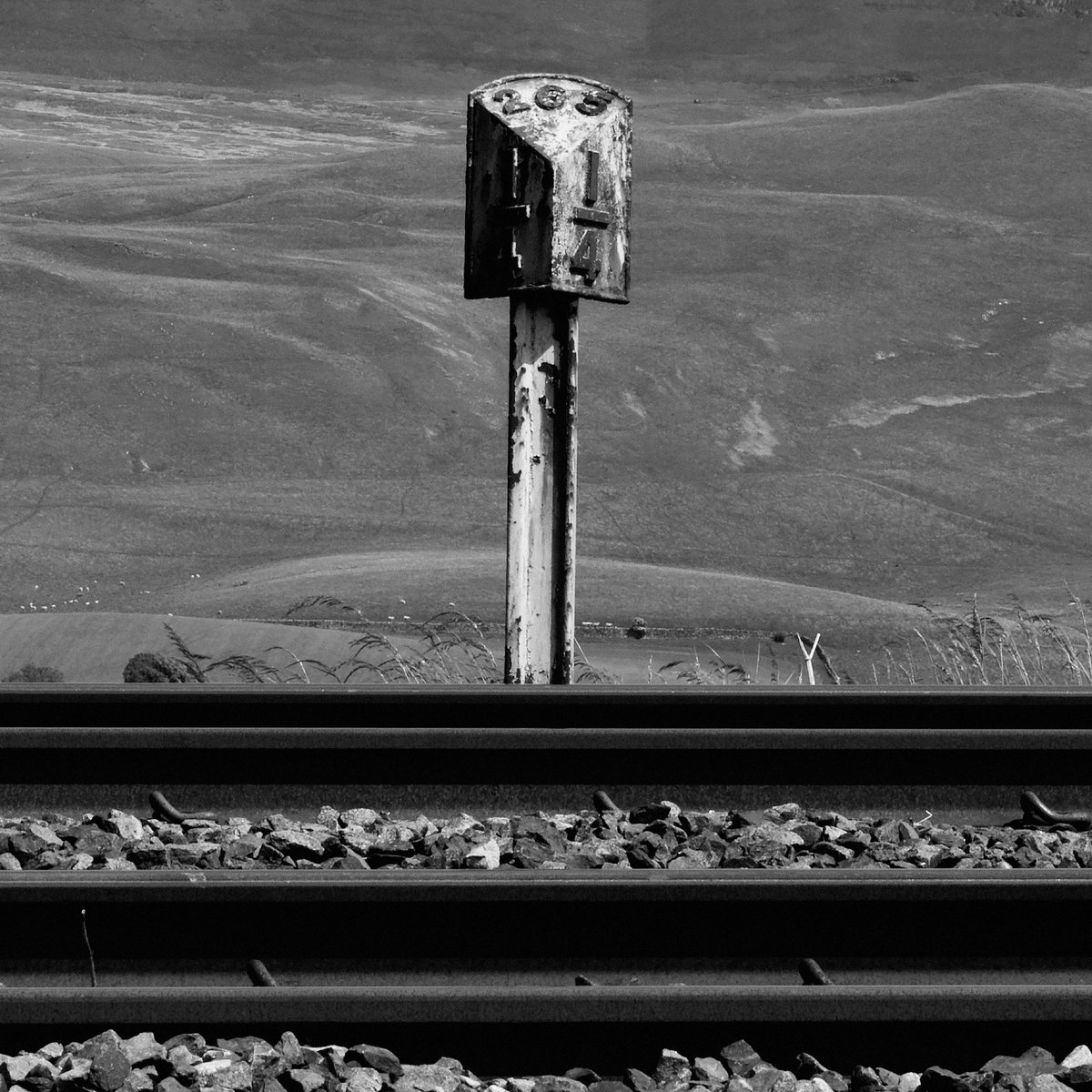
We walk northeast in search of a distance marker. When it first comes into view, it looks similar to where we commenced our journey on ‘Bounds.’ The open moorland gives it away. This particular trip will take considerably longer, by foot and packhorse, before the land and power is redistributed by order of parliament. Just shy of fifteen minutes between 1952 and 1964 – from J&M Studio, New Orleans to the San Francisco Tape Music Centre. Rapid progress and consistently fertile ground.
As the sun rises, we make our way by road to a junction. There is a livestock market and an inn for travellers. It’s important to make the journey before the seasons change and this area becomes inaccessible. An idea almost lost in the mists of time – a West German prototype unearthed twelve years later. A little way due south, we arrive at another crossroads. We find a maestro labouring over his masterwork – Gold Star Studios, United Western Recorders, Columbia Studios and Capitol Studios. October 3rd, 1966 to November 20th, 1968. Inspired by the story of another community building the railways. The circle is complete and encompasses continents.
We continue south, hitching a ride on a finely turned-out cart. We help to unload the churns onto the platform and wait for the train to arrive. Our cargo will head east before switching tracks to be delivered into urban areas. Hundreds of thousands of gallons per year. The Black Ark, 1977.
From there we head north and west a little way and find ourselves near to where we began. Another temporary settlement built up along the line, where each chord occupies its own space. Wally Heider in 1967 and finished off at home a year later. Spikes driven into the frozen ground and the Kirkstall Forge hammer in the dead of night. Finding order in the chaos.
We strike a deal with the local farm and walk a thousand heads of cattle to market. The ground is heavy and it’s slow going – it will take the best part of a week. We stop to graze at Suma Recording Studio, 1978 and then Sunwest, 1969. We reach the end of our journey via a final rest stop – an enclosed field on the moor we hovered over on ‘Standers.’ 1858. An outgrown coda and proof that two chords will suffice. Three is a luxury. A radio enthusiast intercepts government secrets – Cargo Studios, 1980.
What’s the music like?
Once again, the music matches the story – and Sidings unfolds in subtle yet compelling form, finding a meditative sweet spot on Ganger that never lets up, with shimmering figures in the half-light above a supportive, broadly phrased drone.
The start of Stoneyman is initially like the summons of a bell, above a drum with an ominous tread, while Three Loaning End slows the tempo, with an oddly persuasive lilt. Incline is scattered with melodic fragments that have the quality of settling snow, again over the reassurance of a supportive bass drone. Far Closes, meanwhile, operates with a steadying kick drum pulse beneath subtly shifting figures.
Does it all work?
It does. This is an album to get thoroughly engrossed in, rewarding its listeners with vivid and captivating imagery.
Is it recommended?
Very much so. Craven Faults’ music is distinctive and forward looking, yet extremely conscious of its recent past. The blend is both fascinating and rewarding, becoming a form of 21st century English electronica with an uncanny awareness of its surroundings.
Listen / Buy
Published post no.2,776 – Friday 23 January 2026
 Arcana.fm