…this time from Tchaikovsky. Here is his Serenade for Strings in C major, performed by the Norwegian Chamber Orchestra, conducted by Terje Tønnesen:
Published post no.2,190 – Sunday 26 May 2024


…this time from Tchaikovsky. Here is his Serenade for Strings in C major, performed by the Norwegian Chamber Orchestra, conducted by Terje Tønnesen:
Published post no.2,190 – Sunday 26 May 2024

by Ben Hogwood
What’s the story?
Brooklyn artist Yaya Bey returns with a new album for Big Dada, her response to a difficult year in which her father died. Grief can often act as a powerful stimulus within music, and Bey has responded with a candid document, her lyrics channelled through a wide scope of musical forms.
What’s the music like?
Bey is a captivating vocal presence, and Ten Fold is a meaningful and ultimately positive response to those life events. She has clearly been through the wringer but is not afraid to face her feelings head on, copying the listener in on her experiences.
Her father, Ayub Bey – also known as Grand Daddy I.U., pops up at regular intervals with snippets and samples, and there is an underlying positive mood. Her versatility means the music travels through smoky soul, intimate house / garage hybrids, and off kilter funk, as in all around los angeles, which is brilliantly sung. crying through my teeth and me and all my niggas present a frank assessment of her feelings, while the final let go is a fitting culmination.
Does it all work?
It does – Yaya Bey pulls the listener in, converses directly and has you rooting for her long before the end.
Is it recommended?
Very much so – a captivating vocal presence showing how music can be the best possible medicine when dealing with the loss of a loved one. Anyone who has experienced that difficult time will find much to enjoy and relate to here – while musically it is a triumph.
For fans of… Erykah Badu, Ty, Sampa The Great
Listen and Buy
Published post no.2,189 – Saturday 25 May 2024
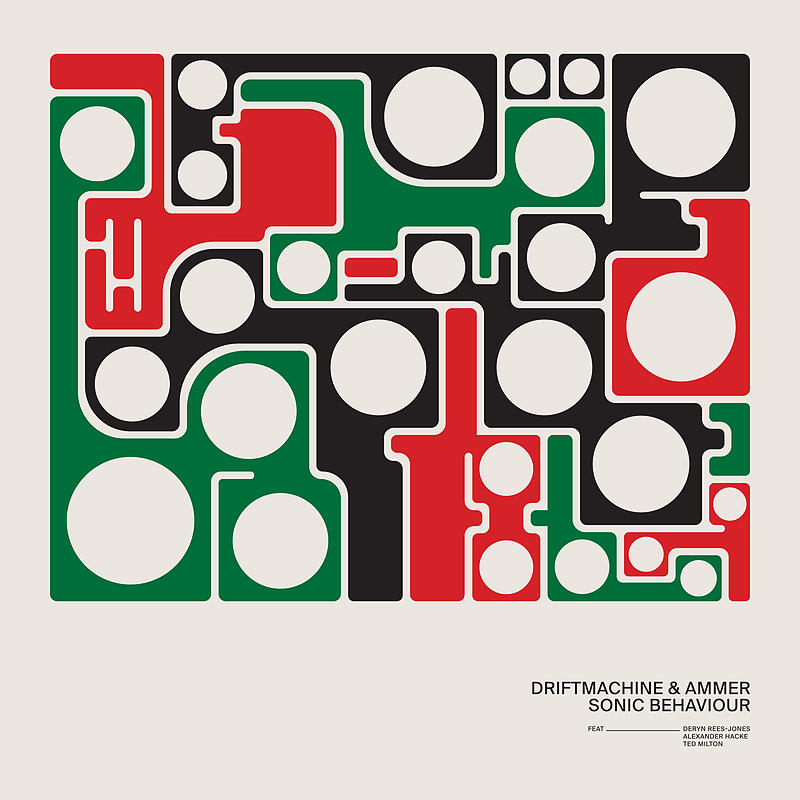
by Ben Hogwood
What’s the story?
Driftmachine (Andreas Gerth and Florian Zimmer) are pushing the sonic boundaries with this new four-track album.
On it they explore ‘the origins of sound, noise, and various music genres’ – and as the press release writes, “alongside lyrical declarations of love for noise (Song To Noise), the album delves into sonic reflections on how beauty and emotion emerge from mundane vibrations in the air (The Siren Is A Simple Device). For the first time, the analogue sound researchers of Driftmachine incorporate spoken language and noise into their sound research. They have collaborated with word and sound artist Andreas Ammer, renowned for his radio plays with Acid Pauli, aka Console (Spaceman 85), or FM Einheit (Radio Inferno, Symphony of Sirens).
What’s the music like?
This is a remarkable, thought-provoking quartet of tracks that ask questions of the listener, but do so through music of great intensity and drama, creating a rarefied atmosphere.
Much of this is down to the spoken word material as much as the music. The Siren Is A Simple Device is a particularly captivating piece of work, the story told by the sonorous tones of 81-year-old Ted Milton, and we hang onto his every word. At times it is genuinely alarming with its sonic range, the build up of percussion taking us through a series of Latin musical influences. Milton also contributes to Sonic Sculpture, a sprawling but gripping piece exploring the sonic effect of a piano falling down the stairs, building in such a way that the listener can barely wait for the final denouement.
Song To Noise, meanwhile, is equal parts dub and drone, with birdsong around the edges, a minimal but powerful outlook in both its guises.
Does it all work?
It does. Experimental and thought provoking, this is music leaving as many questions as it does answers.
Is it recommended?
Enthusiastically. This is music going back to first principles, hard to categorise but holding the listener in its grasp as it challenges a number of sonic frontiers. I would go as far as to say it is essential listening for any electronic music follower.
Listen & Buy
Published post no.2,188 – Friday 24 May 2024
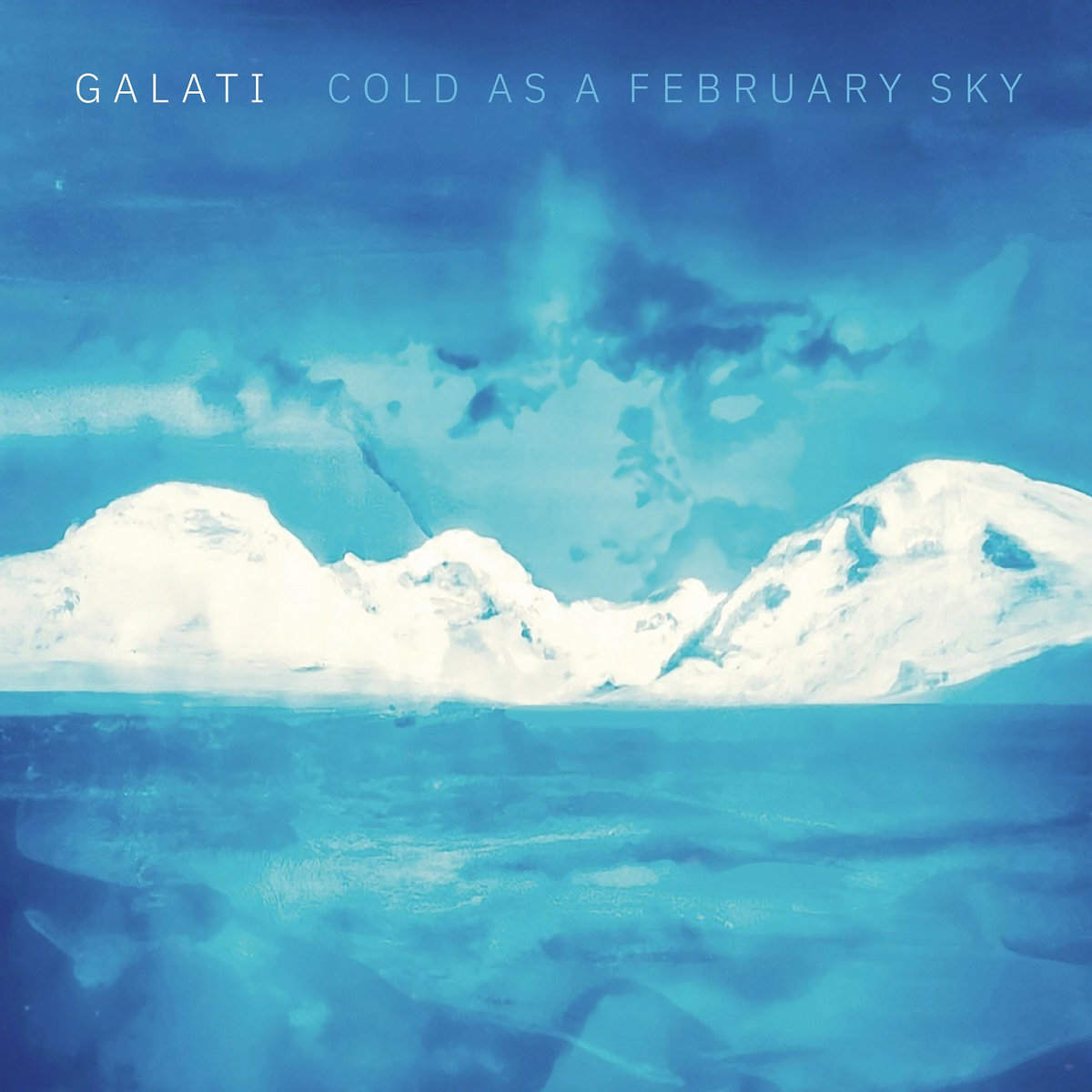
by Ben Hogwood
What’s the story?
Galati is the moniker by which Roberto Galati is best known. The Italian producer has completed his first long player for the Glacial Movements label, writing in the shadow of the Karst Plateau in a blend of cold ambient music and a warmer post-rock.
What’s the music like?
Evocative – and certainly representing the album title. Many of Galati’s pieces are built on slowly shifting loops, with bright textures and fresh scoring.
Galati makes good use of the guitar early on, especially on As still as these high mountains.
After that, the music clouds over, and uncertainty and jeopardy are in play. That day exploded silently all around me is a dramatic about turn, its harmonies uncertain and the textures glowering in the half light. These are partially resolved on the following track, With wide, unbelieving eyes, with subtly wrought drama. After that the intensity subsides a little, though there are still vivid images that remain. Gradually the music comes to rest.
Does it all work?
It does. This is a dramatic album, best heard in one sweep so that the musical statements get to make their most powerful impact.
Is it recommended?
It is. This is a bold and lasting statement from a producer whose grasp of short and long structures is right on the money.
Listen & Buy
Published post no.2,187 – Thursday 23 May 2024

Mark Bebbington (piano, below), Czech National Symphony Orchestra / Steven Mercurio
Delius The Walk to the Paradise Garden (1906)
Beethoven Piano Concerto no.5 in E flat Op.73 ‘Emperor’ (1809)
Smetana Má vlast – Vltava (1874)
Dvořák Symphony no.8 in G major Op.88 (1889)
Symphony Hall, Birmingham
Tuesday 21 May 2024
Reviewed by Richard Whitehouse
Although it might not see the number of visiting orchestras that it once did, Symphony Hall still hosts a number of such concerts and the season’s representation ended tonight with this welcome appearance by the Czech National Symphony Orchestra and music director Steven Mercurio.
Opening with Delius’ The Walk to the Paradise Garden (from his opera A Village Romeo and Juliet) found these players evincing real affinity with its powerful if elusive idiom, Mercurio securing a poetic response from the woodwind and no mean ardour during its climactic stages.

Despite coming from and being based in or around Birmingham for most of his career, Mark Bebbington (above) is less known locally than he might be and his account of Beethoven’s Emperor Concerto confirmed a sure grasp of its expansive formal structure, with his secure and never inflexible technique more than equal to its pianistic demands. After those commanding initial exchanges, the initial Allegro felt just a little under-characterized until hitting its stride in the development; from where this reading proceeded with tangible conviction through to an agile ‘anti-cadenza’ then combative coda. The Adagio’s winsome variations could have had greater inner rapture, yet the eloquence of Bebbington’s response was not in doubt while the hushed transition into the Rondo produced an emotional frisson as carried through this finale overall.
Throughout the movement, Bebbington’s scintillating pianism duly galvanized the CNSO into a forthright response right up to the life-affirming close – after which, he acknowledged the enthusiastic applause with his limpid take on Chopin’s Nocturne (no.20) in C sharp minor.
Following the interval, Czech music not unreasonably took centre-stage. The players might have been surprised by reference to the ‘Moldau’, but Mercurio directed a fluent Vltava with such passages as its wedding dance or traversal of St John’s Rapids nothing if not evocative.
Having been at the helm of the CNSO since March 2019 (in succession to the much-missed Libor Pešek), Mercurio has certainly put his own stamp on its repertoire and presentation. He gave an account of Dvořák’s Eighth Symphony (sometimes referred to as the ‘English’ due to being published by Novello, but actually the most Czech-sounding of his mature symphonies) that, if affording few revelations, underlined its structural innovations as surely as its melodic immediacy. The opening Allegro made a virtue out of eliding the customary formal divisions on route to a resounding peroration, then the Adagio was even finer for the way that its pathos and grandeur were melded into a seamless and methodical yet cumulative design; one where the composer’s Romantic instincts and his Classical inclinations find especially potent accord.
The lilting Allegretto sees Dvořák at its most felicitous – Mercurio aptly taking its boisterous pay-off as a lead-in to the final Allegro, with its variations on an easeful theme for the strings that ingeniously shadow the outline of a sonata design prior to a coda of headlong brilliance.
Conductor and orchestra duly responded with two encores – a rhythmically incisive piece by Iranian-Canadian composer Iman Habibi, then a bossa nova as gave first trumpet and CSNO co-founder Jan Hasenöhrl the spotlight and brought the whole evening gently down to earth.
Click on the names to read more about the Czech National Symphony Orchestra, conductor Steven Mercurio, pianist Mark Bebbington and composer / pianist Iman Habibi
Published post no.2,186 – Wednesday 22 May 2024
 Arcana.fm