Unknown's avatar

About Arcana

My name is Ben Hogwood, editor of the Arcana music site (arcana.fm)

On Record – Solarek Piano Trio – Henriëtte Bosmans: Early Chamber Music (Toccata Classics)

Solarek Piano Trio [Marina Solarek (violin), Miriam Lowbury (cello), Andrew Bottrill (piano)

Henriëtte Bosmans
Arietta (1917)
Violin Sonata (1918)
Piano Trio (1921)

Toccata Classics TOCC0654 [55’22’’]
Producer Ian Dean Engineers Bárbara Santos & Carlos Jesús
Recorded 6-7 April 2022 at Arda Studio A, Porto

Reviewed by Richard Whitehouse

What’s the story?

Toccata Classics continues its exploration of neglected and overlooked figures with a release of early pieces for chamber forces by Henriëtte Bosmans (1895-1952), Dutch composer and pianist whose eventful life drew attention away from her substantial and distinctive output.

What’s the music like?

Although her later music has latterly enjoyed performance and recording, that from Bosman’s formative years has had little exposure, making the pieces recorded here the more welcome – not least for underlining that her journey toward compositional maturity was a successful one.

The Violin Sonata is certainly a statement of intent. Its first of four movements is a substantial sonata design, the impulsive then ruminative main themes duly repeated prior to an extensive development (the transition into which derives from this latter theme rather than being a new idea as such); one whose understated resourcefulness continues throughout an altered reprise then suddenly decisive coda. The other movements (shorter even when combined) comprise a tensile and agitated scherzo, its absence of any trio section making contrast with the ethereal ‘song without words’ of the Adagio the more potent, then a finale that fails less by recycling themes previously encountered as by being too emotionally temperate to round off the whole with quite the resolution needed. This is an appealing and frequently prophetic piece, even so.

A few years later and the Piano Trio finds such promise being amply met. The initial Allegro maintains unflagging impetus that is by no means offset in the second theme, with its sultrily modal colouring, and abetted by the cello’s playing for much of the time in its higher register. After this, the central Andante ably fulfils its role within the overall scheme – the undulating moodiness of its main theme twice contrasted with livelier music, before finding repose at its bittersweet last hearing. It thus remains for the finale, prefaced by a cadenza-like passage, to restore the earlier energy with a dance-like theme which draws an almost orchestral sonority from the three instruments. A secondary idea elaborates on the material of that introduction, while the main theme returns to see this work through to its conclusion with some abandon.

Between these works comes the brief but enticing Ariëtta which is of interest for inhabiting the lower reaches of the violin’s compass (thereby making performances on viola the more common), and which adds to the solemn if not unduly earnest aura of its expressive profile.

Does it all work?

Not entirely, though such failings as there are constitute part of the interest here and the Piano Trio is evidently a minor masterpiece. Performances by the members of the Solarek Trio are never less than sympathetic, but would have benefited from a more sympathetic ambience, as that here has a narrow perspective such as robs them of any subtlety or finesse (those having spent numerous evenings at the British Music Information Centre in London will know what to expect). What is never in doubt is the dedication or the commitment of this music-making.

Is it recommended?

Yes, with reservations as outlined above. The two main works now have rival recordings by the Brundibar Ensemble (Fineline Classics FL72416) but this Toccata release is not thereby outclassed, while its annotations from violinist Marina Solarek are succinct and informative.

Listen & Buy

You can listen to sample tracks and purchase on the Toccata Classics website. Click on the names for more on the Solarek Piano Trio, and on composer Henriëtte Bosmans

Published post no.2,165 – Wednesday 1 May 2024

On Record – George Lloyd: A Litany & A Symphonic Mass (Lyrita)

George Lloyd
A Symphonic Mass (1990-92)
Brighton Festival Chorus, Bournemouth Symphony Orchestra, Philharmonia Orchestra / George Lloyd
A Litany (1994-5)
Janice Watson (soprano), Jeremy White (baritone), Guildford Choral Society, Philharmonia Orchestra / George Lloyd

Lyrita SRCD.2419 [two discs, 60’44” and 49’30”] Latin and English texts included

Producers Ben Turner (A Symphonic Mass), Christopher James (A Litany)
Engineers Harold Barnes, Alan Mosely (A Symphonic Mass), Tony Faulkner (A Litany)

Recorded 19 & 20 June 1993 at Guildhall, Southampton (A Symphonic Mass), 24 & 25 March 1996 at Town Hall, Watford

George Lloyd
Requiem (1997-8)
Psalm 130 (1995)

Stephen Wallace (countertenor), Jeffrey Makinson (organ), Exon Singers / Matthew Owens

Lyrita SRCD.420 [63’22”] Latin and English texts included

Producer Ben Turner Engineer Harold Barnes

Recorded 31 August – 2 September 2000 at Church of St Alban the Martyr, Holborn, London

Reviewed by Richard Whitehouse

What’s the story?

Lyrita continues its reissue schedule of George Lloyd-related recordings for the Albany label – the ‘Signature Edition’ – with those three late choral works which, between them, constitute a worthy culmination to a composing career with few parallels in the annals of British music.

What’s the music like?

While three operas and twelve symphonies are the backbone of Lloyd’s output, choral music came to the fore during his final decade. Few would have demurred had the composer called A Symphonic Mass his ‘Thirteenth Symphony’, given its formal cohesion and harnessing of its liturgical text to a structure in which thematic consistency and cumulative momentum are uppermost. Hence the opposing conflict and consolation in the Kyrie anticipates a struggle reflected, in the Gloria, by the music’s juxtaposing of fervent outbursts with a luminous and otherworldly calm. The Credo becomes an extended development of motifs and expression, informed by an acute relating of textual imagery to musical content – its strenuousness offset by a brief if potent orchestral interlude that is the Offertorium. The piece climaxes with the Sanctus and Benedictus, its rapt intensity heightened by the blazing affirmation at Osanna; after which, the Agnus Dei passes through doubt and apprehension before achieving a new-found though hard-won serenity at Dona nobis pacem. Certainly, a Mass of its time and ours.

Three years on, and A Litany is less inclusive but equally involving – even with Lloyd’s aim of composing a ‘repertoire’ piece likely undermined by the size of its orchestral forces or the demands of its vocal writing. Its words are the first 12 (out of 28) verses from John Donne’s eponymous poem, as set by Lloyd from a spiritual yet non-specifically religious standpoint. Despite being in four movements, this is not an overtly symphonic conception – though the formal follow-through is nothing if not cohesive in its relating of music to text. The opening Allegro Dramatico pursues its respectively passionate then sombre traversal of the first two verses, the ensuing Allegro being akin to an extended intermezzo in its setting the third and fourth verses with a deft yet often oblique eloquence. The brief Adagio focusses on the fifth verse in an intimate acapella setting, then the final Vivace sets the sixth to twelfth verses as   a cumulative sequence in which passing anxiety is gradually overcome; the music accruing the energy needed to hit the ground running for what becomes a decidedly affirmative close.

Written in the months before his death, with a dedication to the memory of Diana, Princess of Wales, the Requiem is an understated if characteristic swansong with, at almost 55 minutes, a scale comparable to those earlier works. This follows the expected liturgical text with just a few pointed modifications (no Libera me at the end), its 16 designated sections falling into three main parts. Requiem and Kyrie sets the reflective if by no means unvaried tone of the whole and highlights the role of the countertenor – occupying the lower end of its compass so that it becomes the subdued complement to choral writing notable for its textural clarity and inwardness. The Dies irae sequence (itself in two halves) has a notably perky Tuba mirum and songful Rex tremendae, while the Lacrimosa seems consoling rather than elegiac. The third part takes in a whimsical Hostias, brief but vibrant Sanctus, elegant and supplicatory Agnus Dei, then a Lux aeterna as sees the whole work through to its close with the voices gradually receding in gently undulating chords for what is a serene yet poignant valediction.

Three years earlier, Lloyd had composed two pieces for unaccompanied choir – of which his setting of Psalm 130 (Out of the depths) is notable for its often circumspect while never aloof manner, the emergence of a soprano in the later stages pointing up its mood of tentative hope.

Does it all work?

Yes, and not least owing to the persuasiveness of recordings made soon after their respective premieres. Lloyd secures a dedicated response in the Mass from the Brighton Festival Chorus (under the redoubtable László Heltay) and Bournemouth Symphony Orchestra while, in the Litany, the Guildford Choral Society (for whom it was written) and Philharmonia Orchestra are no less committed. In the latter piece Janice Watson gives a thrilling contribution, but Jeremy White is not wholly at ease for all his warm nobility. As for the Requiem, the Exon Singers sound tonally assured and Stephen Wallace copes ably with his distinctively conceived role, while Jeffrey Makinson applies a light touch to organ writing as evinces a continuo-like dexterity, though it might yet be worth transcribing this part for woodwind and brass so as to open-out its expressive ambit.

Is it recommended?

Indeed, not least as these reissues come with full texts and detailed notes from Paul Conway. Inherently unoriginal while unequivocally sincere, Lloyd’s late choral works are far removed from the facile disingenuity of much current choral music and are the more appealing for this.

Listen & Buy

For further information visit the dedicated George Lloyd page at the Nimbus website

Published post no.2,164 – Tuesday 30 April 2024

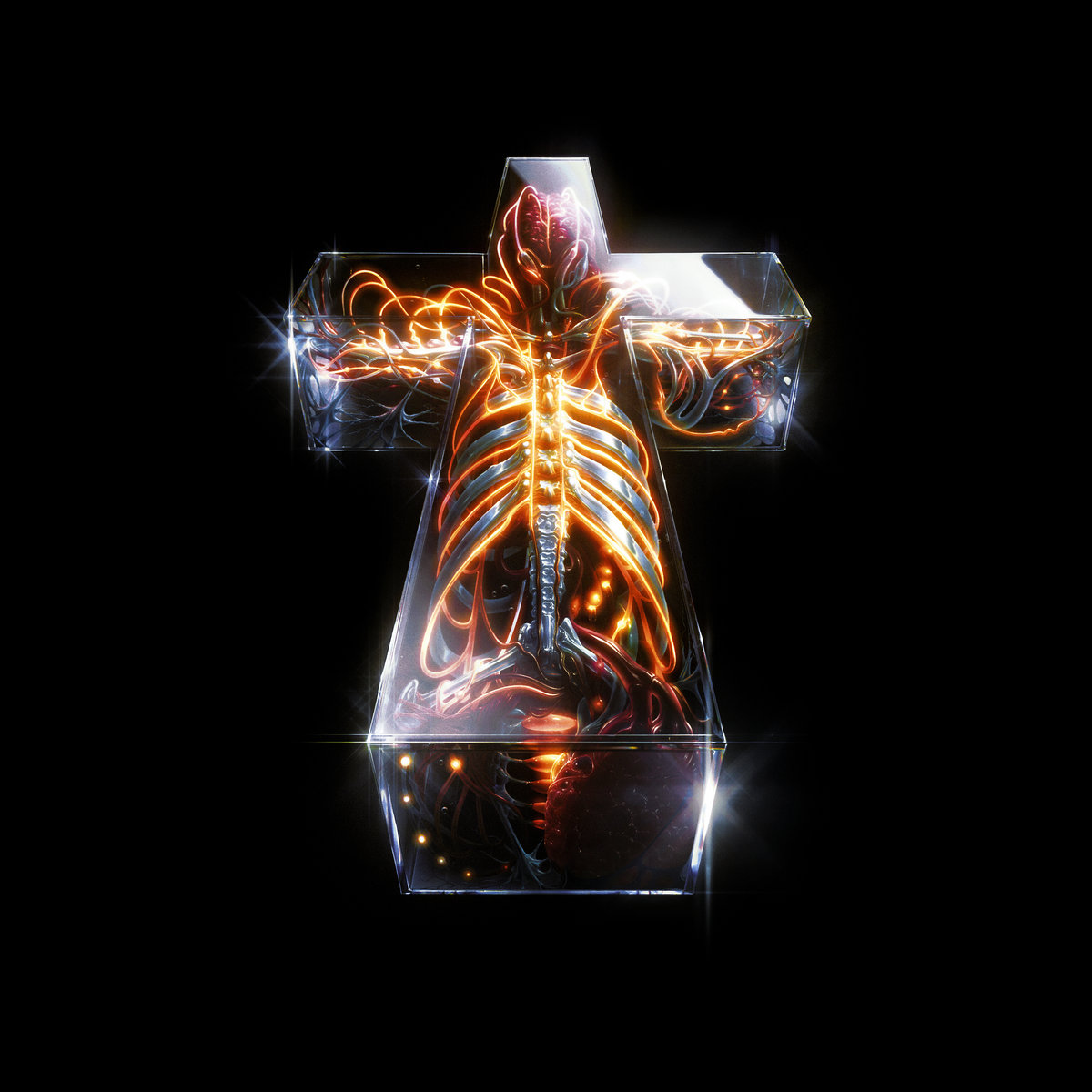
Let’s Dance – Justice: Hyperdrama (Ed Banger / Because)

by Ben Hogwood

What’s the story?

With the dissolution of Daft Punk, Justice are now one of the mainstays of French dance music, flying the flag with their fourth album.

Hyperdrama is their first long player in seven years, but they spent a lot of time recording, enlisting guest vocalists such as Tame Impala‘s Kevin Parker, Thundercat and Connan Mockasin – but also making good chemistry with new talent RIMON and Miguel.

What’s the music like?

The music for Hyperdrama may not be a massive departure from what Justice do best, but that is surely good news for those who love them. The album is well thought out, starting off with a high from the likes of Generator, which is contrasted nicely with the two Kevin Parker tracks, and Incognito, which works the room well.

Then it all changes around half way through, the tempo slowing and the saxophone emerging for the cheesy but enjoyable Moonlight Rendez-Vous, a slow track that nonetheless works a treat as a poolside chillout tune.

Then, gradually, the energy returns – with Saturnine and The End.

Does it all work?

Pretty much – the only reservation being that Justice may have used a bit too much studio gloss in the final production process.

Is it recommended?

It is. Hyperdrama may be a bit more polished than previous work bit it still presses all the right buttons!

Listen & Buy

Published post no.2,163 – Monday 29 April 2024

Switched On – Adam Wiltzie: Eleven Fugues For Sodium Pentothal (Kranky)

by Ben Hogwood

What’s the story?

This is an eagerly awaited solo album from Adam Wiltzie, once part of acclaimed duo Stars Of The Lid with the much-missed Brian McBride.

For this album, he looks to anaesthetic drugs for inspiration, recreating in a musical sense the feeling of induced sleep, where cares are parked and the brain is slowed.

Aiding him with production is Loop‘s Robert Hampson.

What’s the music like?

Some ambient music immediately makes you go “Aaah…”…and that is definitely the case with Adam Wiltzie, who sets out on a serene journey with these pieces.

They may not be fugues in the musical sense, but there is a sense of precision, a stately profile where each note carries equal importance.

The evocatively titled Buried At Westwood Memorial Park, In An Unmarked Grave, To The Left Of Walter Matthau, runs in two slow parts, its supporting ambience soft in focus but not in content.

Robert Hampson’s production supports Stock Horror, where a sonorous drone underpins an elegant chord progression. Dim Hopes adds bell-like chimes up top, while the drone takes on a new dimension in the deep, rumbling bass of Mexican Helium. A similar power can be felt in the broad scope of As Above Perhaps So Below.

Does it all work?

It does, especially if the album is experienced as a single musical canvas.

Is it recommended?

Without hesitation. It is reassuring indeed to have this release from Wiltzie, whose poise and stature in modern ambient music will only be enhanced by this special album.

Listen & Buy

Published post no.2,162 – Sunday 27 April 2024

In concert – James Ehnes, CBSO / Markus Stenz: Schumann Violin Concerto & Bruckner Symphony no.7

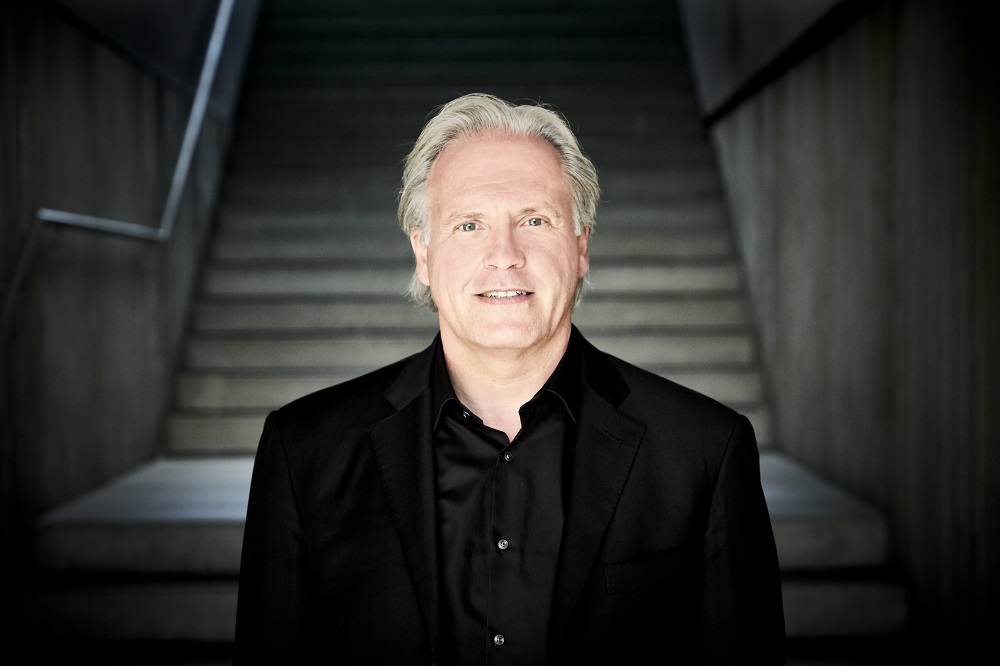
James Ehnes (violin, above), City of Birmingham Symphony Orchestra / Markus Stenz (below)

Schumann Violin Concerto in D minor WoO23 (1853)
Bruckner Symphony no.7 in E major WAB107 (1881-83, ed. Nowak)

Symphony Hall, Birmingham
Thursday 25 April 2024

Reviewed by Richard Whitehouse Picture of James Ehnes (c) Benjamin Ealovega, Markus Stenz (c) Kaupo Kikkas

His appearance here for performances of Mahler’s Second Symphony two years ago had made one hope that Markus Stenz might soon be invited back to the City of Birmingham Symphony Orchestra – such being so tonight for this outstanding programme of Schumann and Bruckner.

Although it now enjoys frequent hearing, Schumann’s Violin Concerto yet remains under the shadow of its eight-decade limbo after the composer’s mental breakdown then decision by its intended soloist Joseph Joachim to withhold performance. Only in 1937 was it given in public, since when it has gradually come to be regarded (as Yehudi Menuhin believed it would be) as the missing link between Beethoven and Brahms. Certainly, there was nothing tentative about James Ehnes’ advocacy, which proved as interpretively acute as it was technically immaculate.

Pacing the initial movement so that its earnest character never becomes unduly sombre is not easy, but Ehnes ensured its halting progress never felt effortful and Stenz drew textures of no mean luminosity from these modest forces. The slow movement seemed more eloquent for its listless pathos, with its terse transition into the finale astutely judged. Its underlying polonaise rhythm deftly inflected, this rather gauche rondo yielded an easy-going momentum in the call and response between soloist and orchestra, through to a conclusion both genial and resolute.

A memorable performance which reinforced Ehnes as among the most consistent (as well as undemonstrative) of present-day virtuosi – something that was no less evident in his account of the Third Sonata (‘Ballade’) by Eugène Ysaÿe which here made for a scintillating encore.

The UK has seen little of Stenz since his tenure with the London Sinfonietta during the mid-1990s, a pity given he has few peers among conductors of his generation in terms of Austro-German repertoire. Such was borne out by Bruckner’s Seventh Symphony – Classical in its lucidity of motion, Romantic in its frequently impulsive emotion. Not least an initial Allegro moderato that elided between its contrasting themes with unforced rightness, the abruptness of certain tempo changes (accentuated by his rare recourse these days to the Nowak edition) channelled into a coda of surging sublimity. Even finer was the Adagio for the inevitability with which this drew respectively elegiac and lyrical themes into a sustained traversal, via an exultant peroration (cymbal and triangle duly outdone by timpani), to a nobly resigned close.

The latter two movements can easily seem anti-climactic, but there was nothing understated about the Scherzo as Stenz heard this – the impetus and acerbity of its outer sections finding accord with a trio whose lilting poise was delectably pointed. As for the Finale, most succinct of Bruckner’s maturity, Stenz emphasized its expressive contrast between themes through his choice of tempi – while managing to mould these into a convincing unity before heading into a coda which revisits that of the first movement with blazing affirmation in the here and now.

The performance would not have made the impact it did without the CBSO playing at or near its best throughout – such Bruckner interpretation having few, if any, equals when it comes to live music-making. One can only hope conductor and orchestra will work together again soon.

Click on the link to read more on the current CBSO concert season, and on the names for more on violinist James Ehnes and conductor Markus Stenz

Published post no.2,161 – Saturday 26 April 2024