
Unknown's avatar

About Arcana

My name is Ben Hogwood, editor of the Arcana music site (arcana.fm)

Arcana at the opera: Hansel and Gretel @ Opera Holland Park (Young Artists Performance)

Hansel and Gretel (1893)
Opera in Three Acts – music by Engelbert Humperdinck; Libretto by Adelheid Wette
Sung in German with English surtitles. Orchestral reduction by Tony Burke

Hansel – Shakira Tsindos (mezzo-soprano), Gretel – Emily Christine Loftus (soprano), Peter – Edward Kim (baritone), Gertrud – Madeline Boreham (mezzo-soprano), The Gingerbread Witch – Ella de Jongh (mezzo-soprano), The Sandman – Claudia Haussmann (soprano), The Dew Fairy – Eleanor Broomfield (soprano)

Bence Kalo (director), Avishka Edrisinghe (repetiteur), Lily Wieland (deputy stage manager)

Opera Holland Park Chorus, Choir of Cardinal Vaughan Memorial School, City of London Sinfonia / Charlotte Corderoy

Holland Park, London
Friday 16 June 2023

review by Richard Whitehouse Photos by (c) Ali Wright

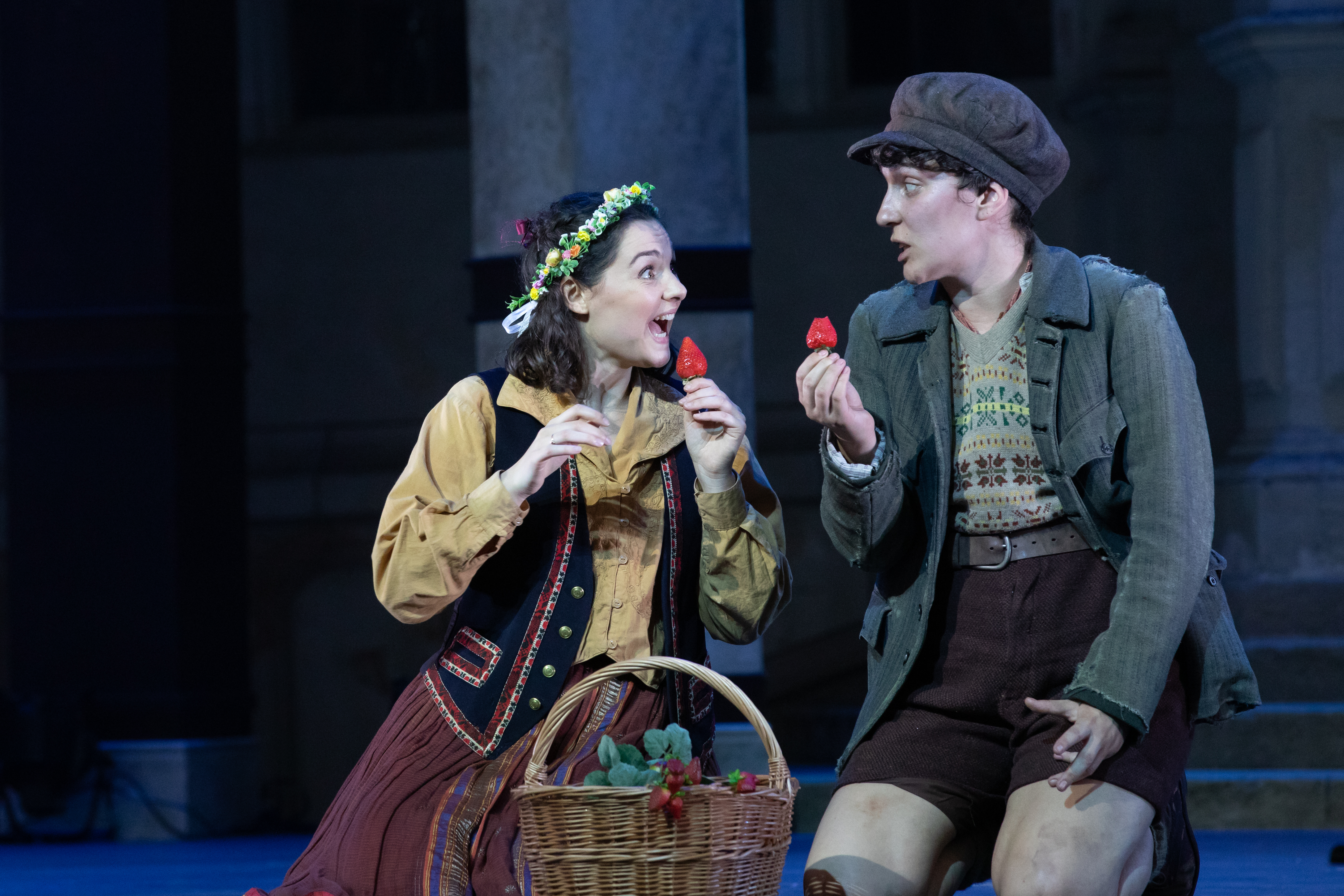
Performances by The Young Artists have been a welcome feature of Opera Holland Park this past decade – none more so than this staging of Hansel and Gretel, Humperdinck’s fairy-tale opera with its ‘rites of passage’ scenario ideally suited to singers at the outset of their careers.

An object lesson in less is more, Bence Kalo’s astute direction worked convincingly through conveying the essence of the siblings’ nocturnal journey – maybe more imagined then real, as was implied by the overture’s becoming a pantomime where a host of comedic and woodland characters assumed the spotlight. Neither was the subsequent element of danger played down, with the confrontation with the Witch taking on ominous overtones as cut across the farce and so made the latter’s demise then the freeing of her victims the more affecting in consequence.

The eponymous figures were as well matched vocally as visually. Shakira Tsindos proved a Hansel likable for all his (sic) gaucheness and gullibility – projecting the character with flair and immediacy, if marginally overdoing the slapstick in the third act. Emily Christina Loftus was a Gretel near ideal in her unforced eloquence, all the while exuding an awareness of the ‘outside world’ as made her the dramatic and musical focus during their sylvan wonderings. As an empathetic portrayal, it could hardly have been bettered technically or interpretively.

Absent throughout much of the opera, the roles of the parents are none the less crucial to its dramatic trajectory. Edward Kim was adept in channelling the warmth and guilelessness of Peter with no risk of sentimentality, making him a dependable figure whatever his failings. Madeline Boreham was forceful but never mean-spirited as Gertrud, her overt exasperation leavened by the anguish through which she lamented her family’s poverty, and recognizing the degree to which Humperdinck humanizes her character compared to the Grimm original.
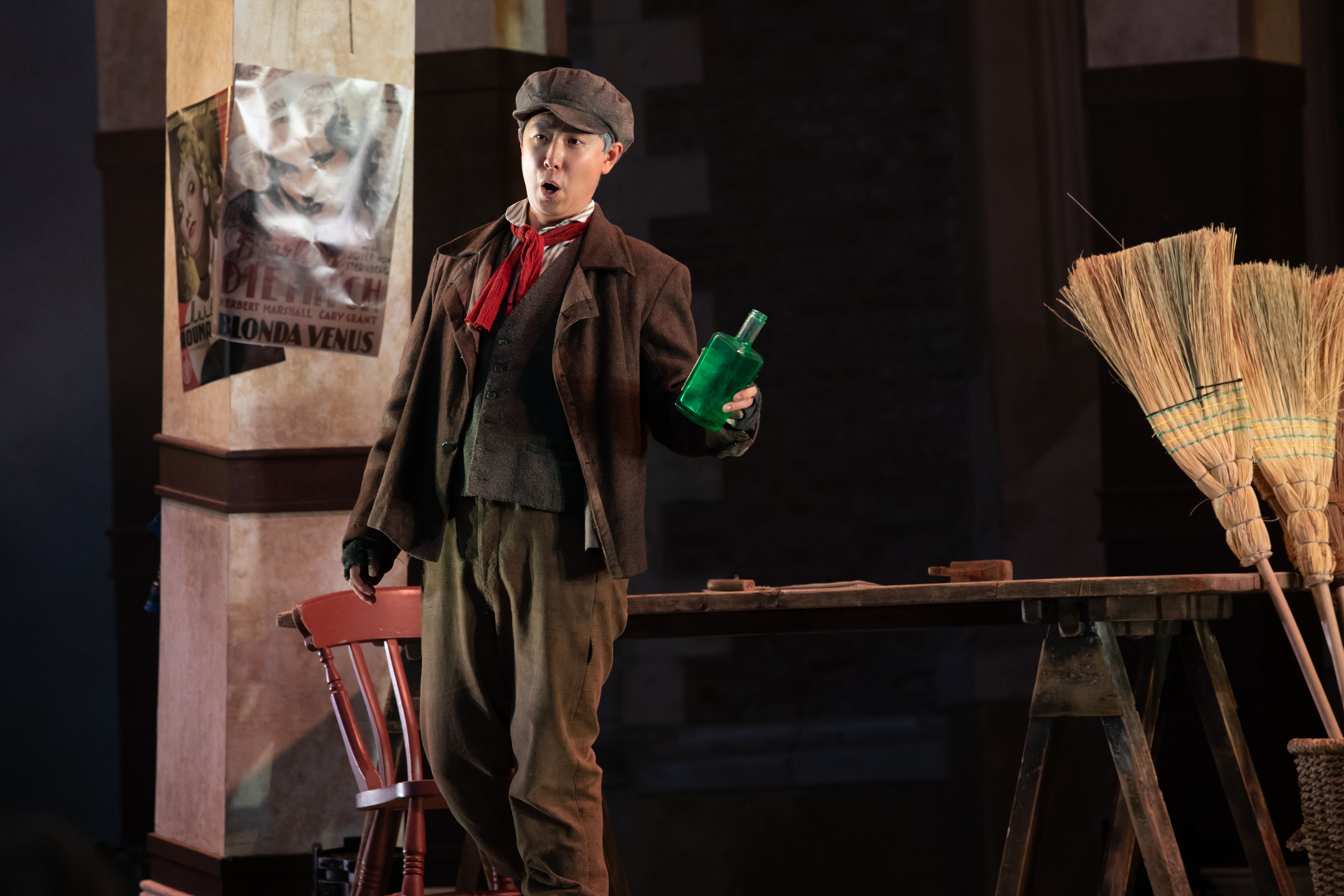
The remaining roles were ably taken – not least the Witch of Ella de Jongh, who brought off the vocal as well as scenic change from pantomime dame to small-time dictator with aplomb. Claudia Haussmann was magnetic though a little edgy in tone as the Sandman, while Eleanor Broomfield conveyed real enchantment without unnecessary whimsy as the Dew Fairy. The choral contribution had the requisite poise and finesse, not least in those evocative moments when the shades of children vanished into the witch’s domain emerged out of the tonal ether.

The orchestra (City of London Sinfonia in its familiar summer guise) was its usual dependable self, the scaled-down complement of strings not lacking for presence situated at the centre of the platform. It helped that Charlotte Corderoy (above) was so evidently attuned to this score, pacing the unfolding drama with subtlety and purpose, while drawing instrumental felicities aplenty from such as the animated prelude and magical ‘dream-pantomime’ which frame the second act. In its mingled pathos and effervescence, the closing scene provided a fitting denouement.

A victim of its own success for much of the 130 years since its premiere, Hansel and Gretel remains an opera not just for Christmas and not just for children: a work in which innocence and experience are meaningfully conjoined, as was confirmed by this admirable production.

For information on further performances, visit the Opera Holland Park website – and you can meet the OHP Young Artists here. Click on the names for more information on Bence Kalo and Charlotte Corderoy

Depeche Mode – Are People Good?

Tonight I am seeing Depeche Mode live for the first time. Excitement is building, especially given the quality of their new album Memento Mori – though we will of course miss the presence of keyboard player ‘Fletch’, who sadly passed away in May 2022.

The most recent Depeche Mode to be played on the radio has been People Are Good, a fine new single that has a ring of Kraftwerk’s Computer Love about it. It is effectively a considered update to one of the band’s best singles from 1984:

People Are Good seems to be impressing a more thoughtful approach on people…but is there a lyrical sting in its tale?

As for tonight, I will report back – firstly via a gig review for musicOMH, then a considered response for these pages.

Happy weekend!

Ben

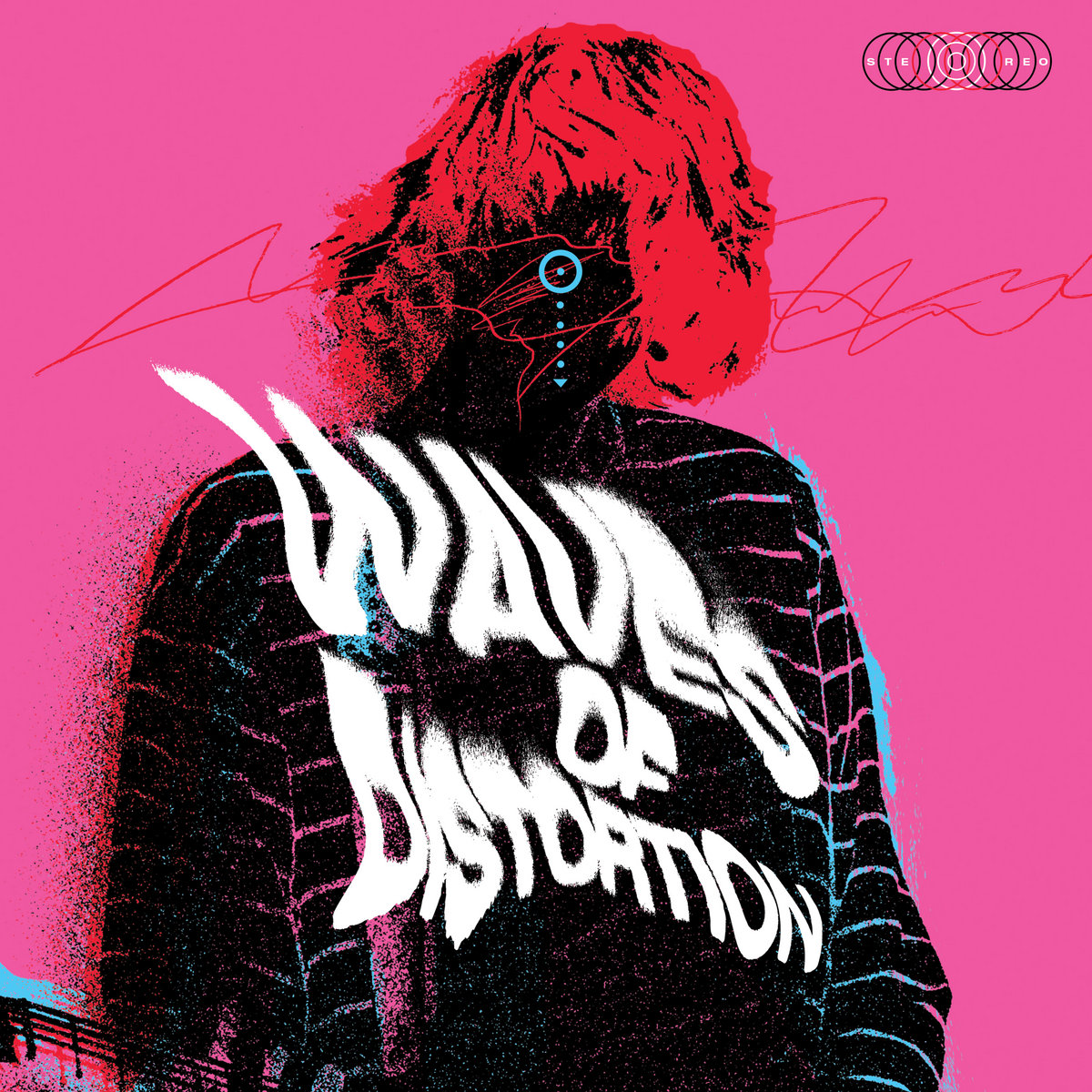
Switched On – Various Artists: Waves Of Distortion (The Best Of Shoegaze 1990-2022) (Two-Piers)

by Ben Hogwood

What’s the story?

Shoegaze was initially a derogatory term, despite its way of describing an area of music where bands tended to look down at their effects pedals during gigs. Now it stands for something far more positive, the celebration of a movement in music now into its fourth decade.

Waves Of Distortion is a compendium of the biggest bands around in shoegaze, but also finds room to celebrate little-known entities, its aim to take the listener down a rabbit hole. It does so across 26 tracks.

What’s the music like?

Rather wonderful. This is an extremely well-chosen sequence of music moving from shoegaze royalty to an examination of more deserving acts. The quality never dips,

The lush textures of Slowdive’s Slomo are first up, celebrating the return of the band in 2017, a key moment in the shoegaze timeline. There is a weightless serenity about their music but also a latent power, beautifully harnessed here.

A strong 1-2-3 is completed by Chapterhouse and Ride, Pearl and Vapour Trail respectively – two tracks from the 1990 origins. Also from that year is Lush’s Sweetness And Light, a beauty enhanced by Miki Berenyi’s angelic tones. How good it is, too, to be reminded of Kitchens Of Distinction, with The 3rd Time We Opened The Capsule.

The excellent notes from Nathaniel Cramp, who runs the Sonic Cathedral label, put the bands in their appropriate context, and explain the welcome inclusion of a number of international bands. Beach House, in particular, deserve their place with the glittering Lazuli, while Robin Guthrie’s starry-eyed version of Echo Ladies’ Overrated is a treat. More modern inclusions such as The Daysleepers’ richly-voiced Food In Heaven work really well, backed up by Flyying Colours’ Long Holiday, which is both tuneful and loosely funky. bdrmm’s A Reason To Celebrate is a welcome blast of sound, too. Sometimes the music is less song-based and more a description of a weather form, with Air Formation’s Daylight Storms a thrilling case in point.

Does it all work?

It does, ticking all the compilation boxes of summing up the best of shoegaze while giving the listener a jumping off point for a number of new discoveries. Repeat listening only adds to the appeal.

Is it recommended?

Very much so. As a starter kit for the shoegaze movement, Waves Of Distortion is highly recommended – but even for the seasoned listener there is plenty to recommend it. Excellent complementary artwork, too!

Listen

Buy

You can explore purchase options at the Piccadilly Records website

Switched On – Black Light Smoke: Ghosts (Scissor and Thread)

by Ben Hogwood

What’s the story?

Black Light Smoke is the front under which Chicago-born Jordan Lieb makes his music. Currently resident in New York, Lieb has house and techno heritage on his doorstep – and pours it into his debut album.

The album draws on 30 years’ worth of dance music in a search for the real meaning of house music. As it does so it brings in elements of rave, house and soul – and forming them into a structure with strong parallels to a DJ mix.

In a deeper meaning, Ghosts also stands for facing the shadows of the past in order to be able to move forward.

What’s the music like?

This is a cracking dance music album. Jordan Lieb is a talented producer, but he doesn’t have to try too hard to show it – the craft of making a strong album akin to a DJ set comes to him instinctively.

We have an atmospheric, deep opener as Sprinkles Says casts an evocative nocturnal atmosphere, and then a thoughtful, voice-led track in the shape of 727 Anthem (House Is Black), which sets out the stall for an album that works as well for the head as it does for the dancing feet. This is an old-style house track seen through younger eyes, and it’s a strong combination.

Then comes one of two excellent vocal tracks featuring Léah Lazonick. Hearts Not Broken is slightly eerie, the spoken word vocal in the verse cutting to a distant harmony for the chorus. Later on, Ghosts itself has smoky, wispy outlines.

Elsewhere, Lieb gets down to business. Pleasure Chaser, The Beat Direct and Out From Within are the sort of deep house tracks we might have expected from the likes of Kevin Yost in the late 1990s, though Lieb creates a very different mood in each one. Love Triangle goes deeper and sultry, but Prisoner is peak time house, its piano ringing out above the dancing throng.

Resonate feels like classic, late 1980s techno, with fat synth lines, while In The Valley has mellow, rich chords to lie on. By way of a contrast, Nighttime Honey keeps its rough edges, vinyl crackles and all, looking out on a nocturnal city scape as it seeks company. Finally The Storm fizzes and crackles, one of the faster tracks of the album taking us out on a high.

Does it all work?

It does. Lieb keeps his music interesting throughout, crackling with atmosphere, and very much setting the scene of late night cities. Social elements are subtly explored, too.

Is it recommended?

Wholeheartedly – this is a fine dance music record. When you buy it, though, you can kill two birds with one stone, because Lieb is donating 100% of all his proceeds to Little Bit Foundation, empowering students living in poverty to achieve their academic goals.

Listen

Buy

Switched On – Brandt Brauer Frick: Multi Faith Prayer Room (Because Music)

by Ben Hogwood

What’s the story?

For their latest album, the trio of Daniel Brandt, Jan Brauer and Paul Frick wanted to go back to the basics of their first. With a primary aim to make people dance through minimal means, they set about their task, in their words bringing in ‘a narrative element directly inspired by the way a night in a club unfolds, as you go through these different experiences’.

A big part of their thinking was a hook-up with speech artist Mykki Blanco, who takes up vocal duties on ‘Act One’. From that the trio looked to bring in a range of vocalists from different scenes and backgrounds, also preparing a questionnaire that they sent to 500 people asking for their vision of the future and experiences of the present.

What’s the music like?

There is not doubt that Multi Faith Prayer Room sees Brandt Brauer Frick reganing their vitality. They do this through a really well constructed album that takes its listener out on to the dancefloor but then back to the side wall for contemplation.

The dance-based tracks are thrilling, visceral pieces of work, and none more so than the Blanco-fronted Act One. While the vocals won’t appeal to all, his is a gripping tale of clubbing experiences, highs and lows. By contrast, some of the people asked for their vision give it on the multilayered vocal tracks Future and Faith, both full of thought provoking clips.

The instrumental tracks show off the group’s prowess in writing for different forces, especially the way the full scored orchestral intro Side segues into the familiar jagged piano that we hear in Ready To Connect. By contrast Dotted Line and Perpetuate are minimal, dot-dash affairs that cross rhythms to hypnotic effect, the latter stretching towards Orbital in its construction.

The vocal tracks are richly varied, too, from the satin voice of Azekel to the brilliant Duane Harden, whose Closer To You is a hands in the air highlight later on. KOM_I makes a strong impression on Soba, while This Feeling finds Sophie Hunger bringing out the emotion.

Does it all work?

It does. The combination of raw, first principles dance music and thoughtful, song-based material is strong – and the musical inspiration is consistent throughout, with plenty of riffs to latch on to as in all good BBF tracks.

Is it recommended?

It is indeed – Brandt Brauer Frick playing to their strengths and producing some of their best music.

Listen

Buy