On paper – Composing Myself by Sir Andrzej Panufnik (Collected Writings, Volume One)

Composing Myself
by Sir Andrzej Panufnik
(Collected Writings, Volume One)
Toccata Press [477pp, hardback, illustrated, ISBN 978-0-907689-90-4, £80]

Reviewed by Richard Whitehouse

What’s the story?

Toccata Press continues its estimable ‘Musicians on Music’ series with this New Edition of Composing Myself – the autobiography of Andrzej Panufnik, first published (by Methuen) in 1987, now reissued with many new annotations, photographs and an end-piece by his widow.

What’s the book like?

Panufnik’s life – taking in the unsettled formative period of his youth, traumatic years with Nazi then Soviet occupation of Warsaw and takeover by communist forces loyal to Moscow, then rigid Stalinization of Polish culture on Socialist Realist lines resulting in his defection to the UK – would make a compelling film, and it typifies this composer’s unwavering integrity he pointedly eschews sensationalism or false emotion in its relating. Moreover, such measured objectivity is enhanced by his tangible evoking of an era cruelly obliterated while resulting in the death of his brother and destruction of all his music. The era of his emergence as Poland’s leading composer and conductor, but also a pawn at the hands of his political ‘masters’, is no less absorbing. Panufnik’s subsequent life – his struggle for recognition in an adopted country where his music fell-foul of officialdom while finding favour with conductors such as Leopold Stokowski and Jascha Horenstein – runs parallel to his evolving a mature idiom and, with the support of his second wife Camilla Jessel, the creative renaissance of his last quarter-century.

Panufnik’s text, left unaltered from 36 years before, is rounded out with explanatory footnotes – by Toccata MD Martin Anderson and the composer’s widow – that fill in a background often unclear or conjectural when Poland was still under communist rule. Almost all his friends or colleagues from the pre-war era are accorded brief but pertinent biographies, but the absence of information about his first wife Marie Elizabeth O’Mahoney (Scarlett Panufnik) after the breakdown of their marriage and divorce in 1959 is surprising (she died in seeming obscurity in 1984). There is an effusive Preface by Simon Callow, contextual Editorial Introduction by Anderson and, most valuably, a Postscriptum by Lady Panufnik. This takes the narrative from 1987 with the composer working on his most ambitious work, the Ninth Symphony, through a further 14 years as saw further high-profile premieres and recordings of almost all his major works before his untimely death in 1991. A late addition details the crucial role of MI6 officer (later MP) Neil Marten in Paunfnik’s escaping Polish ‘minders’ while in Switzerland in 1954.

Is it worth reading?

Absolutely. Panufnik’s being a significant cultural figure as well as a major composer should commend this book to anyone at all interested in the history of post-war Europe. Along with almost all those previously reproduced, this new edition features a host of photos unknown or not available in 1987 and which complement the narrative unerringly. This book is otherwise produced to Toccata’s customary high standards, with an index of works and a general index. Specific information on each piece can be found at Panufnik’s dedicated website (see below).

Is it recommended?

Indeed. The book is Volume One of Panufnik’s collected writings, its successor intended to collate the composer’s articles on music and culture together with his numerous programme notes. Hopefully this can be published in time for the 35th anniversary of his death in 2026.

For more information on the book and to explore purchase options, visit the Toccata Classics website
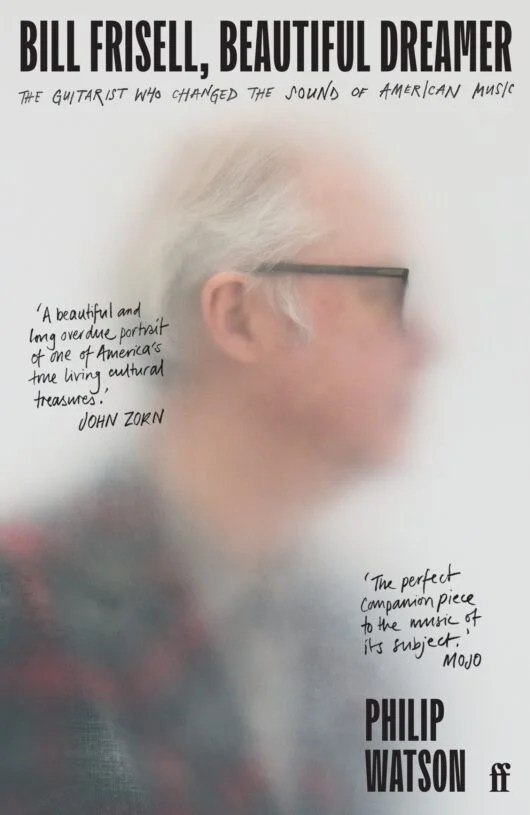
On paper – Bill Frisell, Beautiful Dreamer by Philip Watson

Bill Frisell, Beautiful Dreamer
by Philip Watson
Faber & Faber 2023 (paperback 544 Pages, ISBN: 978-0571361694)

Reviewed by John Earls

Philip Watson’s magnificent biography of Bill Frisell was first published in 2022 with the paperback edition released earlier this year. It is the first authorised biography of the American guitarist and composer – but it is no hagiography although Watson is a fan – and has already been described as definitive. It is also Watson’s first book. Not that you would know – it is both erudite and elegant. The author is of course a very experienced journalist (formerly deputy editor at GQ and editor-at-large at Esquire, he is currently jazz critic at the Irish Times).

An immediate issue to tackle in any work on Frisell is the description of him as a ‘jazz guitarist’ (not Watson’s phrase). Sure, he has played with many jazz greats including collaborations with Ron Carter, Dave Holland, Elvin Jones, Lee Konitz, Jim Hall, Paul Bley, Charlie Haden, Jan Garbarek and Billy Hart – to name but nine – as well as his thirty-year trio partnership with Paul Motian and Joe Lovano, and all are referenced in the book as are descriptions of Frisell’s jazz sensibility. However, the book is also excellent in illustrating the vast range of Frisell’s musical activity as listener, performer and influencer. This includes, in no particular order, folk, country, Americana, blues, world music, contemporary chamber, TV and film scores, 1950s and 60s pop, surf-rock, and the songs of John Lennon. This, as Watson acknowledges several times, can rub up against a certain type of jazz purist (more of which later).

On the ‘classical’ front, American composers Charles Ives and Aaron Copland are strong influences – excerpts from Ives’ Three Places in New England and an adaptation of Copland’s Billy the Kid feature in Frisell’s stunning and eclectic 1992 album Have a Little Faith. But early on in the book one of the young Frisell guitar tutors recalls making him aware of the music of Poulanc, Ravel, Debussy and Béla Bartók.

The book is diligent, but never dull, in tracking Frisell’s story and development from childhood, education, first musical steps (his original instrument was clarinet), the tough start to his career and later success and recognition. It’s quite a journey and there are interesting moments along the way despite Frisell’s protestations that “there haven’t been any fights or anything. And all I’ve done is stay married to the same woman for the past thirty-five years”.

A particularly innovative and insightful feature of the book are the ‘Counterpoint’ listening sessions dotted throughout whereby Watson (a long-time host of the Wire magazine’s ‘Invisible Jukebox’) plays pieces of Frisell’s music to a series of musicians and artists and probes for responses. The list includes Paul Simon, Justin Vernon of Bon Iver, Gus Van Sant, The Bad Plus, Gavin Bryars, Hal Willner, Martin Hayes and Dennis Cahill. It is the range and quality of the listeners that impresses. Many have been collaborators, but Rhiannon Giddens confesses “I don’t really know his music at all”. “Excellent” replies Norman, “This could be interesting!” Van Dyke Parks on Big Sur is a particularly fascinating exchange.

Amongst all the interviews throughout the book there are many references to Frisell’s modesty and shyness. But what also comes across is a powerful sense of his integrity. This can manifest itself in different ways. There’s the decision to honour a commitment to a tour with his long-term supporter and collaborator Paul Motion – “Paul was where my heart was” – at the expense of a more lucrative offer with Jan Garbarek and damage to the relationship with influential ECM boss Manfred Eicher.

But there’s also the night in a club in Rome in July 2004 when Frisell and Petra Haden are performing Stevie Wonder’s I Believe and are heckled by a guy shouting “This is not jazz. This is bullshit”. Frisell stops playing, goes to the microphone (a rarity in itself) and says “Fuck you”, or as Claudia Englehart, Frisell’s sound engineer and road manager, tells it ”Fuuuuuucccccck. Yooooou!” Yep, that would be the same modest and shy Frisell that seeps through the rest of the book.

If you are already familiar with Frisell’s work or even parts of it (it’s a huge catalogue) you will find this a fascinating and extremely valuable profile of this extraordinary musician. If you are not, but are a music lover, it will still be a good read.

John Earls is Director of Research at Unite the Union. He tweets / updates his ‘X’ content at @john_earls

For more information on the book and to explore purchase options, visit the Faber & Faber website

On paper – Nick Drake: The Life by Richard Morton Jack

Nick Drake: The Life
by Richard Morton Jack
John Murray Press 2023 (576 Pages, ISBN: 9781529308082)

Reviewed by John Earls

I first encountered the songs of Nick Drake via the 1985 compilation album Heaven in a Wild Flower. There was something about this selection of bittersweet songs and delicate voice from the three albums released between 1969-72 by the enigmatic singer-songwriter (and exceptional guitarist) who died at the age of 26 that resonated strongly with this then twenty-something listener.

Richard Morton Jack’s recent biography Nick Drake: The Life is a comprehensive and detailed work (576 pages) compellingly and sensitively told. It captures the magic, music and story behind these three remarkable albums – Five Leaves Left, Bryter Layter and Pink Moon – and much more.

Drake came from a privileged background – his 21st birthday present from his parents (a cheque for £750 – worth £10,000 in today’s money) is a particularly eye catching illustration.

But it is his musicality and dedication to his art that shines through. And, of course, there is the story of the mental illness that led to his untimely death.

The book is good on the details of Drake’s collaborators and contributors – I knew that Richard Thompson (guitar) and Danny Thompson (double bass) had played a part in some of his albums but if I already knew that British jazz legends Kenny Wheeler and Henry Lowther both played trumpet on Hazey Jane II, and P. P. Arnold was one of the backing vocalists on Poor Boy, then I’d forgotten.

It’s also good on recording performances given (John Peel) and missed (The Old Grey Whistle Test), and a fascinating encounter with the Rolling Stones in Marrakesh in 1967.

Some of Drake’s musical likes and influences won’t come as a surprise (Bob Dylan, Tim Buckley, Bert Jansch, Joni Mitchell). But there’s also a taste of Drake’s classical music listening including Fauré, Mahler, Debussy and Satie.

Jack’s biography is already being rightly hailed as ‘definitive’. But credit should also go to Patrick Humphries who wrote a groundbreaking biography in 1997 and gave Jack full access to his materials.

When I first heard Nick Drake’s music and read Humphries’ biography it was very much with the subject uppermost in my mind.

Now, as a parent myself, I am also moved by the traumas and anxiety experienced by Drake’s parents Rodney and Molly whose anguish and love is touchingly and delicately portrayed. Drake’s sister Gabrielle has written the foreword to the book but, as she makes clear, this is not an authorised biography.

This is a magnificent book. Inevitably it sent me back to the albums. There is no doubt the music will endure but ultimately, it’s a tragic and heartbreaking tale.

John Earls is Director of Research at Unite the Union. He tweets / updates his ‘X’ content at @john_earls

For more information on the book and to explore purchase options, visit the Waterstones website

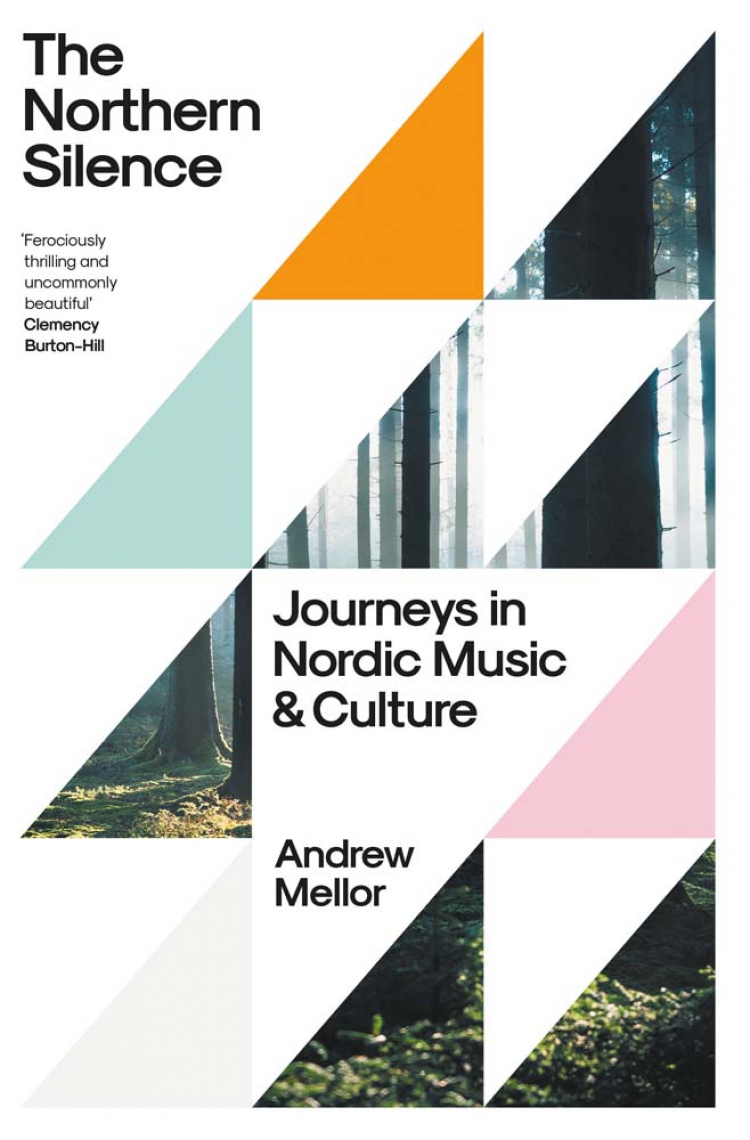
On paper – Andrew Mellor: The Northern Silence – Journeys in Nordic Music and Culture (Yale University Press)

The Northern Silence – Journeys in Nordic Culture and Music by Andrew Mellor

Yale University Press [hardback, 320pp, 16 b/w illustrations, ISBN 9780300254402, £18.99]

Reviewed by Richard Whitehouse

With their generous levels of state funding and – outwardly at least – a high degree of social cohesion, the Nordic countries continue to set the bar for might be thought of as ‘advanced’ societies. That much of what has been written (English or otherwise) about them is derived from internal sources adds to a feeling of self-sustaining complacency which Andrew Mellor, having worked as a freelance music journalist in or around Copenhagen for almost a decade, is well equipped to consider, corroborate or, when necessary, correct in The Northern Silence.

Its subtitle, Journeys in Nordic Music and Culture, is variously significant – Mellor having made it his brief to travel as extensively and cover as inclusively as possible the many outlets which exist in Scandinavia (Denmark, Norway, and Sweden) as well as Finland, Iceland and the Faroe Islands. Although much of the volume’s content ostensibly derives from articles or interviews written for numerous magazines and journals (not least Gramophone, of which he was reviews editor before heading northwards), Mellor has been scrupulous with organizing then integrating his material so there is never any sense of sources thrown together arbitrarily. Rather, the five main chapters unfold as a sequence of topics or subjects related, even if only tangentially, to the heading in question and can be read sectionally or complete as preferred.

The first chapter duly proceeds as overviews of those four larger countries as experienced by a sympathetic outsider and focusses on four musical works whose attributes could be taken as exemplifying a national context. Thus, the bracing harmonic interplay of archaic and modern in Grieg’s Four Psalms, more provocative fusion of tradition with sophistication in Sibelius’s En Saga, head-on confrontation with ingrained parochialism in Nielsen’s Sinfonia Espansiva, then the acerbic sideswipe at bourgeois conformism in Atterberg’s Dollar Symphony. Not all of these ‘case studies’ are pursued throughout what follows, but their underlying premises as typifying the essence of Norway, Finland, Denmark and Sweden holds good in each instance. Icelandic music is represented by the juxtaposing of characteristics as found in Jón Leifs and Björk, whose output (if not personas) may have more in common than Mellor cares to admit, and Sunleif Rasmussen exemplifies that of the Faroes in terms of a culture whose making up for lost time might yet result in the most potent amalgam of any Nordic state relative to size.

Nor is ‘culture’ defined in exclusivist terms – Mellor always mindful to probe the connection between music and the plastic arts, most notably architecture or design, through which these countries are known even more directly to the wider world. The sixth chapter is particularly valuable in this respect, and those who have marvelled at the design of Helsinki’s Finlandia Hall while cringing at its acoustic will likely derive food-for-thought on reading about Alvar Aalto’s architectural convictions being a latter-day parallel to those of Sibelius as composer. That the aural and the visual have often had so close an accommodation in these countries is hardly a surprise given its common derivation from their environment, and the ease by which Mellor points up such lateral associations is a testament to his immersion in all things Nordic.

That said, it is those musical legacies of Nielsen and, above all, Sibelius which dominate the discourse almost a century after the death of the one and the ‘silence’ of the other. Admirable as Mellor is in identifying Nielsen’s emergence against a backdrop of Austro-German norms, his desire to convey that of Sibelius from a similar vantage means the crucial role of Russian music in the honing of his idiom is overlooked; odd given the acknowledgment elsewhere of Finnish culture being forged from the crucible that was Russian political dominance. In other ways this is evidently a book of its era – composers such as Rosenberg, Holmboe or Sallinen get short shrift, though the ‘dark horse’ that is Fartein Valen warrants discussion through his masterly Second Piano Sonata. Of more recent figures, Kaija Saariaho and Magnus Lindberg are not unreasonably surveyed, but Mellor proves no more immune to the blandishments of Anders Hillborg than most; when Sweden has any number of fine second-rate figures such as Anders Eliasson, to emphasize so passably third-rate a figure seems the more unfortunate.

Elsewhere, Mellor can be (surprisingly?) selective as to his inclusions. The evolution of Per Nørgård through to his trail-blazing Second Symphony is well detailed, but there is hardly a mention of his volatile later music – not least the Fifth Symphony which reassesses the genre as decisively as any such piece from the late 20th century, though its 21st-century parallel in the Third Symphony of Seppo Pohjola is included. A comprehensive survey of Nordic music is hardly Mellor’s intention, as he mentions near the outset when ‘‘…by necessity, plenty of talented and important musicians are left out’’, but a feeling persists such omissions may be because they do not accord with the Nordic perspective that he is keen to convey. One hopes his thoughts on such inspired misfits as Rued Langgaard find their place in a future volume.

In other respects, Mellor might be thought misguided in his even-handedness. Sympathetic as Atterberg may have been to aspects of Nazi-ism, to criticize him for rendering the term Volk as ‘people’ rather than Aryan ignores the fact the latter definition had been in common usage in Europe, United States and, moreover, the Soviet Union over several generations. Also, his criticism of Danish paper Jyllands-Posten for its Mohammad parody misses the point that the confronting of institutions, religious or otherwise, is necessarily a facet of vibrant democracy.

As stylishly presented as the Nordic textiles on its cover and admirably edited (but just what is Sibelius’s String Quartet in E minor?), this absorbing read says a great deal for Mellor’s breadth of outlook and his depth of sympathies. In the Prelude and Postlude, the reaching-out of Sibelius’s masterpiece Tapiola towards silence is pertinently considered as exemplifying Nordic culture. Hopefully this book’s authorial voice will stay resilient for a long while yet.

For information on purchasing this book, head to the Yale University or Waterstones websites. You can also listen to a podcast interview with the author at the Gramophone website

On paper – Steven Isserlis – The Bach Cello Suites: A Companion (Faber)

reviewed by Ben Hogwood

What’s the story?

Ask Steven Isserlis the music he would take to a desert island, and his answer would surely be the six Bach Cello Suites. The cellist has lived with their music all his adult life, and having released his award-winning recording of them for Hyperion in 2007, he now expresses his deep love and admiration for them in written form.

What’s the book like?

In a word, invigorating. Having lived with the suites myself for 35+ years as an amateur cellist, your reviewer is very much a convert – but reading this gave me enthusiasm anew, for Isserlis reveals new treasures about this wonderful music at every turn.

Crucially he does this in a way that will appeal to cellists and non-cellists alike, and even those who struggle with musical terms. A helpful glossary is on hand to help here, but so is an introduction that sets out this celebration of six works where mystery, expression and originality walk hand-in-hand.

The origins of the suites are shrouded in mystery, right down to their authorship. Isserlis tackles these questions head-on, in a wholly compelling way. He confronts the doubts, examines the existing performing editions, and looks at the role of Bach’s second wife Anna Magdalena in their publication, all without getting too bogged down in musicology. There is healthy but qualified assumption and speculation, made as a music lover but backed up with firm arguments from Bach scholars past and present.

Isserlis looks at the construction of each suite in great detail, marvelling at Bach’s consistent marriage of mathematical precision and emotional outpouring. He uses the scholarly texts but also leans heavily and most enjoyably on his perspective from the pure, musical instinct of a performer. This approach lifts the music from the page, frequently inspiring the reader to listen along.

This instinct leads to a central, compelling case for a subtext for the suites, describing the life of Christ in a way that can be keenly experienced by the listener but which also makes a great deal of musical sense, with the caveat that the cellist’s conclusions are largely speculative.

What is beyond doubt is the technical mastery shown by Bach in writing for the cello, and the inspiration that flowed so readily and so inevitably in writing the suites, lifting the instrument and its potential to a higher plain. The six suites are remarkable pieces both individually and collectively, as are the six movements of each – and Isserlis brings them to life as he writes. He celebrates their role in the life of any cellist while also, under his breath, lightly cursing some of the technical difficulties as the cycle progresses.

Readers can opt to take the book from start to finish, taking in each of the 36 movements, but the layout rewards repeat visits to dip in to individual parts and elements of their composition. This is ideal not just for serious, practicing cellists but also for individual listener preferences.

Does it all work?

Yes, in several ways. Isserlis is a fluent and passionate writer, putting the music first at all times, so that reading the book will almost always lead to a first hand encounter with the music. That is the surest guide to success for any book on music, surely!

Is it recommended?

Yes, on pretty much every level. For cellists – either full or part-time, like your reviewer – this book is essential and thought-provoking reading. It reveals afresh the many delights to be found in experiencing this wonderful music, and will also make you want to listen to more Bach, the choral works especially, to explore the fascinating parallels drawn between these and the suites.

Non-cellists should not hesitate to approach the book either, for there are many entertaining and thoughtful stories in the book that prove richly rewarding.

This is a fine achievement, celebrating a body of work that all cellists hold dear. The music lifts from the page and into our homes with an easy candour and compelling storytelling. It is a wonderful achievement.