In concert – Hanna Hipp, Tiffin Boys Choir, Philharmonia Chorus, RPO / Vasily Petrenko – Mahler: Symphony no.3 @ Royal Albert Hall

Hanna Hipp (mezzo-soprano), Tiffin Boys Choir, Philharmonia Chorus, Royal Philharmonic Orchestra / Vasily Petrenko

Mahler Symphony no.3 in D minor (1895-6)

Royal Albert Hall, London
Thursday 27 April 2023

Reviewed by Richard Whitehouse Photo of Vasily Petrenko (c) Ben Wright

The Royal Philharmonic Orchestra series of those Mahler symphonies featuring voices came to its conclusion this evening with the Third Symphony, the longest and most encompassing of his cycle with its trajectory ranging from the awakening of life to its divine transcendence.

The first part, comprising Mahler lengthiest purely orchestral movement, presents a stern test in terms of its overall pacing and characterization. Vasily Petrenko had its measure right from the opening fanfare, as powerfully intoned by eight horns in unison, via graphic depictions of inanimate nature (its trombone recitative balefully rendered by Matthew Gee) and its march-like reawakening, to the forceful expressive contrast Mahler invests into this extended sonata design as it advances to a joyous peroration that was superbly controlled and projected here.

Although the published score makes no mention, Mahler evidently favoured a lengthy pause before going into the second part. By allowing barely a minute to elapse, Petrenko arguably left insufficient breathing-space (for the audience if not the musicians) and so undersold the effect of what ensues. Not that this Tempo di Menuetto lacked for poise or insouciance – its chamber-like orchestration exuded a confiding intimacy, with the lingering regret at its close deftly implied. No less persuasive was the third movement, a scherzo whose capricious outer sections found purposeful accord with episodes where the offstage post-horn solos (elegantly delivered by Toby Street) unfolded without hint of indulgence; Petrenko mindful to inject a degree of danger into the final return of the opening music as this heads to its fractious close.

Once again, a slightly longer pause than Petrenko allowed might have given listeners time to settle before the closing three movements – (rightly) played without a break. Not that Hanna Hipp, in situ at stage-left, was other than assured in her contribution to the setting of (part of) Friedrich Nietzsche’s Mitternachts-Lied with its presentiment of eternal life; such unforced eloquence abetted by the hushed intensity of the RPO’s playing. The brief if pertinent setting of Es sungen drei Engel offered the necessary contrast, Hipp sounding a note of uncertainty or even doubt in the context of animated singing from the combined children’s and women’s voices. Here, too, Petrenko’s decision to use actual rather than tubular bells added greatly to the aura of child-like though never merely coy innocence with which this music is infused.

On to the finale – an adagio drawing on precedents from Beethoven and Bruckner, and which crowned this performance in all respects. If the flowing tempo that Petrenko adopted initially seemed a little passive, the seamlessness with which conflicting elements were drawn into the discourse, together with the preparation for and the shaping of each climax, on the way to its apotheosis left no doubt as to his identity with this movement. Neither was there any hint of bathos as striding timpani underpinned those closing bars with their intimations of sublimity.

A memorable performance, then, which brought out the sheer scale and ambition of Mahler’s conception while underlining the all-round excellence of the RPO near the end of its second season with Petrenko. Hopefully there will be further Mahler to come from this partnership.

You can read all about the 2022/23 season and book tickets at the Royal Philharmonic Orchestra website. Click on the artist names for more on Hanna Hipp, Tiffin Boys Choir, Philharmonia Chorus and conductor Vasily Petrenko
In concert – Strings of the CBSO / Eugene Tzikindelean: Four Seasons

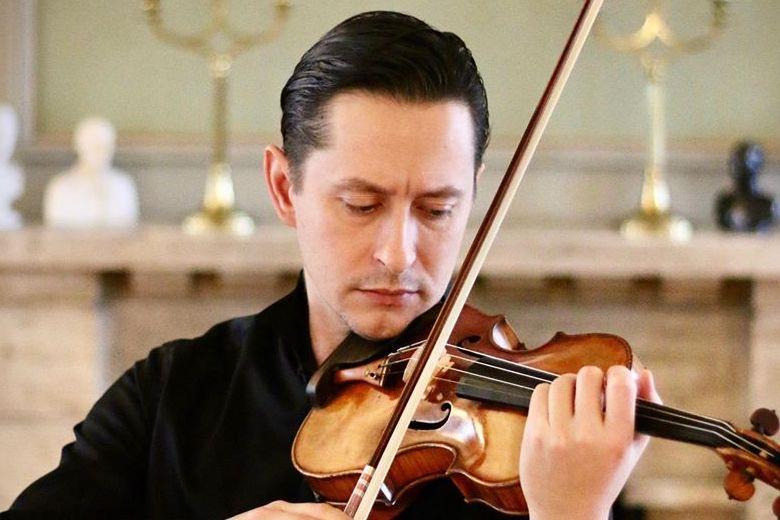
Strings of the City of Birmingham Symphony Orchestra / Eugene Tzikindelean (above)

Schubert arr. Mahler String Quartet no.14 in D minor D810 ‘Der Tod und das Mädchen’ (1824, arr. 1896)
Vivaldi Le quattro Stagioni Op.8 nos. 1-4 (1718-20)
Piazzolla arr. Desyatnikov Cuatro Estaciones Porteñas (1965-9, arr. 1996-8)

Town Hall, Birmingham
Saturday 22 April 2023

Reviewed by Richard Whitehouse

Acoustically transformed following its refurbishment some 15 years ago, a commendably full Town Hall proved to be the ideal venue for this judiciously balanced programme featuring the strings of the City of Birmingham Symphony Orchestra with its leader Eugene Tzikindelean.

Mahler never fully completed his arrangement of Schubert’s Death and the Maiden quartet, but this has enjoyed not a few hearings since its realization by David Matthews with Donald Mitchell four decades ago. Tzikindelean presided over a brisk, incisive opening Allegro (its exposition-repeat not unreasonably omitted), and if the 30-strong ensemble had not quite the tonal depth or dynamic range that Mahler likely envisaged, there was no lack of immediacy – at least until momentum faltered slightly in the later stages of the reprise then into the coda.

No such uncertainty affected the Andante (the only movement elaborated by Mahler), whose variations on Schubert’s earlier song exuded a cumulative intensity up to the theme’s soulful reappearance toward the close. Nor did the Scherzo lack for truculence over its brief yet vital course, assuaged by the trio’s wistful elegance, while the final Presto unfolded as a tarantella as agile as it was malevolent. Tzikindelean kept his players on a tight if never inflexible rein through to a coda that brought this (for the most part) powerful reading to its decisive close.

Tzikindelean having vacated the leader’s chair for centre-stage, the second half consisted of Vivaldi’s The Four Seasons interspersed with Astor Piazzolla’s take on the seasons from the perspective of Buenos Aires. Brought together a quarter-century ago (at the behest of Gidon Kremer for his group Kremerata Baltica) by Leonid Desyatnikov, with numerous references to the Baroque master, the outcome is a provocative amalgam between ‘ancient’ and ‘modern’ which the CBSO strings rendered with alacrity. Among the highlights from the Vivaldi might be mentioned the plaintive eloquence of the Largo from Spring, the coursing impetus of the Presto from Summer, alternation of the robust and poetic in the initial Allegro of Autumn, or that discreetly alluring interplay of legato and pizzicato writing in the Largo from Winter.

Heard in the sequence ‘Summer-Autumn-Winter-Spring’, the tangos by Piazzolla offer any number of anticipations whether melodic or textural. A significant feature of Desyatnikov’s arrangement is the prominence accorded to the leaders from each section which were seized upon gratefully – not least by cellist Eduardo Vassallo, whose Piazzolla recordings with his ensemble El Ultimo Tango are a masterclass in performance from the chamber perspective. While each of the present pieces is more than the sum of its parts, surely the most arresting instance is that towards the close of ‘Spring’ when the harpsichord (ably taken by Masumi Yamamoto) emerges with an allusion to Vivaldi’s opening theme – a coup de théâtre that is seldom less than spellbinding, and duly worked its magic as part of tonight’s performance.

An impressive showing, then, for the CBSO strings and Tzikindelean – who will hopefully be making further appearances both as soloist and director in the coming season. Certainly, the repertoire for string orchestra is one whose exploration should prove well worthwhile.

You can read all about the 2022/23 season and book tickets at the CBSO website. You can read more about Eugene Tzikindelean here, and more about El Ultimo Tango here

On Record: Sueye Park, Seoul Philharmonic Orchestra / Osmo Vänskä – Isang Yun: Violin Concerto III, Chamber Symphony I & Silla

Isang Yun
Silla (1992)
Violin Concerto III (1992)
Chamber Symphony I (1987)

Sueye Park (violin), Seoul Philharmonic Orchestra / Osmo Vänskä

BIS 2642SACD [67’13″]

Producer Robert Stiff Engineer Jin Choi

Recorded 30 August-3 September 2021, Lotte Concert Hall, Seoul, South Korea

Reviewed by Richard Whitehouse

What’s the story?

BIS makes a notable contribution to the growing Isang Yun discography with a judiciously chosen collection of orchestral pieces from his last years, performed with commitment and insight by the Seoul Philharmonic Orchestra under its recently departed music director Osmo Vänskä.

What’s the music like?

Most famous for his fractious relationship with the then military dictatorship of South Korea, Yun (1917-95) resided mainly in West Berlin from 1964 and built a sizable catalogue which effected a far-reaching synthesis of European modernist techniques with traditional Korean elements. At the forefront of the Western avant-garde during the 1960s, he latterly embraced more traditional genres – composing numerous symphonies, concertos and ensemble works such as extend and enrich this synthesis with engaging while frequently provocative results.

The First Chamber Symphony premiered in Güttersloh by the Deutsche Kammerphilharmonie Bremen and scored for early-Classical forces with pairs of oboes and horns alongside strings. Its three continuous sections outline an expected fast-slow-fast format – offset by the interplay of string groupings in the first section, then the emphasis on solo or chamber formations and contrasts of motion in those that follow. The final section moves towards a sustained passage of exquisite poise, before a sudden upsurge concludes the whole piece with terse decisiveness.

Premiered in Amsterdam by Vera Beths, the Third Violin Concerto follows a similar formal trajectory whose continuity is largely determined by greater or lesser contrasts in motion and emotion between its constituent episodes. Those of the opening section build to an intensive central climax, subsiding into a restive calm which takes on greater serenity in its successor; before the final section unfolds impulsively and with martial undertones towards the closing series of exchanges between violin and orchestra: the soloist has the conciliatory last word.

Subtitled ‘Legend for Orchestra’, Silla was Yun’s final such piece and premiered in Hanover by the Niedersächsisches Staatsorchester. Its title evokes connotations of home and origin – not least Korean court music from the earlier Medieval era, here alluded to within a context of nocturnal celebration. There are again three sections, though here the follow-through feels all but seamless while the orchestration enables a wide range of timbral and textural nuances – not least in a peroration as suggests an affirmation (understandably) rare in this composer.

Does it all work?

It does. Many of Yun’s latter works evince sufficient connections with the Western classical music of earlier eras to be accessible for mainstream audiences, with the pieces here being no exception. Sueye Park is assured and insightful in the concerto, while Vänskä secures playing that emphasizes the allure and iridescence of Yun’s orchestral writing. Over a quarter-century after the composer’s death and his music remains on the periphery of the modern repertoire, but releases such as this will secure it greater advocacy from younger musicians and listeners.

Is it recommended?

Very much so. The recording is as commendable in its clarity and definition as expected from BIS, as are Walter-Wolfgang Sparrer’s notes. One can only hope a follow-up release, perhaps featuring Konturen, the Oboe Concerto and the Second Chamber Symphony, is forthcoming.

Listen & Buy

For buying options, and to listen to clips from the album, visit the BIS website. For more information on Isang Yun, visit the Isang Yun International Society, and for more on the artists click on the names Sueye Park, Osmo Vänskä and the Seoul Philharmonic Orchestra.

In concert – Noriko Ogawa, English Symphony Orchestra / Kenneth Woods – Brahms, Grieg & Sibelius

Noriko Ogawa (piano), English String Orchestra / Kenneth Woods

Brahms Tragic Overture, Op. 81 (1880)
Grieg Piano Concerto in A minor, Op. 16 (1868)
Sibelius Symphony No. 5 in E flat, Op. 82 (1915-19)

Town Hall, Cheltenham
Sunday 16 April 2023

Reviewed by Richard Whitehouse

The English Symphony Orchestra’s latest concert had no English (or British) connection and no premieres or unfamiliar music. In short, a mainstream sequence of overture, concerto and symphony which worked as a programme simply because these pieces went so well together.

Although it has never lacked for performances, Brahms’s Tragic Overture remains among his more unusual conceptions: a concert overture whose deftly modified sonata design admits an element of evocation as if some intangible drama were being played out. It was to the credit of this performance when such subjection offset an otherwise unwavering formal trajectory, Kenneth Woods integrating the speculative central episode with a conviction that made the heightened reprise of the main theme the more telling for its implacably wrought fatalism.

Brahms’s writing of an overture with components as if ‘in the wrong order’ made an unlikely link to the Piano Concerto by Grieg, which still offers a wealth of surprises in a sympathetic reading. This it received from Noriko Ogawa – bringing out the unforced eloquence of what, the opening Allegro in particular, is much more than a loose sequence of enticing melodies in search of coherence. As her imaginative take on its cadenza underlined, Grieg left nothing to chance as the movement turns decisively full circle. With its easeful horn melody (courtesy of James Topp) and alluring solo response, the Adagio exuded an understated allure, and if the finale lacked for any rhythmic verve, the central section with its rapt flute melody (courtesy of Laura Jellicoe) sounded as affecting as its heightened peroration at the close was majestic.

The ESO and Woods are currently working towards a Sibelius cycle and their account of the Fifth Symphony had all the hallmarks of complete identity with, here again, a determination not to take to take anything in so familiar a work for granted. This was especially notable in the opening movement – its segueing between what began as two separate entities rendered with due seamlessness. Not least that central climax, out of which the scherzo emerged then proceeded to accrue motion imperceptibly through to a coda whose velocity was irresistibly evident. Much more than a whimsical interlude, the Andante had keen appreciation of those ambiguous shadows which inform its progress at crucial junctures, yet without undermining that guileless essence to the fore in the closing pages with their felicitous woodwind playing.

Making an attacca (and rightly so) directly into the finale, Woods brought out the productive contrast between its ideas – thus, the initial theme with its onrushing strings, then the ‘swan melody’ with its harmonic allure and intricate textural layering abetted here by the up-front acoustic of Cheltenham Town Hall. Just how so tensile and compact a movement generates an apotheosis of such grandeur cannot easily be explained, yet such an outcome was tangible as those concluding chords emerged with an inevitability as undeniable as it was heartening.

They certainly set the seal on an impressive performance which was warmly received by the sizable house. The ESO can be heard in Worcester early next month with assistant conductor Michael Karcher-Young, then with Woods in June for the latest edition of The Elgar Festival.

For more information on the artists in this concert, click on the links to read about Noriko Ogawa Kenneth Woods and the English Symphony Orchestra.

In concert – Behzod Abduraimov, CBSO / François Leleux – Rachmaninoff: Piano Concerto no.2; Brahms: Serenade no.1 & Academic Festival Overture

Behzod Abduraimov (piano, above), City of Birmingham Symphony Orchestra / François Leleux (below)

Brahms Academic Festival Overture Op. 80 (1880)
Rachmaninoff Piano Concerto no.2 in C minor Op.18 (1900-1901)
Brahms Serenade no.1 in D major Op.11 (1858-9)

Symphony Hall, Birmingham
Thursday 13 April 2023

Reviewed by Richard Whitehouse

Its first concert since returning from a European tour saw the City of Birmingham Symphony Orchestra in a programme which tellingly placed Rachmaninoff’s most famous composition within the context of less often heard or uncharacteristically (?) humorous pieces by Brahms.

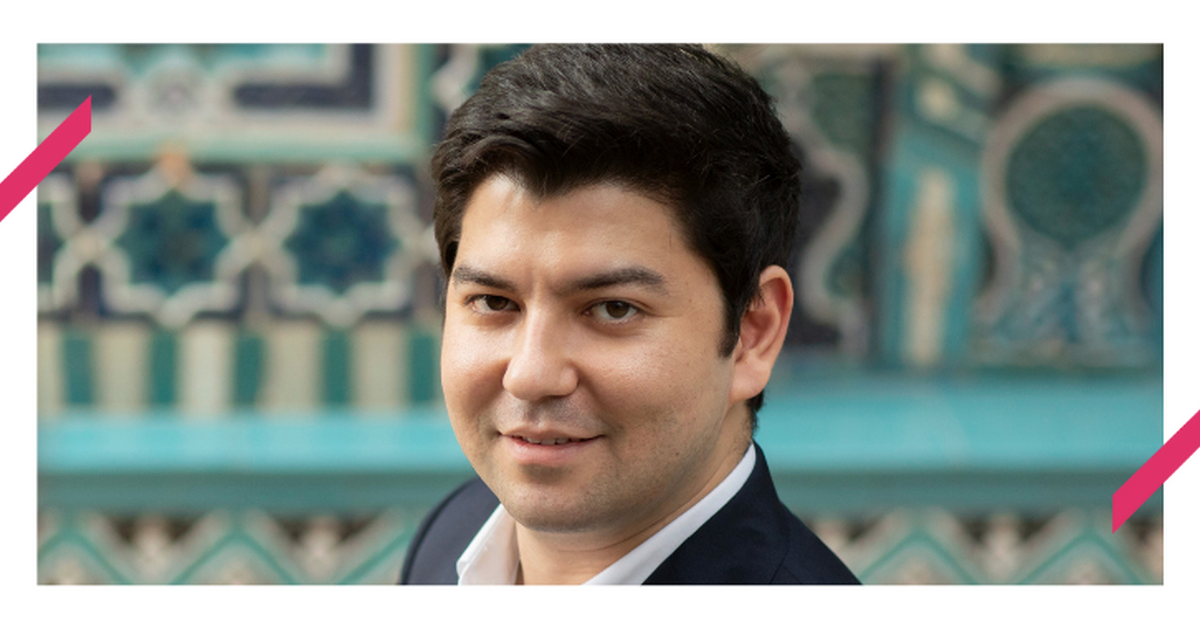
Cinematic and other extra-musical associations often obscure the purely musical qualities of Rachmaninoff’s Second Piano Concerto, so credit to the Uzbek pianist Behzod Abduraimov for duly underlining these in a reading full of incident and unfailingly cohesive. Among the former might be mentioned the limpid elegance of the first movement’s second theme and its improvisatory continuation before the coda, bewitching transition from the Adagio’s central scherzo back to the main melody, and those evocative interludes after the finale’s ‘big tune’ – this latter returning to cap the whole work in unforced ardour. Integration between piano and orchestra was unfailing, as too the emotional immediacy of the CBSO’s response, and who could question Abduraimov’s decision not to provide an encore after so fine a performance.

Rachmaninoff and Brahms seldom complement each other in concert, though the Academic Festival Overture provided an ideal curtain-raiser. Typically more than a potpourri of student songs (drinking or otherwise), the cunningly fashioned sonata design was deftly unfolded by François Leleux so that its portentous and uproarious elements were held in perfect accord. The percussion audibly relished its rare outing in a Brahms score, not least at the close when the hymn-like ‘Gaudeamus igitur’ emerges to see this piece through to its exhilarating close.

Following the interval, a relatively infrequent hearing for Brahms’s First Serenade. Originally planned for chamber ensemble and later rescored for late-Classical forces (with four horns), its equivocally symphonic ambitions and proportions were inevitably overshadowed by what Brahms went on to achieve, but its musical attractions are many and Leleux had its measure. Not least during an initial Allegro, its dextrous horn theme setting the tone for a movement whose impetus was engagingly maintained through to the touching insouciance of its coda.

Omitting repeats in this movement’s exposition and the first half of the Scherzo – which latter anticipates Brahms’s intermezzos in its speculative aura and understated progress – ensured a viable balance with the Adagio. A pre-echo of slow movements to come, the observance of its ‘non troppo’ marking prevented any loss of expressive focus across the methodically evolving whole. If the remaining movements are closer conceptually to serenade rather than symphony, Leleux gave them their due – whether the twin Menuettos with their enticing contrast between woodwind and strings, a second and more rhythmic Scherzo with rustic horn writing here and in the trio, then the final Rondo in which Brahms looks back to those comparable movements from early Beethoven and Schubert with a lack of inhibition he was only rarely to recapture.

Such was the effect of an account that received an enthusiastic response from the near-capacity house. The CBSO strings take the stage next Saturday for a coupling of Schubert arranged by Mahler and Vivaldi interspersed with Piazolla, directed by their leader Eugene Tzikindelean.

You can read all about the 2022/23 season and book tickets at the CBSO website. Click on the artist names for more on Behzod Abduraimov and François Leleux