Tasmin Little, BBC Symphony Orchestra & Edward Gardner at the Barbican – Janáček, Smetana, Szymanowski & Eötvös

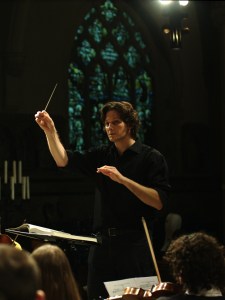
Ed Gardner
BBC Symphony Orchestra / Edward Gardner (above) (photo © Benjamin Ealovega)

Barbican Hall, Saturday January 7, 2017

Janáček Jealousy

Smetana Ma vlast: Vltava; Šarka

Szymanowski Violin Concerto No.2 (soloist – Tasmin Little)

Eötvös The Gliding of the Eagle in the Skies [UK premiere]

Janáček Taras Bulba

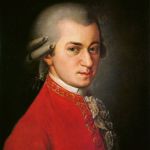
L-R Leoš Janáček (1854-1928); Bedřich Smetana (1824-1884); Karol Szymanowski (1882-1937); Péter Eötvös (b1944)

Listen to the BBC broadcast here

Written by Richard Whitehouse

Edward Gardner returned to the BBC Symphony for this diverse if not wholly successful programme, which opened with the ultimate in terse curtain-raisers. Intended then abandoned as the overture to his opera Jenůfa, Janáček’s Jealousy (1895) has latterly enjoyed a peripheral place in the repertoire. Heard here in the late Charles Mackerras’s realization of the original version, it made for a vivid impression – not least when its alternation between strident brass gestures and eloquent string writing unerringly evokes Sibelius during much the same period.

Next came the second and third instalments from Smetana’s cycle of symphonic portraits, Ma vlast. The performance of Vltava (1874) was a disappointment – its constituent sections rather failing to cohere, with Gardner making little of the visceral ‘St John’s Rapids’ episode and the apotheosis doddering along at a jog-trot.

Šarka (1875) fared better – Gardner exerting a tight grip over its scenario of female retribution, with felicitous playing from solo clarinet and horn prior to the fateful close. In context, these pieces sounded curiously adrift, suggesting that a different selection (Šarka, then From Bohemia’s Woods and Fields maybe?) might have proved more effective. Even better to opt for one of those early ‘Gothenburg’ symphonic poems that are rarely revived, of which Wallenstein’s Camp would ideally have complemented the Janáček in the second half.

Tasmin Little

Tasmin Little

Time was when Szymanowski’s Second Violin Concerto (1933) existed in the shadow of its predecessor, but this last major work by the composer enjoys increasingly regular revival – its amalgam of luscious textures and folk-inflected harmonies underpinned by a formal cohesion where elements of sonata and rondo forms link hands over a powerful cadenza (by the initial soloist Paweł Kochánski) that Tasmin Little rendered with aplomb.Elsewhere her intonation occasionally faltered as she strove for parity against often dense orchestral writing, though a cumulative impact was rarely less than evident on the way to the affirmative closing pages.

After the interval, a welcome first hearing in the UK for a recent orchestral piece by Peter Eötvös. Written for the Basque National Orchestra, The Gliding of the Eagle in the Skies (2012) utilizes not only the quirky rhythmical profile of that region’s traditional music but also its indigenous percussion – two cajóns situated near the front of the orchestra goading the music on with their distinctive timbre. The piece follows an eventful (and suspenseful) trajectory in which the imagery conveyed by the title is amply though subtly conveyed; the typically stratified textures making possible the luminous final stages then an ending which, not for the first time with this composer, suggests a possible continuation just out of reach.

Later Janáček fairly specializes in such oblique endings, and if Taras Bulba (1918) is not one of these, this rhapsody’s graphic yet by no means literal depiction of events related by Gogol leaves no doubt as to its composer’s identification with his subject. Gardner brought fervency then starkness to the respective deaths of Andriy and Ostap, and while the opening stages of the final section were a little temperate, the apotheosis had a glowing inevitability – though some fallible playing was a reminder of this music’s demands for all its relative familiarity.

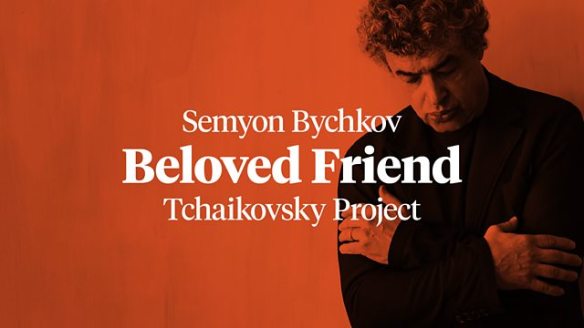
BBC Symphony Orchestra & Semyon Bychkov – Beloved Friend: Tchaikovsky Project

semyon-bychkov

Richard Whitehouse on the BBC Symphony Orchestra, conducted by Semyon Bychkov (above) in the second of their Tchaikovsky-themed concerts

Tchaikovsky Serenade for strings in C major, Op. 48 (1880)

Tchaikovsky Piano Concerto No.3 in E flat major, Op. 75 (1893)

Taneyev Overture: The Oresteia, Op.6 (1889)

Tchaikovsky Francesca da Rimini, Op. 32 (1876)

Kirill Gerstein (piano), BBC Symphony Orchestra / Semyon Bychkov

Barbican Hall, London; Monday 24 October

The Beloved Friend series being curated by Semyon Bychkov provides a revealing overview of Tchaikovsky through some lesser performed works. Not the least of which is the Serenade for strings that, though its individual movements emerge frequently on radio, is not so often encountered in concert. Too short to occupy a second or even first half, it makes for a lengthy yet viable opening item when, as tonight, a full-sized string section is deployed with panache.

Bychkov ensured a fervent response in the first movement, its animated main sections framed by the rhetorical motto theme that ultimately returns as an apotheosis, then found suavity as well as elegance in the Waltz. Despite lack of inwardness, the Elegy yielded real clarity in its denser passages, while the Finale proceeded briskly yet characterfully to its resolute close.

kirill-gersteinNext followed a rare revival of the Third Piano Concerto, itself reworked from an abandoned symphony and what would doubtless have become a three-movement entity had Tchaikovsky completed its Andante and Finale to his satisfaction prior to his death (these latter, as realized posthumously by Taneyev, make an effective whole – as Alexander Markovich demonstrated in a Royal Festival Hall account eight years ago).

As a stand-alone piece, the Allegro brillante (best known in its ballet incarnation by George Balanchine) unfolds a quirky and characterful sonata design – its themes distinctive for their emotional restraint, with a stealthy interplay between piano and orchestra that Kirill Gerstein (above) audibly relished. Momentum faltered marginally after a scintillating cadenza, but the final pages strode onwards to a decisive if peremptory ending.

Overall, a convincing account of music which warrants greater exposure. Hopefully Gerstein will yet tackle this work’s three-movement incarnation: for now, he returned for a reading of Méditation – the fifth of Tchaikovsky’s Op. 72 collection – that oozed eloquence and poise.

More discussed than played in the West, Sergey Taneyev was as least as much a composer as pedagogue; a notable output of orchestral and chamber music capped by his ambitious opera The Oresteia. Beginning life as this latter’s introduction, the present overture expanded into an autonomous entity that surveys the opera’s dramatic content and is an eventful symphonic poem in its own right. Its complementary halves representing an archetypal ‘war and peace’ in dramatic as well as musical terms, the piece is harmonically questing and often texturally adventurous – not least in its extensive though never self-conscious writing for harps. Some 15 years after Taneyev last enjoyed a fair measure of exposure in London, Bychkov directed a fastidious performance to remind listeners that they are the poorer for this music’s neglect.

Even in an era intent on ‘concerto and symphony’ programming, Tchaikovsky’s Francesca da Rimini has never lacked for performances – this symphonic fantasia mingling drama with pathos to a heady degree even for this composer. Bychkov accordingly upped the ante in the tempestuous opening, then secured a suitably rapt response from woodwind and strings in the central section depicting Paolo and Francesca. Its balletic continuation drifted as is often the case, but the final pages portrayed the hapless lovers’ descent into hell with unerring ferocity.

Recorded by BBC Radio 3 for future broadcast in Afternoon on 3, and available for 30 days thereafter via the Radio 3 website

BBC Symphony Orchestra & Martyn Brabbins – Havergal Brian’s ‘Sinfonia Tragica’ + Rubbra & Grøndahl

martyn-brabbins

Richard Whitehouse on the BBC Symphony Orchestra, conducted by Martyn Brabbins (above) in a concert recorded at the orchestra’s home in Maida Vale

Rubbra Symphony No.11 Op. 153 (1979)

Grøndahl Trombone Concerto (1924)

Brian Symphony No.6 Sinfonia tragica (1948)

Jörgen van Rijen (trombone), BBC Symphony Orchestra / Martyn Brabbins

Maida Vale Studios, Tuesday 11 October

The BBC Symphony continues to schedule some of its most distinctive concerts at its Maida Vale studios, and this afternoon saw Martyn Brabbins at the helm for a sequence of English and Danish music – all being pieces that are rarely, if ever, encountered in UK concert halls.

When Edmund Rubbra’s Eleventh Symphony received its premiere at the 1980 Proms, it must have felt appreciably more distant in aesthetic than it now does. Yet timelessness was central to the composer’s music; nowhere more than this 18-minute summation of both his symphonic and orchestral thinking. Its two continuous sections – a ‘moderate’ Andante, then a ‘calm and serene’ Adagio – offer only incremental expressive change, though the cumulative emotional impact as Rubbra evolves intervallic motifs via a seamless process of developing variation is undoubted; as also his fashioning of alternately diaphanous and granitic instrumentation. This latter was superbly rendered by the BBCSO, with Brabbins attentive to the music’s wealth of detail and its by no means untroubled emergence towards an eloquent plateau of tranquillity.

jorgen-van-rijenNext came a welcome revival for the Trombone Concerto by Launy Grøndahl, best known as a conductor (he premiered Robert Simpson’s First Symphony in Copenhagen) but who, on the basis of those pieces to have been recorded, evinced a modest while appealing compositional talent.

The outer movements of his concerto alternate between trenchant and lyrical ideas, the latter having a deftness to offset the hints of rhythmic stolidity elsewhere, but it is the central Andante – in its initial blues-inflected theme and resourceful deployment of piano – that most readily confirms its composer’s prowess. Here, as throughout the piece, Jörgen van Rijen (above) was unfailingly perceptive – underlining the extent to which Grøndahl, a violinist by training, had mastered the technical range of an instrument whose overall potential remains to be realized.

During the break, Van Rijn performed Slipstream by the German-born composer and metal guitarist Florian Magnus Maier (b1973) – its interplay of live playing and recorded repetition, via a loop-station operated by the musician, affording a fresh twist to Reich-style minimalism.

Brabbins has championed Havergal Brian extensively on disc; his live advocacy so far limited (!) to a revival of the Gothic symphony at the 2011 Proms. At just under 20 minutes, Sinfonia tragica comes near the opposite end (albeit conceptually) of his orchestral output. Envisaged as the prelude to an opera on J. M. Synge’s Deirdre of the Sorrows that was soon abandoned, it was not incorporated into his canon for two decades, yet its symphonic status is not hard to discern.

The BBCSO duly had the measure of its progress, as unpredictable as it is inevitable – from the fugitive gestures of its opening section, through the (surprisingly?) long-breathed melodic writing at its centre, to the eruptive activity and stoic processional of its final pages. A persuasive reading of a piece that ranks among its composer’s most immediate utterances.

Indeed, this was a persuasive concert overall – one that made light of the turgid accusations sometimes levelled at Rubbra, or the unplayability too often associated with Brian. Hopefully the BBCSO and Brabbins will continue their exploration of this rewarding music at future studio concerts.

This concert will be broadcast on BBC Radio 3 during November – further details to follow

The Brussels Philharmonic Orchestra and Stéphane Denève in Beethoven, Guillaume Connesson and Respighi

brussels-philharmonicBrussels Philharmonic Orchestra (above, picture courtesy of Samsung)

Richard Whitehouse on a visit from the Brussels Philharmonic Orchestra and their chief conductor to the Cadogan Hall, offering a rare chance to hear the music of Guillaume Connesson.

Cadogan Hall, Thursday 29 September 2016

Beethoven Symphony No. 6 ‘Pastoral’ (1808)

Connesson Flammenschrift (Letters of Fire) (2012); E chiaro nella valle il fiume appare (And clear in the valley the river appears) (2015)

Respighi Pini di Roma (1924)

Brussels Philharmonic Orchestra / Stéphane Denève

This evening’s concert brought a welcome visit from the Brussels Philharmonic and current music director Stéphane Denève, his advocacy of new music evident in the inclusion of two recent pieces by Guillaume Connesson which were performed on either side of the interval.

Now in his mid-40s, this French composer conjures a wide range of influences from François Couperin, via Wagner and Strauss, to Dutilleux and the film music of Bernard Herrmann and John Williams (a pity the programme book included no biography either of Connesson or the orchestra – while being dominated by an absorbing if, in context, overly detailed note on the Beethoven).

These pieces are the first two parts of a symphonic trilogy, with Flammenschrift both an evocation of Beethoven and a tribute to the ‘golden age’ of Germanic music. Strauss does indeed make a fleeting appearance during the more lyrical central episode; otherwise, it is the incisive neo-classicism of Honegger that comes most readily to mind, with the relentless rhythmic drive generating an impetus maintained right through to the effervescent final pages.

Taking its title from lines by the early nineteenth-century poet Giacomo Leopardi, E chiaro nelle valle il fiume appare is ostensibly the slow movement of this sequence – its alternately ethereal and passionate manner recalling the later music of Roussel (notably the Adagio from the Third Symphony), with Connesson proving hardly less adept in controlling the expressive momentum of music such as borders on without quite spilling over into overkill. Presumably the questioning tone on which it ends is answered by Maslenitsa, the final part of this trilogy.

Make no mistake, Connesson is a composer in which formal security is allied to an orchestral sense of considerable flamboyance. Interesting that, along with older contemporaries such as Nicolas Bacri, he should draw inspiration from an earlier era of French music – bypassing the serial complexity of Boulez or the harmonic intricacy of Grisey or Murail. Accessible without being facile, his music may yet gain regular hearings here, and there could be no doubting the conviction with which orchestra and conductor presented it to tonight’s appreciative audience.

Nor was the Brussels orchestra found wanting in the familiar works which opened and closed proceedings. A viable first half in itself, Beethoven’s ‘Pastoral’ Symphony did not fit into its present context: Denève secured a fluent if rarely insightful reading, as its best in an animated take on the first movement and appealingly jaunty scherzo, but there was a lack of inwardness and repose elsewhere; while an almost complete absence of vibrato from the strings gave their playing an unyielding quality emphasized by the forward ambience of the Cadogan acoustic.

More successful overall was Respighi’s Pines of Rome, the second and most enduring part of a ‘Roman triptych’ by which he remains best known to posterity. Denève found humour amid the frenzy of the ‘Villa borghese’ then drama in the sombre musings ‘near a Catacomb’. The sensuousness of the ‘Janiculum’ saw an amusing cameo from the percussionist operating the gramophone record of a nightingale, whereas the crescendo of the ‘Appian Way’ brought a frisson of excitement abetted by offstage brass and organ that fairly brought the house down.

The Brussels Philharmonic performs the final part of Connesson’s trilogy on 9 April, 2017. Further details at the Cadogan Hall website

Meanwhile further information on the Brussels Philharmonic Orchestra can be found from their website

Mariinsky Orchestra with Valery Gergiev – Prokofiev Symphonies (3)

valery-gergiev-3

The final instalment of Valery Gergiev’s Prokofiev symphony cycle with the Mariinsky Orchestra shed light on the composer’s late works, and was as illuminating as the previous two concerts in the series.

Late in life Prokofiev’s works took a darker turn, and while his characteristic humour is still present there are more threats in the shadows, particularly where the Symphony no.6 is concerned. This is increasingly regarded as the masterpiece of the seven, and in the right performance it carries a shattering impact.

This was the right performance emotionally, if not always in terms of ensemble. Gergiev has been unfairly criticised this week for fielding unrehearsed performances – there was absolutely no evidence to these ears in the first two concerts of that! – but in the first movement of the Sixth a few things went awry, particularly with extraneous noise from a violin and a number of flat horn solos.

The emotional content, however, was not affected, and as the symphony wore on so did the feeling of impending dread. Brief consolation was offered by the lovely, chant-like theme given to flute and oboe, but the lower end of the orchestra worked hard in punching their rhythms to the front of the performance, the sound of a machine going wrong. As the final movement started its jolly approach soon emptied, and after the brief reappearance of the consoling theme some shattering chords signalled the descent into absolute darkness. It was an incredibly powerful moment from both conductor and orchestra, and no wonder there was a pause before the applause began.

Watch a performance from 2012 of Gergiev conducting the Mariinsky Orchestra in the Symphony no.6.

The Symphony no.7 has a similarly awkward ending, though here the composer is more resigned to his fate, for illness was now taking over Prokofiev’s life. The lovely unison tune that is the symphony’s calling card was beautifully sung by much of the orchestra, while the quick step theme for the last movement was impishly done, but again the sense of emptiness came through, the ticks and tocks of the final page leaving a sour taste. Prior to this the second and third movements felt like barely finished sketches, but Gergiev characterised them as he would a ballet score. It was a performance notable for its beauty – much of the ensemble problems had been restored – and also its thoughtfulness.

Watch a performance from 2012 of Gergiev conducting the Mariinsky Orchestra in the Symphony no.7.

Between the two symphonies there was an extraordinary performance of the Sinfonia concertante for cello and orchestra. This marked the UK debut of the Russian cellist Alexander Ramm, and on this evidence he will be back very soon. His intonation was incredibly secure and his virtuosity almost beyond question, even in the most demanding passages where the cello sits at the very top of its register.
alexander-rammPower, pace and passion were the features of the fast music, but when this briefly relented there was a real depth of feeling to the soaring, chant-like melody of the second movement. Gergiev and the orchestra gave crisp accompaniment, but Ramm was the star for this incredibly assured and most musical performance, redolent of Steven Isserlis in his youth!

Gergiev and the Mariinsky Orchestra have given us a Prokofiev season to relish here, reminding us of the composer’s melodic gifts, his flair when writing for orchestra and his good humour. The darker undercurrent beneath these pieces has also been fully explored, revealing Prokofiev in all his guises – occasionally rash, but often deeply profound. It has been a pleasure to be part of the experience.

Ben Hogwood