A golden week for Finnish orchestras

The Helsinki Philharmonic Orchestra and Lahti Symphony Orchestra in concert, April 2015

sibelius-hall-lahti

The Sibelius Hall, Lahti

This year the Association of Finnish Symphony Orchestras celebrates its fiftieth anniversary. In a country of five and a half million people that might not seem like a big deal, but the association currently has thirty member orchestras – a sign that classical music in the country is in rude health.

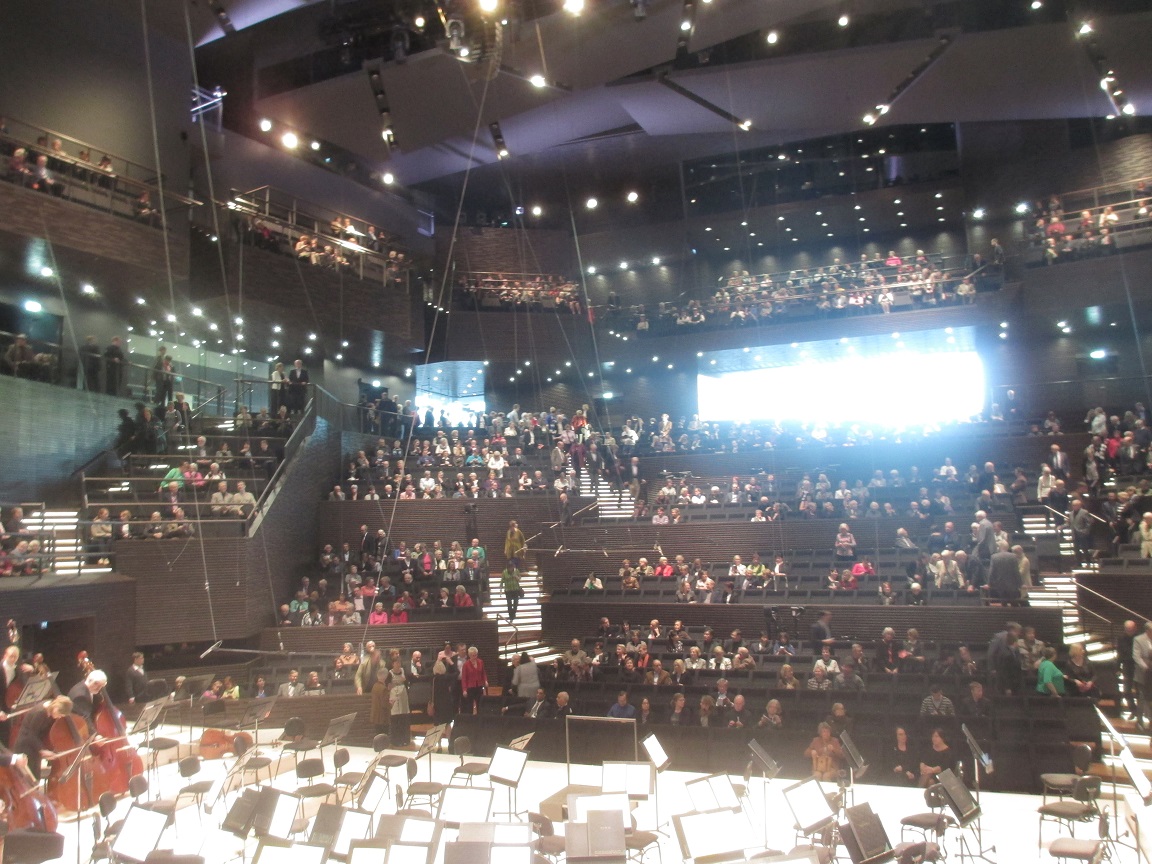
They are helped considerably by the stunning venues in which their music making takes place. The Helsinki Music Centre, for instance, is a miracle of sliding partitions and glass panels allowing shafts of sunlight to stream in up to 30 seconds before a performance begins – as if reminding us that classical music need not be dim and fusty.

helsinki-music-hall

The main concert hall, Helsinki Music Hall

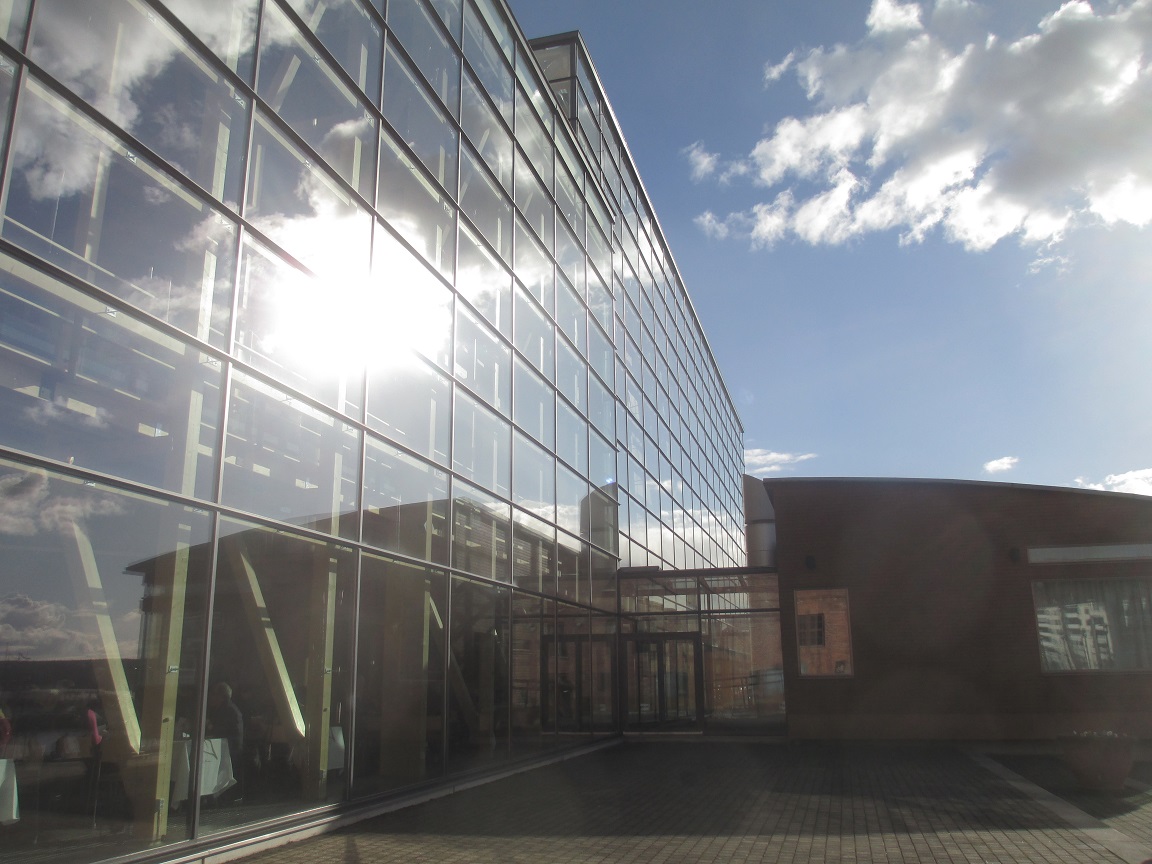
Lahti’s Sibelius Hall, situated on the edge of a lake, also enjoys a rarefied light, this time piercing the huge glass panels that frame the concourse, from which the audience are led to the spectacular wood panelled hall.

The resurgence of the Lahti Symphony Orchestra in the last 25 years has seen it draw level with – and arguably pass – its compatriots in Helsinki, due largely to the remarkable leadership of Osmo Vänskä.

It was here, in the Sibelius Hall, that the Association officially blew out the 50 candles on the cake on 24 April. To do so they were aided by Lahti’s composers in residence present (Kalevi Aho) and past (Jonas Kokkonen), and Okko Kamu, now the orchestra’s chief conductor. He conducted Aho’s short 1982 piece Hiljaisuus (Silence), an atmospheric piece of mood music that swells into an angry climax before subsiding. Aho himself was visible in the interval, drinking a Sibelius beer in a wonderful demonstration of unity!

We then heard only the orchestra’s second performance of Beethoven’s Triple Concerto, which was the relative disappointment of the evening. In the best performances this piece can be a frothy extravagance but here it sounded short on rehearsal time and humour. Soloists Réka Szilvay (violin), Marko Ylönen (cello) and Heini Kärkkäinen (piano) seemed disjointed, tending to look at their music rather than each other, while the elegant orchestral accompaniment, nicely shaped by Kamu, often disappeared behind the bluster of the front three.

This disappointment was quickly removed by some wonderful Sibelius to start the second half, a joyous Festivo from the suite Scènes Historiques Scene I. Then we heard a new commission, Arctic Light, from the orchestra’s principal bassoonist Harri Ahmas. This bold and descriptive piece effectively transferred the listener back outside to the lake, the shadows moving and the light dancing on the cold water. Perhaps unusually for a new piece of orchestral music the most effective music came at the end, a powerful resolution of quiet harmonic tension. Not a sound could be heard in the hall at the end.

Finally the Kokkonen; an elusive but attractive piece with lovely orchestral colours, a tight structure and an elegiac mood putting it close to late Vaughan Williams. The elegant melodies were beautifully teased out from the texture by Kamu, while the clarity of the orchestral sound was consistently impressive.


The Lahti Symphony Orchestra play the end of the Lemminkainen Suite under Okko Kamu at the Sibelius Festival 2013.

The previous night Helsinki’s Music Centre played host to the Helsinki Philharmonic Orchestra and Eivind Gullberg Jansen, in a concert whose first half featured clarinettist and composer Jörg Widmann in both his disciplines. Firstly Con brio took its lead from Beethoven’s Fifth Symphony, with fragmented motifs fired between sections of the orchestra like light sabres. This was a clever piece, but not for cleverness’ sake, Widmann communicating by striking orchestration, powerful dynamic variations and a number of quirks from the timpani.

The contrast between this and Mozart’s Clarinet Concerto could hardly have been greater, though Widmann – now with clarinet in hand – negotiated the switch with ease. In the slow movement he was especially sensitive, and although he did not appear to be playing with a basset clarinet – which reaches lower notes in the concerto – the elegance and grace of the performance were really attractive.

Finally a Russian powerhouse, Rachmaninov’s Second Symphony, showed the versatility of the Helsinki Philharmonic. There was a little in reserve here compared to Russian interpretations, but Jansen clearly loves the piece and knew what he wanted to do with it. A lovely clarinet solo enabled the famous Adagio to hit the emotional heights, but the second and fourth movements didn’t fully harness the power at Rachmaninov’s disposal.

From both these concerts, however, it was abundantly clear classical music is in very good health in Finland. Contemporary music is encouraged, orchestral players clearly enjoy their work and venues are – quite literally – blossoming. Go and visit if you can! And if you need any further convincing, watch this video to see just how good the Helsinki Philharmonic are at contemporary music…

A New World in old clothes

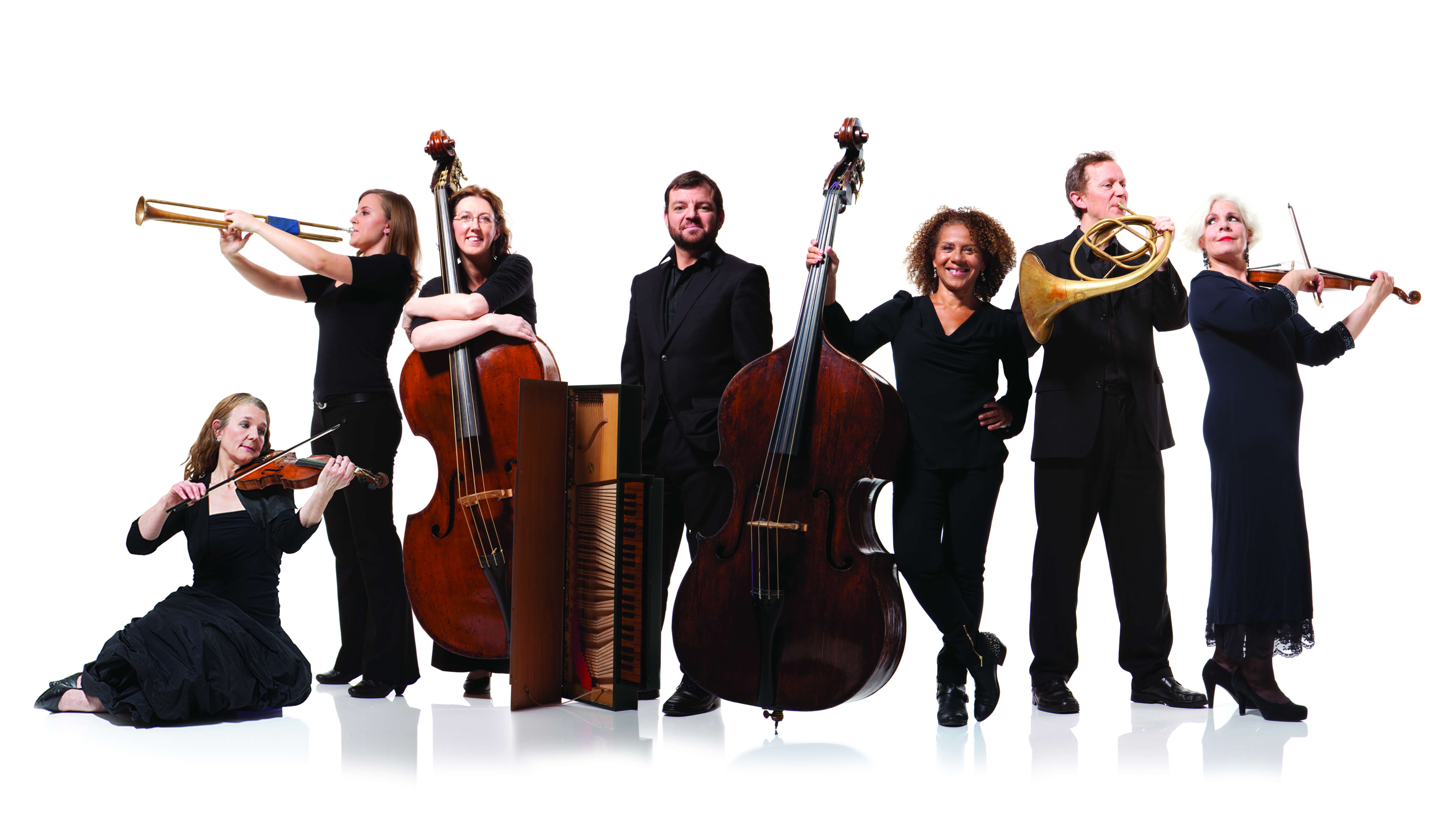
A New World in old clothes – The Orchestra of the Age of Enlightenment, conducted by Adam Fischer, bring new life to Dvořák’s New World symphony, with Brahms’ Violin Concerto from Viktoria Mullova
oae
Viktoria Mullova (violin), Orchestra of the Age of Enlightenment / Adam Fischer – The Anvil, Basingstoke, live on BBC Radio 3, 26 February 2015

Listening link (opens in a new window):

http://www.bbc.co.uk/programmes/b0535tzx

on the iPlayer until 28 March

Spotify

For those unable to hear the broadcast, here is a Spotify link to the same program – with Viktoria Mullova’s recording of the Brahms included.

What’s the music?

Smetana: The Bartered Bride Overture (1865) (7 minutes)

Brahms: Violin Concerto (1878) (39 minutes)

Dvořák: Symphony no.9 (From the New World) (1893) (45 minutes)

What about the music?
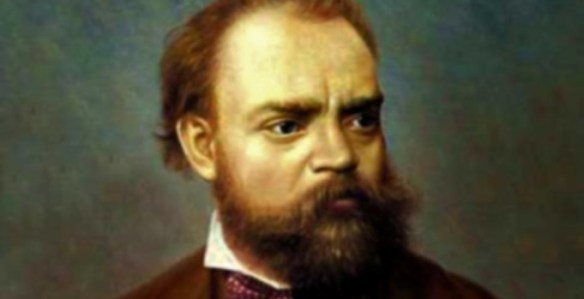
dvorakThe composer Antonin Dvořák

This is a ‘period instrument performance’ – that is, played on instruments either from the time the music was written or before – and performed in a style audiences of the day might have witnessed. It is relatively rare for the Orchestra of the Age of Enlightenment to venture this far forward in time, for their instruments tend to be more geared towards the performance of music between 1700 and 1850.

They begin with a popular overture, a crowd pleaser – the curtain raiser for Bedřich Smetana’s comic opera The Bartered Bride. The work is something of a Czech institution, full of Smetana’s interpretations of Czech dances such as the polka and furiant. As BBC Radio 3 presenter Martin Handley says, Smetana became ‘the father of Czech nationalism’ through his patriotic and uplifting set of works for orchestra, Ma vlast (My Country), completed in 1879.

Dvořák was a Czech composer, but the action in the New World symphony takes place far from home. Always one to fill his music with good tunes, the composer turned to American heritage for a lot of his source material, declaring in the New York Herald that “In the negro melodies of America I discover all that is needed for a great and noble school of music“. Dvořák was homesick at the time, and the melancholy tinge to some of his tunes reflects that.

The symphony was commissioned by the New York Philharmonic and given its first performance in Carnegie Hall in 1893, and has been extremely popular ever since. In recent years themes from it have frequently been heard on TV, most famously when the tune of the second movement Largo was used in a Hovis advert.

In between these Bohemian classics is music by Brahms, his Violin Concerto – which, at the time of composition, was one of the biggest such works around. It was written for the Hungarian virtuoso Joseph Joachim, a composer himself – and he had considerable input into the piece, having also commissioned a concerto from Dvořák. When receiving the parts for the first time Joachim remarked on the symphonic design of the concerto, and on how difficult it was to play – even for him!

The first movement is a big unit in itself, lasting longer than the second and third put together but gripping the listener as a closely fought dialogue between violin and orchestra, both seemingly on equal terms. The third movement finale is based on a gypsy tune, and caught the eye of Paul Thomas Anderson, who chose it for the closing credits of his film There Will Be Blood.

Performance verdict

Having emphatically blown away the cobwebs with a vigorous account of the Smetana overture, the Orchestra of the Age of Enlightenment get their teeth into Brahms.

The Violin Concerto benefits from their slightly smaller numbers, and thanks to Fischer’s conducting we can really hear all the inner workings of the orchestral introduction. The pace is relatively slow at this point, but picks up when the violin enters. Mullova’s tone is lovely, though just occasionally in the first movement she is a little ‘under’ the note of the orchestra – which, given the performance is on period instruments, could even be due to the heat in the venue.

The rustic finale has plenty of swagger, enthusiastically led by Mullova, while the slow movement – which seems to go quickly here – is beautifully rendered.

For the Dvořák the lean textures of the orchestra bring out the beauty of his melodies, and also the strong sense of longing the composer felt from New York for his home. The spiritual melodies help him to express this, but Fischer also keeps the spirit of dance to the fore.

What should I listen out for?

Smetana

2:24 – a brisk and breezy introduction from the orchestra. Soon the violins take up a rushing theme, as do the violas (3:08) and then the cellos and basses. As with much of Smetana’s fast music he generates terrific energy.

Later there is a gentler passage for the woodwind, with a more ‘reedy’ sound than a modern symphony orchestra would provide. This is rudely interrupted by the drums.

The music dips and then comes back with a terrific crescendo, where it feels like the players are standing on tiptoe.

Brahms

12:08 – a smooth, ‘legato’ start to the first movement, marked Allegro non troppo (fast but not too fast). This is the beginning of a long orchestral introduction. It is a long time before we hear the violin

14:22 – a sudden injection of power from the strings, a moment of real drama in this music that prepares the way for the entry of the violin 20 seconds later.

20:08 – the violin now takes up the energetic music the strings had earlier, and this is taken up by the full orchestra. There follows a lovely unison melody at 21:27.

24:25 – the culmination of the movement, violin soaring above the orchestra.

27:45 – deep unease in the violin part as Brahms writes some very uncertain double stopping for the instrument, with mysterious lower strings, until the injection of power happens again at 28:02. This leads through to…

29:13 – the start of the cadenza, a showy section for violin alone. This is a pivotal part in any performance of the Brahms, as a large number of cadenzas from different composers are available – or the soloist can perform their own. I suspect this one is by Joseph Joachim. The orchestra return at 32:07 and the mood has changed to one of calm reflection – which builds to an affirmative finish at 33:40 – at over twenty minutes, a first movement of impressive size!

34:50 – the start of the slow second movement, marked Adagio (slow). Soothing horns and woodwind set a scene of calm. If the music ever sounds out of tune, this is because the brass have a ‘temperament’ that can be slightly out of kilter on certain notes. If anything it makes the music more authentic! The violin comes in at 36:49 with a sweetly toned melody.

42:34 – a wonderful gypsy tune to begin the finale, which sounds full of the open air. This performance brings out the dance, and Mullova takes the lead effortlessly. Lovely woodwind trills at 43:11 too. The catchy tune appears on a number of occasions, structured by Brahms as a ‘Rondo’, running through to the end at 50:30.

Dvořák

1:16:19 – a solemn introduction on lower strings, then woodwind, before the full orchestra interrupt suddenly. Gradually the tension builds before a statement of the main theme of this movement from the horn (1:18:08)

1:18:38 – full brass on the theme, then the texture drops to 1:19:09 and a dance-like melody.

1:20:17 – another tune from the flute, slightly mournful this time, but then given more power by the brass (1:20:44), at which point the horn returns to the tune from the opening.

1:25:19 – the recap of the symphony’s themes so far begins with the horn once again, then the introverted flute tune (1:26:01), then moving seamlessly to the slighty mournful flute tune (1:27:01) – again heard with much greater power a few moments later. There is then a tautly argued close.

1:29:26 – the famous second movement Largo begins, with its homesick melody first heard on the cor anglais at 1:30:07. This is wonderfully controlled by the OAE’s Gonzalo X. Ruiz.

1:32:09 – a more involved section starts with the strings gradually moving the music on by way of a variation on the main theme. Beautifully hushed in this performance. Then the cor anglais returns at 1:33:01.

1:34:02 – the music switches key from major to minor and a darker shadow emerges, but at 1:37:10 this is emphatically put to rights by the woodwind – and then we hear a reference to the first movement in the loudest part of the Largo.

1:38:03 – the tune returns, again on the cor anglais – and then we get the solemn music of the brass introduction, now closing a rather special reverie.

1:41:48 – the third movement (a Scherzo) begins, with spiky fragments from flute and clarinet, taken up by the violins at 1:42:17 and debated by the whole orchestra. This section is repeated.

1:43:23 – another winsome melody from Dvorak, begun by the woodwinds, before the music works its way back round to the mood of the opening.

1:44:46 – this symphony has its mysterious moments, and here is another from the cellos and basses – before yet another catchy melody begins in the woodwinds at 1:45:07. This works around to another statement of the main tune (1:47:10). The orchestral sound is still wide open, as though standing on the prairie. We hear all the tunes again, then the horn brings in another reference from the symphony’s first movement at 1:49:08.

1:49:53 – a terrific sense of expectation with the introduction to the final movement here, justified by the theme that appears on the brass at 1:50:10. This is music of great resilience. Then at 1:51:05 an equally thrilling and persuasive dance tune appears. Yet another big and resilient tune appears at 1:52:31.

1:55:31 – at this point Dvorak brings back the main theme from the symphony’s first movement, now in defiant guise, with extra input from the brass. This theme effectively ‘resets’ the symphony, the feeling now of greater resolution – even when Dvorak skilfully combines two themes at 1:58:35 and we hear some pretty discordant music. The music subsides until…

1:59:57 – the coda of the symphony, with a solemn utterance of its first theme, then proclaimed by the orchestra to an ultimately winning finish over rolling timpani, ending at 2:01:10.

Want to hear more?

How about some dances? All three composers wrote dances for orchestra, so here is a playlist combining two other dances from Smetana’s The Bartered Bride, some Hungarian Dances by Brahms and finally some of Dvořák’s winsome Slavonic Dances with Adam Fischer. As another bonus, dropped into the middle is Dvořák’s own Violin Concerto, written for Joachim and played here by Julia Fischer:

For more concerts click here

Rattle conducts Sibelius – Symphony no.7

Rattle conducts Sibelius – Symphony no.7, in the last of a three-concert residency from the Berlin Philharmonic Orchestra, performing all the composer’s symphonies

sibelius-symphony-7

Berlin Philharmonic Orchestra / Sir Simon Rattle – Barbican Hall, live on BBC Radio 3, 12 February 2015.

Listening link (opens in a new window):

http://www.bbc.co.uk/programmes/b051czxp

on the iPlayer until 13 March

Spotify

For those unable to hear the broadcast, here is a Spotify link. Sir Simon has not recorded this piece with the Berlin Philharmonic, but this is a recording he made with the City of Birmingham Symphony Orchestra for EMI (track 6):


What’s the music?

sibelius-7-dad
(c) Brian Hogwood

Sibelius – Symphony no.7 in C major, Op.105 (1924) (22 minutes)

What about the music?

This symphony is a remarkable piece of work that reveals more and more with each subsequent listen. Initially it can seem too simple in its melodic material or too dense in the sheer amount of ideas, but in fact it is an amazingly self-contained unit, like a single long melody lasting for just over twenty minutes.

Sibelius worked on it at the same time as his Sixth Symphony, hence the reason for Rattle performing the two together without a break – but the recommendation (from here at least!) is to make the most of each piece on separate terms.

In my mind’s eye I often feel as though this piece is a seascape, with the spray almost tangible to the touch. The music is brooding at times, and its complex harmonies can twist the human response, but it is an overwhelmingly positive way in which to finish a symphonic cycle. And how better to finish than with a C major chord, regarded as the purest in all music?

Performance verdict

Rattle’s interpretation of the Seventh would appear to be spot-on tempo-wise, and as is the conductor’s wont it picks apart the structure to highlight all the different themes the composer uses – yet is always moving forward to the next musical ‘signpost’.

In each of the three occurrences of the trombone theme he stresses its heroic quality, and the overall impression of the symphony is a positive, resilient one.

What should I listen out for?

The symphony is in a single section, and though it is possible to break it in to constituent parts, it is so compressed and tightly bound together that is it best to listen to it as a single whole.

1:31:24 – a single timpani roll ushers in an ascending scale on the lower strings. Already the music is noticeably broader than the Sixth Symphony.

1:32:13 – the wind play a relatively distant figure that assumes great importance as the symphony progresses.

1:36:43 – the strings swell to a rousing theme on the trombones, just about rising above the whole orchestra.

1:41:00 – now the music is speeding up, with the strings adopting a similar figure to that found in faster moments of the Sixth Symphony.

1:41:52 – the swirl of the violins gets gradually slower, until 1:42:11, where the trombones return with their tune, now more isolated.

1:43:43 – the quicker theme returns on the woodwind.

1:48:21 – the ascending scale from the opening of the work simmers, but there is a tension between two different speeds before the trombone theme returns at 1:48:40.

1:51:43 – the final section, which ends with what seems the simplest resolution at 1:53:02.

Want to hear more?

After the Symphony no.7 – if you’re on Spotify – keep listening and you will hear another of Sibelius’s orchestral ‘tone poems’ – that is, an orchestral piece that describes a particular story or event. This one, Nightride and Sunrise, is not so well known, but is a descriptive work that draws on an unknown sequence of events for the composer.

For more concerts click here

Rattle conducts Sibelius – Symphony no.6

Rattle conducts Sibelius – Symphony no.6, in the last of a three-concert residency from the Berlin Philharmonic Orchestra, performing all the composer’s symphonies

sibelius-symphony-6

Berlin Philharmonic Orchestra / Sir Simon Rattle – Barbican Hall, live on BBC Radio 3, 12 February 2015.

Listening link (opens in a new window):

http://www.bbc.co.uk/programmes/b051czxp

on the iPlayer until 13 March

Spotify

For those unable to hear the broadcast, here is a Spotify link. Although Sir Simon has recorded the first symphony, with the City of Birmingham Symphony Orchestra, I could not find this for listening. I have therefore inserted a ‘replacement’ version with the Lahti Symphony Orchestra conducted by Osmo Vänskä on BIS.


What’s the music?

sibelius-6-dad

Sibelius – Symphonyno.6 in D minor, Op.104 (1923) (30 minutes)

What about the music?

The Sixth is often glossed over in the course of the Sibelius symphony cycle, coming as it does between the very popular Fifth and Seventh – but repeated study reveals that musically it is the ideal complement to them both.

The composer himself said it reminded him of ‘the scent of the first snow’, or even, in a wonderful quote, ‘Whereas most other modern composers are engaged in manufacturing cocktails of every hue and description, I offer the public pure cold water’.

That crisp air is evident right from the beginning of the music, and indeed it is more a succession of feelings rather than obvious tunes that shape the impact of the work. The compact scale of the orchestra recalls the Symphony no.3, but if anything Sibelius goes further in his economical use of the forces available.

In an interview on the radio prior to this performance Sir Simon Rattle draws attention to the panning of the composer’s symphonies by such lofty figures as Theodor Adorno, who regarded him as ‘the worst composer ever’. Each to their own, I suppose, but one listen even to this lesser known symphony shows this is absolutely not the case!’

Rattle chooses to perform the Sixth and Seventh together, without a break, so if you want to hear them individually (which I personally prefer!) you will have to stop listening quickly at 1:31:20.

Performance verdict

This is a brilliantly played and ideally paced account of the Sixth, to my ears, one that captures the outdoors, the listener feeling as though they are stood at an open door catching the air.

The third movement Scherzo is particularly thrilling, but it is the nuances and detail that Rattle captures within the score that ensure each phrase and unit is brought to life.

What should I listen out for?

First movement (marked Allegro molto moderato) (fast but very moderately so)

1:01:45 – immediately there is a serene air to the strings, a cool but bright and refreshing sound. Because the instruments are high the music is weightless, the depth of the orchestra only really heard just over two minutes in.

1:06:25 – a wispy figure winds its way up from the lower strings, the energy levels slightly raised. This leads to a bright, chirpy sequence from the woodwind with more incisive rhythms.

1:09:38 – what feels like a cold wind blows in from the strings and timpani, darkening the music. The end arrives quickly just over a minute later.

Second movement (marked Allegro moderato) (moderately fast)

1:11:01 – a clear beginning to this movement from the woodwind. Flutes and clarinets are prominent in this movement and indeed the whole symphony.

1:12:48 – at this point the music does not have an obvious base, moving around quite quickly with small fragments of melody that are related but seem not to settle, like birds staying on the wing.

1:16:51 – the music labours a bit before the end before quickly breaking up. It is remarkable that Sibelius signs off a piece of music in this abrupt way, effectively adding to his music a firm full stop and a line underneath.

Third movement (marked Poco vivace) (a little lively)

1:17:10 – with Sibelius’s picture of the first snow in mind, this is perhaps the brisk wind on which the snow arrives. Strings swirl around before more detached rhythms assert themselves, and then the brass and timpani add extra depth with sweeping brush strokes.

One of the shortest sections of a Sibelius symphony, this is over in a flash, using a rhythm that rather recalls Beethoven’s Seventh Symphony.

Fourth movement (marked Allegro molto) (very brisk)

1:20:53 – Once again we have an open orchestral sound, with beautifully phrased woodwind figures.

1:22:45 – the strings bring a more vigorous episode into play, harking back to the mood of the previous movement. Despite its positive mood the music still feels restless and unable to settle for long – until 1:23:52, where it takes a stronger root and now has quite a punch through the weight of the string section. There are now some more obvious motifs from the violins in particular.

1:28:16 – a slightly slower and more thoughtful passage from the strings, who come into play much more in this movement.

1:30:55 – the music slows to a pensive close.

Want to hear more?

A good companion piece to the Symphony no.6 is Tapiola, one of Sibelius’s last works – a descriptive piece based on a forest spirit that has an uncannily vivid description of what feels like a passing snow storm.

You can hear it on Spotify here (track 6):

For more concerts click here

Rattle conducts Sibelius – Symphony no.5

Rattle conducts Sibelius – Symphony no.5, in the last of a three-concert residency from the Berlin Philharmonic Orchestra, performing all the composer’s symphonies

sibelius-5

Berlin Philharmonic Orchestra / Sir Simon Rattle – Barbican Hall, live on BBC Radio 3, 12 February 2015.

Listening link (opens in a new window):

http://www.bbc.co.uk/programmes/b051czxp

on the iPlayer until 13 March

Spotify

For those unable to hear the broadcast, here is a Spotify link. Although Sir Simon has recorded the first symphony, with the City of Birmingham Symphony Orchestra, I could not find this for listening. I have therefore inserted a ‘replacement’ version with the City of Birmingham Symphony Orchestra for EMI (from track 4):


What’s the music?

sibelius-5-swan

Sibelius – Symphony no.5 in E flat major, Op.82 (original version 1915, revised by 1919) (31 minutes)

What about the music?

This – quite simply – is one of the greatest symphonies of the 20th or any century. It is also one of Sibelius’ best known and loved works, being in a sense the sunrise to the Fourth Symphony’s darkness.

The construction of the first movement has occupied musical commentators for nearly a century now, debating its structure, and how Sibelius joins the music seamlessly from one section to another. All we need to know for now is that this wonderfully positive music.
Sir Simon Rattle speaks of this piece as offering a ‘revolution of rhythm and movement’, and saying how its ability to grow at a steady period of intensity is ‘not from any Western culture’. He likens it to Indonesian or Balinese music, though it is unlikely Sibelius would have heard much if any of these cultures.

The density of the music is striking, but this is not difficult music to listen to – rather it is wide open, a celebration of nature and the outdoors. In the third movement Sibelius specifically celebrates the swans, recalling an instance where he saw a flock of them take flight at once, but also reproducing their calls in music.

Performance verdict

The playing of the Berlin Philharmonic is beyond criticism in this Fifth, but now and again questions are raised as to how much the music is actually instinctive for them, for this is music they do not often play (putting my snobby hat on, I would say I prefer this piece given by a Finnish orchestra!)

Rattle gives everything to his interpretation, of that there is no doubt, but there are some moments where the speed drags and the momentum of the music is harmed.

This issue comes up most prominently right near the end, as the tempo slows – but at no point do the orchestra lose the conviction of Rattle’s thoughts, and the ending itself is thoroughly convincing.

What should I listen out for?

First movement (which has a whole host of tempo markings)

4:25 – the wide open textures of the music are immediately obvious in themes from horn and woodwind. A serene, outdoor atmosphere is set.

5:50 – the violins interject with a note that raises the possibility of the music accelerating. There are almost dual speeds at this point, with some fast moving music and some slow. This creates a wide impression of space.

6:44 – a syncopated theme on the violins. All the time the music is building and pressing forward. Still the music builds, the violins coming to the fore – like birds taking off.

11:25 – a big, hugely affirmative statement on unison strings

12:29 – the wonderful climax to this movement, where we hear the theme from the opening on the brass. At this point Sibelius exacts a wondrous transition into a faster section, seemingly without breaking stride.

13:29 – a tangible shift here, back to the ‘home key’* – and a terrific gathering of momentum.

16:45 – the timpani hit E flat and start a whirlwind of phrases all around this note, the music gathering tremendous excitement before rushing headlong over the edge of the cliff at 17:20.

Second movement (again a whole host of tempo markings)

17:48 – the woodwind begin an attractive movement that once again sounds as if from outdoors. The sonorities of the Berlin Philharmonic woodwind in this section are especially beautiful. The flute theme at the beginning forms the basis of the whole movement, which is a theme and variations*

20:42 – a lush and affectionate reference to the woodwind’s theme from the strings. The orchestral texture remains wide open, and the music increases in energy. The same five-note rhythmic figure dominates this movement (from 21:43)

The music speeds up considerable before Rattle puts the brakes on at 23:18. Gradually we arrive at a slow and peaceful close.

Third movement (once more a whole host of tempo markings)

26:14 – a drum roll takes us immediately back to the mood of the first movement, with rushing strings giving the impression of trees flying past on a fast journey.

27:28 – the horns ring out in a theme closely related to the first one of the first movement. Here the mood is more regal.

30:43 – now the music is much quieter and more mysterious. The shimmering violins make reference to the horn theme described previously, like ripples on a lake. Then the music slows rather.

Rattle now slows the music considerably, and the theme sounds again, this time on trumpets at 32:35. The full power of the orchestra gathers again to the ‘home key’:

34:50 – a series of six massive chords end the symphony

Want to hear more?

After the Symphony no.5, the best next port of call is the next in the symphonic cycle, the Sixth – coming up in this series.

Glossary

*Home key – the base of the music – that is, the note on which the whole of a piece is based. The music may journey a considerable distance from this note, but if a piece is said to be ‘in E flat’, then it would normally be expected to start and finish with music based on those notes.

*Theme and variations – a common tactic in classical music, to introduce a theme and then construct a set of different themes that derive from it.

For more concerts click here