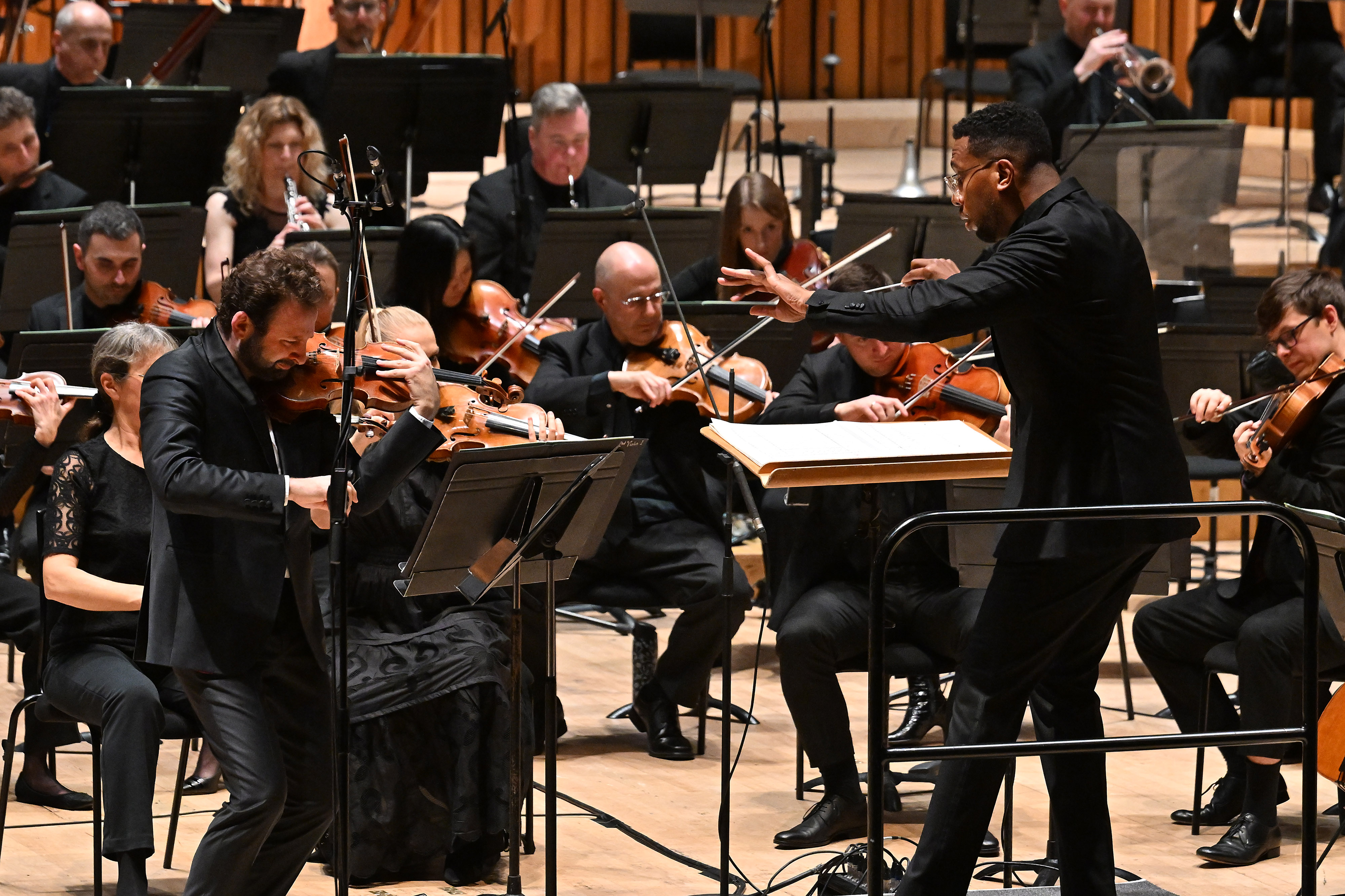
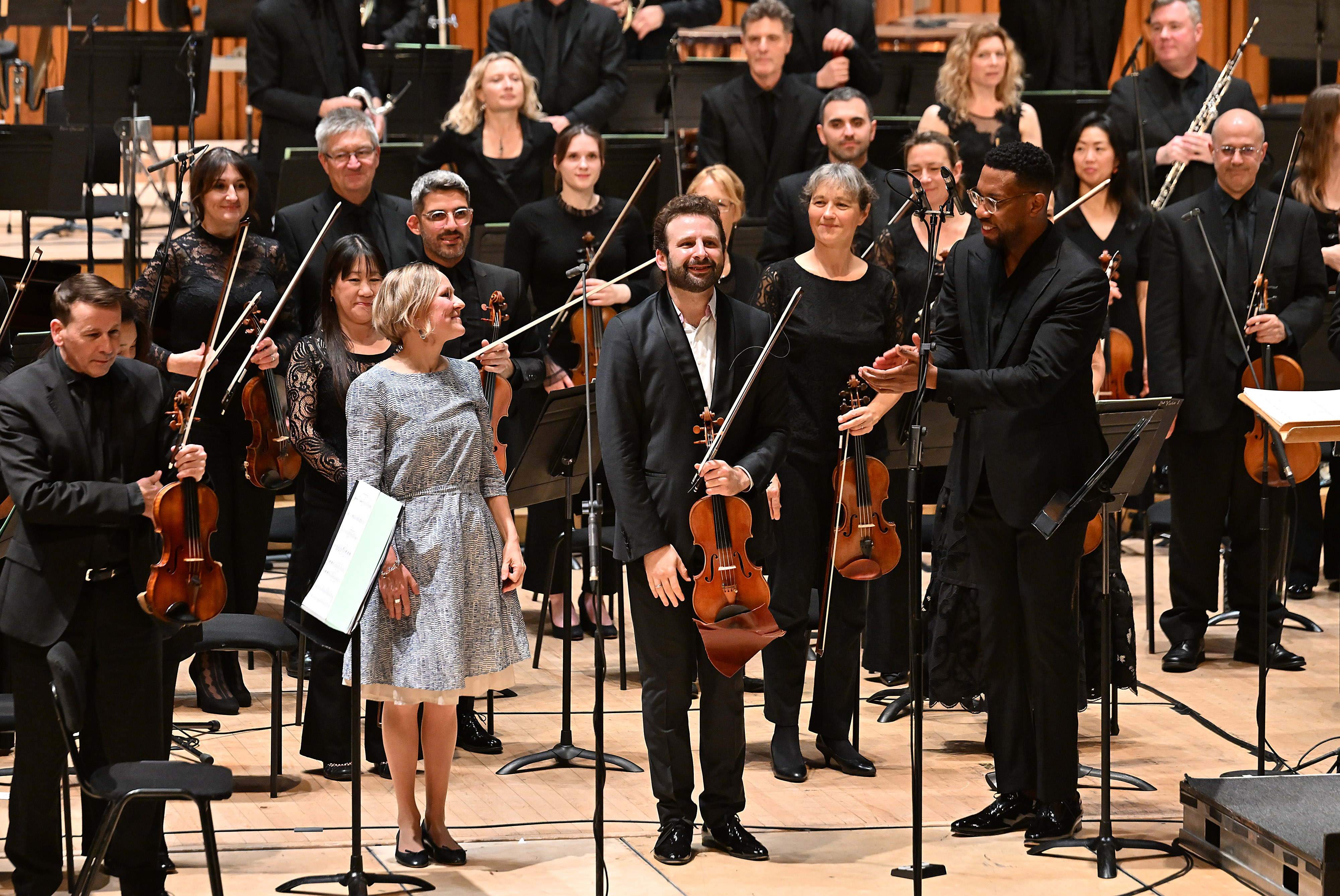
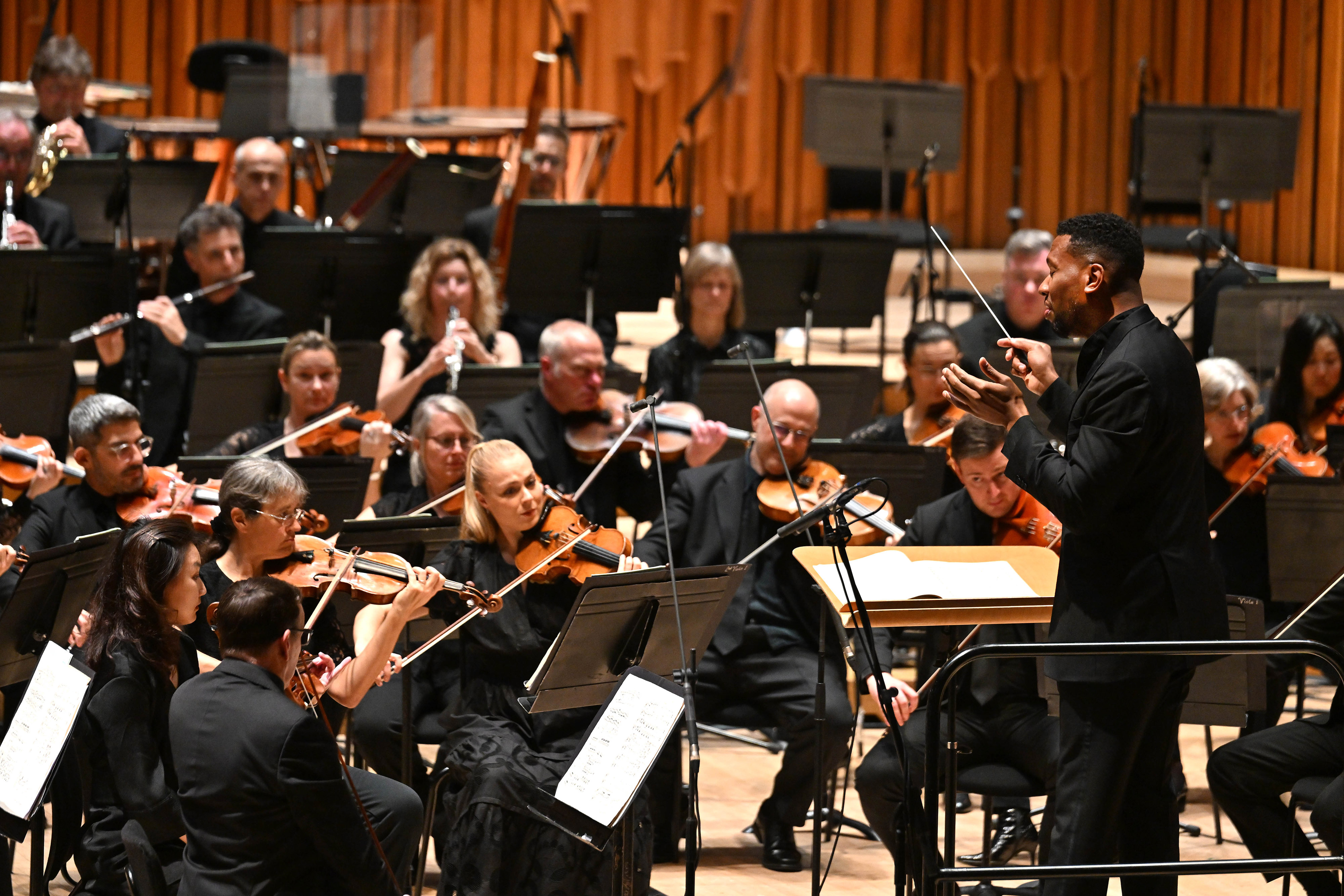
In concert – Brian Eno & Baltic Sea Philharmonic @ Royal Festival Hall

Brian Eno (vocals, instruments), Melanie Pappenheim (vocals), Leo Abrahams (guitar), Peter Chilvers (instruments, software), Peter Serafinowicz (vocals), Baltic Sea Philharmonic Orchestra / Kristjan Järvi

Brian Eno
The Ship [The Ship, Fickle Sun (I), Fickle Sun (II) The Hour Is Thin, Fickle Sun (III) I’m Set Free]
By This River, Who Gives A Thought, And Then So Clear, Bone Bomb, Making Gardens Out Of Silence, There Were Bells

Royal Festival Hall
Monday 30 October (9 pm concert)

by Ben Hogwood photos (c) Ben Hogwood, not to be reproduced without permission

The estimable Setlist website, documenting the concert history of artists and bands, has a notable seven-year gap between Brian Eno’s last live appearances and this new tour, in which he has been bringing an orchestral perspective to his 2016 album The Ship.

Many artists in Eno’s ambient sphere have looked at the orchestra as a vehicle for original composition, but more recently the tendency has been for artists to use it to regenerate past material, and – perish the thought – boost awareness and bank balance by association through touring. This tactic is clearly not for Eno, who invested a great deal of time in finding the right ensemble before even looking at the layout of this tour. Seeking fresh talent and players with flexibility, he alighted on the Baltic Sea Philharmonic Orchestra, a ten-year-old ensemble conducted by the dynamic Kristjan Järvi. It is fascinating to think that Kristjan, part of a remarkable Estonian conducting trio after father Neeme and elder brother Paavo, is creating new directions for his family, stepping out on ever more adventurous voyages into contemporary music.

This one – on the banks of the Thames – takes its lead from the most famous voyage of the 20th century, the Titanic. Yet Eno chooses not to tell the story in graphic detail, portraying the ship instead through shades of orchestration, atmospheric noise and folk-like utterances. These are made through his own sonorous tones, which worked in this concert to vivid effect. The sonic picture was surely aided by the inclement weather in the UK, the audience becoming part of the vessel as the sea spray splashed against the side. Meanwhile the creaks of the orchestra’s wooden instruments portrayed the boat’s natural bowing and bending.

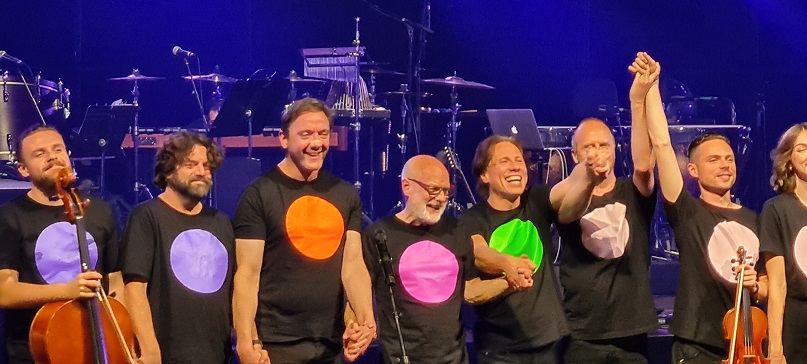
Eno’s music for The Ship reflects his ambient work, in which the music makes incremental changes in its own sweet time, but it shows how ambient music can also be loud. As time progressed this performance assumed a dramatic intensity way above that of the home listening experience. The orchestra’s control was a key aspect, with Järvi ensuring the musicians had as much freedom as they wanted. He walked around the stage to cajole individual players or sections, then faced the audience as though looking out to sea himself. Dressed in colour-co-ordinated t-shirts, the players could see each other and their conductor in the dark – not to mention the cerise shirt of Eno, a point of vivid colour in the middle.

Eno’s vocal was complemented by the understated yet versatile voice of Melanie Pappenheim, and the thoughtful input of guitarist Leo Abrahams and keyboard player / software designer Peter Chilvers. Also present was the actor and comedian Peter Serafinowicz, reading a monologue on war through rich bass tones.

The Ship, a three-movement suite, had at its heart Fickle Sun, itself in three parts. Here the onward motion of the orchestra was irresistible, still moving slowly like the Titanic but flattening everything in its path. Then, the struggle over, Eno reached for the Velvet Underground cover I’m Set Free, its heart-shifting chord progression nudging at the emotions with every repetition, providing an tidal swell for the audience.

This performance was a triumph of spirit and resolve, a warming combination in these troubled times. The encores continued in the same vein, though the deeply uncomfortable Bone Bomb, from 2005 album Another Day On Earth, provided painful relevance with its response to an article on a suicide bomber in Palestine. Eno paused the music after this to give his own unstinting views on the conflict with Israel, declaring proceeds from the Ships gigs would go to help those suffering from the war in Gaza.

Of the other encore items Making Gardens Out Of Silence, from last year’s ForeverAndEverNoMore, reached a more obvious inner peace, before There Were Bells, found Eno’s music once again reaching beyond the ambient to find notes of sustainable emotional power. Equal strength was found in By This River, the earliest music of the night (from 1977), and the track that stayed with the audience long after the concert had finished.

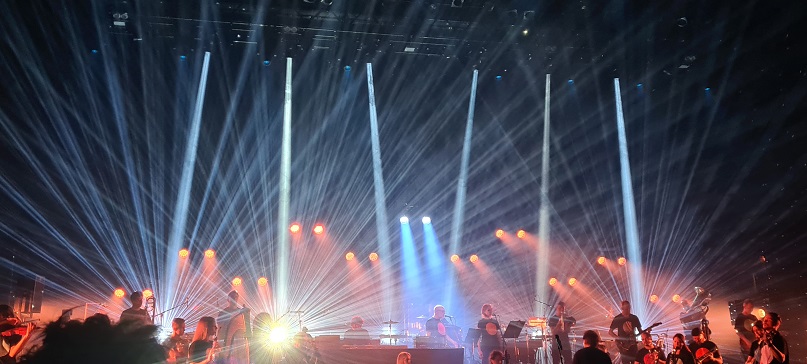
At the end Eno and Järvi generously credited the band and orchestral musicians, looking beyond to single out those responsible for monitoring and lighting, two crucial overlooked b but crucial elements of any performance. The lighting was wholly suitable, the relative darkness allowing the audience to use their mind’s eye in response to Eno’s resolute constructions. Thus was a memorable evening, and one in which the main man himself was also deeply moved.

In concert – Mimi Doulton, Thando Mjandana, BCMG: Songs at Day, Songs at Night

Mimi Doulton (soprano), Thando Mjandana (tenor), Birmingham Contemporary Music Group / Vimbayi Kaziboni

Kidane Primitive Blaze (2022)
Birtwistle Today Too (2004)
Birtwistle …when falling asleep (2018)
Kendall Tuxedo: Between Carnival and Lent (2022)
Kidane Cradle Song (2023) [BCMG Sound Investment commission: World premiere]
Anderson Mitternachtslied (2020) [UK premiere]
Anderson THUS (2023) [World premiere of final extended version]

Elgar Concert Hall, University of Birmingham
Wednesday 18 October 2023

Reviewed by Richard Whitehouse

A varied programme greeted attendees at tonight’s concert from Birmingham Contemporary Music Group (to be repeated in Bristol on October 29th), consisting largely of vocal pieces and directed with precise assurance by the highly regarded (justifiably so) Vimbayi Kaziboni.

Equally well regarded at present, Daniel Kidane (recently signed to Schott) was represented by two works – of which Primitive Blaze made for an effective curtain-raiser with its array of interlocking rhythmic patterns whose elaboration brought greater emphasis on a linear continuity in its wake. Both the electric guitar and tenor saxophone were prominent within this ensemble – the latter instrument emerging at the forefront in the final stages, when its plangent tones signified a closure as decisive formally as it sounded decidedly equivocal.

Next came settings by Harrison Birtwistle. To a text by the 18th-century Japanese poet Tanko (translated by Joel Hoffman), Today Too found tenor, flute and guitar evoking a twilit scene whose ominous elements are subsumed into an aura of shimmering, even sensuous stillness.

Rehearsal considerations necessitated exclusion of the David Harsent setting From Vanitas (hopefully not in Bristol) but not of …when falling asleep – Birtwistle’s last completed work, which intersperses lines by Rilke (translated by Jochen Voigt) with those by Swinburne in a sequence the more affecting for its understatement. Mimi Doulton brought a keen eloquence to the sung component, though Thando Mjandana seemed a little tentative with those spoken in parallel, and quite why the final lines of his contribution had been excluded was unclear.

Doulton returned for Between Carnival and Lent – one of Hannah Kendall’s ongoing Tuxedo series drawing on the art-print of that name by Jean-Michel Basquiat; abrupt juxtaposition of keening melisma with spoken polemic rather tending to cancel out each other as it proceeded.

Mjandana duly came into his own with the premiere of Cradle Song, Kidane’s setting of verse from the poem by Blake, though an evident desire to avoid the winsomeness associated with ‘innocence’ led to a highly rhetorical vocal line surely at odds with the semantics of this text.

The evening closed with two settings by Julian Anderson, both from his song-cycle In statu nascendi and drawing on a linguistic variety of verse in the context of an ensemble similar in line-up while not in usage to that of Schoenberg’s Pierrot Lunaire. Nietzsche (in the original German) was the basis for Mitternachtslied, familiar lines here exuding an anguished elation wholly different from that encountered in Mahler or Delius. Longfellow at his most visionary was the starting-point for THUS, building gradually from speculative beginnings towards a climactic section whose visceral impact felt less a setting than an intuitive riposte to its text. This premiere of the ‘final extended version’ drew a forceful though slightly self-conscious response from Doulton, in what seems the likely culmination of the song-cycle in question.

It certainly brought to a striking close a programme whose relative short measure was more than outweighed by its variety or its intrinsic interest. Hopefully those who hear it in Bristol will be equally responsive to its enticements as those who were present at Elgar Concert Hall.

For ticket information on the forthcoming Bristol concert on Sunday 29 October, click here, and click here for more information on the Birmingham Contemporary Music Group. Click on the artist names for more information on Vimbayi Kaziboni, Mimi Doulton and Thando Mjandana, and on the composer names for more on Julian Anderson, Harrison Birtwistle, Hannah Kendall and Daniel Kidane

Published post no.1,986 – Sunday 22 October 2023

In concert – Pretenders @ The Electric Ballroom

Pretenders

Electric Ballroom, Camden, London
Thursday 19 October 2023

Reviewed by John Earls. Picture (c) John Earls

Chrissie Hynde, founder member, singer and leader of Pretenders has spoken about how this latest tour has focussed on playing nightclubs rather than theatres or arenas. And this performance at London’s 1500-capacity Camden Electric Ballroom amply demonstrated how this most enduring of bands can still cut it in this environment. And then some.

Losing My Sense of Taste is not just a gripping opener to their impressive latest (and twelfth) studio album Relentless but made for a powerful start to this 100-minute show that was full of energy, poise and attitude.

There certainly wasn’t any resting on the laurels of a ‘greatest hits’ package in a set that featured much relatively recent material. And how it rocked. Boots of Chinese Plastic and Don’t Cut Your Hair from 2008’s Break Up the Concrete were played back-to-back and were fast and furious but never out of control. Just one of many examples of how tight this iteration of the band are. Special praise to James Walbourne, co-songwriter on the more recent material, who played some magnificent guitar.

Of course, Pretenders have some well-known classics too and the two encores featured not only their excellent cover versions of The KinksStop Your Sobbing and I Go To Sleep but their own Back on the Chain Gang, Don’t Get Me Wrong as well as closing with ripping versions of Precious and Tattooed Love Boys from the very first Pretenders album released some 43 years ago.

This was sharp, powerful rock and roll with a nod to a punk sensibility including shout outs to Joe Strummer and Johnny Thunders. And of course no one quite sings a ballad like Chrissie Hynde, and stunning versions of You Can’t Hurt a Fool and Tequila proved to be cases in point. She remains one of the great voices of modern music. Actually, make that just one of the great voices.

John Earls is Director of Research at Unite the Union and tweets at @john_earls

You can listen to the new Pretenders album Relentless on Spotify below:

In concert – Musicians of the English Symphony Orchestra / Kenneth Woods: Blown Away – Doolittle, Gál & Dvořák

Musicians of the English Symphony Orchestra / Kenneth Woods

Doolittle Woodwings (2018, arr. 2021)
Gál Divertimento for Wind Octet, Op. 22 (1924)
Dvořák Serenade in D minor, B77 (1878)

Henry Sandon Hall @ Royal Porcelain Works, Worcester
Saturday 14 October 2023 (4pm)

Reviewed by Richard Whitehouse

Entitled Music for Humans, the coming season from the English Symphony Orchestra promises a wide array of pieces such as focus on what can be achieved through the art of communication and, conversely, what can result when that communication breaks down. This afternoon’s concert enabled the ESO woodwind (along with some of its brass and a couple of its strings) to come into its own with a varied programme as featured music from a regular ESO collaborator, one whom the orchestra has often championed and one who ranks among the greatest of any era.

It may have originated as a wind quintet, but Woodwings by Emily Doolittle (from Halifax, Nova Scotia and now based in Glasgow) proved no less effective when recast for 10-strong wind ensemble (with cello and double-bass) – songs and calls of nine Canadian birds heard over five characterful movements. These range from the playfully assertive Bobolink, via the inwardly plaintive Hermit Thrush and the quizzically engaging Winter Wren, to the cumulatively arresting Snow Goose then a Night Owls finale whose freeform evolution makes for an intriguing and enticing pay-off. First played by the ESO in Kidderminster just over two years ago, it once again provided an appealing concert-opener and certainly bodes well for the 2024-25 season, when Doolittle becomes the ESO’s Composer-in-Association.

The success of his Divertimento was a notable marker for the burgeoning career which Hans Gál enjoyed during the earlier inter-war period, and it remains among the most personable of his chamber works. ‘Intrata’ affords a keen indication of what is to come with its juxtaposing of the martial, hilarious and confiding, proceeded by the capricious exchanges of Pagliazza (inspired by the eponymous tower in Florence?) then the wistful interplay of Cavatina with Gál’s handling of wind sonority at its most beguiling. The mood turns towards the whimsical in the by no means genteel humour of Intermezzo grazioso, before the piece is rounded off with those varied character-portrayals of Pifferari – its title alluding to a group of itinerant musicians playing upon a variety of pipes, and thereby bringing matters to a diverting close.

Although less often performed than its earlier counterpart for strings, Dvořák’s Serenade for Winds (plus cello and double-bass) is arguably more indicative of where his genius lay. The martial theme of its opening Moderato is leavened by a ruminative poise that comes into its own with the minuet-like successor, its felicitous contours duly finding contrast through the animated gaiety of its Presto trio-section. The ensuing Andante is undoubtedly this work’s emotional heart – its eloquence redolent of Mozart in its understatement but also intimation of more ambivalent emotion in the ominous central stage or bittersweet fatalism at its close. From here the final Allegro steers an impulsive but also lilting course through to a climactic restatement of the march theme, then on to a coda that ends the work in exhilarating fashion.

In this judiciously balanced selection, ESO woodwind was heard at its most stylish in music whose appeal belies its technical challenges for individuals and ensemble alike. Next month the orchestra heads to Malvern for an imposing double-bill of Tchaikovsky and Shostakovich.

To discover more of the English Symphony Orchestra’s 2023/24 season, head to the English Symphony Orchestra website. Meanwhile click on the names for more on conductor Kenneth Woods, composers Emily Doolittle and Hans Gál, and the Royal Porcelain Works venue

Published post no.1,980 – Monday 16 October 2023

In concert – Jenebah Kanneh-Mason, CBSO / Andrew Gourlay: Coleridge-Taylor, Rachmaninoff & Wagner

Jenebah Kanneh-Mason (piano), City of Birmingham Symphony Orchestra / Andrew Gourlay

Coleridge-Taylor Ballade in A minor Op.33 (1898)
Rachmaninoff Piano Concerto No. 2 in C minor, Op. 18 (1900-01)
Wagner arr. Gourlay Parsifal Suite (1877-82, arr. 2017-18)

Symphony Hall, Birmingham
Thursday 12 October 2023 (2.15pm)

Reviewed by Richard Whitehouse

A regular collaborator with the City of Birmingham Symphony Orchestra over recent seasons, Andrew Gourlay returned to Symphony Hall this afternoon for a varied programme of music from the late nineteenth-century and one where his input extended to more than conducting.

The resurgence of interest in Samuel Coleridge-Taylor’s music continues apace, his Ballade a success at the Three Choirs Festival and no less an effective concert-opener today. Gourlay drew a keen rhythmic impetus from its outer sections, while making the most of the surging melody that comes between before it returns to dominate the closing pages. What (if anything more specific) this piece might be about remains uncertain, but its undeniable impulsiveness of expression carries all before it, not least in so vibrant and committed a performance as this.

Rachmaninoff’s Second Piano Concerto has never been more ubiquitous than it is today, and it takes a performance of some distinction to experience it afresh. That was not the case here, even though Jeneba Kanneh-Mason certainly contributed pianism of a high order – elegance of touch combined with crystal-clear articulation as made those more understated passages a pleasure to behold. What it lacked was greater projection elsewhere – piano all but inaudible at the climax of the first movement, despite Gourlay reining in orchestral dynamics – or that sense of the work as a long-term, cumulative entity. Intimate and confiding, the Adagio was the undoubted highlight and though the scherzando sections of the finale lacked a degree of incisiveness, the ‘big tune’ was eloquently rendered when it returned as a fervent peroration.

Overall, if this was a performance not quite the sum of its best parts, it confirmed this latest addition to the Kanneh-Mason dynasty is shaping up as a pianist with whom to reckon – as was demonstrated by her capricious take on Rachmaninoff’s Prelude in A flat major Op.23/8.

Symphonic syntheses from Wagner’s music-dramas (latter-day equivalent of those ‘bleeding chunks’ beloved of an earlier generation) have enjoyed something of a vogue in recent years, though Gourlay’s Parsifal Suite feels both more modest and more successful in its ambitions.

Writing in the programme, the conductor explained his concern had been to draw this opera’s numerous orchestral passages into a continuous as well as a cohesive sequence, with no need for ‘outside’ linking material. This he achieved by reordering those seven sections in question such that one segued naturally into the next. Thus the Prelude to Act One – opulent but never portentous – was followed by the Good Friday Music from Act Three, its beguiling pathos a perfect foil for the anguished Transformation Music from Act Three then the desolate Prelude to Act Three; now finding its continuation in the volatile Prelude to Act Two, before dramatic and musical equilibrium is restored with the Transformation Music from Act One – its stately progress here making possible the Finale to Act Three with its serenely enveloping catharsis.

Certainly, anyone deterred by the formidable length and gravitas of the complete opera will find Gourlay’s suite conveys its essence – not least as rendered with such poise and insight by the CBSO, in excellent shape prior to touring Germany and Switzerland later this month.

You can read all about the 2023/24 season and book tickets at the CBSO website. Click on the artist names for more information on pianist Jeneba Kanneh-Mason and conductor Andrew Gourlay, and for more on composer Samuel Coleridge-Taylor. Andrew Gourlay’s recording of the Parsifal Suite is available through Orchid Classics, and can be listened to below:

Published post no.1,979 – Sunday 17 October 2023