In concert – Isata Kanneh-Mason, CBSO / Ilan Volkov: Sibelius, Prokofiev & Freya Waley-Cohen

Isata Kanneh-Mason (piano), City of Birmingham Symphony Orchestra / Ilan Volkov

Sibelius The Oceanides, Op. 73 (1914)
Prokofiev Piano Concerto No. 3 in C, Op. 26 (1921)
Waley-Cohen Demon (2022) [CBSO Centenary Commission: World Premiere]
Sibelius Symphony No. 5 in E flat, Op. 82 (1915-19)

Symphony Hall, Birmingham
Wednesday 22 February 2023

Reviewed by Richard Whitehouse

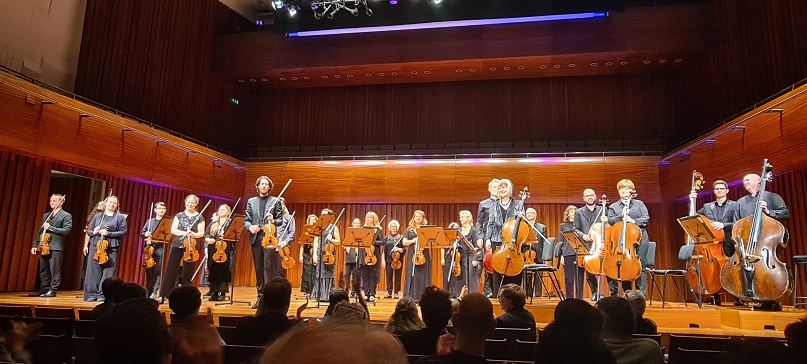
A frequent visitor during the past quarter-century, Ilan Volkov’s concerts with the City of Birmingham Symphony Orchestra are always to be anticipated, and so it proved with this evening’s programme which brought together the familiar and the new to engaging effect.

Sibelius provided a potent framework, The Oceanides (of which the CBSO made a fine recording with Simon Rattle now almost four decades ago) heard in a reading of unusual breadth and deliberation. Not that this ever impeded the progress of music whose almost impressionistic eddying goes hand in hand with inexorability of motion; the outcome a double climax whose spiralling intensity – visceral even in the context of Sibelius’s later music – makes way for a coda whose understated fatalism was affectingly conveyed here.

Along with her brother Sheku, Isata Kanneh-Mason has had a major impact on the UK music scene – her skill and insight evident throughout this performance of Prokofiev’s Third Piano Concerto. There was no lack of élan in passagework where the composer sought to confirm his own pianistic credentials as he built a career in the West, but also a tendency to brittleness as arguably sold the music short. It was in more reflective sections that Kanneh-Mason came fully into her own – the limpid musing on its main theme at the centre of the first movement, the spectral half-lights of its successor’s third variation, or the warmly expressive melody at the heart of the finale in which her rapport with Volkov was tangible. If the electrifying close brought less than the ultimate frisson, it still set the seal on a reading of impressive potential.

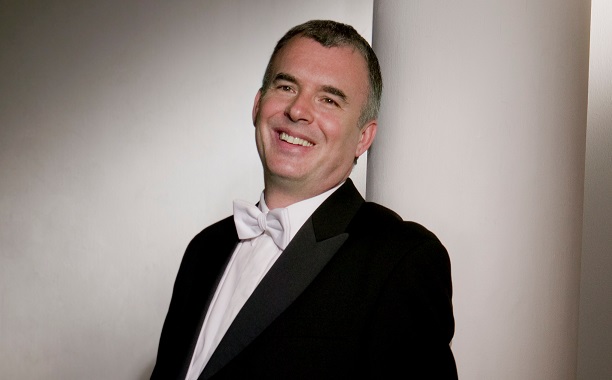
After the interval, another in the CBSO’s Centenary Commissions – the well-regarded Freya Waley-Cohen (above) duly responding with Demon. Its scenario evoking the more ominous of folk stories, this piece packed a considerable amount of incident into its 11 minutes – a Ligetian playfulness offsetting its frequently intricate polyphony to diverting and, throughout the final stages, impulsive effect. Drawing an incisive and precise response, Volkov seemed intent on presenting this colourful curtain-raiser as well worthy of further and repeated performance.

Volkov’s accounts of Sibelius’s Third and Fourth Symphonies were highlights of a complete cycle at the 2015 Proms, and this account of the Fifth found his advocacy undimmed. Others have found greater atmosphere in the first movement’s earlier stages, but the purposefulness with which he built to its defining climax was undoubted; as too a corresponding build-up of momentum in its ‘scherzo’ – Matthew Hardy’s volleys of timpani spearheading the propulsive coda. More intermezzo than slow movement, the Andante had an appealingly winsome aura for all its darker undertones (with some delectable woodwind playing), while the finale made the most of its contrasts in motion – the ‘swan melody’ eloquently rendered – on the way to an apotheosis whose surging affirmation was driven home by those indelible closing chords.

An impressive performance, then, such as brought this concert to a suitably inspiring close. Volkov is on the podium again this Sunday – directing the CBSO Youth Orchestra in a new piece by Bergrun Snaebjörnsdottir, heard alongside music by Grażyna Bacewicz and Berlioz.

You can read all about the 2022/23 season and book tickets at the CBSO website. Click on the artist and composer names for more on Ilan Volkov, Isata Kanneh-Mason and Freya Waley-Cohen

On Record – Robert Saxton: Portrait (Métier)

Saxton
A Hymn to the Thames (2020)
James Turnbull (oboe), St Paul’s Sinfonia / Andrew Morley
Fantasy Pieces (2020)
Fidelio Trio [Darragh Morgan (violin), Tim Gill (cello), Mary Dullea (piano)]
Time and the Seasons (2013)
Roderick Williams (baritone), Andrew West (piano)
Suite (2019)
Madeleine Mitchell (violin), Clare Hammond (piano)

Métier msv28624 [69’40’’]
Producers / Engineers Adaq Khan, Stewart Smith (Time and the Seasons)

Recorded 12 March 2014 at King’s Hall, Ilkley (Time and the Seasons); 27 January 2020 at St John the Evangelist, Oxford (Suite); 7 November 2021 at Conway Hall, London (Fantasy Pieces); 28 January 2022 at St John the Evangelist, London (A Hymn to the Thames)

Reviewed by Richard Whitehouse

What’s the story?

Having issued several of his works on miscellanies, Métier now issues a release devoted to Robert Saxton – this Portrait comprising four pieces which, written during the past decade, make for a revealing overview of the composer’s musical and wider aesthetic convictions.

What’s the music like?

Earliest among these works is Time and the Seasons – a song-cycle to Saxton’s own poems, in which memories of the composer’s long attraction to the south-eastern Norfolk coast are elided with a seasonal traversal from then back to winter; and itself underpinned by a tonal evolution drawing the six songs into a musical continuity. A piano solo Summer Seascape provides a formal and expressive pivot, the baritone solo Autumn an entrée into the The beach in winter as foregrounds human activity against a backdrop of temporal permanence.

Although they likewise have descriptive titles, the five pieces that comprise Suite for violin and piano seem inherently abstract in their content. Following the cumulative activity then limpid evocation of the first two, the others play without pause – the visceral immediacy of Jacob and the Angel, then the ethereal interplay in Bells of Memory, leading into Quest with (as in the song-cycle) a sense of this music having come full-circle yet simultaneously setting out fresh possibilities – tonal and emotional – to be pursued in future compositions.

The composer himself notes that Fantasy Pieces for piano trio, despite its title and scoring, is not related to Schumann’s eponymous work in any formal or thematic sense. Instead of the latter’s four character-pieces, moreover, Saxton opts for six continuous items whose fluidity of content and intuitive follow-through readily point up the various connotations of the title. That the closing piece seeks to provide a definite resolution while imparting a sense of open-endedness to the sequence overall is merely the most arresting facet of this engaging work.

Closure and un-restrictedness are no less crucial in A Hymn to the Thames, a concertante for oboe and ‘Classical’ forces whose four movements outline the river’s journey from its source in the Cotswolds to its estuary at the North Sea. Allusions to places encountered on route are deftly inferred (notably choral works by Taverner and Tallis), with the soloist a ‘first among equals’ as it leads the orchestra on through these contrasted musical landscapes towards a heightened arrival as the river meets the sea and, in turn, a comparable sense of renewal.

Does it all work?

It does. Saxton observed several years ago his music had become both more serial and tonal in its preoccupations, as is evident from the works recorded here. An incidental fascination is how each section or movement, appealing in itself, yet leaves a sense of open-endedness that is only resolved through the context in which they appear. This will doubtless be evident on a larger scale when Saxton’s Scenes from the Epic of Gilgamesh is premiered by the English Symphony Orchestra in Oxford as part of its 21st Century Symphony Project on March 10th.

Is it recommended?

Very much so. Excellence of performers and performances is matched by sound which gives little indication of any disparity in venues or dates, and the composer provides informative booklet notes. Hopefully further releases of Saxton will be forthcoming from this source.

For purchase information on this album, and to hear sound clips, visit the Divine Art Recordings Group website. For more on the composer, visit Robert Saxton’s dedicated website – and for more on the performers, click on Clare Hammond, Madeleine Mitchell, Andrew Morley, James Turnbull, Andrew West, Roderick Williams, Fidelio Trio and St. Paul’s Sinfonia

In concert – English Symphony Orchestra / Kenneth Woods – American & Canadian Sounds 2

Roman Kosyakov (piano), Rebecca Wood (cor anglais), Stuart Essenhigh (trumpet), English String Orchestra / Kenneth Woods

Barber Adagio for strings Op.11a (1936)
Still (arr. Zur) Dismal Swamp (1935)
Gershwin (arr. Farrington) Rhapsody in Blue (1924)
Copland Quiet City (1941); Appalachian Spring (1945)

Kings Place, London
Sunday 19 February 2022

Reviewed by Richard Whitehouse

London appearances by the English Symphony Orchestra being so infrequent, it was good to see an (understandably) scaled-down orchestra returning to Kings Place for the series American & Canadian Sounds that is taking place under the auspices of London Chamber Music Society.

The ubiquitous Adagio that Samuel Barber arranged from his only string quartet almost had to feature here, but that was no hardship given the excellence of the ESO’s playing – the silence after its climax rightly made the focal-point around which this whole performance revolved.

Although his music never entirely went away, the extent of William Grant Still’s output has barely been explored so all credit to Kenneth Woods for championing Dismal Swamp (heard here in an effective reduction by Noam Zur). Taking its cue from a short yet intense poem by playwright Verna Arvey (Still’s second wife), this 15-minute tone poem evokes the no-man’s land between Virginia and North Carolina across which escaped slaves once fled to freedom. Its concertante role for piano subtly embedded into the orchestral texture, the music charts a progression from sombre desperation to outward elation through a subtly extended tonality (Still having studied with composers as distinct as Chadwick and Varèse) whose apotheosis elides resolve and equivocation with a fervency which was tangibly in evidence.

Roman Kosyakov was the admirable pianist here as in George Gershwin’s Rhapsody in Blue. This also was heard in reduction, Iain Farrington’s arrangement combining the immediacy of Ferde Grofé’s original scoring with the Europeanized grandeur of his later orchestration. Placing the piano rear-centre of the platform likely accounted for any occasional failings of coordination, but Kosyakov’s characterful playing – not least in the lengthy developmental cadenza and ensuing ‘big tune’ – held one’s attention through to the indelible closing bars.

The play by Irwin Shaw for which he wrote incidental music might have passed into history, but Quiet City is among Aaron Copland’s most effective shorter pieces – its halting dialogue between cor anglais (Rebecca Wood) and trumpet (Stuart Essenhigh) given context by the modal plangency of its string writing.

The programme ended with Copland’s Appalachian Spring – heard here in the familiar suite but in the original orchestration with its prominent part for piano, along with solo woodwind contributions that stand out more clearly against the string nonet. Familiar as this music may be, its understated harmonic shadings and keen rhythmic ingenuity are never easily realized in performance, and it was testament to the ESO’s playing that the piece emerged as vividly and as cohesively as it did. In particular, the penultimate sequence of variations on ‘Simple Gifts’ had an unforced eloquence (the last statement of the Shaker hymn eschewing any hint of bathos) which carried through into the coda – its evocation of community no less affecting for being so idealized, and in music such as more than warrants that misused term ‘iconic’.

A rewarding programme and a welcome London appearance by the ESO, which will be back in action next month with (inter alia) a concert at Oxford’s Sheldonian Theatre that features a major new work by Robert Saxton as part of the orchestra’s ‘21st Century Symphony Project’

For more information on the artists in this concert, click on the links to read about Roman Kosyakov, Kenneth Woods and the English Symphony Orchestra. For more on the London Chamber Music Society, click here – and for more on composer William Grant Still, click here

In concert – Hannah Peel: Fir Wave Live premiere

by Ben Hogwood

How appropriate that Hannah Peel should be placed in Hall One at Kings Place for the live premiere of her 2021 album Fir Wave. The hall is, after all, constructed with the material from a single, 500 year-old German oak tree named Contessa – and here it absorbed music that could have been written in its honour, as part of Peel’s artist residency in the venue’s Sound Unwrapped series.

Fir Wave originated in lockdown, its open air textures providing solace for many – your reviewer included – during several different phases of isolation. Its appeal lies both in the past and the future. Peel based her musical inspiration on the music of Delia Derbyshire and the Radiophonic Workshop, re-sampling and regenerating their work, and absorbing it into her own style and processes. The resultant work is an emotive one, celebrating the environment while fully aware of the issues it faces.

Peel’s deeply felt electronic music is often achieved through a ‘less is more’ approach – as the vocals on first track Wind Shadow demonstrated. With her live accomplice, Hazel Mills, she proceeded to sculpture and layer some beautifully earthy sounds, the melodic motifs coming up from the ground itself but becoming airborne through their expression by voice, synthesizer treble, violin or piano. For Peel is a multitalented artist, her roots nearer to folk music but now fully embracing the electronic idiom.

This included the intricate and sensitively handled beats. These cut through the smokescreen in Hall One with clear precision, drawing back to enable the appreciation of bigger vistas, both in the title track and Emergence In Nature. Peel was an endearing presence, addressing the audience only occasionally as she preferred to let her music do the talking. While understandably nervous at the reaction to music that hadn’t played in public since its release two years ago, the warmth of the reception confirmed she need not have worried. Patterned Formation had an angular beauty to its repeated loop, while Reaction Diffusion packed a heavier punch.

The attentive audience became fully immersed in the music, transported to the natural spaces it was portraying. Fir Wave itself was a treasure, describing a remarkable process found on certain mountains in the world. When the wind hits a mountainside full of trees, it starts to kill off the front arm of the fir trees, allowing the ones at the back to grow. Over years and years, the steady pattern creates a beautiful sound wave across the mountainside that shifts through a long period of time. Peel somehow described this in her music, which left a lasting impression.

With the album ingrained in our thoughts, Peel returned for two charming encores given with the aid of a music box. This gave her the appearance of standing in a cosmic post office, preparing to dispatch a lettercard to a significant other. The music told compelling stories through a charming cover of Cocteau TwinsSugar Hiccup, dating back to 2010, and a revelatory interpretation of New Order’s Blue Monday, turning the music on its head in duet with Mills.

Even these were not the emotional peak of the evening, however, for in a final encore of Unheard Delia Part 1 we heard the voice of Derbyshire herself, caught in an interview in a sunlit room. This detail, imparted by Peel before we heard the music, helped us to capture the moment itself, and the track remained in thrall to a pioneer of electronic music taken too soon. Peel, to her enormous credit, stepped back at this point to ensure Derbyshire’s voice could, at last, be fully heard and appreciated.

In concert – Alban Gerhardt, CBSO / Roderick Cox: Ravel, Saint-Saëns & Bartók

Alban Gerhardt (cello), City of Birmingham Symphony Orchestra / Roderick Cox

Ravel Ma mère l’Oye – suite (1910, orch. 1911)
Saint-Saëns Cello Concerto no.1 in A minor Op.33 (1872)
Bartók Concerto for Orchestra BB123 (1943, rev. 1945)

Symphony Hall, Birmingham
Thursday 16 February 2023 (2.15pm)

Reviewed by Richard Whitehouse

This afternoon’s concert by the City of Birmingham Symphony Orchestra brought a judicious programme that not only looked effective on paper but worked well in practice, juxtaposing characteristic works by Ravel and Bartók alongside a favourite concerto from Saint-Saëns.

Although the extended ballet was championed by Simon Rattle during his CBSO tenure, the original five items constituting Ravel’s Mother Goose suite (the Prelude was included on the programme but (rightly) not in this performance) constitutes an attractive sequence and one that played to the orchestra’s strengths. Roderick Cox brought out the serene poignancy of Sleeping Beauty’s Pavane as fully as the winsome poise of Hop-o’-My-Thumb, with its delectable playing from woodwind. Neither was the piquant humour in Laideronnette, Empress of the Pagodas undersold, nor the stealthy interplay of gentility and earthiness in Dialogue of Beauty and the Beast. Initially a little muted in its rapture, The Fairy Garden built towards a finely sustained apotheosis whose unforced ecstasy was much in evidence.

Saint-Saëns has long enjoyed a following in Birmingham – not least his First Cello Concerto, which this reviewer first heard played by CBSO with the redoubtable Paul Tortelier almost a half-century ago. Evidently no stranger to this piece, Alban Gerhardt launched into the first of its three continuous movements with due purposefulness; pointing up the formal ingenuity as the composer interposes between what are nominally the exposition and development of a sonata design a ‘minuetto’ where soloist and muted strings render the principal themes at an oblique remove. The relatively extended final section can risk feeling diffuse, but Gerhardt’s focus brought a natural sense of intensification then resolution prior to the decisive close. The soulful opening Dialogo from Ligeti’s early Solo Cello Sonata provided an apposite encore.

A staple of the modern repertoire in almost as short a time as it took to be composed, Bartók’s Concerto for Orchestra is a sure test for any such ensemble and one that the CBSO met with alacrity on this occasion. Setting a steady if never inflexible tempo for the Introduzione, Cox drew its contrasts of musing uncertainty and impulsive dynamism into a tensile and cohesive whole. Hardly less effective was the genial succession of duets in Giuoco delle coppie, set in relief by a brass chorale which makes for one of its composer’s most affecting inspirations.

Its sombreness marginally underplayed in its opening stages, the Elegia lacked nothing in eloquence at its climaxes or in its regretful closing bars, then a juxtaposing of folksong with Léhar and/or Shostakovich in the Intermezzo interrotto made for a heady while meaningful amalgam. It might not have followed-on attacca, but the Finale was otherwise the highlight of the reading – Cox as attentive to the music’s energetic and lyrical elements as to a central fugato whose initial fanfares return to cap the work, and this performance, in joyous abandon.

Born in Macon (Georgia) and currently based in Berlin, Cox is a fluent and assured presence such as helped make this an auspicious debut. The CBSO returns next week for an appealing programme with Ilan Volkov, featuring Isata Kanneh-Mason in Prokofiev’s Third Concerto.

You can read all about the 2022/23 season and book tickets at the CBSO website. Click on the artist names for more on Roderick Cox and Alban Gerhardt.