In concert – Clara-Jumi Kang, CBSO / Elena Schwarz: Dukas, Prokofiev & Dvořák

Dukas L’apprenti sorcier (1897)
Prokofiev Violin Concerto no.2 in G minor Op.63 (1935)
Dvořák Symphony no.8 in G major Op. 88 (1889)

Clara-Jumi Kang (violin), City of Birmingham Symphony Orchestra / Elena Schwarz

Symphony Hall, Birmingham
Tuesday 15 November 2022 2.15pm

Reviewed by Richard Whitehouse

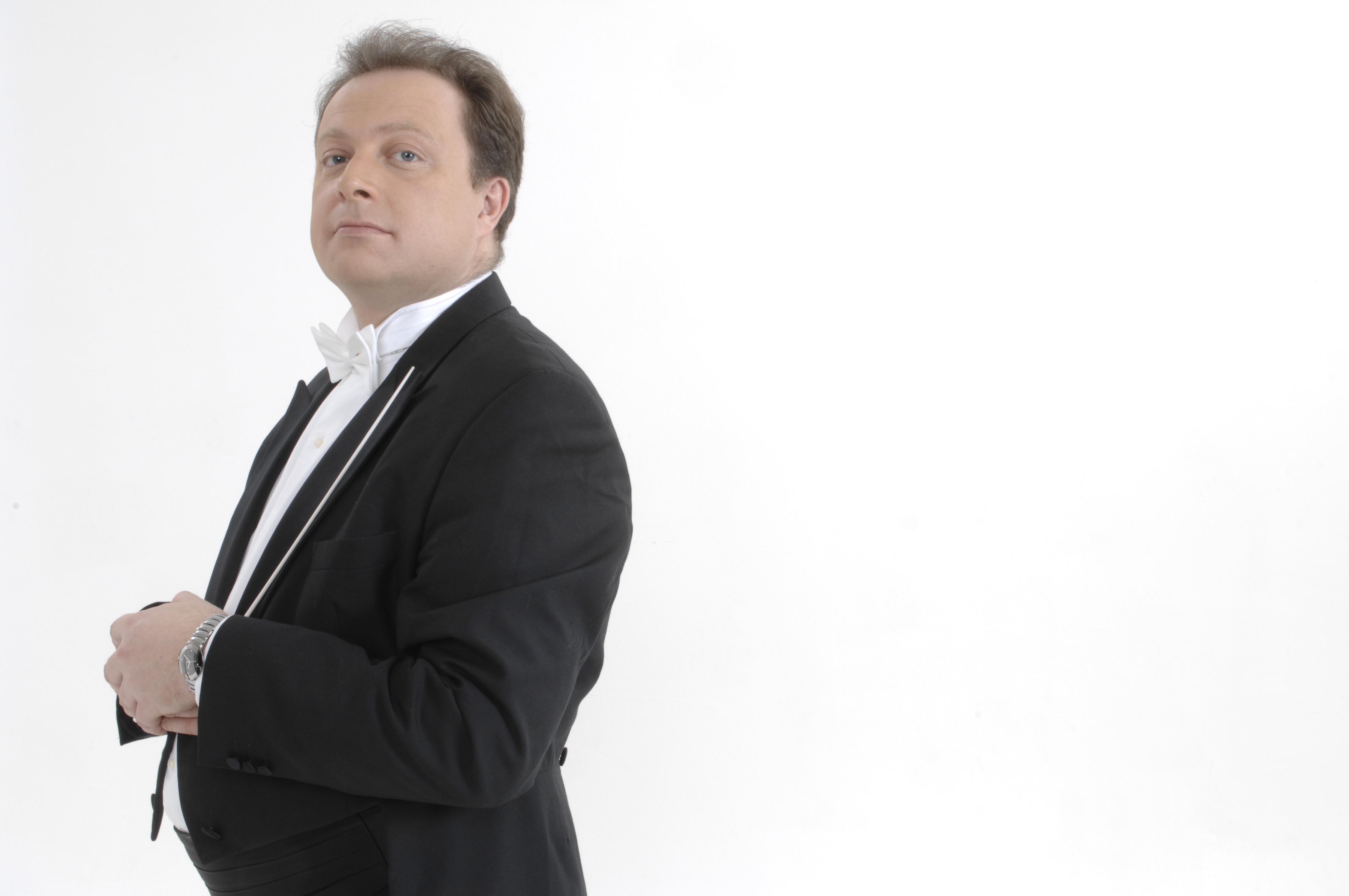
This afternoon’s concert by the City of Birmingham Symphony Orchestra followed the once customary format of overture, concerto and symphony for what was a compact but cohesive programme which duly highlighted the considerable conducting prowess of Elena Schwarz.

It may be a ‘symphonic scherzo’ rather than overture, but Dukas’s The Sorcerer’s Apprentice after an early ballade by Goethe makes for an ideal curtain-raiser and if Schwarz stressed its purely musical rather than evocative qualities (there being little sense of Fantasia goings-on), the piece still packed a fair punch. Other accounts might have brought out more of that sense of teetering on the brink of disaster during its climactic stages though, a couple of awkward transitions and premature entries aside, this was rarely less than gripping as a performance.

So, too, was Clara-Jumi Kang in Prokofiev’s Second Violin Concerto. Long a staple of the repertoire, the work’s appeal can often be undermined by an emotional disengagement over its course. There was no chance of that here – Kang alive to the opening Allegro’s interplay of ambivalence and eloquence as were barely resolved by the terse closing pay-off. Nor was there any absence of expressive poise in the Andante, Kang’s often astringent tone pointing up that uneasy lyricism such as characterizes so much of the composer’s music at this time.

Kang entered fully into the final Allegro’s bracing if often sardonic spirit. The main theme’s rhythmic undertow, accentuated by castanets on its returns, likely indicates no more than a generalized Spanish-ness rather than any Civil War premonition, but it does add an edginess to the music’s course right through to its peremptory signing-off. This was a performance to savour, and Kang responded to its warm reception with an encore – the soulful Grave from Bach’s Second Violin Sonata (BWV1003) – which seemed entirely appropriate in context.

Although this was her debut with the CBSO, Schwarz clearly found no mean rapport with the musicians, as was evident in Dvořák’s Eighth Symphony. Not all those tempo changes in the opening Allegro were equally well handled, but the unbridled verve with which the composer handles his material was sustained through to the effervescent coda. With its deft alternating between wistfulness and pathos, the Adagio is surely as finely achieved a slow movement as Dvořák wrote and such qualities were as evident here as was the raptness of its closing bars.

The other movements might represent a marginal falling-off of invention, but the Allegretto’s gentle lilt was delightfully inflected with its unexpected breezy coda made all of a piece with the foregoing. Similarly, the variation format of the final Allegro can easily become a formal strait-jacket – yet with a delectable response from the CBSO woodwind and Schwarz pacing its eventful progress ideally through the ruminative latter variations and on to a scintillating close, it rounded off this performance with no less conviction than was evident at the outset.

From a relatively traditional programme to one much freer – next week’s CBSO concert is devised and directed by Pekka Kuusisto, and features music by Sibelius, Vaughan Williams and Rautavaara as part of an ingenious sequence centred on the concept Birds of Paradise.

You can read all about the 2022/23 season and book tickets at the CBSO website. Click on the artist names for more on Elena Schwarz and Clara-Jumi Kang

In concert – Kate Trethewey, CBSO Youth Chorus, CBSO / Martyn Brabbins: Vaughan Williams at 150: Scott of the Antarctic

Vaughan Williams
Scott of the Antarctic (1948)
Directed by Charles Frend
Music by Ralph Vaughan Williams
Presented by Big Screen Live

Kate Trethewey (soprano), CBSO Youth Chorus, City of Birmingham Symphony Orchestra / Martyn Brabbins

Symphony Hall, Birmingham
Friday 11 November 2022

Reviewed by Richard Whitehouse

The City of Birmingham Symphony Orchestra’s commemoration of the 150th anniversary of Vaughan Williams’s birth concluding this evening in a showing, with live orchestral accompaniment, of Scott of the Antarctic which proved to be the composer’s most ambitious cinema project.

Directed by Charles Frend (who presided over several UK films in the 1940s and ‘50s, before having an equally prominent role in television) and released in November 1948, the film was a commercial success not least owing to the expressive scope and richness of its music. This extended to some 80 minutes, but Vaughan Williams was more than happy for it to be edited as required and was so in accord with Ernest Irving (director of music at Ealing Studios) that he dedicated to him his Sinfonia Antartica, evolved from the original score, four years later.

It was this close synchronization between image and music that Tommy Pearson (director of Big Screen Live) was intent on capturing when he prepared the film for concert presentation (and the background to which was described in entertaining detail in the programme for these concerts). Suffice to add while the overhauled soundtrack, consisting of dialogue and sound-effects, was all too evidently recorded in mono so that it is easily obscured by the music, the visual component has an opulence and immediacy as transcends its more than seven decades.

Occupying a space equivalent to the lower half of the organ in Symphony Hall, the screen was less dominant in a venue of this size than it would have been even in larger cinemas, but any wider or wrap-round treatment would doubtless have raised many technical obstacles and the print had, in any case, a clarity evident from the rear of the stalls. Much the same could also be said of the orchestra’s contribution, even if its seating on a level platform meant certain of those more intricate details and textures seemed less prominent than under concert conditions.

There can be little but praise for Martyn Brabbins’s direction. A Vaughan Williams exponent of stature (the latest instalment in his traversal of the symphonies has recently been issued on Hyperion), he has an instinctive feel for the emotional highs and lows of this music along with its myriad instrumental subtleties. That divide between what was retained for the soundtrack and what became the composer’s Seventh Symphony is greater than is often supposed, yet the degree to which the former effects and enhances one’s experience of the film is considerable.

This is not the place for any detailed overview of the film itself, though it is notable just how restrained and even absent is the music from the latter stages when Robert Scott and his team head towards oblivion the further they seem to be heading on their return journey. This might have been more to do with Frend or even Irving, but the resulting psychological dimension – beholden neither to inter-war expressionism nor wartime realism – was ostensibly new in a cinematic epic of this kind and makes the film historically as well as artistically significant.

The singing of Katie Tretheway and the CBSO Youth Chorus left nothing to be desired, but many attendees having stocked up on liquid refreshment beforehand saw a steady coming and going over much of the two hours: something that would not be tolerated in a concert, so why here?

You can read all about the 2022/23 season and book tickets at the CBSO website. For more information on the artists, click on the names of Kate Trethewey, Martyn Brabbins and the CBSO Youth Chorus

In concert – Roderick Williams, CBSO Chorus, CBSO / Michael Seal: Vaughan Williams at 150: 5 Mystical Songs, Symphony no.5

Vaughan Williams
The Wasps – Overture (1909); Towards the Unknown Region (1906-07); Five Mystical Songs (1906-11); Symphony no.5 in D major (1938-43)

Roderick Williams (baritone, above), CBSO Chorus, City of Birmingham Symphony Orchestra / Michael Seal

Symphony Hall, Birmingham
Thursday 10 November 2022

Reviewed by Richard Whitehouse

The City of Birmingham Symphony Orchestra’s mini-series devoted to Vaughan Williams continued this evening with the overture from his music to Aristophenes’ satire The Wasps, paced by Michael Seal (below) so its animated and soulful themes complemented each other perfectly.

Judicious was no less true of this first half with its overview of the composer’s music across the first decade of the last century. Its premiere at the Leeds Festival bringing a first taste of national acclaim, his ‘song for chorus and orchestra’ Toward the Unknown Region sets Walt Whitman with assurance and imagination in its evocative opening section, and if the ensuing peroration feels a little contrived – the journey proving more memorable than the destination – that was no fault of the CBSO Chorus whose contribution was sensitively attuned throughout.

As it was with those Five Mystical Songs in which the composer gave full vent to his love for the Metaphysical poets and George Herbert in particular. A curiously hybrid conception, the chorus is very much secondary to the baritone soloist throughout much of the first three songs – a congregational presence in the processional Easter and then underpinning the emotional intimacy of I Got Me Flowers or confiding profundity of Love Bade Me Welcome, before falling silent in The Call. Roderick Williams was eloquence itself in this latter setting and a forthright presence in the preceding, before sitting out the Antiphon with its pealing bells and mounting exultation. Williams has recently given the rarely heard version of these songs with piano but hearing them with such burnished splendour as here was its own justification.

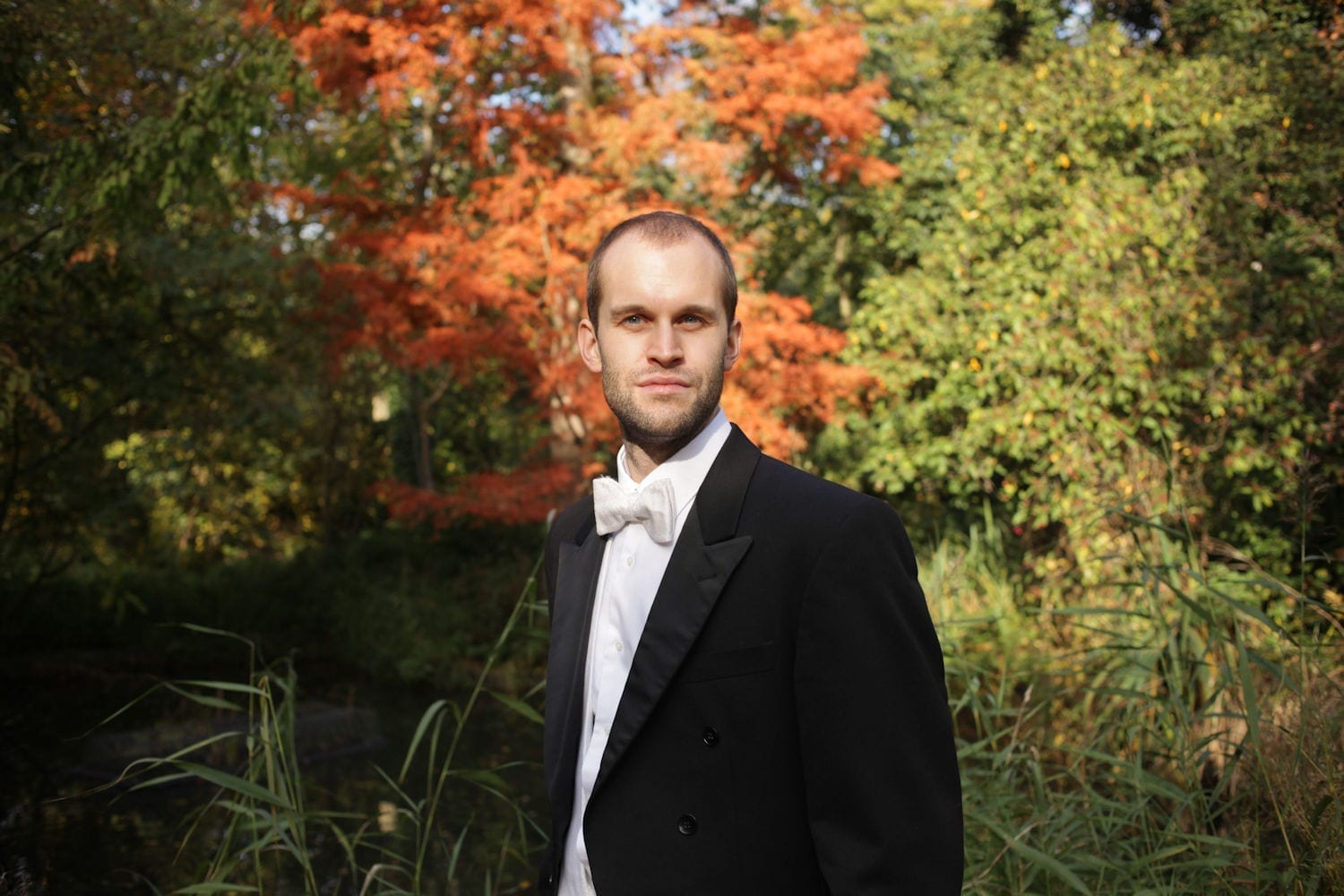
Is the Fifth Symphony unduly exposed nowadays? The composer’s most characteristic and culturally significant such piece might risk palling with too much repetition, but there was no chance of that here. Seal (above) set a flowing if not too swift tempo for the Preludio, pointing up the radiant tonal contrast between its themes – the second of them capping the movement to thrilling effect towards its close. Its rhythmic pitfalls ably negotiated, the Scherzo had the requisite deftness and mystery while taking on a degree of malevolence over its later stages. The Romanza then emerged surely yet unforcedly through glowing chorales and plaintive soliloquy (CBSO woodwind at its most felicitous) to a heartfelt culmination before subsiding into a hardly less enveloping serenity – its inspiration in John Bunyan tacitly acknowledged.

Enough had wisely been kept in reserve for the final Passacaglia – its initial stages evincing an almost nonchalant gaiety as only clouded towards its centre with the recollection of earlier ideas. By making it the work’s emotional highpoint, moreover, Seal ensured that the epilogue capped not just this movement but the work overall – its transcendence (hopefully) speaking as directly to listeners today as those at the premiere almost 80 years ago. Certainly, it would be a real misfortune were this music ever to be viewed solely from the perspective of the past.

An absorbing performance, then, that reaffirmed the greatness of this music to an enthusiastic audience. Vaughan Williams at 50 concludes tomorrow evening with the CBSO providing a live soundtrack to the composer’s most ambitious cinematic project – Scott of the Antarctic.

You can read all about the 2022/23 season and book tickets at the CBSO website. For more information on Scott of the Antarctic, click here – and click on the artist names for more on Roderick Williams, the CBSO Chorus and Michael Seal

In Concert – Soloists, City of London Choir, Royal Philharmonic Orchestra – Hilary Davan Wetton: Vaughan Williams & Ravel

Anita Watson (soprano), Maya Colwell (mezzo-soprano), John Cuthbert (tenor), Ashley Riches (bass-baritone), City of London Choir, Royal Philharmonic Orchestra / Hilary Davan Wetton

Ravel Menuet antique (1895, orch. 1929)
Vaughan Williams Serenade to Music (1938)
Ravel Le Tombeau de Couperin (1914-17, orch. 1919)
Vaughan Williams Dona nobis pacem (1936)

Cadogan Hall, London
Thursday 10 November 2022

Reviewed by Ben Hogwood

This concert deftly assembled a number of threads to bring the Royal Philharmonic Orchestra’s celebration of RWV150 – the handy abbreviation for Vaughan Williams‘ birth anniversary year – to a close.

Vaughan Williams studied with Ravel in Paris in 1908. Just over a decade later, the lives of both men had been altered forever by the First World War. It affected both of them deeply – Ravel in a brief stint as a lorry driver and Vaughan Williams as an ambulance driver and artillery officer in France.

Both Le Tombeau de Couperin and Donna nobis pacem are affected by their experiences, but first we heard another act of musical remembrance in Ravel’s charming Menuet antique. Written in memory of Chabrier, this bittersweet work presents a winsome smile while it dances, but darker thoughts lurk in the middle ground, expressed through the gruff voices of lower woodwind. Hilary Davan Wetton conducted a sprightly reading, though it took a little while for the RPO to settle. After a soft-centred middle section, the second reading of the Menuet itself was on much firmer ground.

Le Tombeau de Couperin is both a commemoration and celebration of French baroque music, but its deeply personal connections mark the passing of Ravel’s mother in 1917 as well as close friends lost to the First World War. Originally written for piano, the suite comprises six movements, four of which the composer arranged for orchestra, his painterly touch evident at every turn.

This was a touching performance, led by a fine contribution from RPO oboist Timothy Watts, who led off the Prélude with beautifully flowing phrases. The orchestra responded with silvery strings and harp, the music shimmering but shivering too. The personal reverberations were close to hand in the underlying sadness of the Forlane, which nonetheless danced with poise and grace. The Menuet, taken relatively quickly, found time to express its innermost feelings in the thoughtful trio section, while the Rigaudon gained a spring in its step, bouncing along but soon checked by the sparse textures of its central section. This was a fine performance, earning the RPO woodwind a deserved curtain call of their own.

Vaughan Williams’ Serenade to Music is a softly voiced tribute to Sir Henry Wood’s Golden Jubilee as a conductor. In recognition, the composer sets the scene between Lorenzo and Jessica from Act Five of Shakespeare’s The Merchant of Venice. It is a versatile piece, written initially for 16 selected soloists but performed here by four singers and the sensitively controlled voices of the City of London Choir, who revelled in the cushioned carpet of sound Vaughan Williams creates. This was established by an affectionate solo from orchestra leader Duncan Riddell, establishing the serenity of D major under Davan Wetton’s watchful eye.

The balance between choir and orchestra, tricky to achieve in the Cadogan Hall, felt just right – as did the poise of soprano Anita Watson (above), floating up to the high ‘A’s with impressive control. She was aided by fine contributions from Maya Colwell, John Cuthbert and Ashley Riches, whose bass-baritone had a particularly attractive, rounded quality.

Two years prior to the Serenade, Vaughan Williams completed Dona nobis pacem, whose very different outlook reflects the worrisome mood in Britain and Europe in the mid-1930s. The composer’s dread of war, heightened by his experiences 20 years hence, was palpable in the central setting of Dirge For Two Veterans, using part of Walt Whitman’s poem Drum Taps in music that ironically dates from 1911.

Dona nobis pacem brings together texts from both sacred and secular sources, anticipating Benjamin Britten’s War Requiem some 26 years later, which used a similar tactic to startling effect. Here Vaughan Williams’ ‘catharsis’ – as Hilary Davan Wetton eloquently referred to it – received a heartfelt performance, anchored by Anita Watson’s recurring pleas for peace as the soprano soloist. The choir echoed these sentiments, but in a more fretful manner as they reflected on previous losses through Whitman’s poetry.

The music was remarkably prescient for our times, and the cautionary snare drum strokes bringing in the Dirge held a Mahlerian tension that stayed long in the memory. So, too, did the setting of Beat! Beat! Drums! (from the same Whitman poem), which was reached through a dramatic turn of the page from the full Agnus Dei plea. There was exultation from the choir, but also a constant ache beneath the surface.

Watson and Ashley Riches (above) were surefooted and expressive soloists, while Davan Wetton ensured the combination of choir and orchestra captured that wonderful sheen that Vaughan Williams can achieve when writing for the combined forces. The percussion, awkwardly hidden beneath the Cadogan Hall balcony with the organ, made a telling contribution as the dreaded ammunition, which was finally silenced as the peace for which we all surely strive came to pass at the end. The rapt closing bars were pure in their sincerity, soprano and acapella choir achieving an ideal balance and fade.

Before the Dona nobis pacem, Hilary Davan Wetton spoke briefly to the audience on the importance of the arts in the wake of a slew of funding cuts and falling attendances. As he so subtly reminded us, how lucky we are that in times of war in Europe and further afield we can still attend and enjoy concerts in person. It is a privilege never to be taken for granted, particularly on nights of Remembrance such as this.

In concert – Alexandra Lowe, Benson Wilson, City of Birmingham Choir, CBSO / Adrian Lucas: Vaughan Williams at 150: A Sea Symphony

Vaughan Williams
Benedicite (1929); Fantasia on Greensleeves (arr. Ralph Greeves) (1934); A Sea Symphony (Symphony No. 1) (1903-09)

Alexandra Lowe (soprano), Benson Wilson (baritone), City of Birmingham Choir, City of Birmingham Symphony Orchestra / Adrian Lucas

Symphony Hall, Birmingham
Sunday 6 November 2022 [3pm]

Reviewed by Richard Whitehouse

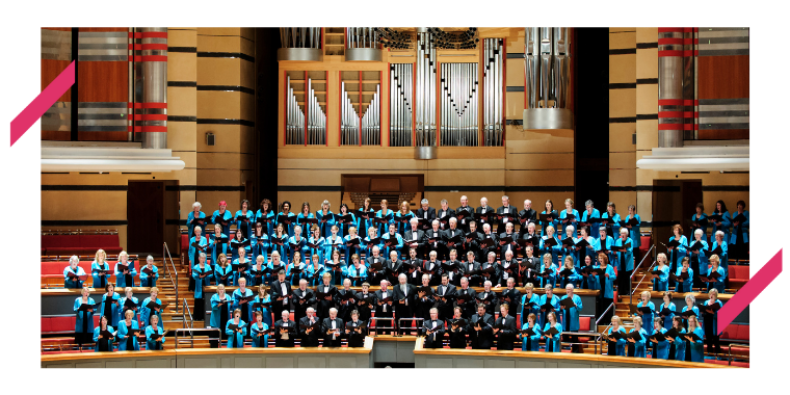
It may have been celebrated a year late, but this concert marking the centenary of the City of Birmingham Choir tied in with the 150th anniversary of the birth of Vaughan Williams and saw this choir joining forces with the City of Birmingham Symphony Orchestra in appropriate fashion.

Even when it had all but fallen out of the concert repertoire, A Sea Symphony yet remained a favourite of choral societies around the country such that the CBC has given its fair share of performances over the decades. On this occasion Adrian Lucas (musical director of the choir these past two decades) presided over an account whose shortcomings (notably an occasional misbalance between choir and orchestra in those more densely scored passages) were more than outweighed by the conviction with which the composer’s essential vision was realized.

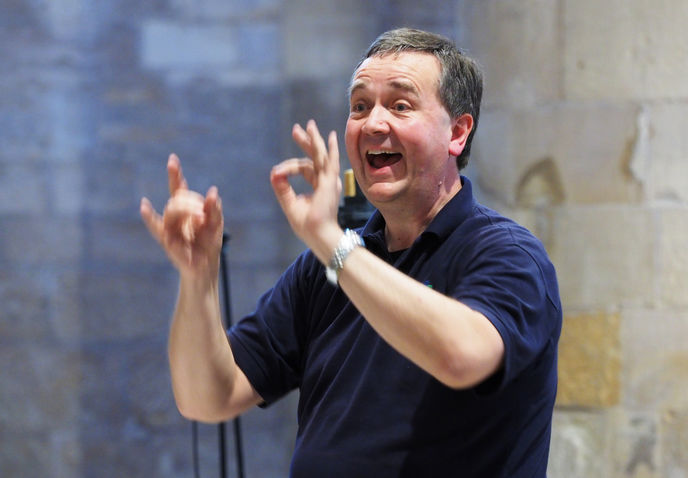
Certainly, the surging choral paragraph which launches A Song for all Seas, all Ships was powerfully conveyed with its subsequent sections introducing the soloists – Benson Wilson’s baritone ardent and mellifluous while just a little strained in its upper register, and Alexandra Lowe’s soprano such as rang out imperiously towards the centre of this opening movement. Momentum can easily falter in the latter stages, but Lucas (below) ensured its apotheosis provided an emotional counterweight to the beginning and never risked outweighing its rapt conclusion. Wilson came into his own with On the Beach at Night, Alone, its ruminative if often uneasy calm notably in evidence and with the more animated central section paced unerringly up to its fervent choral climax – after which, those brooding final pages yielded an evocative poise.

OLYMPUS DIGITAL CAMERA

As the symphony’s scherzo The Waves can feel overly contrived in context, but Lucas duly made the most of its rousing outer sections – the CBC in command of its textural intricacies – and convincingly integrated the Parry-like nobility of its ‘big tune’ into its evolving structure. Everything then came together in The Explorers, a finale which is also this work’s longest movement and features its finest music. By turns serene and speculative, the initial sections built assuredly to a rousing peroration from where the soloists’ impulsive re-emergence was the more telling. Lucas again ensured the culmination had the requisite grandeur without pre-empting the epilogue; at one with some of Walt Whitman’s most affecting lines in conveying that all-encompassing vastness as was a hallmark of Vaughan Williams’s endings henceforth.

The relatively short first half brought a welcome revival for Benedicite – its origins as a test-piece for competition likely telling against the qualities of a piece that, while it may break no new ground in its composer’s output, denotes his maturity in its vigorously wrought opening section, before a limpid setting of the 17th-century poet John Austin that brought an eloquent response from Lowe that itself preceded an energetic close. The once ubiquitous Fantasia on Greensleeves made for an appealing and by no means cloying interlude prior to the interval. All in all, this was a worthy commemoration of the respective anniversaries. The CBC can be heard in Handel’s Messiah early next month, and the CBSO continues its Vaughan Williams at 150 series next week with programmes conducted by Michael Seal and Martyn Brabbins.

You can read all about the 2022/23 season and book tickets at the CBSO website. For more information on the artists, click on the names of Adrian Lucas, Alexandra Lowe, Benson Wilson and the City of Birmingham Choir