In concert – Soloists, CBSO Chorus & CBSO / John Butt: Handel’s Messiah

John-Butt

Handel Messiah HWV56 (1741)

Mary Bevan (soprano), Reginald Mobley (countertenor), James Gilchrist (tenor), Christopher Purves (baritone), CBSO Chorus, City of Birmingham Symphony Orchestra / John Butt (harpsichord)

Symphony Hall, Birmingham
Wednesday 8 June 2022

Written by Richard Whitehouse

Unlikely as it might seem, the CBSO Chorus had never given Handel’s Messiah before this evening – the regular stream of performances by choral societies or the City of Birmingham Symphony Orchestra having other priorities putting paid to any such intention until tonight.

Not that Messiah has ever lacked for performances since its Dublin premiere in April 1742 – after which, it soon became recognized as, if not necessarily the finest of Handel’s numerous oratorios, then certainly the most representative; a template for the genre such as dominated music-making in Britain over the next 175 years. His text drawn freely from the Old and New Testaments, Charles Jennens relates Christ’s birth, death and resurrection then triumph of the Christian gospel in meaningful while not profound terms as were bound to strike a resonance.

Formerly the work falls into three parts of 16 scenes and 53 individual (not always separate) numbers, ranging from brief solo recitatives to lengthy arias and extended choruses in what became a blueprint for those oratorios as followed apace over the next decade. Although all four soloists share in relating aspects of the narrative, there is no division into specific roles as in Passion settings; itself a sure means of conveying a dramatic scenario without the need to endow musical content with an overly theatrical aspect as might have become distracting.
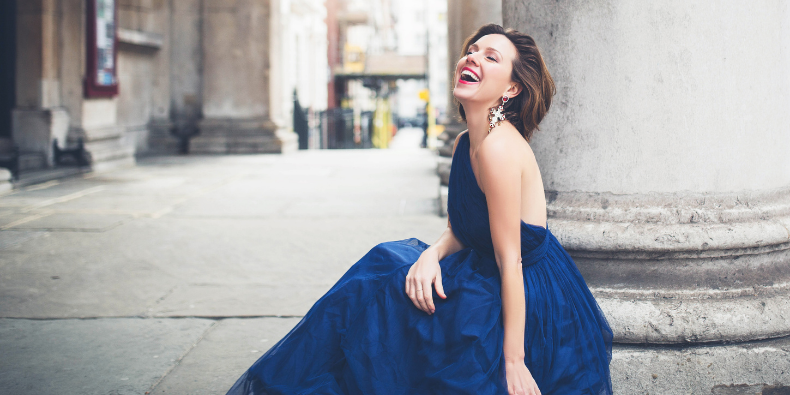
Tonight’s soloists evidently had no lack of familiarity with the work. For all their individual excellence, the deftness of Reginald Mobley’s lightly inflected alto, mellifluousness of James Gilchrist’s high tenor and elegance of Christopher Purves’s lyric baritone perhaps limited the emotional contrast possible between solo items. This was hardly the case with Mary Bevan (above), whose eloquent assumption of the soprano numbers, not least an I know that my Redeemer liveth as brought out the pathos of music that long ago seemed to have become its own stereotype.

Otherwise (not unreasonably) it was the choral items which really hit home. Enthused by the chance to sing this work the CBSO Chorus gave its collective all: whether in those energetic earlier choruses, fervent anticipation of Glory to God in the highest, contrapuntal vigour of Hallelujah or the majestic accumulation of Worthy is the Lamb, whose elaborate ‘Amen’ was powerfully rendered. Simon Halsey and Julian Wilkins (behind the organ manual) had evidently ensured that, for the CBSOC’s rare outing in this work, nothing was left to chance.

Not that the CBSO’s contribution was found at all wanting. Avoiding a temptation to try out one of the latter-day orchestrations, the string sections were modest (10.8.6.4.2) while almost always achieving a viable balance with the chorus. Bassoon, theorbo and organ constituted a discreet continuo, Matthew Hardy’s timpani underpinned the final choruses and Gwyn Owen was superb in the concertante role of The trumpet shall sound. Directing at the harpsichord, John Butt secured playing of incisiveness and depth with no recourse to specious authenticity. Given that the CBSO Chorus celebrate its half-century next year, it might have been thought advisable to schedule this performance during 2023. No matter – tonight proved a memorable occasion and it seems highly unlikely that a repeat account will have to wait another 49 years.

For more information on the CBSO’s 2021/22 season, visit their website, and for details on the newly announced 2022/23 season click here. Meanwhile for more information on the artists, click on the names to access the websites of John Butt, Mary Bevan, Reginald Mobley, James Gilchrist and Christopher Purves

In concert – London Symphony Orchestra & Sir Antonio Pappano – Respighi & Dallapiccola

Respighi Vetrate di Chiesa (1925-6)
Dallapiccola Il prigioniero (1944-8) {Sung in Italian with English surtitles]

Ángeles Blancas Gulín (soprano – Mother), Eric Greene (baritone – Prisoner), Stefano Secco (tenor – Gaoler / Grand Inquisitor), Egor Zhuravskii (tenor – First Priest), Chuma Sijeqa (bass-baritone – Second Priest), London Symphony Chorus, Guildhall School Singers, London Symphony Orchestra / Sir Antonio Pappano

Barbican Hall, London

Sunday 5 June 2022

Written by Richard Whitehouse Pictures (c) Mark Allan Photography

This second of the London Symphony Orchestra’s two concerts of Italian music with chief conductor designate Sir Antonio Pappano consisted of two pieces that brought the aesthetic and political divisions of Italy between the world wars into acute while always productive focus.

It might have originated in piano pieces written for his wife, but Respighi’s Church Windows duly emerged among the most opulent and evocative of his orchestral works. That both title and subtitles were postpriori additions does not lessen their relevance – not least as concerns The Flight into Egypt, its tense understatement a telling foil to the ensuing Saint Michael the Archangel with its warlike images rendered graphically by brass and percussion, before climaxing in one of the most theatrical of tam-tam crashes as Satan is banished from Heaven.

Not that Respighi was averse to gentler expression as appropriate, The Matins of Saint Clare featuring orchestration of unfailing finesse on its raptly expressive course. Inevitably, it is the magisterial finale of Saint Gregory the Great when this composer comes most fully into his own – its cumulative fervour drawing on all aspects of the sizable forces for what becomes a heady apotheosis. Music, indeed, that needs to be realized with discipline and focus to avoid overkill, which was certainly the case in a performance where the LSO left nothing to chance.

The London Symphony Orchestra and London Symphony Chorus conducted by Sir Antonio Pappano perform Ottorino Respighi Church Windows Luigi Dallapiccola Il prigioniero In the Barbican Hall (Ángeles Blancas Gulin Mother, Eric Greene Prisoner, Stefano Secco Gaoler / Grand Inquisitor, Egor Zhuravskii First priest, Chuma Sijeqa Second priest ) on Friday, 3 June 2022. Photo by Mark Allan

Whereas Respighi pays (indirect) tribute to Italy’s cultural greatness, Dallapiccola exposes its darker recesses in his one-act opera The Prisoner. Composed over several years that span the decline and fall of Mussolini’s Italian empire, its libretto is drawn from the novel by the late 19th century author Villiers de l’Isle-Adam whose title Torture by Hope became subtitle for this opera by intimating the culmination of a scenario set during one of the grimmest periods in the Spanish Inquisition. By this time, Dallapiccola had evolved that distinctively personal brand of serialism which served him thereafter, but his knowledge of and devotion to Italian opera meant that those more methodical or systematic aspects are harnessed to an emotional fervour as makes for a consistently powerful and often moving while harrowing experience.

The performance was a compulsive one – centred upon Eric Greene’s assumption of the title-role that built gradually to an apex of elation suddenly and cruelly denied. The opening stage is dominated by the Mother – rendered with unfailing charisma yet never wanton melodrama by Ángeles Blancas Gulín, and Stefano Secco brought hardly less conviction to the twin-role of the Gaoler whose urgings to remain steadfast assume a chilling tone when he is revealed as the Grand Inquisitor. There were telling cameos from Egor Zhuruvskii and Chuma Sijeqa as the Priests, with the London Symphony Chorus and Guildhall School Singers combining to potent effect in offstage Psalm settings – the final one a climax of sombre grandeur. Pappano directed with absolute assurance an opera he doubtless, and rightly so, ranks with the finest.

It brought this enterprising and superbly executed concert to an impressive close. One only hopes Pappano will have the opportunity to programme further such music over the coming seasons: the enthusiastic response suggested an almost full house would be there it hear it.

To read more on the London Symphony Orchestra’s current season, visit their website. For more information on the artists involved, click on the names for Antonio Pappano, Ángeles Blancas Gulín, Eric Greene, Stefano Secco, Egor Zhuravskii and Chuma Sijega

In concert – London Symphony Orchestra & Sir Antonio Pappano – Petrassi, Puccini & De Sabata

G. Gabrieli Canzoni – primi toni a 8; duodecimi toni a 8 (c1597)
Vivaldi Concerto for Four Violins in B minor RV580 / Op.3/10
Petrassi Concerto for Orchestra No. 5 (1954-5)
Puccini Capriccio sinfonico (1883)
De Sabata Juventus (1919)

Benjamin Gilmore, Julia Ungureanu, Julián Gil Rodríguez, Thomas Norris (violins), London Symphony Orchestra / Sir Antonio Pappano

Barbican Hall, London

Thursday 2 June 2022

Written by Richard Whitehouse

What better way to mark Queen Elizabeth II’s Platinum Jubilee than with two concerts providing a decent overview of Italian orchestral music with the London Symphony Orchestra and its chief conductor designate Sir Antonio Pappano. That relatively little of this music has managed to enter the standard repertoire only makes revivals such as these the more worthwhile.

Tonight’s programme began off-stage with two Canzoni by Giovanni Gabrieli played by LSO brass from the centre of the lower circle – Pappano facing the audience to conduct. Although a more spacious and terraced acoustic would have presented these to better advantage, their hieratic grandeur as well as intricately contrapuntal texture was an admirable foil to Vivaldi‘s Concerto for Four Violins which followed onstage. Published in his ground-breaking collection L’estro armonico, its bracing outer Allegros frame a brief while unpredictable Largo whose disjunctive contrasts of tempo and technique brought the best out of a quartet drawn from the LSO front desks and notably well-matched in temperament.

From the early 18th to mid-20th century was less of an aesthetic wrench than might be thought, the Fifth Concerto for Orchestra by Goffredo Petrassi embodying various of those facets as set out by his musical antecedents. Written for the Boston Symphony and long-serving director Charles Munch, this is arguably the most representative of its composer’s eight such works in its amalgam of technical virtuosity with that personal adaptation of serial thinking which Petrassi pursued during the post-war era. Moreover, its outwardly simple format of two movements each following a slow-fast trajectory belies a subtler and more organic evolution – such that an atmospheric prelude intensifies into a capricious scherzo whose provisional close makes possible what follows. Here, an increasingly restive intermezzo elides into a Dionysian toccata with brass and percussion to the fore – then a pensive epilogue returns the music to the inwardness from which it had emerged. A superb performance from the LSO, and a timely revival of this not so minor masterpiece.

His operas brought the orchestral component of Italian opera to a new level of sophistication, but Puccini wrote little for orchestra alone. Essentially his graduation exercise, Capriccio sinfonico is equally a ‘statement of intent’ with its unfolding from a sombre opening (later to be redeployed in Edgar), through an energetic central phase (its main idea familiar as the opening of La bohème), to a modified reprise of that first section which brings about a gently fatalistic close. Pappano duly guided the LSO through an assured reading of music known ‘by default’, making one regret that Puccini’s later focus on opera to the virtual exclusion of all else left no comparable orchestral work from his maturity.

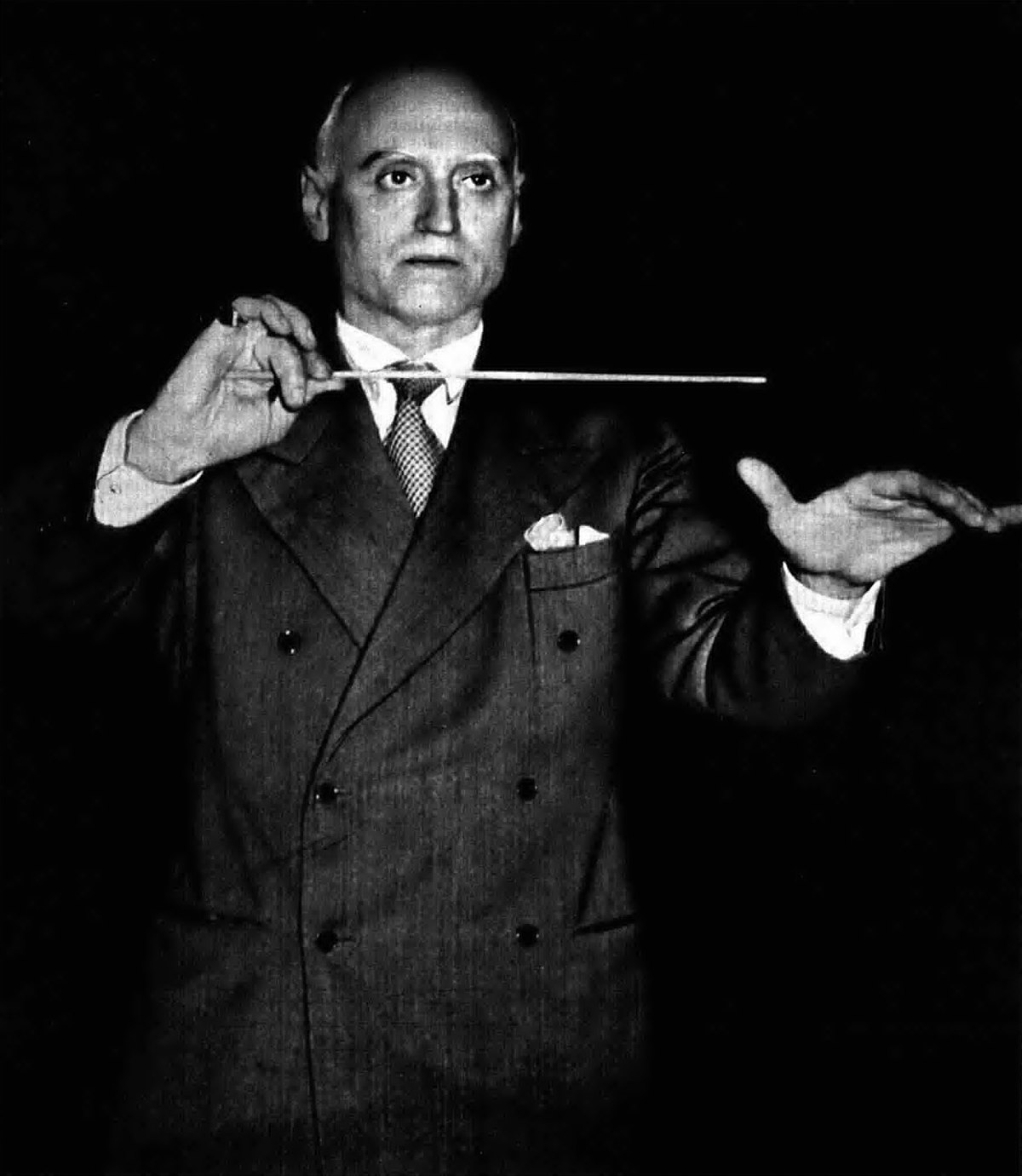
Much the same might be said of Victor de Sabata (above), whose international career as a conductor from his late thirties left him with little time or inclination to compose. A sequence of symphonic poems from around the early 1920s confirms sure mastery of the orchestra, and if Juventus is hardly the deepest of these, its dramatic flair and gestural immediacy are not to be gainsaid. Here, too, there is a three-part structure – the vaunting aspiration of youth becoming subsumed into the trials and setbacks which come with experience, before a revival of those earlier convictions ensures a close of blazing affirmation. Other composers might have invested such a sequence with a dialectical sense of change and attainment, but de Sabata is content to take these implications at face value – while investing his music with a greater subtlety and resourcefulness than it has often been credited for (not least by the writer of this evening’s programme note). This was certainly evident in Pappano’s take on a piece which could yet attract plaudits for other than its name.

As if mindful of the context in which this concert was heard, Pappano opened the second half with a rendering of the National Anthem – somewhat to the surprise of an audibly bemused audience, and presumably not to be repeated for Sunday’s follow-up programme that features Respighi and Dallapiccola at their (very different) communicative best.

To read more on the London Symphony Orchestra’s current season, visit their website

In concert – Zoë Beyers, English Symphony Orchestra / Kenneth Woods: Celebrating the Queen’s Platinum Jubilee

Beethoven Egmont, Op. 84 – Overture (1809-10)
Elcock Violin Concerto, Op. 13 (1996-2006) [UK premiere]
Vaughan Williams The Lark Ascending (1914/20); Symphony no.5 in D major (1938-43)

Zoë Beyers (violin), English Symphony Orchestra / Kenneth Woods

Routh Hall, Bromsgrove School
Friday 27 May 2022

There will be many concerts over the next fortnight celebrating Queen Elizabeth II’s Platinum Jubilee, but few (if any) of more substance than that given tonight by the English Symphony Orchestra with its principal conductor Kenneth Woods, taking place on the attractive campus of Bromsgrove School some miles from Birmingham.

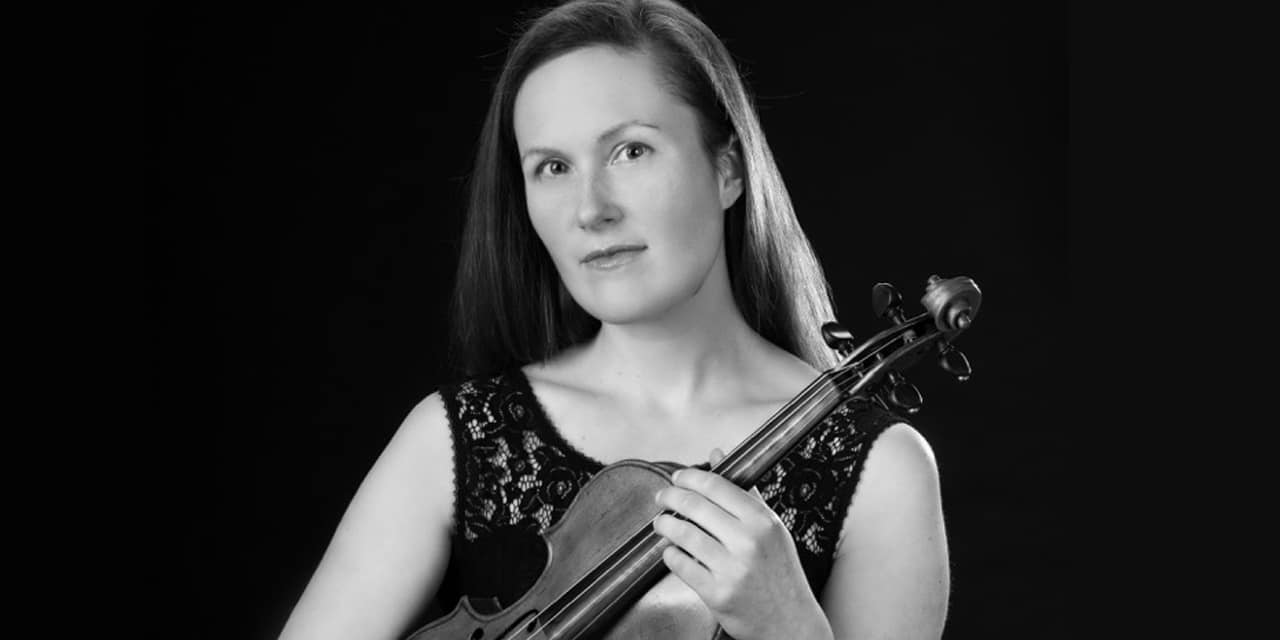
It might not have been written for this occasion, but the Violin Concerto by the ESO’s current composer-in-association Steve Elcock (above) was no less impressive for that. This marks something of a transition from those less ambitious pieces written for local musicians and the symphonic works now being recorded to great acclaim. It opens with an Allegro vivo whose rhythmic energy is maintained throughout, yet with enough expressive contrast for its second theme to assume greater expressive emphasis in the reprise. The highlight is a Molto tranquillo whose haunting main theme, initially unfolded by the soloist over undulating upper strings in a texture inspired by change-ringing techniques, is a memorable inspiration. A pavane-like idea later comes into focus and the closing stage, opening onto an eloquent plateau before evanescing into silence, lingers in the memory. The finale is a Passacaglia whose theme accelerates in five variations from Andante to Presto, culminating in a ‘cadenza’ for violin and timpani then a decisive pay-off.

A tough challenge, indeed, for any soloist and one which Zoë Beyers met with assurance over its 30-minute course. Aside from its sheer velocity the first movement is notable for a close-knit interplay between soloist and orchestra that was brought off with admirable precision, while the modal subtleties of the slow movement were rendered as enhancements to its overall tonal trajectory. Aside from a slight falling away of tension toward its centre, the finale saw the piece to a forceful close. Good to hear these performers recorded it prior to this performance, as a coupling to the Eighth Symphony that the ESO premiered last year, and which should be released over the coming months.

Beyers returned after the interval to launch a Vaughan Williams second-half (this year being the 150th anniversary of his birth) with The Lark Ascending. Easy to take for granted now that it is so frequently performed, the piece can still work its magic in an attentive rendering such as this. The underlying tempo might have been on the slow side, but the elegance and poise invested into the solo line were not to be gainsaid, nor was the translucency of orchestral textures which Kenneth Woods shaped with due restraint through the folk-like central section then into the easeful closing pages. Suffice to add that the unaccompanied final bars held those present spellbound with their artlessness.

There was at least as much to admire in the reading of VW’s Fifth Symphony which here followed on inevitably. A steady overall tempo for the Preludio did not exclude a palpable accumulation of energy in its development, nor a build-up of real fervency with the thrilling re-entry of its second theme. Understated it may be, but the Scherzo is replete with rhythmic quirks and while these were not always ideally negotiated, the music’s sardonic humour and ultimate evaporation were tellingly rendered. Doubtless this work’s emotional heart, the Romanza was admirably realized in its gradual coalescing of hymnal and folk-inflected elements towards a nobly wrought apex, but Woods kept enough in reserve so the final Passacaglia never risked becoming an anti-climax. It earlier stages conveyed  an emotional release as is countered by the ensuing anxiety then fateful reappearance of the work’s opening theme, subsiding into a coda which feels as much a benediction now as when it was first heard almost eight decades ago.

Beethoven‘s overture to Goethe’s Egmont might have seemed anomalous in this context but, as Woods pointed out in his opening remarks, the heroes and villains of 16th-century ‘Spanish Netherlands’ were not so far removed from those of today and, as the heady closing pages reminded us, triumph over adversity can never be taken for granted.

For further information on Steve Elcock, click here to visit his dedicated site, and for more on Vaughan Williams click here. To find out more about the artists, click on the names for more on Zoë Beyers, Kenneth Woods and the English Symphony Orchestra.

In concert – BBC Philharmonic Orchestra & Jac van Steen – David Matthews Symphony no.10 world premiere, Schubert & Brahms

jac-van-steen

Brahms Piano Concerto no.1 in D minor Op.13 (1854-8)
Schubert
Overture to Rosamunde D797 (1820)
David Matthews
Symphony no.10 Op.157 (2020-21) [World premiere]

Stephen Hough (piano, below), BBC Philharmonic Orchestra / Jac van Steen (above)

MediaCity UK, Salford Quays
Friday 20 May 2022, 3pm

Written by Richard Whitehouse

A substantial programme was the order of the day for this afternoon’s studio concert from the BBC Philharmonic with Jac van Steen, given at the orchestra’s regular base in MediaCityUK and that featured a first performance anywhere for the Tenth Symphony by David Matthews.

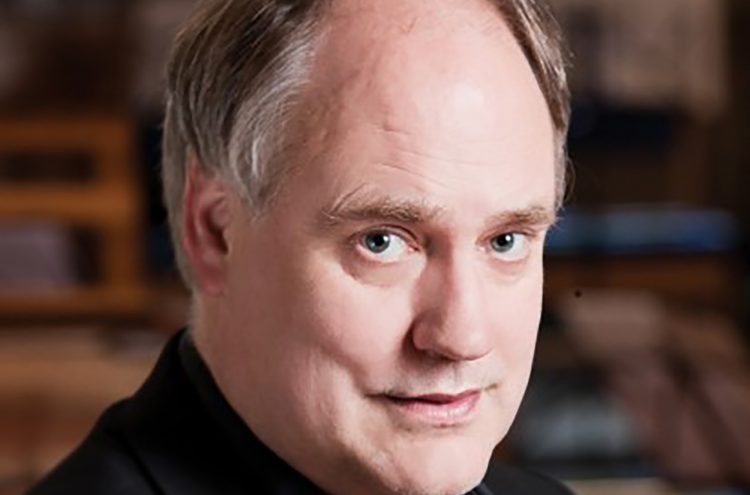
Whereas his previous symphony was written for relatively modest dimensions, the Tenth marks a return to larger forces: triple woodwind (with doublings), four horns, three each of trumpets and trombones, tuba and four percussionists alongside timpani, celesta, piano, harp, and strings. It also finds Matthews (above) retackling the one-movement format that dominated his earlier symphonies, allied to a subtle process of developing variation such as ensures unity across a varied and eventful discourse. Not least when that massive opening chord sets out a long-range tonal and harmonic trajectory for this work overall, and to which a pensive (offstage) cor anglais solo then intensifying string fugato provide both continuation and contrast by anticipating the types of expression and motion as variously come to the fore.

Distinctive in themselves yet drawn into a tensile and cohesive entity, the constituent sections take in a wistful intermezzo then an agile scherzo on the way to a central culmination whose increasingly explosive energy likely marks a point of greatest engagement with that opening chord. The music duly heads into a slower episode of sustained emotional raptness, elements heard earlier gradually being recalled through an unforced while never discursive process of reprise towards a coda whose ending seems the more conclusive for its poised equivocation. An absorbing and often gripping exploration of symphonic tenets such as Matthews has long pursued, persuasively realized by the BBCPO and van Steen – whose support of the composer – having already recorded the Second, Sixth and Eighth Symphonies – hardly needs restating.

Before the interval, Stephen Hough (above) was soloist in Brahms’s First Piano Concerto – a piece he has given many times (not least a memorable reading at London’s Royal Festival Hall in the early 1990s, Andrew Davis also giving a seismic account of the Symphony by the late Hugh Wood). There was emotional breadth aplenty in the initial Maestoso, but also latest energy as came to the fore in a combative development and tempestuous coda. Nor was the symphonic aspect underplayed in what is still the most monumental opening movement of any concerto.

If the central Adagio lacked a degree of repose in its orchestral introduction, Hough’s take on its almost confessional solo passages brought the required inwardness, with the course of this movement towards its agitated peak or enfolding serenity at its close never in doubt. Nor was that of the closing rondo, especially a central episode whose string fugato was deftly rendered then the piano’s gentle response enticingly conveyed. After the cadenza, horns and woodwind emerged as if leaving a benediction prior to the triumph that coursed through those final bars.

Throughout this performance, van Steen was an alert and responsive accompanist – then put the BBC Philharmonic through its paces with an animated account of Schubert’s Rosamunde (a.k.a. Die Zauberharfe), which made for an engaging if unlikely entrée into the Matthews.

For more information on David Matthews you can visit his website here. For more on the artists in this concert, click on the names to access the websites of Stephen Hough, Jac van Steen and the BBC Philharmonic Orchestra