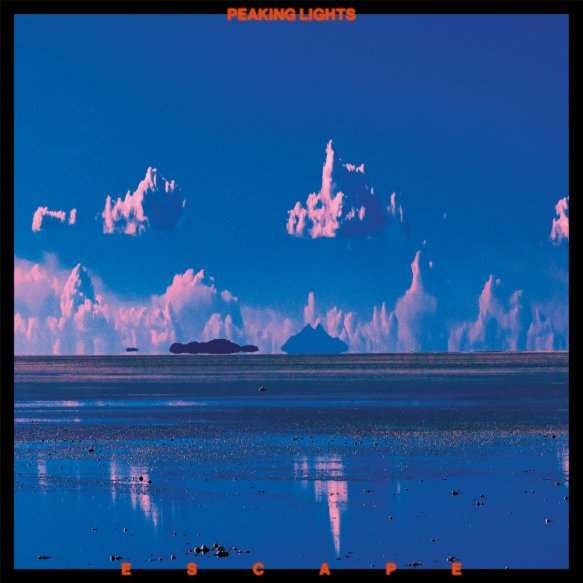
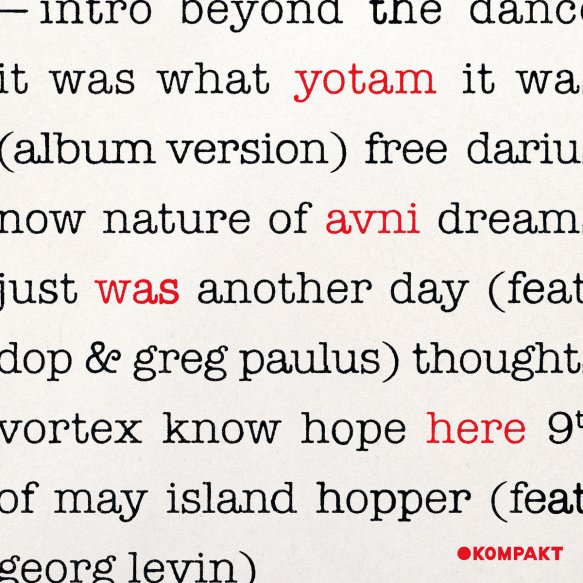
Switched On – Air Texture VII compiled by Rrose & Silent Servant (Air Texture)

reviewed by Ben Hogwood

What’s the story?

The innovative Air Texture compilation series reaches the magnificent seven, staying true to its principles. The idea is that two producers with a connection hook up for a double compilation, whose only proviso is that the music should not be ‘straight ahead club music’. Early volumes in the series tended to be much more ambient, with some completely devoid of beats, but as the canon has developed so has the open and inclusive approach.

This is one of the more upfront releases so far, from Californian Seth Horvitz – now using his Rrose alias – and Silent Servant, aka Los Angeles resident Juan Mendez.

What’s the music like?

The great thing about each Air Texture release is the opportunity for musical discovery, and this is no exception. Both contributors have clearly given the collection a lot of thought, and the range of musical styles here extends from thick muffled ambience from the likes of Octo Octa, where time stands virtually still, to the other end of the scale and the relentless bass drum of JS Aurelius.

Along the way we hear fascinating ideas. The first set of twelve tracks includes probing sounds from Anthony Child and nice, spectral effects from Laurel Halo, whose Dies Ist Ein sounds great on headphones. Ron Morelli’s Psychic Harms of Economic Deprivation has dense and foreboding ambience, while AGF’s HUM-iLiTY displaces reality with eerie vocal effects,

The second set has the wonderfully cinematic Luke Slater track When It Twists, yet another example of his techno mastery, but backs this up with Mara’s Rebellion, a fascinating track which moves from sumptuous widescreen sounds to distorted, extraterrestrial fragments. Silent Servant’s own New World has a propulsive drum track but broad ambience behind, while the ever-reliable Phase Fatale offers the excellent Nightmare in LA, a bubbling and moody synth cauldron. Finally Zahlensender (ssb), from Function, takes us to the other end of the aural spectrum with glittering treble sounds.

Does it all work?

Yes. Some of the more confrontational sounds here mean the compilation is not one of outright ambience, as previous volumes have been, but at this point it is worth remembering the Air Texture philosophy of challenging as well as soothing. In that respect the pairing of Rrose and Silent Servant works a treat, fulfilling the brief while introducing new names as the best compilers should.

Many of the tracks here led to further exploration, but they hang together really well as a pair of sets.

Is it recommended?

Yes, without reservation. This may be the seventh release in the series but it is another feature in the cap of Air Texture’s bow, a compilation series where it really pays to immerse yourself in each instalment. For a listener to be challenged and soothed in equal measure is just how a series like this should be.

Stream

Buy

Let’s Dance – House Masters: David Penn (Defected)

Various ArtistsHouse Masters: David Penn (Defected)

reviewed by Ben Hogwood

What’s the story?

Spanish DJ David Penn gets this very welcome career retrospective from Defected, a chance for fans to appreciate not just his original, Latin-flavoured house tunes and his teamwork with DJ Chus, but a whole host of remixes. Penn has in the past bravely taken on classics like Pete Heller’s Big Love and Sophie Lloyd’s Calling Out, but as this collection shows he always comes out on top.

What’s the music like?

Excellent, and brimming with good vibes. The original productions include Penn’s uplifting Nobody, which sets the tone from the off, but also What Is House, with Rober Gaez, and Stand Up, a piano-led, gospel-tinged winner with Ramona Renea. The collection has a really good ebb and flow between these productions and Penn’s remixes, so early on we get the rolling beats and bass of Jack Back’s (It Happens) Sometimes and a brilliant take on Candi Staton’s Hallelujah Anyway, smooth as silk in the production but still hitting the essence of the song. Later on the same can be said for Ron Hall & The MuthafunkazThe Way You Love Me, which Penn treats just right, and also Todd Terry’s Babarabatiri, which plays right into his Latino strengths.

Speaking of which, Penn’s El Sur, with Jabato, is a highlight later on – as is Esperenza, the long-established anthem made with regular sparring partner DJ Chus. Both appear later with a remix of Lenny Fontana’s The Way, before teaming up with Concha Buika to bring the house down on Will I (Discover Love).

Does it all work?

Yes. Penn’s remixing style is uncomplicated – which is an underrated quality, because it means the quality of the original still shines through in spite of the new clothing. The Mediterranean warmth is ever-present in his own productions, which flow beautifully and are consistently classy. A good piano riff is rarely far away from a David Penn production!

Is it recommended?

Yes. It’s great to see Penn getting the spotlight in this way, and he deserves his place alongside the hall of fame Defected have built up in their House Masters series. He understands what makes house music work so well in the hotter European climes, and this compilation shows off his output beautifully.

Stream

Buy

You can buy David Penn’s House Masters compilation from the Defected website here

Switched On – Ultramarine: Meditations (Real Soon)

reviewed by Ben Hogwood

What’s the story?

Exactly as it appears. Meditations is a companion piece to last year’s long player Signals Into Space, which Arcana particularly enjoyed. Lasting not long over half an hour, it is what Ultramarine main man Paul Hammond describes as ‘two long-form episodic ambient pieces performed with a reduced palette of kalimba, treated guitar, wavetable & analogue synths and hardware effects; recorded in London with Andy Ramsay (of Stereolab).

Meditations includes field recordings made in Brazil, engineered and mastered as part of the main recording process.

What’s the music like?

Very easy on the ear, as you can imagine – and very like the cover in terms of musical colour.

Both Meditations are best experienced on headphones or on a widescreen system in a quiet environment. Speaking from experience, they have only limited success on public transport, as the large amount of background noise means the sounds occasionally drop out of earshot unless turned up loud. Of course this music would never really be intended for such listening.

Instead, find the right environment to tune in and you will be quickly transported into Ultramarine’s world. It is a warm, watery place, out of doors and with soft, consoling noises both close up and far away, depending on where you want to focus your listening.

Meditation I settles on a dreamy sequence of two chords that follow each other without having any obvious rules, before moving to a section where the kalimba can cast its watery magic. Gradually this builds its energy, the sounds rippling outwards very pleasantly over a long pedal note.

Meditation II feels slightly closer to people, with distant snatches of dialogue audible from the field recordings. There are more obviously electronic interpolations here too, with ambient noises and subtle oscillations to guitar and keyboard. Again there are no drum beats, and virtually no bass – and the calm sonic environment casts a lasting spell, ending on a consonant, rippling chord.

Does it all work?

Yes. Ultramarine have plenty of experience in the ambient music area, and are masters at slowing down the mind while still giving it enough beneficial stimulation. You will emerge from an encounter with these two pieces with a calmer outlook for sure.

Is it recommended?

Yes. The listening environment is crucial to the success of any encounter with Meditations, just as it would be for proper meditation – so bear that in mind. As far as cancelling out the fast pace of modern life goes, or enhancing an already relaxing day, you really can’t go wrong with this one.

Stream and Buy

Switched On – Steve Spacek: Houses (Black Focus)

reviewed by Ben Hogwood

What’s the story?

In which Steve Spacek goes back to basics. House music has always been at the heart of his musical thinking, but he feels it has been a long time since he indulged himself in a 4/4 beat. He does so through a long player made solely with iPhone and iPad apps, in Spacek’s words using technology to join the past with the present.

What’s the music like?

Spacek can never really sit still, which is a helpful quality to have in house music! Because of that he is always subtly creating and innovating.

In this case the past is still relatively recent – Detroit techno – but he adds his own welcome quirks to the mix, bringing in vocals to point towards soul and even experimental jazz. His own vocals are as distinctive as ever, while the resultant style is one that purposely includes UK rave music in a kind of transatlantic fusion.

As far as that translates to individual tracks, Tell Me is a really nice hybrid of deep house and UK garage, the latter diffused through its bassline. There are some nice bumpy beats and bass to African Dream which gets bigger perspective through faint keyboards. Song Life is really nice, deep and smooth with a good mix of polish and instinctive writing, which typifies the album. Love 4 Nano is great, with a cosmic synth and serrated bass sound twisting and turning among the chopped up and clipped vocals. The agile bassline of first track Rawl Aredo should not be forgotten either!

Does it all work?

Very much so. Spacek is ever inventive, and Houses works on a deeper level while providing energy through its beats. With four bonus tracks it clocks in at a generous 75 minutes, but thanks to Spacek’s subtly inventive ways through house music it never outstays its welcome.

Is it recommended?

Yes. If you’re a fan of Matthew Herbert’s house exploits you will find yourself close in style to Steve Spacek. Yet the application of his falsetto voice and the UK concessions bring individuality to Houses, in what turns out to be a really fine and invigorating album.

Stream

Buy

Switched On – Ocoeur: Everything (n5MD)

reviewed by Ben Hogwood

What’s the story?

Franck Zaragoza’s sixth album as Ocoeur comes with a plea. It is about getting people to restore their communication to a more direct level of humanity, rather than spending all the time gazing at devices, heads down.

With a wish that we engage with ‘Everything’ around us, Zaragoza gets to work on a broad, ambient canvas, producing an album of six rather beautiful tracks. The one-word titles speak of the simplicity he is searching for in his music.

What’s the music like?

Everything is a beauty. With it Zaragoza manages to suspend conventional feelings of time. Setting out its scope with the Jean Michel Jarre leanings of Ascent, laden with melancholy, it presents a simple, tonal musical language that evolves beautifully.

The title track introduces a kick drum as punctuation, though the appearance of any drums is relatively rare. Current has icy percussion around the edges as it unwraps a chilly, watery scene. Glow also uses shards of rhythm to accompany its luminous keyboards, unfolding at a natural pace.

It is however the closing pair of Dawn and Dusk that leave a lasting mark. At 20 minutes between them, they have an easy, natural progression across space and time in direct opposition to the busy digital environments around us. There is very little to anchor either production to the ground, but the floated motifs work really well.

Does it all work?

Yes. The softly reflective nature of this music makes it ideal for either end of the day, and Ocoeur’s slow yet measured progressions take place through sounds the listener can dive into.

Is it recommended?

Wholeheartedly. Its sentiment is spot on, but so is the feeling you get after 40 minutes spent in Ocoeur’s company. A cleansing and subtly uplifting experience.

Stream

Buy

Everything is released on Friday February 28 on n5MD