Switched On – Special Request: Offworld (Houndstooth)

reviewed by Ben Hogwood

What’s the story?

Paul Woolford’s third album of the year under the Special Request moniker attempts to answer a question. What if Jam & Lewis signed to Metropolis?

The thought of one of soul music’s finest production duo hanging out with Juan Atkins at the beginning of another era in Detroit musical history in the mid-1980s is an irresistible one, and Woolford’s ambitious attempt to bring the combination to life is what powers Offworld.

What’s the music like?

There are seven expansive tracks, mostly instrumental and rich in analogue colour, put together with Woolford’s trademark instinctive approach.

Immediately it finds the sweet spot with the booming bass, analogue highs and strong vocal of 237,000 miles. More typical of the album are the vast spaces evoked by Offworld Memory 3. Front Screen Projection looks back to Jean Michel Jarre with its synth sound and riff, but forward with its no-nonsense breakbeat, while Arse End Of The Moon, a classic Woolford title, has sharper sounds and clattering, big beat percussion. Morning Ritual is also a lovely track, a brooding instrumental, before a rather fine remix of The Grid’s Floatation, signing off with an affectionate quarter-hour of expansive ambience and a nicely done retro beat.

Does it all work?

Once again – yes. Woolford never pads his albums out too much, either in texture or duration, so while Offworld is not much longer than an extended EP without the Grid remix, it works brilliantly well.

Is it recommended?

Yes indeed – as much as the first two albums of this year’s crop did. Paul Woolford is on a roll right now and it’s up to us to keep up!

Stream

Buy

Switched On – Conforce: Dawn Chorus (Delsin Records)

reviewed by Ben Hogwood

What’s the story?

Conforce is the work of Dutch producer Boris Bunnik, who comes from the island of Terschelling, near Rotterdam. He has a good deal of previous in electronic music, working under the Versalife and Severnaya pseudonyms. This is his fifth album for the Delsin label.

Previous Conforce albums have included references to AI and machine learning, but retain their personal edge through Bunnik’s more ambient dressing and the packaging, which often includes his own photography.

What’s the music like?

Dawn Chorus moves at two different speeds. The foreground is rich with percussion, with rolling breakbeats that generate plenty of energy. This gives the music much more of a human element, ensuring it doesn’t sound too processed. Behind all the rhythmic activity sit slow moving sets of chords, subtly changing shape like clouds in the sky or mist over a lake.

Throughout there are references to the role of electronics in everyday life, with chattering loops and bleeps. Marooned feels remote in spite of its squelchy bass, while Axis Perpendicular packs more of a bunch with its offbeat breaks. Avoid is roomy and heavily percussive, while iO also has increased activity. Void and Umbra are both excellent tracks, the latter taking on an eerie edge by the end.

Does it all work?

Yes. Without being too ground breaking, Conforce has a style that is immediately identifiable and extremely listenable. With ambience and energy combined his is a style that works on two different levels for Dawn Chorus.

Is it recommended?

Yes. Anyone following the Delsin label will want to get involved, as it maintains their quality-rich approach.

Stream

Buy

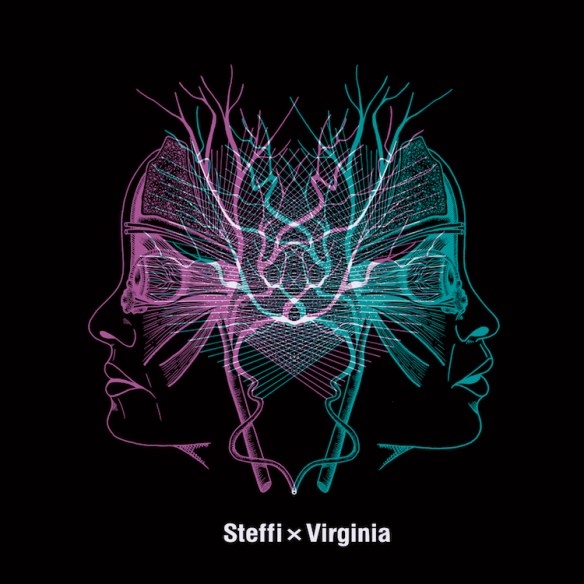
Switched On – Steffi x Virginia: Work A Change (Ostgut Ton)

reviewed by Ben Hogwood

What’s the story?

Steffi & Virginia have been regular collaborators ever since 2011, when their vocal track Yours surfaced on the Ostgut Ton label. I use the term ‘Vocal track’ rather than ‘song’ advisedly, because the two DJs and vocalists find that their vocal work complements the instrumental craft, the two elements becoming inseparable.

Eight years on and their musical chemistry remains, sparking eight track EP Work A Change.

What’s the music like?

Every bit as vital as the pair’s first work. Steffi x Virginia, as the name implies, are an incredibly cohesive unit, finishing each other’s musical sentences on tracks that exist somewhere between techno, electro and pop. They manage to satisfy the elements of each style while being difficult to pin down to a single genre.

Beats bubble below the surface while cool keyboards float above on Be True To Me, which kicks in with a catchy chorus, while the two standouts Help Me Understand and Work The Change have a great sense of urgency. Both exist in instrumental form to show just how good they are.

Sight From Above, meanwhile, has a closer harmony which leads to a warmer sound, while Until You’re Begging has a conversational style over a busy beat. Only Internal Bleeding doesn’t quite hit the spot, though the harmonies are as effective as ever.

Does it all work?

Yes, because the blend of processed electronica with a freedom of spirit is irresistible. Work A Change, Help Me Understand and Be True To Me are big hitters that repay many repetitions (from experience!)

Is it recommended?

Without hesitation. These two spark off each other to brilliant effect, and the natural creation of this album has led to some brilliant vocal and instrumental sparring. It brings forward high quality music with energy and positivity.

Stream

Buy

On record – CBSO / Edward Gardner – Mendelssohn in Birmingham Vol.5: Overtures (Chandos)

Mendelssohn
Trumpet Overture Op.101 (1825)
Overture to A Midsummer Night’s Dream Op.21 (1826)****
Calm Sea and Prosperous Voyage Op.27 (1828)**
The Hebrides (Fingal’s Cave) Op.26 (1830)*
The Fair Melusine, Op. 32 (1834)
Overture to St. Paul Op.36 (1836)
Ruy Blas Overture Op.95 (1839)***
Overture to Athalie Op.74 (1844)
Lorenda Ramou (piano)

Chandos CHSA5235 [74’53”]

Producer Brian Pidgeon
Engineers Ralph Couzens, Jonathan Cooper and ****Robert Gilmour

Recorded *20-21 October 2013; **15 and ***16 February 2014; ****13-14 July 2015; 10-11 July 2018 at Town Hall, Birmingham

Written by Richard Whitehouse

What’s the story?

For the fifth release in Chandos’s series Mendelssohn in Birmingham, the City of Birmingham Symphony Orchestra and its onetime guest conductor Edward Gardner further traverse the orchestral output of a composer who was not averse to snatching mediocrity from the jaws of greatness.

What’s the music like?

It should be pointed out only a part of this release consists of new material. The Hebrides, Ruy Blas and Calm Sea and Prosperous Voyage first appeared in harness with Symphonies nos.4 and 5, nos.1 and 3, and no.2 respectively; while A Midsummer Night’s Dream was coupled with a selection of the incidental music for Shakespeare’s play as well as the Violin Concerto. Those who have been acquiring this series may thus feel a little short-changed, which perhaps makes purchasing those previously unreleased items as individual downloads the best option.

Proceeding chronologically, the Trumpet Overture reinforced Mendelssohn’s precocity in the wake of his Octet for strings – its breezily incisive manner, opened-out expressively by ominous asides, a viable template for future generations on which to hone their aspirations. Few could have hoped to match A Midsummer Night’s Dream as to prodigality of invention or technical resource, not least in terms of its redefining the orchestra near the outset of the Romantic era. A more prolix structure, Calm Sea and Prosperous Voyage yet merits revival through the limpid eloquence of its introduction and surging impetus of its Allegro towards a rousing peroration. That said, it cannot compare with The Hebrides in terms of an evocation sustained via formal sleight of hand and emotional clarity as remain breath-taking to this day.

Into the 1830s, The Fair Melusine still remains engaging for those subtly tangible images of watery domains (proto-Wagnerian, though the connection is easily overstated) and headlong fate through a vivid if increasingly impersonal idiom. Such impersonality had all but taken hold by the time of the oratorio St Paul, its overture breathing an aura of unforced piety and ‘natural order’ increased by the fugal interplay at its centre then almost apologetic fervency near its close. Mendelssohn rather grudgingly supplied incidental music for Victor Hugo’s play Ruy Blas, but the overture retains its drama and melodic appeal up to the surging coda. Would that Athalie conveyed comparable conviction, but this overture to Jean Racine’s play yields little more then technical proficiency as its composer strives gainfully for inspiration.

Does it all work?

On a technical level, absolutely. Mendelssohn was a master of his craft whose abundant early promise was only intermittently fulfilled by his later music. Tackling these overtures in order of composition (rather than that of this disc) tends to reinforce such an observation, which is not to deny the sheer technical command of even those lesser pieces or of the conviction that Gardner and his players have invested into this programme overall. Save for just a couple of overly headlong climaxes, there is little to fault here in terms of either playing or recording.

Is it recommended?

Yes, with the proviso detailed above. Bayan Northcott’s estimable booklet note mentions the overture to cantata The First Walpurgis Night as being inseparable from its main work, which makes a CBSO recording of this ‘dark horse’ among Mendelssohn works the more desirable.

Stream

tbc

Buy

For more information on this release and to purchase in multiple formats visit the Chandos website

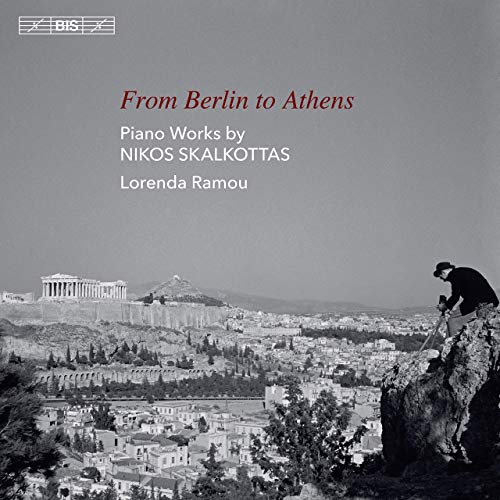
On record – Lorenda Ramou – From Berlin to Athens: Skalkottas Piano Works (BIS)

Skalkottas
Griechische Suite A/K79a (1924)
(Suite) A/K79b (1924)
Sonatina A/K75b (1927)
15 kleine Variationen A/K75c (1927)
Suites – no.2 A/K72 (1940); no.3 A/K73 (1941); no.4 A/K74 (1941)
The Gnomes A/K110 (1939)

Lorenda Ramou (piano)

BISBIS 2364SACD [87’43’’]

Producer & Engineer Christian Starke

Recorded October and November 2017 at Reitstadel, Neumarkt in der Oberpfalz

Written by Richard Whitehouse

What’s the story?

Between 1998 and 2008 BIS undertook a ground-breaking series devoted to Nikos Skalkottas (1904-1949), and this new release features almost all the music for solo piano that was still to be collated. The result is a fascinating journey through one facet of this fascinating composer.

What’s the music like?

As Lorenda Ramou indicates, this recital divides into three parts.

The first of these comprises music written in Berlin during Skalkottas’s study there, including the composer’s two earliest surviving works. Greek Suite is a quirkily appealing amalgam of neo-classical and traditional stylisms with distinct jazz overtones in its closing movement. The ‘Suite’ (its title can only be conjectured as the first two pages of music are missing) develops these influences on a larger scale, not least the scintillating Shimmy tempo finale. Come the Sonatina and Skalkottas’s language has evolved apace – hence the expressively detached Siciliano, then restive finale with its ominous coda; an upbeat to the masterly 15 Little Variations on a Beethoven-inspired theme that finds a natural climax in its laconic recollection following a subdued apotheosis.

The next three pieces were all written in Athens during Skalkottas’s ‘inner exile’ after being repatriated. Ramou’s implication that the Second, Third and Fourth Suites (the earlier First Suite was recorded by Nikolaos Samaltanos on BIS1133/4) form an extended sequence that fuses this composer’s preoccupation with ‘classical’ and popular’ formal archetypes in his mature post-tonal language. Highlights include the angular virtuosity of no.2’s Rapsodie, the inexorable motion of no.3’s Marcia funebre, and the oblique wistfulness of no.4’s Serenade. Performable (also listenable to) separately or as a 30-minute continuum, these confirm Skalkottas’s mastery of a medium about which he often felt equivocal yet to which he contributed some of the most thought-provoking music from the mid-twentieth century.

Also written in Athens, The Gnomes was intended to accompany a Christmas dance-show but rhythmic difficulty led Skalkottas to orchestrate a selection of miniatures by other composers under an identical title (recorded by the Caput Ensemble on BIS1364). Relocated in 2015, the present piece unfolds in two parts of six and three items – the former as tensile and impulsive as the latter – notably an Intermezzo (Chorale) – are hieratic and evocative. What the scenario depicted is unclear, though the presence of a Greek carol rather suggests something seasonal.

Does it all work?

To varying degrees according to when the music was written. The Variations and three Suites can rank with the finest Skalkottas compositions, while the early pieces and The Gnomes are fascinating subsidiary items. Nothing here should be without interest for discerning pianists.

Is it recommended?

Indeed. Ramou is a perceptive guide throughout, even if certain of the more extrovert pieces could evince greater panache. Among the previously recorded works, those from Samaltanos (BIS) of the Sonatina and Variations are coupled with the 16 Melodies, with those by Steffen Schleiermacher (MDG) and Lefki Katanou-Lindahl (Caprice) of Third and Fourth Suites part of miscellaneous recitals. At nearly 88 minutes, this is among the longest discs yet issued, but the range and depth of the SACD sound is wholly commensurate with BIS’s usual standards.

Stream

Buy

For more information on this release and to purchase in multiple formats visit the BIS website