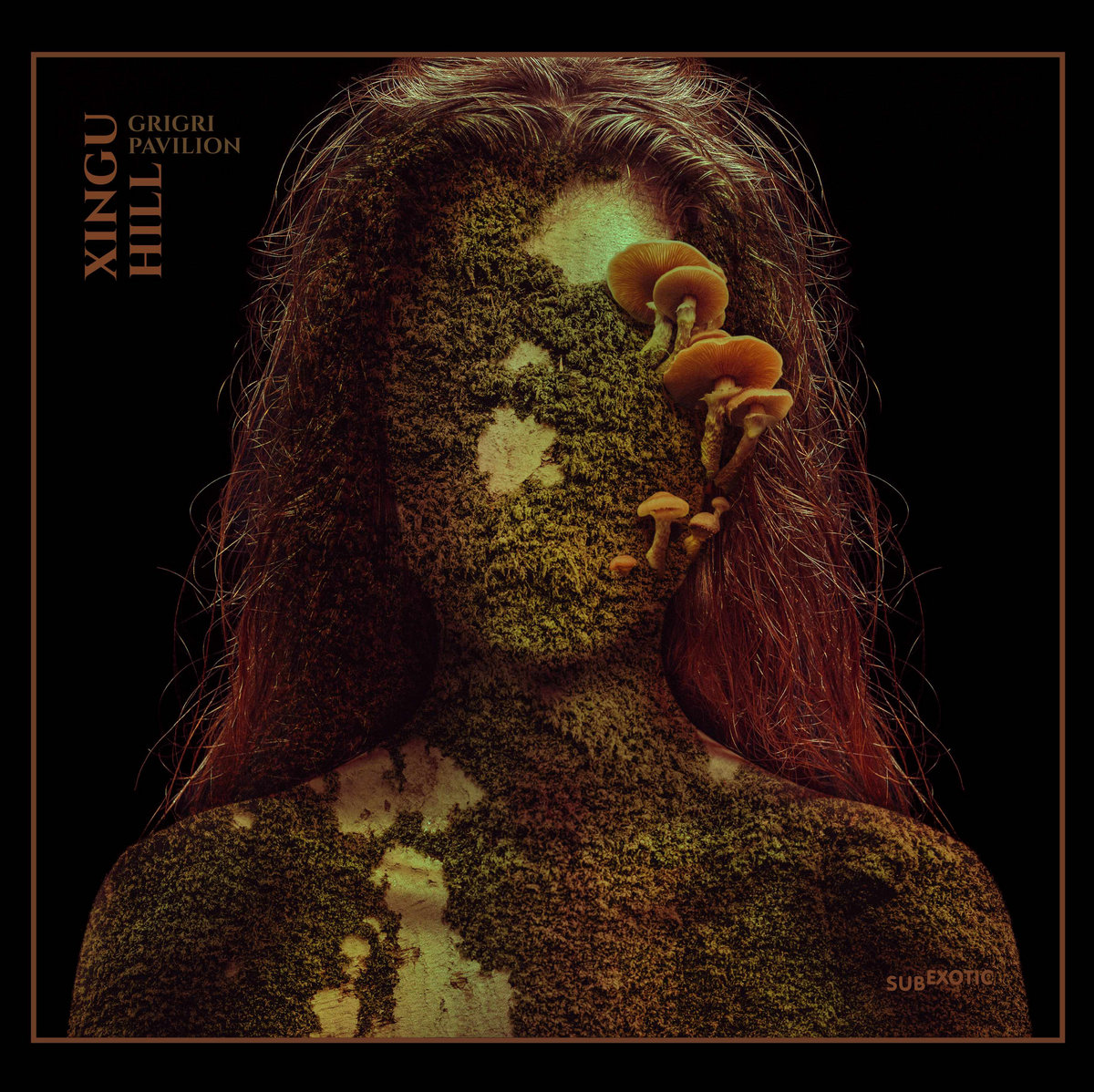
Xingu Hill is a pseudonym from the extremely prolific John Sellekaers, the Canadian-born musician and producer who lives in Brussels.
With Grigri Pavilion his aim was to ‘build a dreamscape, albeit a slightly uncomfortable one’. He recorded the album during the heat-soaked French summer of 2022, before a detailed rework and completion in his Brussels studio.
What’sthemusiclike?
There is indeed an undercurrent of unease to the music here, in spite of its overall ambience. This is in part a reflection on the feverish climate in which it was recorded, with an edgy feel to a number of the mid or lower-range riffs Sellekaers uses. Indeed, when the music is stripped back to its drum track and the motif sits lower in the pitch range, there is the sense of danger around the corner.
Tracks like Eye Contact are a little easier, where the sustained harmonies bring extra depth to the music. Conjectures does the same, but its riff is an insistent, dominating one. While some of Sellekaer’s music brings solace, the likes of Nightcraft explore the shadows, finding industrial processes left on or slightly malfunctioning.
The rhythm tracks hold the key to Girgri Pavilion. Byways & Tunnels is particularly good, channelling mid-90s exploration and a little Cabaret Voltaire through dubby confines. Electrographic Dreams has a similar, low-slung profile but more kinetic energy.
Does it all work?
It does, and is held together well to make a cohesive half-hour suite of electronic portraits and vistas.
Is it recommended?
Yes. Like all Sellekaers’ work, there is plenty of interest here – and his various pseudonyms show an ability to move between a number of different electronic music styles with instinctive ease.
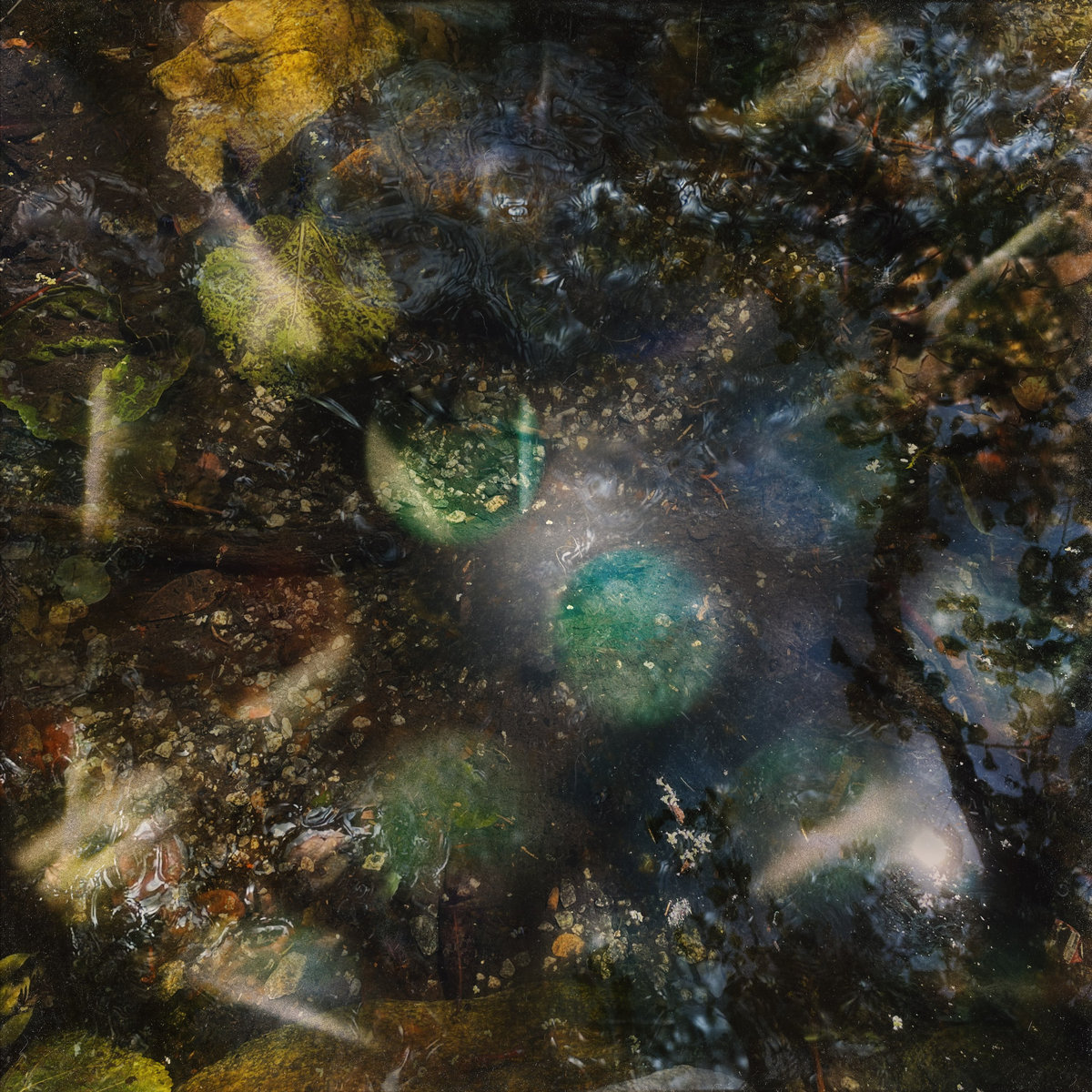
The striking artwork on Ellie Wilson‘s new album is a key for what lies within. Memory Islands explores the power or spirit of remembrance, drawing on a number of first hand sources for inspiration.
The most pronounced of these is a recording of Wilson’s grandfather reminiscing about his experiences and lost years as a Navy seaman in World War II (By the Time I Got Back Pt 1). Other pieces explore the behaviour of the brain when waking from a coma (Delta), or the disappearance of words from our language, as noted by Robert Macfarlane (Unnamed Unseen). Looking forward – in a sense – is Will I Dream, inspired by the film The Year We Make Contact – specifically the moment the onboard computer HAL 900 confronts his digital ‘mortality’– all memories erased.
What’sthemusiclike?
Extremely evocative. Wilson’s twin disciplines are the violin and electronics, the ideal blend of past, present and future to support the album’s themes – and both are used in support of memories lost and regained.
The open strings of the violin on Unnamed Unseen inevitably hark back to time spent learning the instrument but also express a powerful simplicity, her experience in folk music yielding strong communication from the off. The use of rapid pizzicato is especially effective when describing Delta‘s emergence from a coma, its pitter-patter countered by rustic double stopping.
The electronic Mindpop harnesses its power through a rolling drum track, while Will I Dream? has intriguing effects that play with aural perspective.
As you might expect, the tones of Wilson’s grandfather on By the Time I Got Back Pt 1 are particularly moving, complemented by urgent phrases from the violin. The second part spins a web of ideas against a tick-tock rhythm, an open-ended conclusion to the album.
Does it all work?
It does. The album is effectively a seven-part suite of studies on memory, and its half hour fairly flies by, leaving you wanting more.
Is it recommended?
Very much so. If you enjoy music where folk and electronic intersect, then this is definitely for you – and more besides, since Memory Islands tells a series of vivid tales. Given its value for money through Bandcamp, there really is no excuse!
We last encountered Captain Mustache two years ago, as part of the excellentQuattro Artists collectionreleased by Bedrock. His contribution was Indigo Memories, where the intersection between techno and electro functioned particularly well.
Now we find him returning to the Kompakt label with an imagined an imagined ‘whole day for party people’, with a raft of guests in tow.
What’sthemusiclike?
The captain delivers a captivating blend of darkness and light in the course of the day. The darker stuff is the four to the floor electro and techno workouts, some really well produced numbers that hit the floor without any nonsense. These include the instrumental cuts Laser Me, Clair-Obscur and Galaxian Symbiosis, the last two of which would be more than half Detroit-based if you cut them open. Acapulco Citron has a chunky bass profile, as does Pulsions Organiques, which pans out a bit to softer electro up top.
Then we have the more humourous tracks such as the vocal playful Gimme Your Mustache or Shifting Basslines, where Chicks on Speed work particularly well. The Arnaud Rebotini collaboration I Love Watching U is excellent, too.
Does it all work?
It does – the album has a really satisfying ebb and flow.
Is it recommended?
Indeed it is, another fine opus from the man with immaculate facial hair.
The tale of Michael Gold is a compelling one. The singer-songwriter, who records as Mirror Tree, is a pilot, flying a 737 for a major airline out of Los Angeles. Yet he also belongs to a musical family tree of impressive lineage, his mother being Grammy-winning singer-songwriter Sharon Robinson and his godfather a certain Leonard Cohen.
For a while his route into music looked unlikely, with pilot duties taking him into remote Alaska – but it was while flying across the remote American wilderness that he began to hear music afresh, and in particular bands such as Stereolab and Broadcast.
Returning to L.A., Gold began writing and recording, working with former Poolside bandmate Filip Nikolic. The two dragged Gold’s Farfisa organ out of storage, and it became an integral part of the album’s sound.
What’sthemusiclike?
The Farfisa makes all the difference. With clever use of reverb and perspective, Gold and Nikolic use it to add perspective but to add a layer of musical dust to each track, the listener almost shaking sand off their shoes. This feels like outdoor music as a result, and with a lovely sheen and hints of psychedelia added to the production, the sound is an extremely pleasant one.
The clincher, however, is Gold’s voice, an easy-going instrument that is slightly husky and delivers the lyrics with warmth and a little charm. Another Day is a beauty, dappled sunlight sneaking through the trees as a backdrop to the vocal, while Echoes Competing is similarly sunny, its coda a singalong moment. The hooks Gold uses can pass the listener by on the first one or two listens, but give it time and the album really starts to make its mark.
Let It Go looks up at the moon and stars with tired eyes and an old piano for company, while during the carefree Tuesday it’s easy to imagine Gold soaring above the clouds. Similarly with Along For The Ride, which takes to the wing on vocals that could have been crafted as part of late-1960s psychedelia. The Stereolab and Broadcast influence can be heard in a good way, and the Farfisa creates a series of musical mirages.
Elsewhere layers of guitar create a warm musical bed for songs such as In A Day, where the organ is manipulated to sound like a flute ensemble. Meanwhile 300 Miles bends the sound off pitch slightly, creating a distinctly Eastern feel.
Does it all work?
Largely, yes. This is charming pop music with pastoral and psychedelic overtones. The album threads its themes together nicely, and while occasionally it’s a bit too woozy – and maybe a song or two long – Gold spreads the warmth of his music a long way.
Is it recommended?
It is. Mirror Tree uses a combination of thoughtful and often blissful songwriting with imaginative instrumentation, and it proves difficult to resist.
Stacey Rishoi (mezzo-soprano), Boulder Children’s Chorale, Women of Boulder Concert Chorale, Colorado MahlerFest Orchestra / Kenneth Woods
Gunning Symphony no.10 (2016-17) [First public performance] Mahler Symphony no.3 in D minor (1893-6)
Colorado MahlerFest 195269164287 [two discs, 114’21”] Live performances on 22 May 2022, Macky Auditorium, Boulder, Colorado
Reviewed by Richard Whitehouse
What’s the story?
The 35th Colorado MahlerFest, the eighth under the direction of Kenneth Woods, reached its culmination with the performance of Mahler’s Third Symphony and preceded in this concert with a first public hearing for the 10th Symphony by the late-lamented Christopher Gunning.
What’s the music like?
In its setting out the creation of the world, from an inanimate state to the dawn of humanity, Mahler’s Third Symphony is his most ambitious conceptually and certainly his lengthiest. It is to Woods’s credit that, though his account at 92 minutes is among the swiftest, there is no sense of haste – not least his handling of the first movement’s vastly extended sonata design, which amply conveys the burgeoning of natural forces with unbridled impetus but equally a fantasy or even playfulness manifest through the irresistible abandon of those closing pages.
Those having watched the online broadcast will recall Woods observing the customary break before the remaining five movements which constitute the second part. Here, though, there is barely a pause going into the second movement, its minuet-like lilt and evocation of all things vernal rarely having sounded so delicate or ingratiating. The ensuing scherzo is almost as fine, the often boisterous irony of its outer sections finding contrast in trios whose post-horn solos are ethereally rendered by Richard Adams, with a frisson of danger emerging in the final bars.
Nor is Stacey Rishoi found wanting in a Nietzsche setting that alternates earnest speculation with heartfelt yearning. She is no less inside its successor’s setting of a Knaben Wunderhorn text, its ambivalence offset by a whimsical response from the women’s and children’s choirs. Others may have found even more profundity from the finale, but Woods ensures it emerges as a seamless totality – the anguish at its centre drawn into a rapt eloquence which is carried through to a coda bringing this disciplined and persuasive performance to its ecstatic close.
Unlike other of his peers, their concert output little more than a rehash of their work for film and television, Christopher Gunning’s symphonies and concertos seem abstract music with a vengeance. The single-movement 10th Symphony is both cohesive in its structure and methodical in its evolution. Woods has recorded it with BBC National Orchestral of Wales (Signum Classics), and while that studio recording has greater formal focus, the Colorado musicians unfold this quixotic score to its serene ending with demonstrably greater spontaneity and impulsiveness.
Does it all work?
Almost always. Those who prefer a more expansive or interventionist approach in the Mahler may be disappointed, but the no-nonsense nature of Woods’s traversal conveys any amount of insight or expressive nuance. Presentation is equally straightforward, but Mahler’s expression markings for each movement should have been included alongside those descriptive headings he later deleted, while the Gunning might have been best placed at the start (as in the concert) with the first part of the Mahler – allowing its second part to unfold as an unbroken continuity.
Is it recommended?
Very much. Boulder’s Macky Auditorium might not have the most spacious perspective, but its clarity and definition audibly benefit a performance that is much more than the memento of an occasion. Indeed, this MahlerFest series is shaping up to be a memorable Mahler cycle.
Buy
For further purchase options, visit the MahlerFest website – and for more information on the festival itself, click here. Click on the names for further information on conductor Kenneth Woods and composer Christopher Gunning