Keith Kenniff releases his third album as Helios on Ghostly International, a label he joined in 2018. Kenniff, though, has been making music under this alias since 2004 – a complement to his other active persona of Goldmund. Kenniff, who also explores poppier climbs with partner Hollie as Mint Julep, is a prolific composer who likes to record at night.
Espera took on its form in this way, using layers of guitar, piano and percussion and concentrating on texture and colour just as much as melody and rhythm.
What’sthemusiclike?
In a word, lush. Espera presents wide open vistas, sunny outlooks, a light wind in the branches, an ebbing tide – all of those ambient things that we look for on holiday, presented in audio form. He presents those textures with subtly catchy hooks and melodies, the sounds warm to the touch and the harmonies easy on the ear.
From the moment Fainted Fog floats in the mood is set, and you can practically feel the sand in your toes as Intertwine takes shape. As well as pure relaxation, Kenniff’s music as Helios does have an emotional dimension, as the excellent later cuts Well Within and Rounds show. The latter has some softly voiced melodic loops linked together rather beautifully.
Meanwhile the likes of Impossible Valleys present a calming meander, outdoors in nature with not a care in the world.
Does it all work?
It does indeed, especially in the sunshine!
Is it recommended?
Yes. There are no surprises here, but that’s because Helios knows exactly what to do to set the mood. The mood here being relaxation and hot weather bliss.
There are two new beginnings at work with this release, the first one on the new Odda Recordings label. Odda, founded by Leaf’s label manager and press officer, Thea Hudson-Davies, describes itself as being ‘informed by the musical contours of a long-running NTS Radio show, taking the lesser-walked paths across the fringe terrains of experimental music, percussive electronics and film soundtracks’.
To that end, the choice of Flaer – aka Realf Heygate – is an obvious one. Heygate is an artist, pianist and cellist based in Leicestershire, and this mini album has strong classical connotations in its title. For inspiration the net is cast further afield, however, drawing on environments and field recordings that would fit into 1970s folk horror films,
Heygate started the album during lockdown, restricting himself to four track tape and three acoustic instruments – cello, piano and acoustic guitar.
What’sthemusiclike?
Preludes captures the rarefied atmosphere of early lockdown in the UK, where an eerie quiet fell over the land and familiar sounds such as birdsong and church bells took on heightened significance and intensity.
Hew reflects this in its churchyard recording that quickly segues into gently oscillating piano and guitar, rippling out beautifully to a rocking cello motif. The cello takes the lead for a plaintive but searching melody on The Hill, while the guitar comes forward for Pasture, closely mixed to capture fret movements under the watchful eye of a blackbird.
Forever Never is the first truly heartstopping moment, an eddying piano line dropping away into stillness:
Landlock pits broad cello phrases against complementary guitar, but a low piano note on Magnolia introduces caution, the pastoral scene compromised by swarming treble lines, though these soften appreciably as the track proceeds. The closing Follow sees dense acoustic guitar lines accompanied by the distinctive chirp of house sparrows, before the cello adds richness.
Does it all work?
It does. Close-up listening is recommended, to catch the detail of the field recordings and the softened timbres Heygate often applies to the instruments. The only regret is that the recordings do not exist in longer versions, as there is still plenty of room for musical development in each.
Is it recommended?
It is. An auspicious start for the new label, which looks well set for the long haul. Preludes will put you under a spell for 20 minutes, and though on occasions it might get eerie, Flaer’s environment is a musically nourishing place to be.
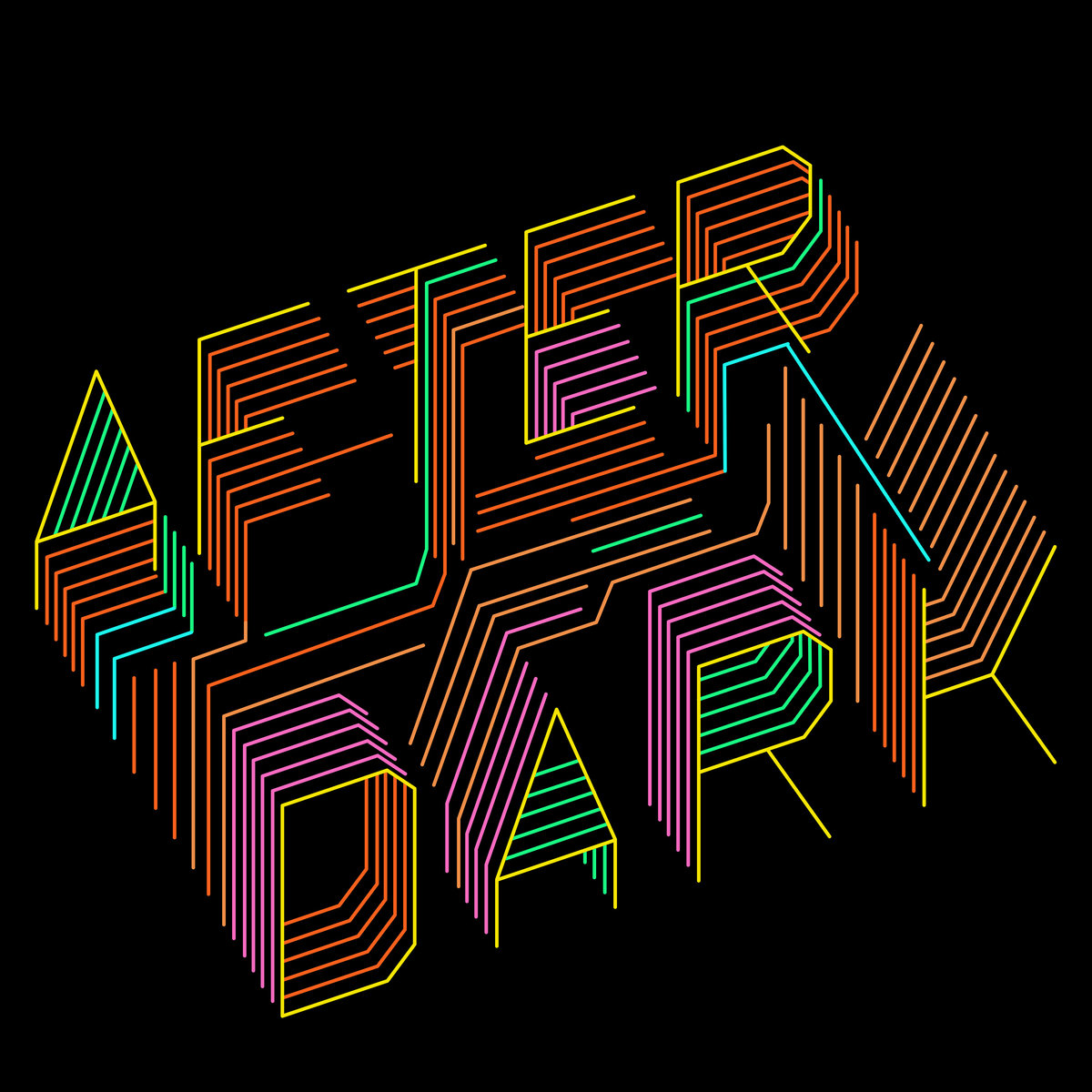
Bill Brewster returns to the decks for a new instalment in his After Dark series for Late Night Tales. Firmly entrenched as dance music royalty, Brewster has an encyclopedic knowledge of house, funk and disco, writing and co-writing a number of books and endlessly fascinating booklet notes. This love transfers effortlessly to his DJ sets and the music itself.
As before he has come up with an inventive selection of tracks old and new, plucking a number of rarities from behind the sofa, always with an eye on the overarching whole. Tracks are either brand new or digitally available for the first time.
Brewster describes his selection as “a basement, a red light and a sound system. Or, as the Beasties once rapped, slow and low, that is the tempo”.
What’sthemusiclike?
Not surprisingly, slow and low – and very smooth with it. Brewster, whose modesty is commendable given all the tunes he knows, has come up with a set that casts its net far and wide musically. It’s a selection where the listener will find plenty to satisfy their curiosity.
Brewster’s own work in the studio shines through, joining Alex Tepper for the Hotel Motel remake of Jeb Loy Nichols’ Don’t Drop Me, the singer professing his love for ‘a little bit of dirt’. Nichols makes an excellent vocalist in this context, though it could be argued that Brewster’s work with Raj Gupta, as Mang Dynasty, is even finer. The pair lend a chunky groove to Khruangbin‘s So We Won’t Forget.
Where Brewster really scores is in the joyful unpredictability of his selections, which turn out to sound great next to each other. A great example begins with the persuasive rhythms of Jana Koubkova’s Nijána, which give way to the Hacienda-tinged vocals of Dan Wainwright and the excellent Come Home.
Island Band‘s Idle Hours is openly joyful, with its choruses of voices and saxophones. Meanwhile Gus Paterson, Fernando and IPG V Hot Toddy all present winsome summer grooves. The former’s Archipelago has a Balearic feel, while IPG’s Open Space explores a classy pool party vibe.
Wrapping things up are a nice bit of electro funk from Rheinzand, the Scorpio Twins remix of Kills And Kisses, and a very smooth, languid groove from Chaz Jankel, Manon Manon.
Does it all work?
It does indeed. The music here is gloriously unhurried, and with each track able to play out there is plenty of space around the notes.
Is it recommended?
Certainly – a great complement to previous releases in the series. Bill Brewster certainly understands what makes a dancefloor tick.
Olivine Window is no ordinary album. Its origins lie in the Soviet spy satellite Cаяём1 (which translates roughly into English as ‘We speak as one’). This craft, launched in 1983, went missing and was thought to have ditched into the Laptev Sea – though no evidence was found to reinforce this claim.
The details were kept secret until the fall of the Soviet Union in 1988, at which point amateur radio enthusiasts started picking up a new transmission whose frequency was compromising that of other similar, high frequency stations.
This pioneering release collects recordings attributed to the station renamed Sareem1, then SareemOne. They have been restored, corrected and prepared for digital release by Mach V and Andy Gillham, of Echaskech, who have assigned each track a name from the ENIGMA logs where most of the recordings can be found.
Compelling – and almost entirely weightless. The six compositions have no percussion or meaningful bass, meaning they exist as the original transmissions did – in mid-air. The melodies are extended to the point where each progression has a slow inevitability about it, slow enough to operate as a deep, ambient melody.
The wide-open panorama is established with Losing Nils, which has an air of melancholy, while The BCDE looks upwards to a more fragmented, heavily synthesized melody played over the top.
As the album progresses so the pieces become more substantial, with each maintaining a similar textural blueprint while varying in style. 3TIGHTGAPS has a slide guitar feel, its white noise and slow vibrato both uplifting and incredibly calming. There are hints of percussion in a slightly bassier interference, which also makes itself known in the thrumming introduction to Sol’s Goodbye. This flickers like a flame against broad background strokes, high in the treble range and carefully marshalled.
Between them the last two tracks last over 26 minutes, yet remain compelling to the close listener. Olivine Window itself has hints of the human voice and a diverse range of timbres, though its watery textures remain as a support throughout. Mastaba looks wider still, its textures akin to a massive intro for a shoegaze song, guitar-like sounds rippling over sustained notes. Rich chords and sonorous white noise combine to make the audio equivalent of cotton wool.
Does it all work?
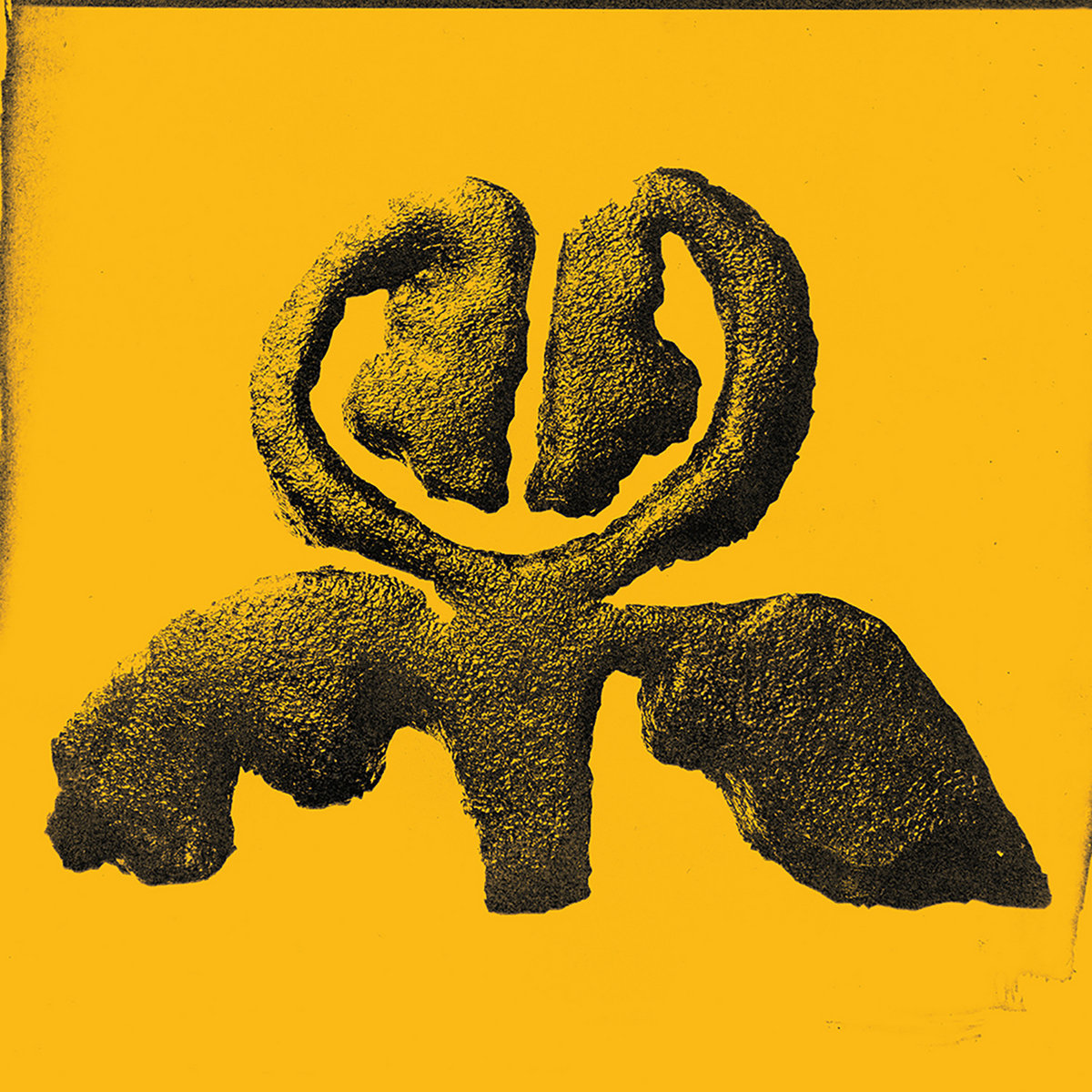
It does. This is very deep ambient music, ideally produced and matching its cover art, which is the striking, immersive Day of Radiance Quilt by Susannah Eisenbraun
Is it recommended?
Yes, without hesitation. The fascinating back story demands to be read, and is more than matched by a soundtrack that does wonders for the mind.
Producers Matthew Bennett (Violin Concerto), Alexander Van Ingen (Double Concerto) Engineers Dave Rowell (Violin Concerto), Andrew Mellor, Brett Cox (Double Concerto)
Recorded 5-6 January 2020 (Violin Concerto), 19-20 April 2022 (Double Concerto), Henry Wood Hall, London
Written by Richard Whitehouse
What’s the story?
BIS continues its long-running project devoted to music by Nikos Skalkottas (1904-49) with this revisiting of his Violin Concerto, alongside a first recording for his Double Concerto in what is a typically apposite pairing which none the less points up the diversity of his output.
What’s the music like?
It was with a release featuring the Violin Concerto that BIS inaugurated its Skalkottas series a quarter-century ago. This recording uses the ‘new critical edition’ prepared in 2019 by Eva Mantzourani, whose volume The Life and Twelve-Note Music of Nikos Skalkottas (Routledge: 2011) is necessary reading for anyone interested in this composer. Many of these corrections will only be evident to those having access to the score, but interpretive differences between Gorgios Demertzis in 1997 and George Zacharias in 2022 are clear from the outset. The latter adopts appreciably quicker tempos for the first two movements that make the opening Molto appassionato more febrile in its expressive contrasts, then the Andante spirito feels closer to an intermezzo after the example of Schoenberg’s Violin Concerto as is brought more directly into focus. Demertzis launches the final Allegro rapidly, Zacharias gaining momentum more gradually before tackling the Prestissimo coda with abandon. Which one prefers depends on how one views the competing expressionist and classicizing impulses of this masterly work.
Although finished barely two years later and pursuing a nominally similar formal trajectory, the Concerto for Violin, Viola and Wind Orchestra presents a markedly different take on its composer’s thinking. Different though not unexpectedly so, given Skalkottas’s approach to serial composition was anything but predictable while it took shape, moreover, in a cultural milieu where Hindemith and Weill (briefly his teacher) were as necessary a creative catalyst as Schoenberg. Not only does the scoring of this piece find accord with that of Hindemith’s concertante works and Weill’s Violin Concerto during that period, but the evolution of each movement in sometimes oblique though always discernible terms gives the overall design a distinctly neo-classical feel. Zacharias sounds even more ‘inside’ this work, and Alexandros Koustas is no less assured in viola writing which is (surprisingly?) always audible against an orchestra whose saxophone section accentuates the presence of jazz as against the militaristic element of brass and other woodwind. The result is a piece by turns engaging and disturbing.
Does it all work?
Pretty much always. Thoughtfully conceived and impressively executed, Skalkottas’s music does not play itself so that performers need to take the lead in rendering its inherent qualities as comprehensively as possible. Which is undoubtedly the case here – Zacharias and Koustas convincingly overcome any incidental technical difficulties, while Martyn Brabbins secures a trenchant and committed response from the London Philharmonic Orchestra in works with which neither he nor they have had the opportunity to come to terms via live performances.
Is it recommended?
It is. Those who already have that earlier recording of the Violin Concerto still need this new release which, with its immediate sound and detailed notes, brings the Skalkottas discography nearer fruition. How about a complete version of the Second Symphonic Suite as a follow-up?
Stream
Buy
For more information on this release visit the BIS website




 Arcana.fm