Switched On – Tiny Leaves: Mynd (self-released)

by Ben Hogwood

What’s the story?

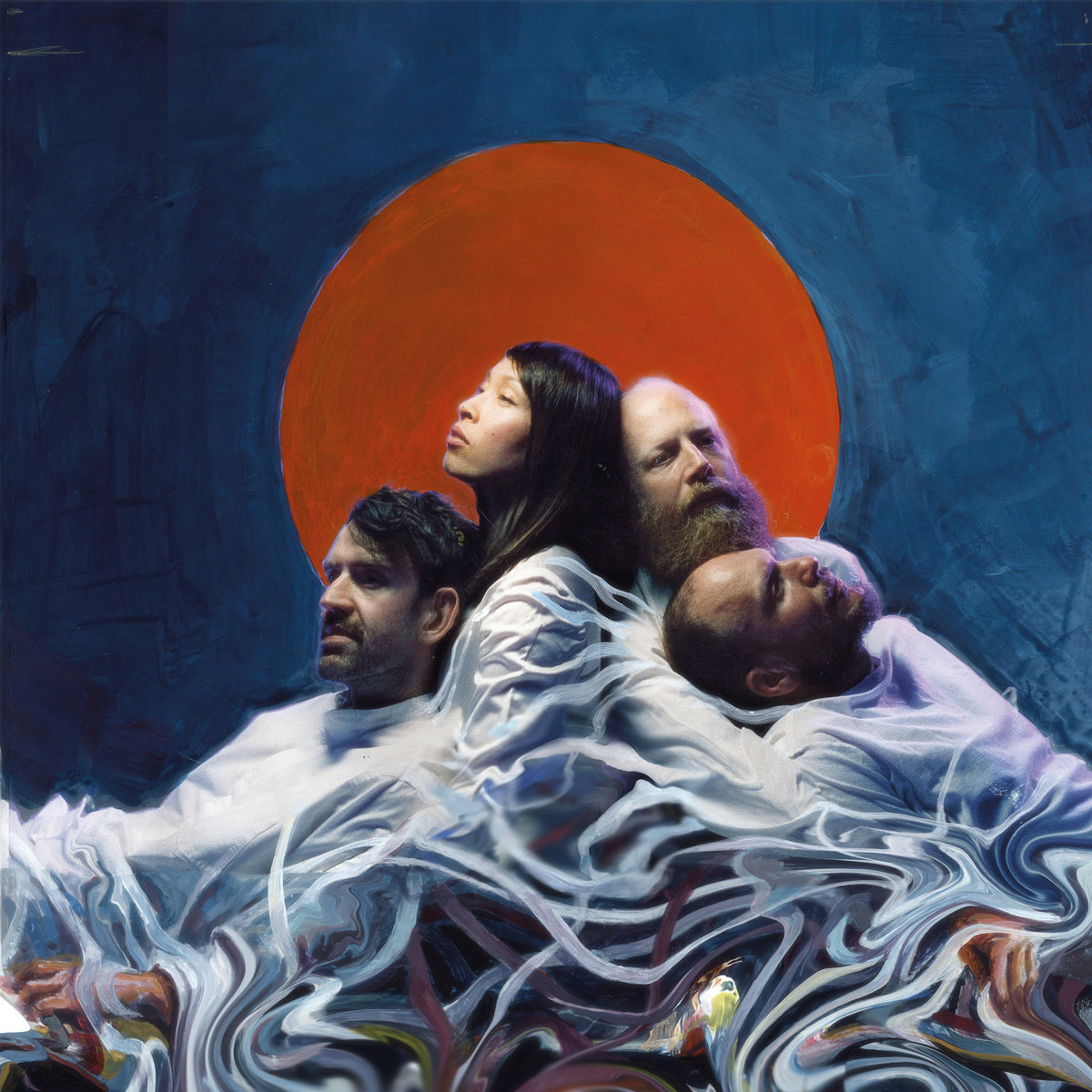
Tiny Leaves is the name under which mult-instrumentalist and composer Joel Pike operates. Having toured the US recently with Julianna Barwick, he has worked closely with nature, writing music for the RSPB compilation Simmerdim: Curlew Sounds.

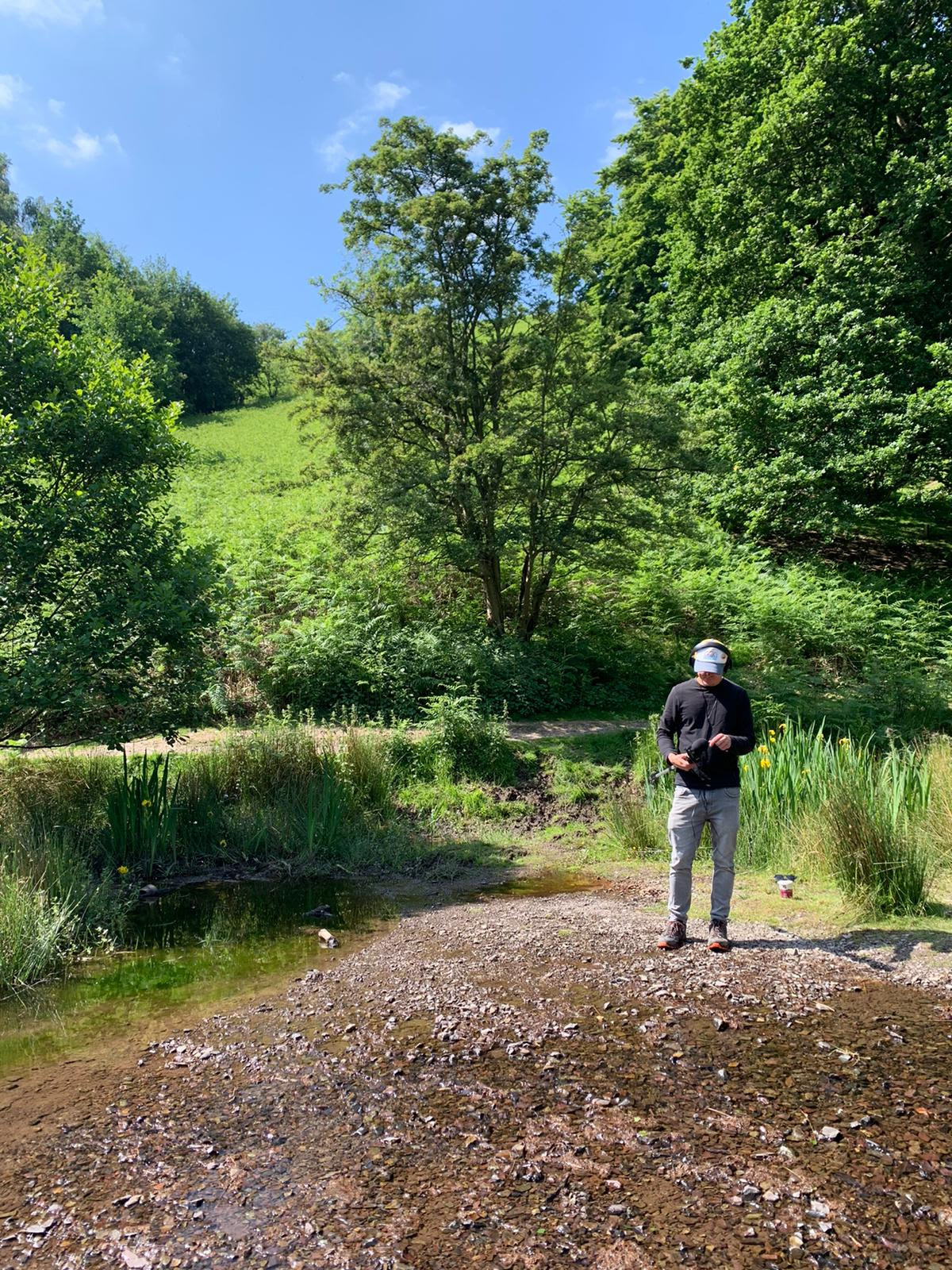
Mynd is his fifth album, and is intended as a portrait of the Shropshire hills and valleys near his home. While strings and piano are used, arguably the most important instruments are those of the field recordings Pike has sourced from his residency with the National Trust at The Long Mynd, an Area of Outstanding Natural Beauty.

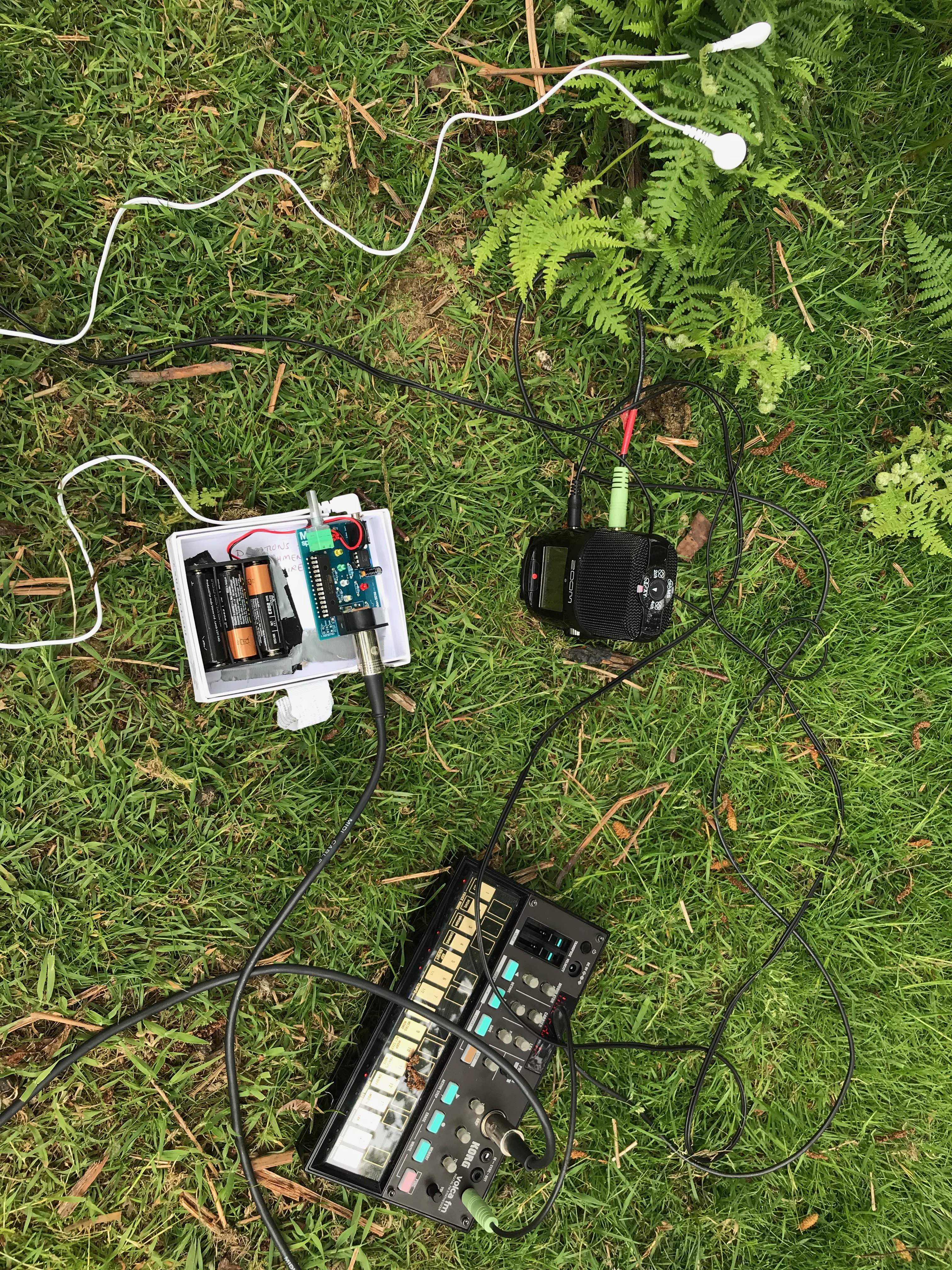
With that area very much in mind, Pike looks to reflect its beauty in sound. In this he is mindful of the pandemic, which brought home the fragility of nature but also the sounds it makes when you listen closely. Yet Pike has been listening more closely than anybody, using a biodata kit to sample the pulses of trees, by way of electrodes attached to their leaves.

What’s the music like?

To get the full benefit of Mynd, an immersive approach is best. Sit in a still room and listen through headphones or in the middle of a stereo picture, and you will get a full sense of the perspective and beauty of The Long Mynd. This is because Pike makes nature the soloist, but dresses it with music of attractive, verdant colouring and consonant harmonic and melodic cells that speak of growth and flourishing life.

This is of course in contrast to what we know of the environmental problems through the world, but it is so heartening to have a celebration of nature’s resolve in this way. Lower Valley, while it pipes through the chatter of people in the middle distance, is taken over by a burrowing violin line and silvery harmonics (beautifully played by Faith Brackenbury) with distant birdsong.

Pike makes rather beautiful use of mottled piano lines, acting as the basis for more fluttery sounds up top from violin in Portway and With The Hollow At My Feet. By contrast Long Mynd Snow carries the chill of winter in held string harmonics and cold chimes from the piano.

The close inspection of tree sounds are fascinating. Song Of The Trees – CMV 2 has violin drones and slightly mysterious, plucked motifs along with rich morning birdsong, which move straight into the watery Ascent From New Pool Hollow. Meanwhile, Together, Alder is about the discovery that Alder trees communicate through their roots through a frequency corresponding to A3 on the piano. Naturally this appears in Pike’s mysterious response.

The unmistakeable sound of the curlew comes through in Pike’s RSPB contribution, Runner, Messenger ii, the bird’s call complemented by guitar and rounded piano chords. while Pike evokes harebells in the fluttering piano of Campanula Rotundifolia.

Does it all work?

Yes – this is an album best experienced as a whole, with the sections linking beautifully. Pike has an instinct for large-scale composition, the result being that this is really a single suite of 11 movements.

Is it recommended?

Very much so. Mynd is a beautiful antidote to our busy, technology-dominated lives, reminding us of the complex beauty of nature in a deceptively simple way. You will emerge from your encounter with this album as a calmer, lighter soul – and that’s guaranteed!

Listen

Buy

Switched On – Omar Ahmad – Inheritance (AKP Recordings)

by Ben Hogwood

What’s the story?

Inheritance is the debut album from Palestinian-American artist Omar Ahmad. Ahmad is a multi-instrumentalist, and as the only contributor to this record his list of instruments makes impressive reading. On Bandcamp he is credited with contributions on cello, synthesizer, guitar, percussion, voice, programming, CDJ, field recordings and effects – so pretty much everything bar the kitchen sink!

Ahmad hones his talents into emotive music that provides a soundtrack for some of the bigger questions. As stated on his Bandcamp page, they are: What is a right to a land? What is the responsibility of the youth to carry forward the struggles and undertakings of their elders? How can we break the recurrence of intergenerational trauma that gives rise to the cyclical conflicts that tear away at the heart of humanity?

Ahmad does not pretend to have any answers to hand, but his wish is to provide music that grants the listener a chance to react freely, either in animation or in reflection, and to connect not just with their inner adult but with the inner child as well.

What’s the music like?

Ahmad’s music rewards close inspection – but it is equally effective if the listener chooses to listen from afar, and let the overall mood wash over them.

Close up, there is a good deal going on. Fragments of melody, often fitting into the ‘pentatonic’ scale, are consistently attractive features of the music, as is the texture, with the ear often panning out for a wide-angle sonic lens. Here the field recordings, and other vocal snippets, are helpful. The start of Gesso, for instance, has middle ground voices but soon cuts to running water and a soft, held chord the listener can easily dive into.

Often there is a heat haze in Ahmad’s workings, so when the rhythm kicks in during A Little Time For Me it creates a shimmering horizon in the mind’s eye. Rhythm plays a bigger part in Sham Oasis and Lapses, both of which create dubby profiles while Ahmad bends a few samples in and out of focus. The excellent Usra generates more energy through a quicker rhythm.

There are some mind bending sonics here, too. Descended from a Wanaque Tree (Borrowed Memory) is the standout, with some bewitching timbres and playful execution that prove hypnotic on headphones.

Does it all work?

Yes, it does. Ahmad’s musical language is immediately attractive, and its cosmopolitan outlook will wind many friends, as will his sonic invention.

Is it recommended?

Yes, enthusiastically. Omar Ahmad offers something a little different, something well above the average, run of the mill. This is certainly an album to chill out with, but the rewards are ultimately far greater.

Listen

Buy

Switched On – Penguin Cafe: Rain Before Seven… (Erased Tapes)

by Ben Hogwood

What’s the story?

This is the fifth album for Penguin Cafe in their second incarnation under Arthur Jeffes. As its title perhaps implies, Rain Before Seven… is looking to reassert the band’s Englishness, while simultaneously looking to recapture the slightly whimsical and humourous approach Arthur’s dad Simon made so natural in the group’s first period. There is also a concerted effort to use more of Jeffes’ considerable percussion arsenal, drawing on objects from around the globe to give the music a cosmopolitan edge.

What’s the music like?

Arthur wholeheartedly succeeds in his aims, for Rain Before Seven…is a fine piece of work and one that will frequently make its listener smile.

There is a wide-eyed innocence to the strings that come into Galahad, while Re Budd relocates to the Caribbean with an accurate evocation of steelpans. Goldfinch Yodel takes on the air of a country dance, while the more serious Might Be Something becomes a heartfelt reflection.

Does it all work?

Yes. Richly scored and packed with melodic content, this is an album with a great deal for the listener to enjoy.

Is it recommended?

It is – and while the other four albums under Arthur Jeffes have been successful, this goes the extra mile for colour and flair. The best modern Penguin Cafe album yet.

Listen

Buy

Switched On – Rone: L(oo)ping (InFiné)

by Ben Hogwood

What’s the story?

Rone has always been an artist keen to try new things, but even he baulked slightly at the prospect of working with an orchestra. This was in part due to an inferiority complex that he felt, ‘in relation to scholarly music’.

Helping him bridge the perceived divide was arranger Romain Allender, a fan of Rone’s music and a skilled accomplice with composer Alexandre Desplat. The two started working together in 2017, a partnership that culminated with this project enlisting the Orchestre national de Lyon and conductor Dirk Brossé

On it they reimagine carefully chosen parts of Rone’s electronic discography for orchestra, discovering the transition between the two to be surprisingly seamless.

What’s the music like?

Full of drama. This is a really impressive project, one that retains the immediate thrill of Rone’s music but does a great job in bringing out its previously unheard orchestral elements.

The arrangements are imaginative, using the orchestra to their full potential, in a way that brings out all the melodies but also generates impressive momentum.

New track Ghosts is very atmospheric, a piece of big screen imagination brought to life, while (OO) gains really impressive power, its orchestral concept fully realised. Room With A View goes a step further, incisive strings driving forward to thrilling effect before a piano comes through to lead the melody. Chaos reigns towards the end as all the forces gather.

Does it all work?

It does. A consistently imaginative partnership that reaps rewards and presents a new side to Rone’s music. No tired re-hashes here!

Is it recommended?

Yes – and it rewards repeated listening.

Listen

Buy

Switched On – Arthur Oskan: Generation Loss EP (Endurance Asteroid)

by Ben Hogwood

What’s the story?

After a number of years away from music, Arthur Oskan is getting his hands warm again. This is the second EP to mark his return, a duo of extended tracks that mark something of a change in direction.

Under the restrictions of the pandemic, Oskan took a deep dive into modular synthesis, putting together a carefully constructed sound reflecting his response to isolation.

What’s the music like?

This is music that takes the listener somewhere else. The first track, Adult Themes, has a hypnotic figure that starts at a measured pace and timbre. Gradually the tones sharpen and the energy heightens, a controlled piece of moody instrumental music that proves highly effective in setting the scene. Balancing this is the reflective Maybe Tomorrow, its softly pulsing undercarriage supporting the brighter tones above, which become lighter and float away like wisps of cloud.

Both pieces are instrumentals without drums, but the cross-rhythmic currents create plenty of interest.

Does it all work?

It does. Oskan has made two subtle pieces of ambient music here that calm the head but also provide it with positive energy.

Is it recommended?

It is – with hopefully more to come in this vein of writing from Oskan.

Listen

Buy