On record – Ellen Nisbeth, Norrköpping Symphony Orchestra / Christian Lindberg – Pettersson: Symphony no.15, Viola Concerto, Fantaisie (BIS)

pettersson-15

Ellen Nisbeth (viola), Norrköpping Symphony Orchestra / Christian Lindberg

Pettersson
Symphony no.15 (1978)
Viola Concerto (1979)
Fantaisie for solo viola (1936)

BIS BIS 2480SACD [67’37”]

Producers Stephan Reh, Marion Schwebel
Engineers Bastian SchickMarion Schwebel

Recorded 13-17 January 2020 at Louis de Geer Concert Hall, Norrköpping (Symphony & Viola Concerto); 29 May 2020 at Petruskyrkan, Danderyd, Sweden (Fantaisie)

Written by Richard Whitehouse

What’s the story?

Christian Lindberg nears the close of his Allan Pettersson cycle for BIS with this coupling of two of the composer’s late works, both of which had previously been issued on this label and are now added to its extensive series of recordings with the Norrköping Symphony Orchestra.

What’s the music like?

Although following-on directly from the Second Violin Concerto [BIS2290], Pettersson’s 15th Symphony might be thought of as forming the end of a trilogy with its predecessors (1976 and 1978) – a sequence becoming more compressed in scale as it becomes less volatile in content. At barely 36 minutes No. 15 was its composer’s shortest symphony since the 11th, but this is not to suggest any lack of drama or eventfulness in a score as finds Pettersson grappling with existential issues key to his thinking since at least the Second Symphony of 25 years earlier.

As so often in this cycle, the salient ideas are heard at the outset: here, ejaculatory chords on brass over side-drum, then wistful lines for viola and violin over lower strings. What follows seems less an extended evolution than an elaboration and intensification – during the course of which a more conciliatory mood takes precedence, though the coda proves to be as tonally oblique as it is emotionally ambivalent. Dividing the present recording into 11 tracks enables listeners to navigate their own route through this absorbing and wholly characteristic piece.

The Viola Concerto has a curious history – its existence not even known about until after the composer’s death; its manuscript suggesting a work complete as a formal entity if lacking in textural detail. Whether or not Lindberg had any input in this latter respect, the solo part has been edited by Ellen Nisbeth and hence sounds appreciably more integrated into the musical content than hitherto. Conceptually the work continues from the Second Violin Concerto and 16th Symphony with saxophone [BIS2110] in its eliding between concertante and symphonic domains; such that the viola line can be heard as a motivic ‘backbone’, affording focus to the sparse orchestral texture and channelling its expressive essence to an ending at once forceful yet provisional. Concerto or not, this is a notable as well as valuable addition to its repertoire.

In between these works comes Fantasie for solo viola, composed when Pettersson was in his mid-20s and still a practitioner on this instrument rather than a composer. Alternately soulful and incisive, this is eloquently rendered by Nisbeth and makes a worthwhile inclusion here.

Does it all work?

Yes, assuming familiarity with at least several of Pettersson’s earlier symphonies. In the 15th, Lindberg steers a more cohesive course than does Leif Segerstam [BIS680] or Peter Ruzicka [CPO9990952] with more idiomatic orchestral playing than either. As to the Viola Concerto, Nobuko Imai [BIS480] is no less sympathetic an advocate but her tone is a little too rounded for this music, whose idiom Nisbeth has down to a tee. Sound is comparable to earlier issues from this source in clarity and perspective, with decent booklet notes by Per-Henning Olsson.

Is it recommended?

Indeed. Those who have been following this cycle will be pleased Lindberg has been given the go-ahead to record all the symphonies. With just Nos. 3, 8, 10 and 11 to go, the end is in sight for this traversal of one of the most significant symphonic cycles from the post-war era.

Stream

Buy

For more information on this release visit the BIS website

Depeche Mode – Are People Good?

Tonight I am seeing Depeche Mode live for the first time. Excitement is building, especially given the quality of their new album Memento Mori – though we will of course miss the presence of keyboard player ‘Fletch’, who sadly passed away in May 2022.

The most recent Depeche Mode to be played on the radio has been People Are Good, a fine new single that has a ring of Kraftwerk’s Computer Love about it. It is effectively a considered update to one of the band’s best singles from 1984:

People Are Good seems to be impressing a more thoughtful approach on people…but is there a lyrical sting in its tale?

As for tonight, I will report back – firstly via a gig review for musicOMH, then a considered response for these pages.

Happy weekend!

Ben

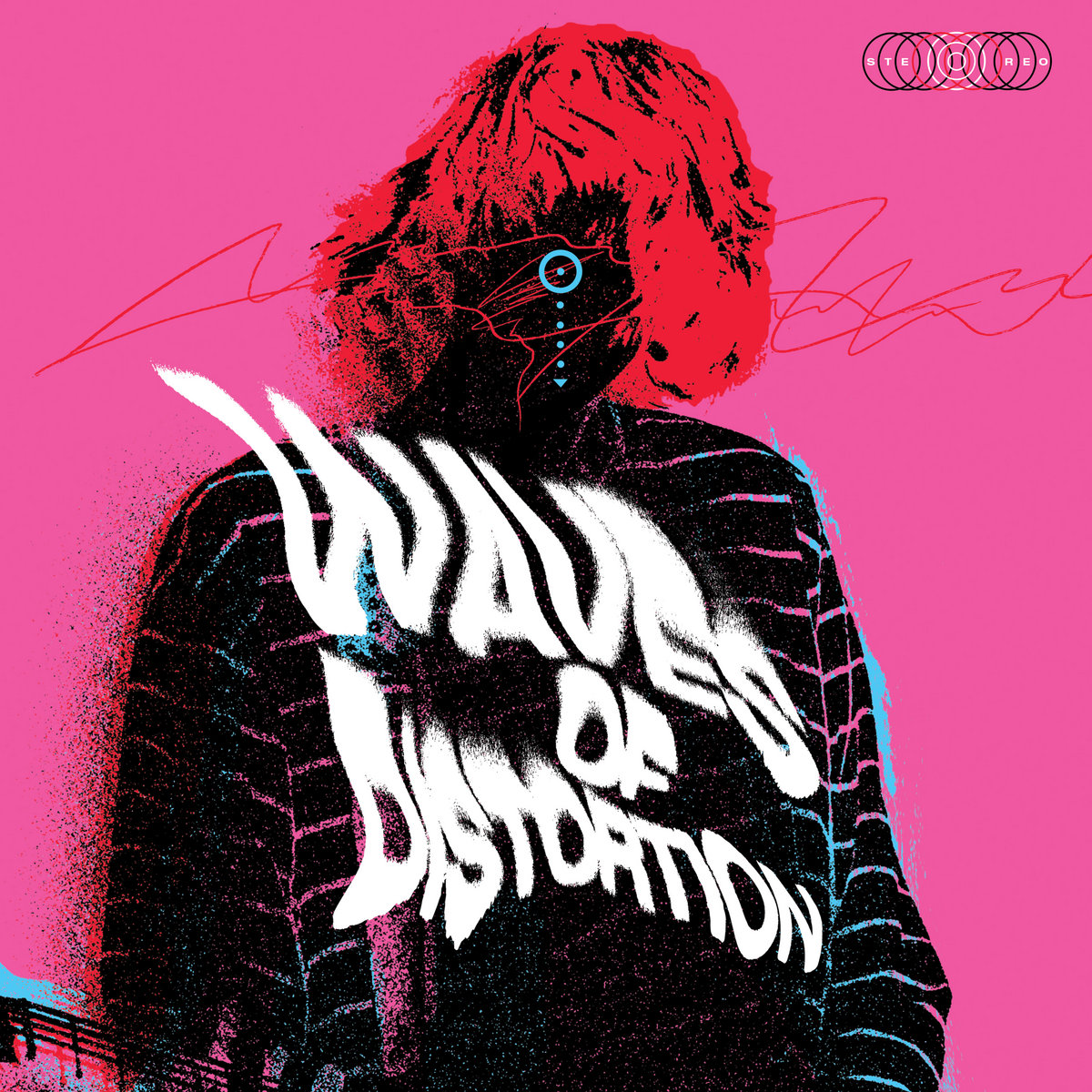
Switched On – Various Artists: Waves Of Distortion (The Best Of Shoegaze 1990-2022) (Two-Piers)

by Ben Hogwood

What’s the story?

Shoegaze was initially a derogatory term, despite its way of describing an area of music where bands tended to look down at their effects pedals during gigs. Now it stands for something far more positive, the celebration of a movement in music now into its fourth decade.

Waves Of Distortion is a compendium of the biggest bands around in shoegaze, but also finds room to celebrate little-known entities, its aim to take the listener down a rabbit hole. It does so across 26 tracks.

What’s the music like?

Rather wonderful. This is an extremely well-chosen sequence of music moving from shoegaze royalty to an examination of more deserving acts. The quality never dips,

The lush textures of Slowdive’s Slomo are first up, celebrating the return of the band in 2017, a key moment in the shoegaze timeline. There is a weightless serenity about their music but also a latent power, beautifully harnessed here.

A strong 1-2-3 is completed by Chapterhouse and Ride, Pearl and Vapour Trail respectively – two tracks from the 1990 origins. Also from that year is Lush’s Sweetness And Light, a beauty enhanced by Miki Berenyi’s angelic tones. How good it is, too, to be reminded of Kitchens Of Distinction, with The 3rd Time We Opened The Capsule.

The excellent notes from Nathaniel Cramp, who runs the Sonic Cathedral label, put the bands in their appropriate context, and explain the welcome inclusion of a number of international bands. Beach House, in particular, deserve their place with the glittering Lazuli, while Robin Guthrie’s starry-eyed version of Echo LadiesOverrated is a treat. More modern inclusions such as The Daysleepers’ richly-voiced Food In Heaven work really well, backed up by Flyying ColoursLong Holiday, which is both tuneful and loosely funky. bdrmm’s A Reason To Celebrate is a welcome blast of sound, too. Sometimes the music is less song-based and more a description of a weather form, with Air Formation’s Daylight Storms a thrilling case in point.

Does it all work?

It does, ticking all the compilation boxes of summing up the best of shoegaze while giving the listener a jumping off point for a number of new discoveries. Repeat listening only adds to the appeal.

Is it recommended?

Very much so. As a starter kit for the shoegaze movement, Waves Of Distortion is highly recommended – but even for the seasoned listener there is plenty to recommend it. Excellent complementary artwork, too!

Listen

Buy

You can explore purchase options at the Piccadilly Records website

Switched On – Black Light Smoke: Ghosts (Scissor and Thread)

by Ben Hogwood

What’s the story?

Black Light Smoke is the front under which Chicago-born Jordan Lieb makes his music. Currently resident in New York, Lieb has house and techno heritage on his doorstep – and pours it into his debut album.

The album draws on 30 years’ worth of dance music in a search for the real meaning of house music. As it does so it brings in elements of rave, house and soul – and forming them into a structure with strong parallels to a DJ mix.

In a deeper meaning, Ghosts also stands for facing the shadows of the past in order to be able to move forward.

What’s the music like?

This is a cracking dance music album. Jordan Lieb is a talented producer, but he doesn’t have to try too hard to show it – the craft of making a strong album akin to a DJ set comes to him instinctively.

We have an atmospheric, deep opener as Sprinkles Says casts an evocative nocturnal atmosphere, and then a thoughtful, voice-led track in the shape of 727 Anthem (House Is Black), which sets out the stall for an album that works as well for the head as it does for the dancing feet. This is an old-style house track seen through younger eyes, and it’s a strong combination.

Then comes one of two excellent vocal tracks featuring Léah Lazonick. Hearts Not Broken is slightly eerie, the spoken word vocal in the verse cutting to a distant harmony for the chorus. Later on, Ghosts itself has smoky, wispy outlines.

Elsewhere, Lieb gets down to business. Pleasure Chaser, The Beat Direct and Out From Within are the sort of deep house tracks we might have expected from the likes of Kevin Yost in the late 1990s, though Lieb creates a very different mood in each one. Love Triangle goes deeper and sultry, but Prisoner is peak time house, its piano ringing out above the dancing throng.

Resonate feels like classic, late 1980s techno, with fat synth lines, while In The Valley has mellow, rich chords to lie on. By way of a contrast, Nighttime Honey keeps its rough edges, vinyl crackles and all, looking out on a nocturnal city scape as it seeks company. Finally The Storm fizzes and crackles, one of the faster tracks of the album taking us out on a high.

Does it all work?

It does. Lieb keeps his music interesting throughout, crackling with atmosphere, and very much setting the scene of late night cities. Social elements are subtly explored, too.

Is it recommended?

Wholeheartedly – this is a fine dance music record. When you buy it, though, you can kill two birds with one stone, because Lieb is donating 100% of all his proceeds to Little Bit Foundation, empowering students living in poverty to achieve their academic goals.

Listen

Buy

Switched On – Brandt Brauer Frick: Multi Faith Prayer Room (Because Music)

by Ben Hogwood

What’s the story?

For their latest album, the trio of Daniel Brandt, Jan Brauer and Paul Frick wanted to go back to the basics of their first. With a primary aim to make people dance through minimal means, they set about their task, in their words bringing in ‘a narrative element directly inspired by the way a night in a club unfolds, as you go through these different experiences’.

A big part of their thinking was a hook-up with speech artist Mykki Blanco, who takes up vocal duties on ‘Act One’. From that the trio looked to bring in a range of vocalists from different scenes and backgrounds, also preparing a questionnaire that they sent to 500 people asking for their vision of the future and experiences of the present.

What’s the music like?

There is not doubt that Multi Faith Prayer Room sees Brandt Brauer Frick reganing their vitality. They do this through a really well constructed album that takes its listener out on to the dancefloor but then back to the side wall for contemplation.

The dance-based tracks are thrilling, visceral pieces of work, and none more so than the Blanco-fronted Act One. While the vocals won’t appeal to all, his is a gripping tale of clubbing experiences, highs and lows. By contrast, some of the people asked for their vision give it on the multilayered vocal tracks Future and Faith, both full of thought provoking clips.

The instrumental tracks show off the group’s prowess in writing for different forces, especially the way the full scored orchestral intro Side segues into the familiar jagged piano that we hear in Ready To Connect. By contrast Dotted Line and Perpetuate are minimal, dot-dash affairs that cross rhythms to hypnotic effect, the latter stretching towards Orbital in its construction.

The vocal tracks are richly varied, too, from the satin voice of Azekel to the brilliant Duane Harden, whose Closer To You is a hands in the air highlight later on. KOM_I makes a strong impression on Soba, while This Feeling finds Sophie Hunger bringing out the emotion.

Does it all work?

It does. The combination of raw, first principles dance music and thoughtful, song-based material is strong – and the musical inspiration is consistent throughout, with plenty of riffs to latch on to as in all good BBF tracks.

Is it recommended?

It is indeed – Brandt Brauer Frick playing to their strengths and producing some of their best music.

Listen

Buy