On record – Emily Davis, English String Orchestra, English Symphony Orchestra / Kenneth Woods: Steven R. Gerber: Lyric Pieces, Sinfonietta Nos. 1 & 2, String Sinfonia Nos. 1 & 2 (Nimbus Alliance)

gerber-nimbus

Emily Davis (violin), English String Orchestra, English Symphony Orchestra / Kenneth Woods

Steven R. Gerber
Sinfoniettas – No. 1 (1991, arr. Hagen); No. 2 (2000). String Sinfoniasa – No. 1 (1995); No. 2 (2011, all arr. Williams). Two Lyric Pieces (2005)ab

Nimbus Alliance NI6423 [73’07”]

Producer Phil Rowlands
Engineer Tim Burton

Recorded 7-8 October 2020, Wyastone Concert Hall, Monmouth

Written by Richard Whitehouse

What’s the story?

The English Symphony Orchestra returns with music by American composer Steven R. Gerber (1948-2015). Little known in the UK, it enjoyed wide exposure in the Russia of the immediate post-Soviet era and could well find a new audience through such pieces as those featured here.

What’s the music like?

In common with many composers of his generation, Gerber’s output charts a trajectory from serialism to a direct re-engagement with tonality, but his success in aligning these nominally opposing aesthetics confirms a creative insight matched by (surprisingly?) few of his peers. That four out of the five pieces are arrangements from chamber works should not imply any lack of versatility on the composer’s part; rather, these are all pieces more likely to reach a wider listenership through being reimagined for larger though still relatively modest forces.

This is evident not least in the case of the two Sinfoniettas. The First is an arrangement of the Piano Quintet by Daron Hagen (pupil of David Diamond and Ned Rorem, and a composer of numerous works for the stage) whose five movements evolve from the tensile incisiveness of its preludial first movement, via the capricious then scurrying manner of the Intermezzo and Scherzo that ensue, to a finale whose accrued emotional plangency finds its apogee in a coda whose headlong impetus renders what went before from an appreciably different perspective.

The other arrangements were all undertaken by Adrian Williams, himself a notable composer whose large-scale Symphony the ESO has recently recorded for future release. Derived from Gerber’s Fourth Quartet, the First String Sinfonia is most arresting for the consistent intensity of its central movements – a Lento then a Maestoso that might have functioned as finale had not the composer opted, rightly as it turns out, to let the emotion subside over the course of a brief yet affecting Postlude – one that balances the gentle opening Moderato to potent effect. As derived from Gerber’s Sixth Quartet, the Second String Sinfonia emerges as a much more equivocal work – the angular and ambivalent Allegro followed by the menacing Intermezzo, then a final Theme and Variations which ultimately winds down towards an uncertain repose.

A more elaborate, indeed methodical take on the Variations format is pursued by the second and final movement of Gerber’s Fifth Quartet, here arranged as the Second Sinfonietta which again makes use of fuller instrumentation and exudes more charged expression. Not least the opening Fantasy, whose determined contrasts of mood make for a disjunct overall trajectory such as is countered, though not wholly resolved, through the steady and always inevitable build-up of its finale towards a forceful while by no means decisive or clinching apotheosis.

Does it all work?

Yes. This is engaging music which, if it tends to an unrelieved earnestness, cannot be faulted for emotional sincerity. It was astute programming to include Two Lyric Pieces for violin and strings, the only item in its original guise, whose inward soulfulness finds Gerber at his most approachable – not least when Emily Davis renders the solo part with such fluency and poise.

Is it recommended?

Indeed, directed by Kenneth Woods with unfailing conviction in sound of real clarity. Those who are coming afresh to Gerber should certainly respond positively to what is heard here.

Listen and Buy

You can listen to clips and purchase this disc from the Nimbus website. For more information on Steven R. Gerber, click here. For more on Daron Hagen, click here – and click on the names for more on Adrian Williams, Emily Davis, Kenneth Woods and the English Symphony Orchestra. –

On record – William Wordsworth: Orchestral Music Vol.3 (Toccata Classics)

wordsworth-3

Florian Arnicans (cello), Liepāja Symphony Orchestra / John Gibbons

William Wordsworth
Symphony no.5 in A minor Op.68 (1957-60)
Cello Concerto Op.73 (1963)

Toccata Classics TOCC0600 [65’55”]

Producer Normands Slāva
Engineer Jānis Straume

Recorded 1-5 February 2021, Amber Concert Hall, Liepāja, Latvia

Written by Richard Whitehouse

What’s the story?

Toccata Classics continues its series devoted to the orchestral works of William Wordsworth (1908-88) in a coupling of two pieces from around the turn of the 1960s, when the changing priorities of the British musical establishment meant such music was increasingly overlooked.

What’s the music like?

Although it had to wait over a decade before its first performance in January 1975 (perhaps as it was written with no specific soloist in mind), the Cello Concerto is unerringly conceived for this instrument – not least the substantial opening Allegretto whose brusque initial orchestral tutti hardly prepares one for the wide-ranging if never discursive dialogue that follows. There is a lengthy and developmental cadenza before a reprise which continues the evolution of its pithy ideas prior to the ruminative close. Designated Nocturne, the ensuing Lento is among Wordsworth’s most atmospheric slow movements; the cello’s eloquent main theme provides a focal point thrown into relief by woodwind via a series of haunting asides, without seriously undermining the repose made tangible in the evocative closing bars. The final Allegro vivace is centred on a lively, even nonchalant refrain whose trenchant rhythmic profile comes to the fore in a fugal section whose accrued energy subsides into a musing solo passage – from out of which the earlier repartee continues through to a decisive while not a little sardonic coda.

Although premiered in 1962 and broadcast thereafter, the Fifth Symphony only now receives its first commercial recording – a pity, given this is arguably Wordsworth’s most emotionally involving such piece. A calmly undulating ‘motto’ at the outset is heard in three guises over each of three movements. Thematic in the initial Andante maestoso, its supplicatory writing for strings complemented with plangent woodwind in a discourse where the slowly emergent ‘landscape’ may well be that of the mind – not least its quietly ecstatic writing for solo violin toward the close. Rhythmic in the central Allegro, a scherzo whose spectral writing for tuned percussion and upper woodwind has more than a little malevolence – even with a whimsical trio to provide contrast. Its recalcitrant ebbing away makes the finale’s slow introduction the more striking, strings building to an expressive apex from where the Allegro begins. Here the harmonic aspect of the ‘motto’ is dominant, episodes of tensile fugato alternating with gentler asides on the way to an apotheosis whose affirmation is necessarily tempered by experience.

Does it all work?

Yes, in that both pieces find Wordsworth’s often elusive tonal language at its most searching. Florian Arnicans cannot have known the Cello Concerto before these sessions, but he captures its brooding understatement with undoubted assurance and thereby reinforces its claim to be the deepest and most substantial of this composer’s concertante works. The Fifth Symphony can be heard in a 1979 studio reading by Stewart Robson with the BBC Scottish Symphony (Lyrita), but Gibbons reveals more fully why it is likely the highlight of Wordsworth’s cycle.

Is it recommended?

Indeed. The playing of the Liepāja Symphony Orchestra is on a par with that of the previous two instalments in this series, and Paul Conway contributes his usual thorough booklet notes. Good to hear the fourth volume in this series, featuring the Seventh Symphony, is imminent.

Read, listen and Buy

You can read Richard’s review of the first two volumes in the Wordsworth series on Arcana, clicking here for the first volume and here for the second

You can listen to clips and purchase this disc from the Toccata Classics website. For more information on WIlliam Wordsworth, click here. For more on the performers on this recordings, click on the names for websites devoted to Florian Arnicans, John Gibbons and the Liepāja Symphony Orchestra respectively.

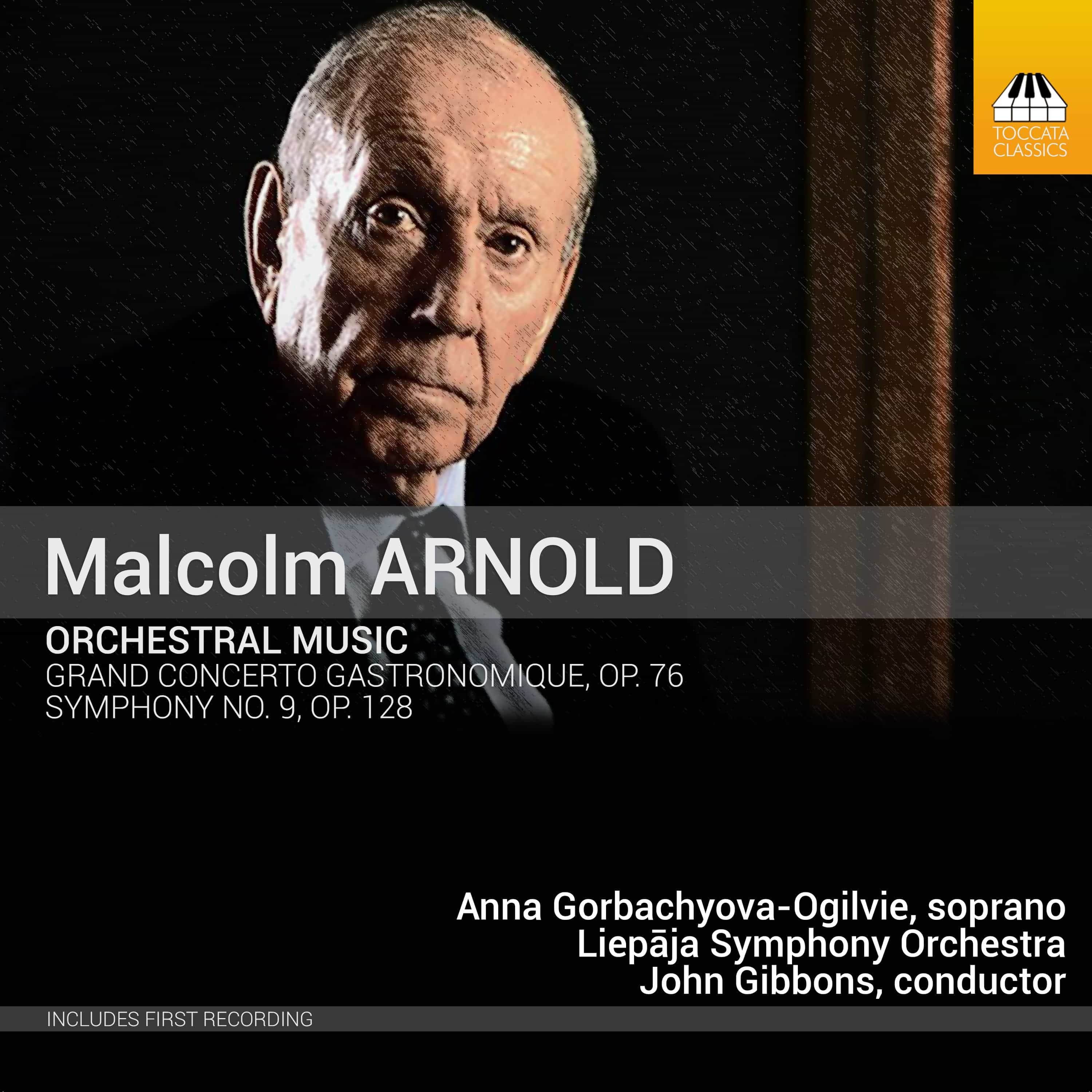
On record – Arnold: Symphony no.9 & Grand Concerto Gastronomique (Liepāja Symphony Orchestra / John Gibbons) (Toccata Classics)

toccata-arnold

Malcolm Arnold
Grand Concerto Gastronomique Op.76 (1961)
Symphony no.9 in D Op.128 (1986)

Anna Gorbachyova-Ogilvie (soprano, Concerto), Liepāja Symphony Orchestra / John Gibbons

Toccata Classics TOCC0613 [57’30”]

Producer Normands Slāva
Engineer Jānis Straume

Recorded 14-16 June 2021 at Great Concert Hall, Liepāja

Written by Richard Whitehouse

What’s the story?

Toccata Classics marks the centenary of Malcolm Arnold’s birth (falling on October 21st) in a pertinent coupling of his final symphonic statement with music finding this composer at his most irreverent and, by so doing, juxtaposes the two sides of his creativity to startling effect.

What’s the music like?

It was the compositional hiatus resulting from emotional breakdown then tortuous recovery as provided the catalyst for the Ninth Symphony, whose superficial simplicity belies the anguish beneath its surface. John Gibbons (who had earlier conducted this work in London, as part of a nine-year Arnold cycle, and Northampton) brings tangible expectancy to the opening Vivace, its arresting initial gestures soon revealing that textural starkness which goes on to define the whole work, with a circuitous evolution even more marked in the Allegretto – an intermezzo whose wistful theme effects less a series of variations than poignant searching for formal and expressive closure. The ensuing Giubiloso is more overtly a scherzo with its headlong motion or trenchant exchanges between wind and strings, yet even here a curious detachment prevails.

Arnold’s eight previous symphonies each concluded in a relatively short and decisive finale, but the Ninth’s final Lento proves anything but – its sustained slowness abetted by restrained dynamics and a sparseness of detail which could have made for unrelieved gloom were it not for those myriad ‘shades of grey’ the composer draws from his reduced palette. An additional factor is Gibbons’s pulse for this movement as a tactus (one-second) rather than crotchet beat, leading to a traversal several minutes less than earlier recordings by Andrew Penny (Naxos), Vernon Handley (BMG) or Rumon Gamba (Chandos) and, as a result, making the cadential chord one of benediction than resignation. Whether or not this approach convinces depends on how one views the symphony overall, but there can be no doubting its sincerity of intent.

Composed for the Astronautical Music Festival – the last of several events inspired by Gerard HoffnungGrand Concerto Gastronomique is Arnold at his most uproarious. Its designation ‘for Eater, Waiter Food and Large Orchestra’ betrays a visual aspect not essential for enjoying this 15-minute consumption of Brown Windsor soup, roast beef, cheese, Peach Melba – with a sensuous cameo by soprano Anna Gorbachyova-Ogilvie – then coffee with brandy; framed by a Prologue and Epilogue of due portentousness, but thankfully no ‘Mr Creosote’ in evidence.

Does it all work?

As a coupling, yes. As to content, the Ninth Symphony will likely always divide opinion as to whether it is what Arnold intended or merely the best that he was able to achieve after the traumas of the preceding decade, but no-one could accuse Gibbons of realizing it as other than a cohesive entity whose formal proportions are as precisely judged as its expressive trajectory is purposefully conveyed. Listeners not convinced by those earlier recordings should certainly hear this new account, lucidly and persuasively rendered by the Liepāja Symphony Orchestra.

Is it recommended?

Yes, enhanced by thought-provoking booklet notes from Timothy Bowers along with realistic sound. Should still-missing orchestral pieces by Arnold (notably the Op. 1 First Divertimento or the Op. 12 Symphonic Suite) come to light, Gibbons will hopefully be asked to record them.

Listen

Buy

You can discover more about this release at the Toccata Classics website, where you can also purchase the recording. You can read more about the Malcolm Arnold society at their website, while for more on each of the performers, click on the names Anna Gorbachyova-Ogilvie, Liepāja Symphony Orchestra and John Gibbons

Switched On – Hounah: Broken Land (Feines Tier)

hounah

reviewed by Ben Hogwood

What’s the story?

Daniel Nitsch is an extremely versatile electronic artist who has been making music for more than 20 years. Hounah is his most recent pseudonym, and he is using it to express innermost feelings and thoughts about the world today. Covering subjects such as racism and gentrification, he moves fluidly between a series of different styles, mostly slow in tempo, with the help of a band comprising pianist Johann Blanchard, singer Lena Schmidt and guitarist Marten Pankow.

What’s the music like?

Both thoughtful and thought provoking, Hounah’s musical style is downbeat but diverse too. After an atmospheric instrumental beginning from Reflections, the meditative Fairbanks has an intimate vocal from Schmidt and a production panning out in between the words.

The Robbery has a sort of smokiness you would expect from Massive Attack, creating a late night vista, but also uses a cautionary musical language. That feeling is swept up by A.F.R.O., who entreats ‘my people please rise up’ at the heart of Revolution. He appears again later on with Laid Back Misery, which ironically is a faster track with an urgency to the beats.

Sorrow is very slow, and a bit stately, as is Through The Rain – but this intriguing track feels like an improvisation on a thought, using some musical language that could be loosely appropriated with jazz. From Norton Bay is a thoughtful closing track, almost absent minded in its guitar strumming but with a spoken word vocal.

The interludes are thought-provoking, too – especially Cash For Your Home with its muse on gentrification.

Does it all work?

Yes, largely. On occasion the music of Hounah can feel too preoccupied with itself, weighed down by the surroundings, but more often than not it emerges with resilience and poise.

Is it recommended?

It is. Nitsch is a writer who gets to the heart, and this atmospheric album has a lot of emotional depth to go with it.

Stream

Buy


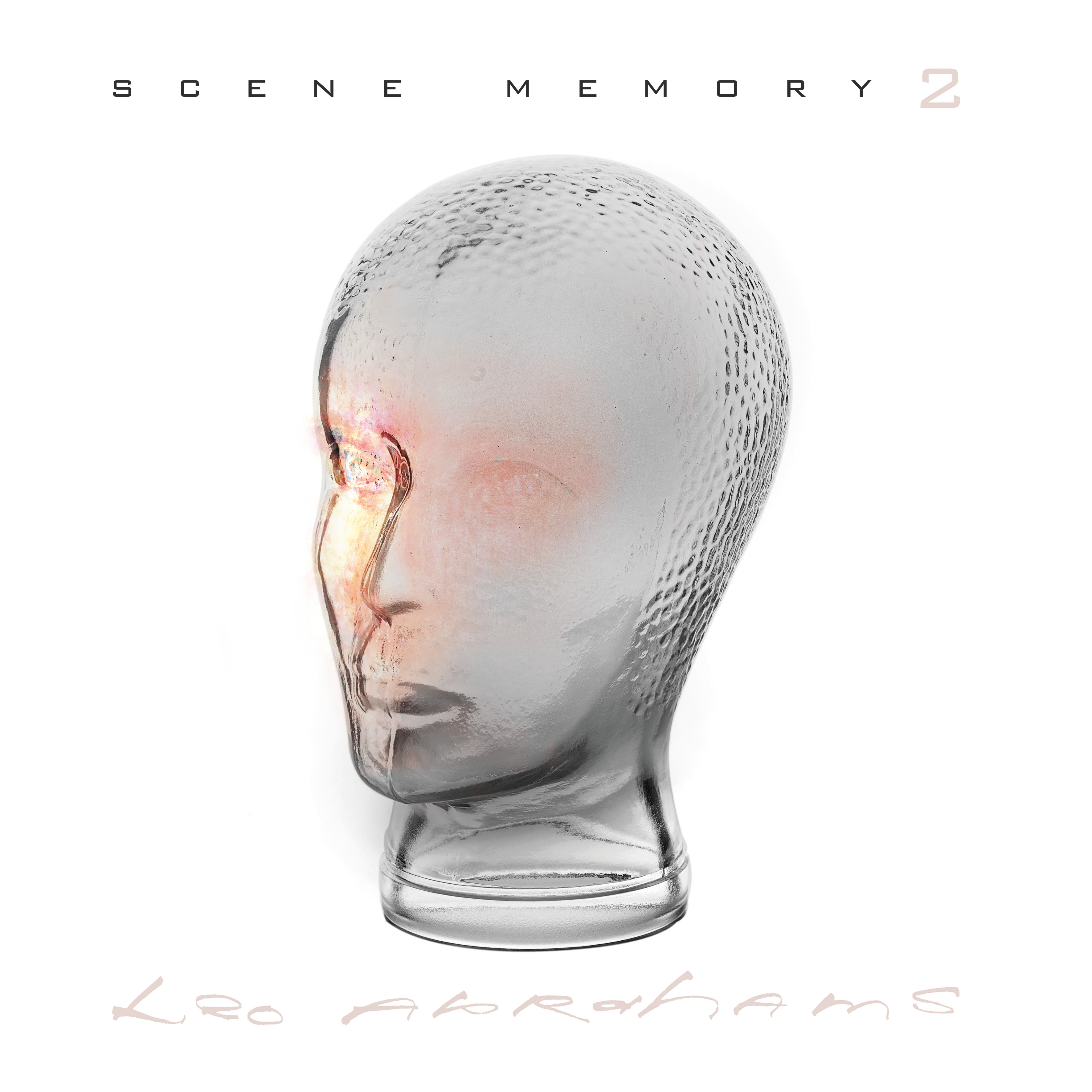
Switched On – Leo Abrahams: Scene Memory II (figureight records)

leo-abrahams

reviewed by Ben Hogwood

What’s the story?

This is a sequel album at a distance of fifteen years from the original. When Scene Memory I came out in 2006, Leo Abrahams was already proficient in a number of musical forms and styles, but since then he has broadened his horizons by working with Brian Eno, David Byrne, Jon Hopkins and Paul Simon, among many others.

Working from his London studio, Abrahams offers both collaboration and solo work, but until recently has tended to prioritise the former. Scene Memory II sees him return to the solo guitar, and all its sounds are conjured from the instrument in some way.

His approach is one largely borne of instinct and improvisation, inspired by a tour of Siberia undertaken in 2019. Many of the melodic ideas have their origin there, being honed to completion in London.

What’s the music like?

There is an intriguing balance of ambience and tension running through Abrahams’ music. The studied guitar lines that come to the forefront are often complemented by more spacious surroundings, rewarding listeners on headphones or wider screen sound systems. There is always a strong sense of direction in his workings, however, and the guitar is used to generate sounds that are by turns percussive, feather-light, melodic and noise-based.

Spiral Trem is glitchy, with bass drum sounds like stepping stones, somehow wrought from the guitar. Supplicant explores the higher range of the instrument with harmonics, which sound like chimes. Its lines recall a similar state of mind to that found in the early ECM recordings of Pat Metheny. Tithe has a calling towards the start and then flickers intermittently, the pauses between its melodic phrases bringing to mind the more intricate works of John Martyn. Alternations retreats to a distance for its reverberating, languid lines, while Ruins is suitably eerie, turning the guitar into a wordless vocal instrument and losing track of a discernible pulse. Troth, meanwhile, has a more severe language secured through its sharper timbres.

Does it all work?

It does. Abrahams’ work has presence and poise, and makes a powerful impact even in its most restrained moments.

Is it recommended?

It certainly is. Abrahams writes music that becomes more compelling the more time you spend with it. It will be interesting to see how his solo work develops as he spends more time on it over the next few years.

Stream

Buy