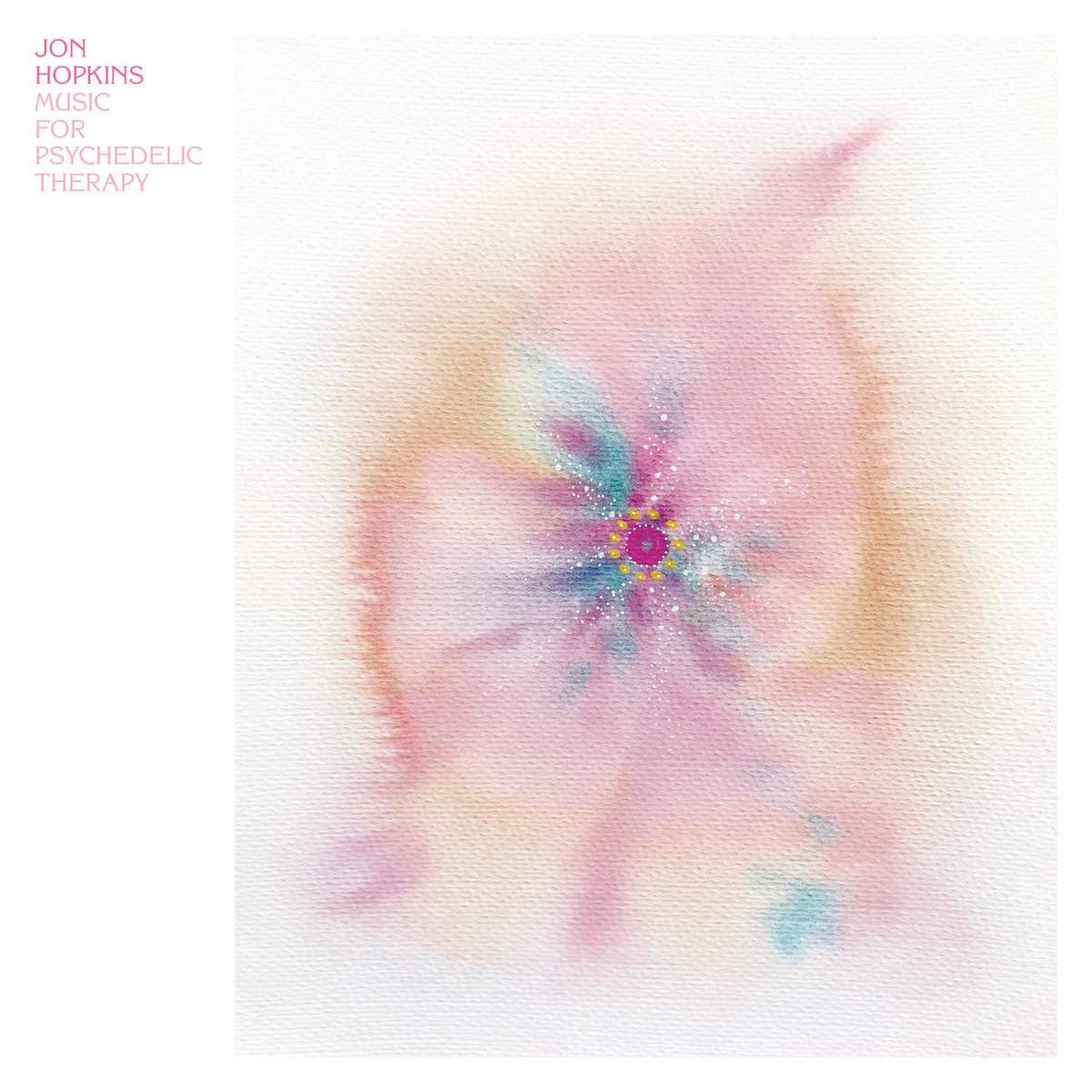
Switched On – Jon Hopkins: Music for Psychedelic Therapy (Domino)

jon-hopkins

reviewed by Ben Hogwood

What’s the story?

After two albums driven by rhythm (Immunity and Singularity) Jon Hopkins had the wish to branch out in a different musical direction, turning his focus away from a ‘cosmic party or a set of festival bangers’.

His musical direction took him to a more classical approach, with no electronic drums in evidence and a musical language operating under much larger structures. Hopkins has openly admitted that the resultant workings are “more emotionally honest than I had been comfortable making before”, and has talked about the liberation of being cast free of traditional rhythmic structures.

The music was recorded in the dark of winter in early 2021, looking for brightness amongst the gloom. It is instructive to hear from the composer again: “Psychedelic-assisted therapies are moving into legality across the world, and yet it feels like no one is talking about the music. but the music is as important as the medicine.”

What’s the music like?

Right from the start it is clear Jon Hopkins is ploughing a very different furrow with this album. A treble-rich texture, with the regular ‘tsing’ of a tuning fork, sets out a scene more like the beginning of an extended yoga or pilates session. Woozy background textures blend with primary colours in the foreground, as musical phrases make themselves loosely known.

There is an immediate warmth to Hopkins’ musical language, and as we move into Tayos Caves, Ecuador i, the natural world takes over. A rush of water places the listener right in the middle of the action, with drips from the ceiling of the cave, a torrent of constant spray and the calling of a bird. The simplest of drones and long, drawn out phrases is added by Hopkins, but here we are all travelling together well beyond the studio.

We are in fact in the first part of a near 20-minute suite in three parts, which gradually introduces the thick ambience more common to Hopkins’ earlier work. The second part is a single, slowly shifting melodic sequence, while the third brings in a resonant treble sound. The structure is ideally paced, the listener slowing to the natural rhythms of the cave.

The album takes on the form of an entirely through-composed affair, lending weight to Hopkins’ observation of the similarity with classical music forms. Love Flows Over Us In Prismatic Waves is every bit as serene and comforting as its title suggests, while Deep In The Glowing Heart is the resultant balm, sat squarely in the tonal centre we have occupied for the last half-hour.

Such slow-moving music has a deep, rapturous message to the listener, and the more you become immersed in Hopkins world, the more intense the session. Ascending, Dawn Sky takes a step back, surveying the scene from a greater distance with the cool lapping of a quiet piano, and segues gently into Arriving, where the sound of chimes is complemented with a softly humming vocal – the nearest we get to words on the album so far. It is in effect a gentle warning for Sit Around The Fire, where we get the closing thoughts of Ram Dass, who speaks on the importance of inner connection in the company of meditative thoughts from musician East Forest. If Hopkins’ music has done its job, that has already been achieved.

Does it all work?

It does. Hopkins has a natural instinct for large structures but can also break them into smaller units, so there is enough going on in the short and the long term to keep the listener compelled. The hour passes just like a yoga session, so you may arrive feeling fraught and stressed, but you will leave with your mind on a higher plane.

Is it recommended?

Very much so. Jon Hopkins has been threatening this album ever since he signed to Domino, and it is gratifying to see him make it. A document for our stress-filled times.

Stream

Buy

You can listen to clips from the album and purchase in CD or download form at the Domino website
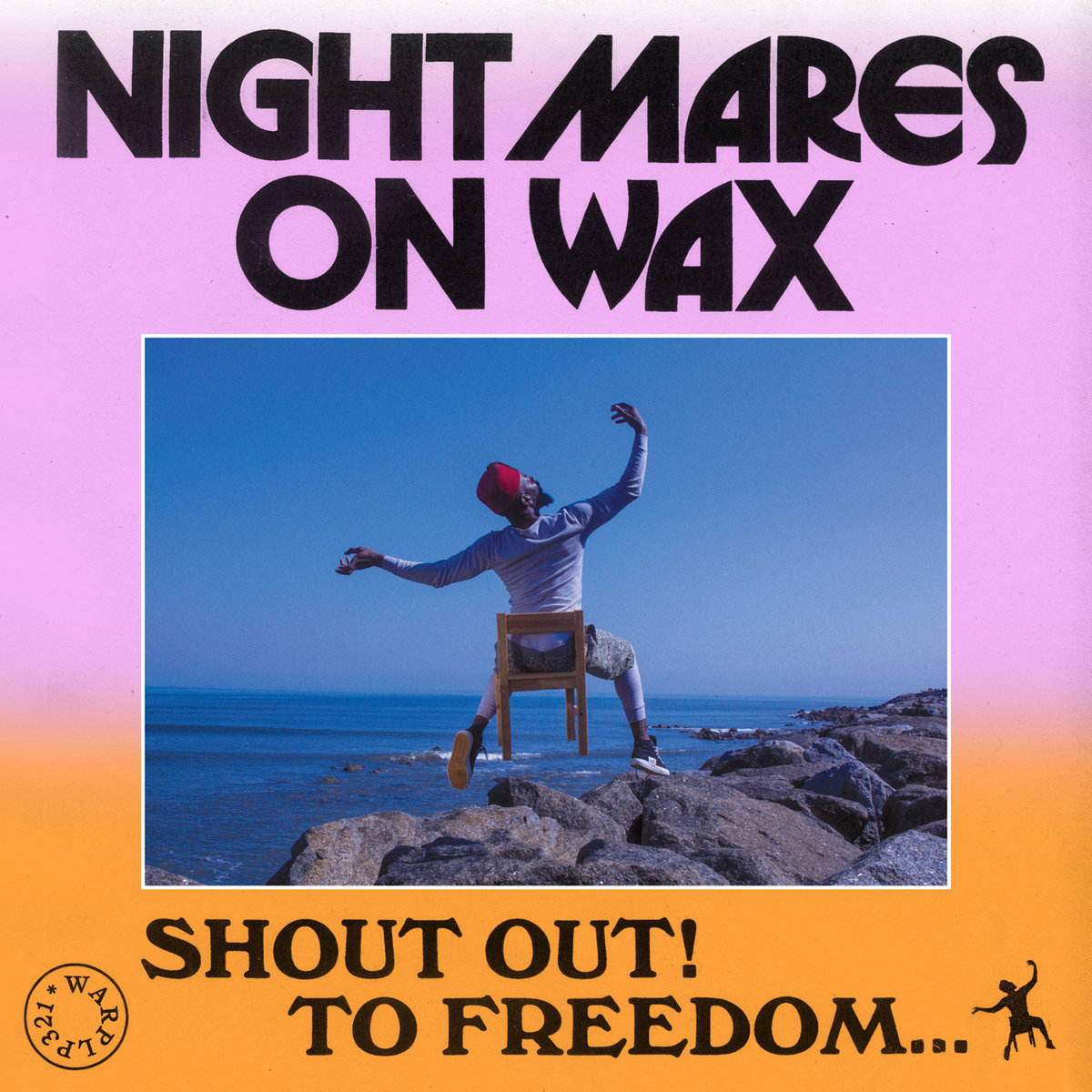
 

Switched On – Nightmares On Wax: Shout Out! To Freedom… (Warp)

nightmares-on-wax

reviewed by Ben Hogwood

What’s the story?

The Coronavirus pandemic has had a deep effect on many artists, causing them to rethink their approach to life and often showing them the things of greatest importance. George Evelyn, the man behind Nightmares On Wax, is no exception, as a life spent largely on the road became extended time spent with his wife and daughter.

At the same time he was in the midst of a cancer scare, prompting him to write Shout Out! as though it was his last album. The profound effect of these life-changing experiences led to what he declares to be his most personal album yet – and his most thankful one too.

What’s the music like?

Shout Out! To Freedom… has typically blissful Nightmares On Wax vibes, with good feelings to the fore, but there is definitely something more profound hovering on the surface. The positive feelings are dispensed from the start, but contemplation and appreciation is often the order of the day.

3D Warrior is one of the finest tracks in that respect, with a mellow saxophone sound from Shabaka Hutchings and some excellent vocals from Haile Supreme and Wolfgang Haffner. Hutchings appears again in Wonder, a beautiful piece of work where the instrument really feels airborne and lost in time, its opening statement akin to a piece of ancient plainchant.

Greentea Peng is a captivating and provocative presence on Wikid Satellites, her vocal an excellent foil as the music steps up a gear. Own Me is a thoughtful study in positivity with Haile Supreme to the accompaniment of a dreamy trumpet, while Isolated – in spite of its obvious lyrical influence – is uplifting in a deep-rooted way, positivity coursing through the warm production. Trillion has an electro edge, sharpening the vocals from Mara TK, while Miami 80 is an excellent, piano-based instrumental construction that could be longer.

Evelyn has a very natural musical style that can’t be fully pinned down, other than to say he works in elements of hip hop, soul, dub and funk without ever restricting himself to one. The vocalists are well-chosen, while the production casts an attractive heat haze over the whole album.

Does it all work?

Very much so. This is deeply felt material, made by an artist still at the top of his game, bringing music to Warp that is just as meaningful as when he started with the label in 1991.

Is it recommended?

Yes. As simple as that!

Stream

Buy


Switched On – Marc Romboy Presents: Music from Space (Dimension A) (Systematic)

space_dimension_a

reviewed by Ben Hogwood

What’s the story?

Marc Romboy’s Systematic imprint returns with a compilation inspired by his Music from Space radio show. With nine tracks stretching for just over an hour, this is an unmixed selection drawing on familiar names but also looking at some of the talent Romboy has discovered in the course of his show.

What’s the music like?

There is some very fine house music here. Petar Dundov contributes the suitably stellar Andante, a beautifully paced and structured piece of spatial electronica that gets all the right elements of feet and head stimulated.. The Oliver Linge & Olaf Pozsgay collaboration Neutron has a nice, chunky beat, while Romboy’s collaboration with Oniris, Eternity, is a spaced-out beauty that works in some satisfyingly solid breakbeats. Julian Wassermann’s The Red Planet might be minimal but still fires the imagination over some increasingly caustic synths.

Of the newer talent, Pôngo starts minimal but soon sprinkles synthesized stardust all over Blind, while MOLØ’s Fleut is an airy, blissed out experience. The equally promising Rodriguez Jr. works in a dubby profile underneath Mare Serenitatis.

Does it all work?

It does. The music might not be mixed, but Romboy’s instincts as a DJ serve him in good stead here, and the quality threshold is high throughout.

Is it recommended?

It is – anyone following Romboy’s releases as a producer or DJ will find much to enjoy here.

Stream

Buy


Switched On – Matthew Herbert: Musca (Accidental)

musca

reviewed by Ben Hogwood

What’s the story?

With more than 25 years’ worth of experience in making house music, Matthew Herbert knows more than most how to make people dance. He has done so in a wide variety of ways, none more so than in his so-called ‘domestic’ albums Around The House and Bodily Functions – where the music was made from home appliances and the human body respectively.

Musca completes a trilogy of these albums, as far as the production goes – with added vocals from eight singers who Herbert had not met at the time of recording. It is, in effect, the ultimate lockdown album.

What’s the music like?

If you liked Herbert’s 1990s deep house, with its experimental tendencies and intimate language, you’ll love this. To get his musical sounds the composer manipulated a number of sounds from around the farm where he lives – so there are cameos from the pigs, dogs and foxes to name just a few. This being Herbert the sounds are expertly treated and fashioned into the language of house music, which on this occasion is a soulful model, especially with some of the vocalists involved.

Bianca Rose stands out for her contributions to Chain Reaction, Gold Dust and Let Me Sleep. The first of these has a lovely choral effect that Herbert secures as part of his word painting, while the last is a dreamy, piano-led nocturnal number with a wide sonic scope. Verushka is another to stand out on Fantasy, which has a clunking beat reminiscent of mid-90s Herbert and a sublime vocal.

Allie Armstrong is also an ideal foil for Herbert’s music, with the sombre but curiously moving The Horror a standout among her three contributions, its lyrics especially moving. The Impossible, meanwhile, has the backdrop of what sounds like a dripping tap in a barn, but the multi-tracked vocals are like a warm blanket in the coda.

Meanwhile Hypnotised, with Mel Uye-Parker, works really well thanks to deep keyboards and lovely layered vocals to dive into. It comes off the back of the treated vocals of Joy Morgan in Two Doors, with shuffling beats the backdrop to quite an eerie experience.

Only one of the 14 tracks is instrumental, The Slip positioned in the centre of the album and taking a jazzier profile, with flute solo and plucked bass.

Does it all work?

It does, largely. Part of this will depend on your approach to Herbert, for if you started listening to him because of his house music ventures you will definitely warm to this. It has an urban and soulful charm, with its beautifully layered textures, and its songs are constantly shifting, never too repetitive.

Is it recommended?

Very much so – for Musca is an album that is at turns relaxing, hypnotic, moving and subtly inspiring. Herbert’s command of the beats ensures there is never a moment wasted.

Stream

Buy


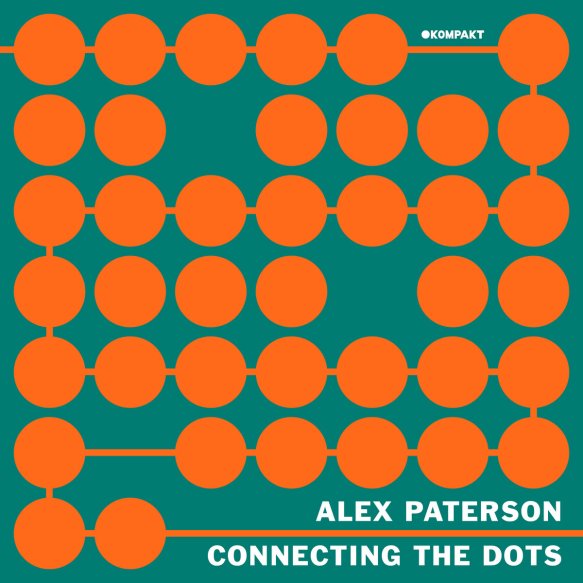
Switched On – Connecting The Dots mixed by Alex Paterson (Kompakt)

reviewed by Ben Hogwood

What’s the story?

In a little less than a year, Kompakt’s Connecting The Dots series has proved remarkably popular, as the label explore their substantial catalogue of electronic music. Now Alex Paterson, original founding member of The Orb, steps up to mine the more ambient side of the warehouse, pulling 17 out of the 15,000 available recordings to make a mix that would fall naturally into Kompakt’s Pop Ambient division.

The mix has been out for a while digitally, but has found its way on to Arcana’s early morning playlist in the last few weeks!

What’s the music like?

Extremely restful, providing a blissful 90-minute time out when needed – but also rewarding the closer listener, who can follow Paterson’s thought patterns as the meditative mood grows.

The Orb lynchpin starts with big, loping beats from Mohn, Schwarzer Schwan imposing a subtly menacing mood on proceedings. It doesn’t last, for the expansive Milk from Klimek is on hand. This track has like a series of long, slow breaths, taking its sweet time as each repetition leads gradually to a bigger, thicker sound.

Regular beats arrive once more with Markus Guentner’s mix of label founder Michael Mayer, Pensum held in place by a lovely suspended chord that you can dive into completely. The Orb’s own mix of Because Before by Ulf Lohmann is next, with lush slowly moving chords like a warm weather system. This blissful mood holds through the Fresco & Pfeiffer remix of Christian Löffler’s Pigment to ex-Orb member Thomas Fehlmann, and Treatment.

Each of the tracks is a good four and half minutes long at least, the slowly shifting mix paced just right. As it progresses we hear from Simon Scott, who spaces out his musical thoughts beautifully in Für Betty, and Andrew Thomas, static but meditative in I Am Here Where Are You. The mix reaches its zenith, however, with the quarter-hour penultimate track from Klimek. Music To Fall Asleep is a thing of beauty, drifting into a slow trance with a spatially altered guitar, against a background of softly pitched white noise. The coda is The Orb’s own Glen Coe, a cotton-wool glow of positive ambience and spoken word.

Does it all work?

It does – and a sure sign of this on the first few listens was that I couldn’t be bothered to check my player to see what the tracks were, or if indeed at some points we had even changed track! Such is the vibe behind Paterson’s choices, mixing and presentation.

Is it recommended?

Without hesitation. Paterson has so much experience in making fully immersive ambient music, and he clearly knows the corners of the Kompakt catalogue where the best possible mindful examples can be found. The artists not mentioned above – such as Gas and Walls – are testament to that. Nothing more need be said – just go and listen!

Stream

https://open.spotify.com/album/46L9tNr4y1nCwpwDkYIyIT?si=2MDlseB5SyKzFvQHf1ZmMw

Buy

You can listen to clips from the mix and purchase from the Kompakt website