Switched On – Albrecht La’Brooy: Healesville (Apollo)

What’s the story?

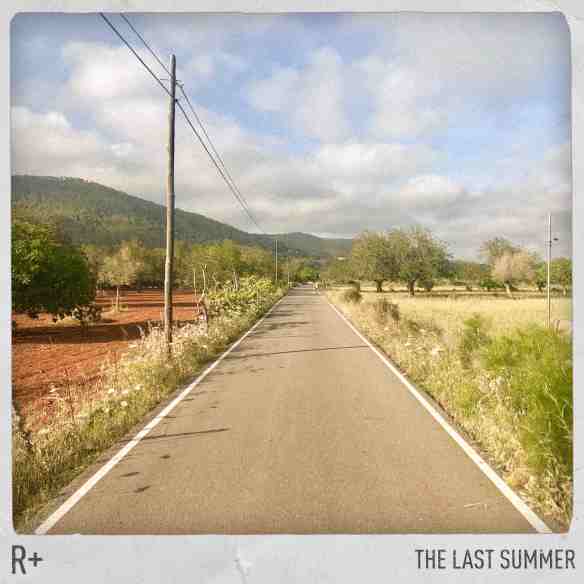
Albrecht La’Brooy – the Melbourne duo of Sean La’Brooy and Alex Albrecht – bring this 40-minute album of improvised ambience to calm our nerves. Their Spotify biography tells the real story, describing an approach looking to ‘modernise the classic jazz format while walking ambient music through the rainforest and down to the shore. Absorbing Australia’s landscape to craft enlightened, on the fly performances that are never to be missed and never to be repeated’.

What’s the music like?

‘Natural ambience’ is the most appropriate description, for the music is rooted in field recordings made by the pair. On Healesville these include noises associated with tending the land – a tractor is especially prominent – but also a wider sound scape which includes bird noises, indistinct voices and other sounds caught on the breeze. Above this are long, held notes, a slightly shrill bird-like sound and softly intoned piano unisons or chords with plenty of sustain, which unfold like an improvised chorale. The held notes behind can range from one single pitch to thicker clumps but always feel consonant in their make-up.

The fact that two of the five tracks on this album bear the word ‘lullaby’ tells a lot of the mood and tempo at which Albrecht La’Brooy operate, but as well as relaxation there is positive energy to be found in abundance, especially in the piano playing. Sean’s Lullaby may have a good deal of reverb, but its stream of consciousness respectfully echoes Satie and Debussy.

Does it all work?

Healesville is a supremely calming listen, experienced at its best on the morning commute but equally effective in a quiet room. It sets an incredibly restful outdoor scene, making the listener feel as though they are lying on their back in a field with no reason to get up any time soon.

Is it recommended?

Yes, and especially to every commuter whose fevered brow needs soothing!

Stream

Buy

Switched On – Mount Liberation Unlimited: Mount Liberation Unlimited (Studio Barnhus)

What’s the story?

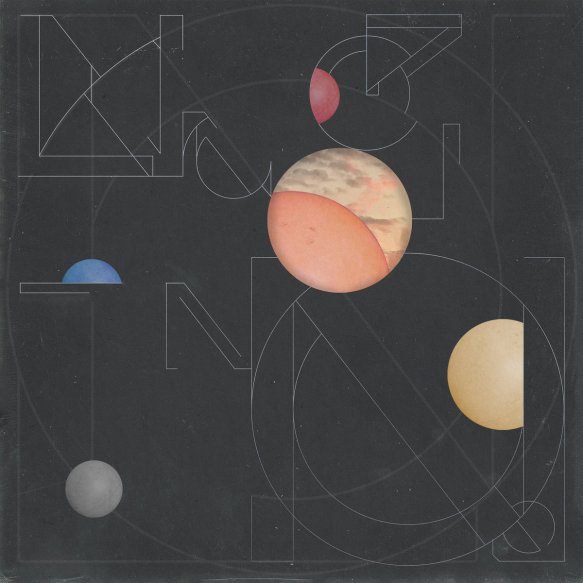
Mount Liberation are from Stockholm, Sweden, and they make music best described with the words ‘space’, ‘funk’ and ‘percussion’ in the same sentence. Tom Lagerman and Niklas Janzon used to be in a band together but found they were enjoying themselves too much in their new project, signing to Axel Boman’s Studio Banhus label. This is their self-titled debut album.

What’s the music like?

Mount Liberation Unlimited is a thrilling ride. Bolstered by heaps of live percussion, their take on space disco is packed with riffs, quirky harmonic asides and a strong rhythmic base. Welcome To Organic is a great illustration of their approach, with a breezy hook, cut up vocal, beefed up percussion and a feelgood vibe – yet if anything it is eclipsed by Gospel (Makes My Body Move In Sinful Ways), a particularly funky number with filtering and drum fills to work an absolute treat on the dancefloor.

Prozac is similarly full of upward looking sentiments, ‘Krauten’ has a driving bass and solid drum track that would do the likes of Justice proud, while later on Techno Thrills and Ecstasy Pills ends in a lush, Balearic warmth giving the effect of a sonic bath to the headphone listener.

Does it all work?

It’s irresistible. Any album that has the ability to put a smile on its listener’s face within five minutes has to be admired, and not only do the pair manage that but they maintain the feeling even in tracks like the seven minute Climb Me Up, with its twinkling xylophones.

Is it recommended?

This is an excellent piece of work that repays multiple listens. Its organic approach, hook-laden and cunningly developed with a healthy sense of humour, is to be admired. Most of all it’s a heap of fun!

Stream

Buy

Switched On – Haiku Salut: The General (Secret Name)

What’s the story?

This is a really intriguing proposition, in which instrumental trio Haiku Salut are invited to score The General, the silent Buster Keaton film of 1926. The group have until now built their reputation with three intricate and intimate instrumental albums, all containing music that translates well to a memorable live experience of subtle imagination. This would seem to be an ideal opportunity for expansion, for the band to show their talent for the bigger screen. The soundtrack runs for the whole film, clocking in at an ambitious 79 minutes.

What’s the music like?

Much more varied than regular listeners might expect. That’s not a criticism of previous albums, more an observation that it is easy to mistakenly pigeon hole a band! If like me you had them down as pedalling intricate electronica, building on small melodic loops to more expansive effect, you would be pleased to note the number of different styles Haiku Salut naturally work in to the fibre of this record.

Initially the pairing of graceful piano and subtle electronics is familiar, and is typically effective, but the sighing motif in the main theme of Start has a sinister undertone and is unsettling. In the centre of the soundtrack, Cannon plays some brilliant sonic tricks with its massive reverb and a held drone chord, expanding the band’s sound considerably, while Train Steal produces big beats to go with the depiction of the crime itself.

This wide range of moods continues to Chopping Wood, where solemn keyboard chords intone like thoughtful brass, or Hide, where a four to the floor beat gives softly voiced energy. ‘Reunited’ conveys its emotion simply through piano, with a watery accompaniment, Firewood crackles with an energetic if subtle beat, while Obstructions has the friendly chatter of loops. The final number of the 23, Finish, returns us to the same outlook as the opening – but that slightly sinister undertone has still not gone away.

Does it all work?

Yes, and without the moving pictures there is still a strong narrative thread running through this music, which leaves a lasting impression. While the subtleties are still on show, Haiku Salut show really impressive ambition and a taste for bigger and more imaginative sounds. The potential is clearly there for the trio to score a lot more films in the future, given the thought and imagination applied here. Their style will continue to win a lot of friends through its melodic approach and interesting textures.

Is it recommended?

Yes. The General continues to impress in subsequent hearings, either in fragments or in a listen to the whole picture.

Stream

Buy

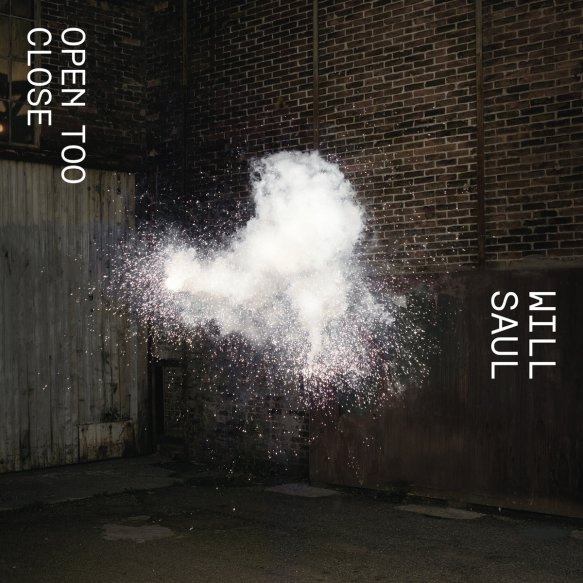
Switched On – GLOK: Dissident (Bytes)

What’s the story?

Ride’s Andy Bell has pulled together all his solo recordings to date under the GLOK alias. GLOK – the German word for ‘bell’ with a crucial letter missing – has been an undercover enterprise until now, an anonymous project brought to life by Bytes chief Joe Clay, a Ride fan himself.

As this story suggests Bell is modest about his side project, but now he has been ‘outed’ as a one-man band, expect to hear a lot more of this music as the year progresses, even allowing for a new Ride album due in August.

What’s the music like?

Dissident unwittingly taps into the success of recent TV series such as Deutschland 83 and 86, where the pleasures have been as much about the music as they have been the plot. Yet as Bell looks back to the 1980s and further, he brings in the influence of Krautrock luminaries such as Can, Neu! And Bauhaus. He does this without compromising his own skills as a guitarist and his credentials as a much-loved ‘shoegaze’ producer.

Keith Tenniswood has remastered the whole album, which unfolds at a very natural pace. The title track clocks in at nearly 20 minutes, but is one of those productions you can completely lose yourself in, the main riff turning away in the background while running through a series of filters, the drum beats receding and then coming back with extra depth.

Bell expands his outlook with the subtle groove of Kolokoi (the Russian word for ‘bell’) and the airy textures and firm kick drum of Pulsing, which has a tempo suitable for dub-infused house. Cloud Cover adds a reminder of his first known discipline as a guitarist – a nice acoustic meander here – while the closing Exit Through The Skylight introduces chattering beats and a more processed feel.

Does it all work?

Yes. Bell has equal headspace for the past and the present, setting the mood perfectly with tracks that are suitable for both ends of the day. ‘Dissident’ on its own shows he can master big structures with durable ideas, while the shorter tracks teem with melodies, subtle humour and a refreshing lack of pretence. The album repays both foreground and background listening, preferably in a hotter climate!

Is it recommended?

Yes. Ride fans will love it, but the recommendation extends to anyone with a love of instrumental music and synthesizers.

Stream

Buy

Ibiza – A symphony of dance music

When you think of Ibiza, what are the visual images generated in your head?

Are they glorious sunsets and heat-soaked villas with sandy beaches…or a bunch of rowdy types ‘on tour’ or on extended stag / hen weekends?

Happily, from first-hand experience, the natural pigeon holing that occurs thanks to reality TV programmes and social media is pretty wide of the mark.

Sure, there are those that go to the White Island to completely lose themselves and their minds, but equally there are those who travel for more soothing mental reasons. There is room for both and more besides in Ibiza.

With the visual images addressed, what are the musical images that come to mind? Because no trip to Ibiza can be complete without dance music – and yet, as with the visuals, there is much more here than at first appears.
During our holiday last month, I reflected on the way Ibiza’s music is structured, like acts in a play or even movements in a symphony.

There is a slow introduction. The day dawns, people rise slowly and amble to the pool, the breakfast bar, the beach – and their soundtrack is chillout music.

Where we stayed, at the excellent Axelbeach hotel across from San Antonio (view from the balcony above!), blissful poolside vibes slowed the pulse rate and calmed the fevered brow from the previous night. Then, gradually, as the day took hold, so too did the beats – and deep house music became the order of the day. Moody basslines and rich chords were the soundtrack as we flitted in and out of sunkissed reveries. At this point I particularly enjoyed the music of Mark Alow, reflecting the intense heat of the midday sun.

The effortless soundtrack grew ever so slightly faster as the day went on, like an extended warm-up DJ set preparing for the night ahead. As the sun dipped in the sky it was time to head across the bay to San Antonio, and the much-revered sunset strip.

This is one of the most established parts of Ibiza holiday life, though it treads a fine line between keeping the carefree atmosphere of those late 1980s beach parties, where the likes of Danny Rampling, Paul Oakenfold, Nicky Holloway and Johnny Walker discovered the island’s potential, and the commercialism that has inevitably struck more recently.

Café Mambo, 25 years old this year, sits squarely between the two. Service is efficient, mostly friendly but occasionally too dismissive. Clearly our looks are important at this point, which was never the issue with Ibiza before I would have thought! Yet as we settle the magic of the area takes hold, and everyone anticipates the sunset moment itself.

Through the week we were to discover that the Golden Buddha bar just round the corner offers a much more authentic and unfiltered sunset experience, but this was good for now. We were at Cafe Mambo for a night promoting Pacha, and Radio Slave was in the wings with his brand of minimal, stretched out techno.

From the moment the dull red orb of the sun disappeared below the sea line, as we took a breath he sprang into action, delivering a dramatic change in mood and tempo, the onset of darkness bringing with it fresh energy. That he did this with such deceptively simple music was really impressive, his remix of Sasha’s Cut Me Down the calling card as the night opened up again. This would – in symphonic terms – be the start of the big finale.

A couple of nights later we found ourselves in Amnesia, where the finale was effectively split into two. Craig Richards and Seth Troxler were the opening DJs for a night with Cocoon, part of the season celebrating 20 years of the club on the island. A club and record label run by Sven Väth, Cocoon has always been about good times and an almost complete lack of pretence, and although prices at Amnesia are not exactly welcoming, everything else was.

It occurred to me at this point just how similar the roles of DJ and conductor are. Richards and Troxler were back to back, each choosing a tune or two in a relay style, the turntables their orchestra as the music unfolded. The dancefloor, initially empty, began to fill as their hypnotic beats took hold, the ‘less is more’ approach complemented by colourful dancers and two great big jellyfish, suspended above the dancefloor.

All this was happening on the terrace. In the main room, the beats were faster, the night more advanced, and those who had come to throw themselves around were having a ball. Back at the terrace, all that was about to arrive with Riccardo Villalobos, the Chilean DJ celebrated – like Radio Slave – for minimal yet timeless interpretations of house and techno.

With Villalobos though there is a much more primal instinct at play, which you can see as much from his image as you can hear it in his music. His set is not really about individual tracks, more about the pulsing rhythms as a whole, the DJ himself a ball of nervous energy behind the decks as he flits about impatiently, tweaking levels and ushering new depths of tremor-inducing drums.

It is incredibly effective, and even the relative lack of a melody does not prove a massive problem. The tunes can be found elsewhere of course, with the likes of Defected, Pacha and Soul Heaven serving up incredibly popular seasons of more soulful house in San Antonio itself.

Musically sated, we return to the hotel – and the cycle / symphony begins all over again. Ibiza really is one of a kind, and this trip was a fascinating insight to me of just how much dance and classical music have in common. Their functions can cross over, their structures are similar, yet the inspiration is equally lasting. Classical music might often try to claim the intellectual high ground, but the music can strive for cleverness and lose its immediacy. Dance music is clever in a different way, speaking to its lovers directly as it aims squarely for the feet and heart.

What I’m saying here is that different strokes for different folks is what music is all about. Long may it stay that way!

Here are two playlists from our ten days in Ibiza – ‘poolside’ and ‘club’:

Not surprisingly the ‘club’ one is shorter as a lot of the tracks we heard are not yet available – but hopefully it still catches the essence of our nights!

While we were there the sad news came through that Philippe Zdar, of French duo Cassius (below), had died in a tragic accident. Given his contribution to dance music in the last 20 years it was great to hear some of their tunes woven into DJ sets, especially at Café Mambo – and so this playlist starts with Cassius’ best-known tune as a small tribute. I was fortunate to interview Philippe once and found him a really engaging and mischievous subject. Both those qualities came across in his music and he will be greatly missed.