Switched On – Lightwave: Cités Analogues (Bureau B)

by Ben Hogwood

What’s the story?

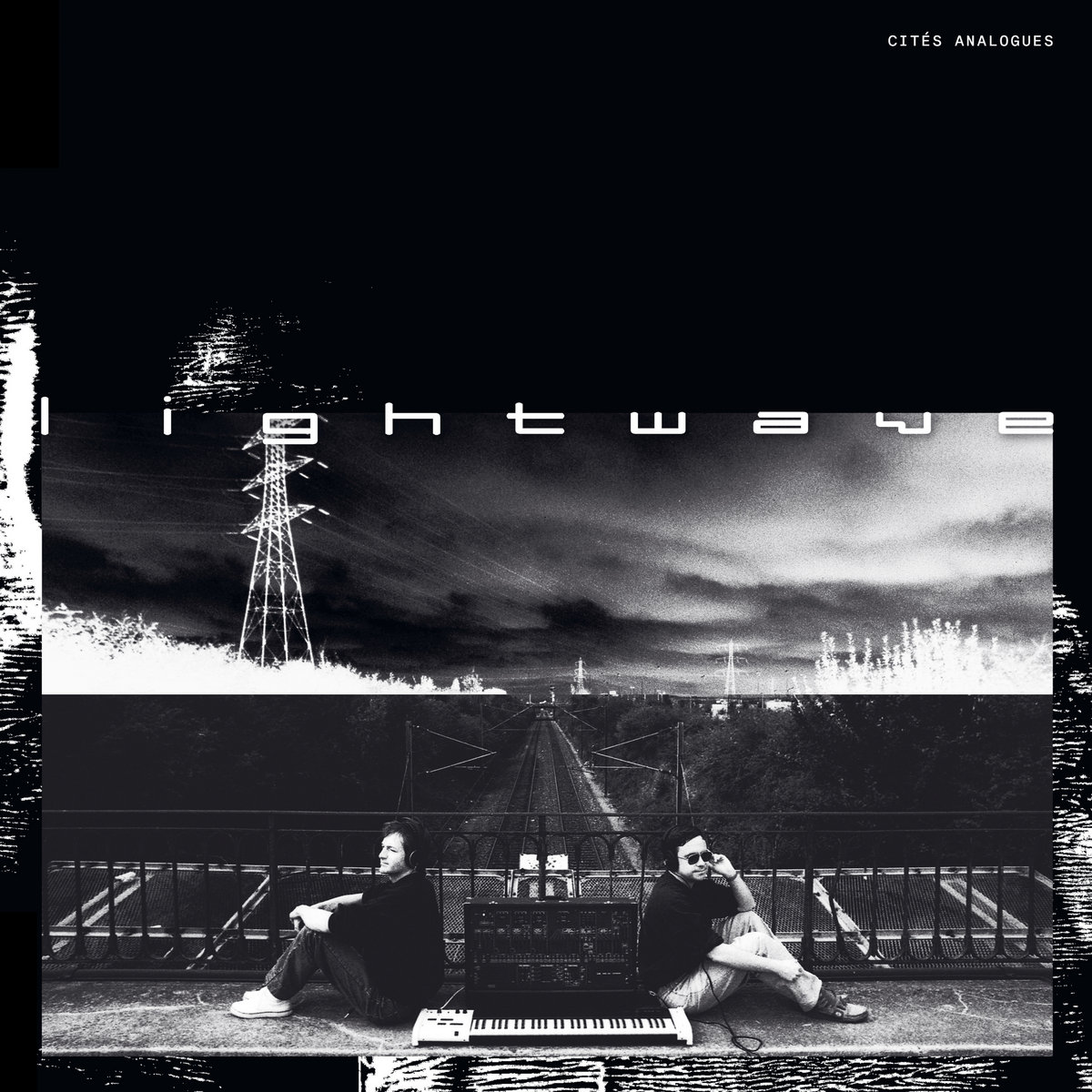
In the story of electronic music – and especially that with a more experimental, ambient viewpoint – the name of Lightwave will not be known to many. Christoph Harbonnier and Christian Wittman released their first album, Modular Experiments, in 1987, after which they recorded Cités Analogues in April and May 1988. It was released as a casette.

Their relative neglect is a mystery, but the restoration of this album should ensure their profile is raised. Bureau B have done the duo proud with a reissue on LP, CD and download. Their press release lists an inventory of RSF, ARP, Roland and Oberheim modular systems, mixed on A&H 12/2 and recorded to tape on a Revox B77 tape machine – a complex set-up but one aimed at what they describe as ‘a concept album, comprising of a series of discrete compositions and atmospheres assembled into two continuous tracks. The tracks are split out a little by dividers, with field recordings and tape processing softening the join between sections.

What’s the music like?

This is a fascinating listen, and if you didn’t already know you might suspect that Cités Analogues had been recorded in the last year, such is its reach and originality. Whether they work in long or short form the duo make subtly shifting soundscapes that are unexpectedly intense in their realisation.

On occasion they hit some winsome grooves, as in the slow but elastic Le Purvis. Agora is lost in thought, musing over a slowly shifting bass, while the eerie Polycentre and activity of News are at once complementary. Cités Analogues itself is an effective long form piece, its quarter-hour duration packed full of ideas and fragments that are given an assured and compelling development. As the album evolves Lightwave create soundscapes with industrial roots but with added splashes of instrumental colour. These are especially evident on Ophelia, a dream sequence with feather-light textures, suspended in mid-air.

Does it all work?

It does. Any regular listeners to the output of the Bureau B label will find much in the way of musical nourishment here. The only regret is that it’s taken so long for Lightwave to get the kind of exposure they deserve!

Is it recommended?

Yes – Lightwave are essential listening for any lovers of Brian Eno, Tangerine Dream and the like. Their music is descriptive, engaging and frequently fascinating, their sonic outlines branching out far ahead of their time.

For fans of… Brian Eno, Tangerine Dream, Klaus Schulze, Jean-Michel Jarre

Listen and Buy
Switched On – Fennesz: Mosaic (Touch)

by Ben Hogwood

What’s the story?

The composition process for Christian Fennesz’s eighth album was relatively swift. Mosaic was written and recorded at the end of 2023 and completed in the summer of 2024, using a new studio space in the composer’s home city of Vienna.

Experimentation is at its heart, from the collection of ideas through a process of improvisation and development. In the making of Mosaic Fennesz was able to use unusual time signatures (Love and the Framed Insects being in 7/4 rather than the most-used 4/4) while influences come from far and wide, such as West African pop (Personare) and a collage of hard rock riffs (Gonionrizon)

What’s the music like?

Spacious. This is a beautiful audio experience, especially on headphones, where Fennesz places the listener in a position to end the listening experience in a place of extreme calm.

Not all the music is calm however, for the compelling Love and the Framed Insects has an engrossing dialogue, becoming more jagged in its appearance, as though portraying the side of a mountain or the slow movement of a glacier. Personare has tracer lines that cut through the texture.

Contrasting with the sharper sounds are the incredibly restful scenes of Heliconia and A Man Outside. The former takes shape gradually, finding solid ground as its chords grow in stature but then moving to slow, processed guitar loops that add charm to the experience. A Man Outside is taken by the sonic breeze, its lines drifting this way in that as though in the late afternoon sun.

Patterning Heart is a thing of beauty, a slowly oscillating drone whose shape is dictated by an ebb and flow of the sonic tide, the sound occasionally swelling as Fennesz applies distortion to the guitar. The collage of riffs, Gonionrizon, is fascinating, a kaleidoscope of colour that continually changes as though a spectral organ is being played.

Does it all work?

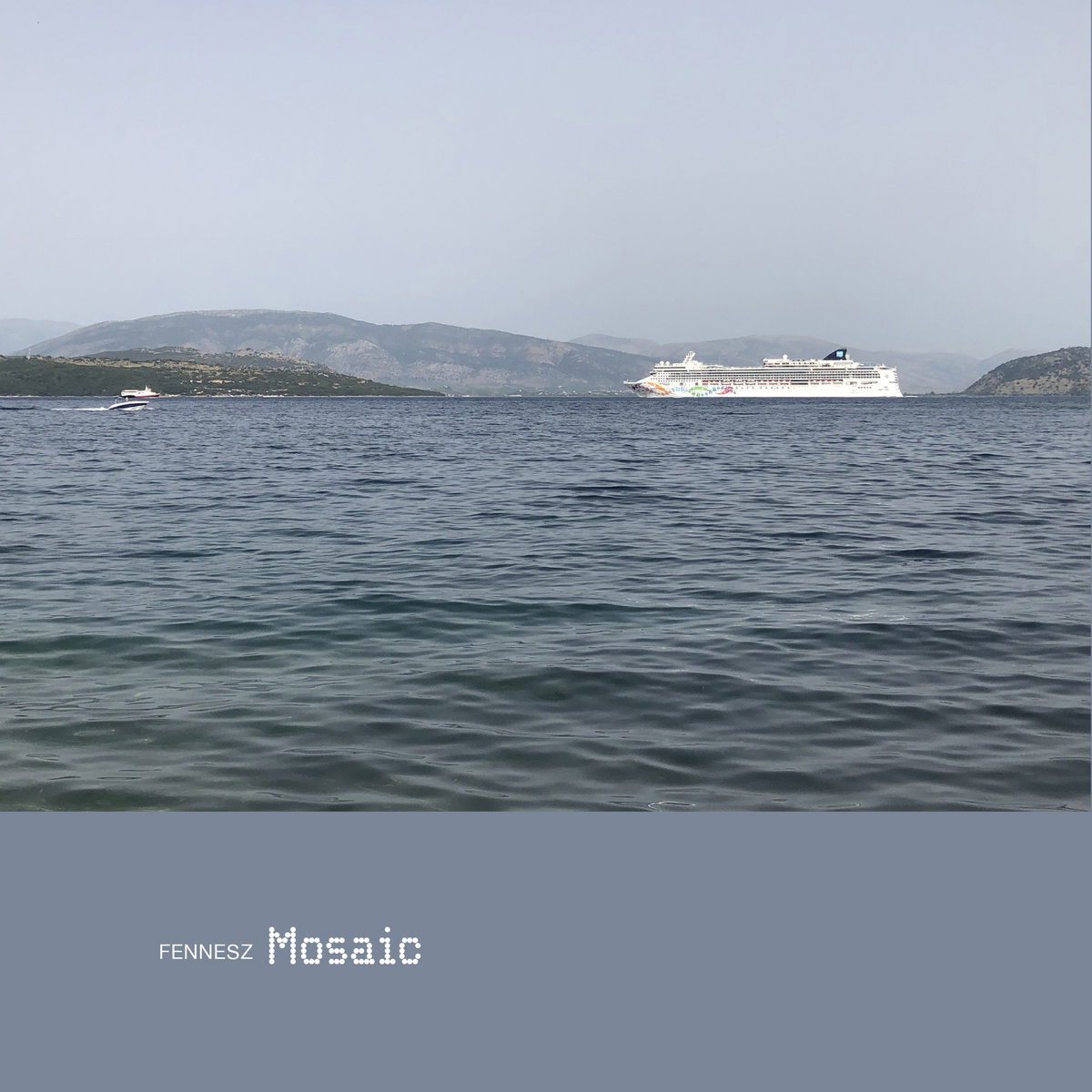
It does – and as the press release mentions, Mosaic is a natural follow-on from Venice, though the boat in the cover art is much bigger and the water less calm. A reflection of the world, it would seem.

Is it recommended?

Yes, enthusiastically. There is a beguiling warmth and space to Fennesz’s work here, an album that links together in a wide spectrum of sound. From whispered ambience to dazzling beauty, it’s all here.

For fans of… Tim Hecker, Loscil, Stars Of The Lid, A Winged Victory for the Sullen

Listen & Buy

Published post no.2,412 – Tuesday 14 January 2025

Switched On – Ryan Teague: Chorale (self-released)

by Ben Hogwood

What’s the story?

Ryan Teague, the Bristolian soundsmith, has released a pair of instrumental compositions that suggest the influence of classical processes, combining simplicity and emotion.

What’s the music like?

From its title, Chorale in A minor could have been written at any point in the last 300 years or so. Its musical language suggests a look back to the distant past, though the electronic choir sound has a touching and emotive simplicity. Gradually the piece builds in weight and intensity, impressive in widescreen, before paring back to a weightless finish.

The Canon in E minor is relatively austere as it begins, but its movement becomes more graceful and stately as the electronic string sounds reach for the heights. The piece is like an arch, climbing to its peak before descending in its second half, returning from whence it came.

Does it all work?

Yes – both pieces have poise and presence.

Is it recommended?

It is…and it will be interesting to see where Teague heads next musically. Here he has managed to bring emotion from musical simplicity; no mean achievement.

Published post no.2,408 – Saturday 11 January 2025

Signing off – Arcana’s pick of 2024

As every year passes, it seems to me the importance of music and culture in our lives gets ever greater. Unfortunately this is not recognised by the vast majority of our politicians or those in education. Shouting our love of music from the rooftops is therefore more important than ever! It’s something Arcana has done for nearly 10 years…and as we close in on that special anniversary we do so with a mixture of thankfulness and regret.

I am incredibly grateful to have the new music that we have enjoyed together – and to have Richard Whitehouse giving regular despatches and typically probing insight from Birmingham and the classical recording world. This is along with John Earls whose London gig-going and home reading contributions have been incredibly welcome – along with a couple of very welcome reports from Jon Jacob.

My principal regret with Arcana is that I don’t have enough time to devote to it, with a day job that takes care of the working hours – but I do feel incredibly privileged to be able to bring to you another set of thoughts on the best of 2024 as experienced on these pages.

As you may know Arcana tends to focus on music we either like or are likely to enjoy. This means the review pages tend to celebrate more than criticize, though rest assured we won’t hesitate to if we need to! I see this sort of site as a place for communal enjoyment, to share what we love – with classical and electronic music as two main points of reference, with rock and pop orbiting close around. There are no rules to what we cover, and if it’s good it’s more likely to be written about! On which note…

Thank you to some most enjoyable interviews across 2024 – including cellist Steven Isserlis, conductor Paul Agnew, soprano Claire Booth and the double header of Aldeburgh artists in residence, composer Unsuk Chin and cellist Alban Gerhardt.

Our classical albums of the year include Philip Sawyers’ adventurous Mayflower on the Sea of Time, another instalment in an excellent series of his music from Nimbus, an outstanding recording of symphonies from John Pickard on BIS, a welcome debut for Jaakko Kuusisto’s Symphony on the same label, and an important recording of George Benjamin’s opera Picture A Day Like This

Right on the junction between classical and electronic sits Belle Chen, whose inventive Ravel in the Forest, on the excellent Platoon label, cast an enchanting spell with its tasteful reimagining of the French master’s music. Also occupying this space is Erland Cooper, whose Carve The Runes…was a culmination of a captivating story of loss and recovery – and Debbie Wiseman, whose spellbinding music for Wolf Hall: The Mirror and The Light captured our hearts.

Not far from here musically were two excellent contributions on the LEAF label, MINING’s Chimet and Craven Faults’ Bounds, Adam Wiltzie’s Eleven Fugues for Sodium Pentothal, a sublime contribution from the one time Stars Of The Lid member, or Krononaut II, a fascinating discourse from Leo Abrahams and the much-missed Martin France.

Also incorporating improvisation were The Utopia Strong, and their outstanding BBC Sessions, the excellent trio of Dave Harrington, Max Jaffe and Patrick Shroishi – another winner from AKP Recordings, and the brilliant BEAK>>, with their final album >>>>

Moving towards the dancefloor, I really enjoyed the minimal but striking T.O.R. LP001 from Robag Wruhme, the technicolour Cascade from Floating Points and a dazzling second album from Jamie xx. The best compilations included 20 Years of Phonica, a thrill-a-minute collection of house music, and a selection of classic house on Defected’s House Masters compilation devoted to Marshall Jefferson

Our favourite pop / rock, meanwhile, included Ride’s Interplay, Jordan Rakei’s richly soulful The Loop, the dappled leftfield songwriting of Jon McKiel’s Hex and a fantastic compilation celebrating 20 years of Sonic Cathedral.

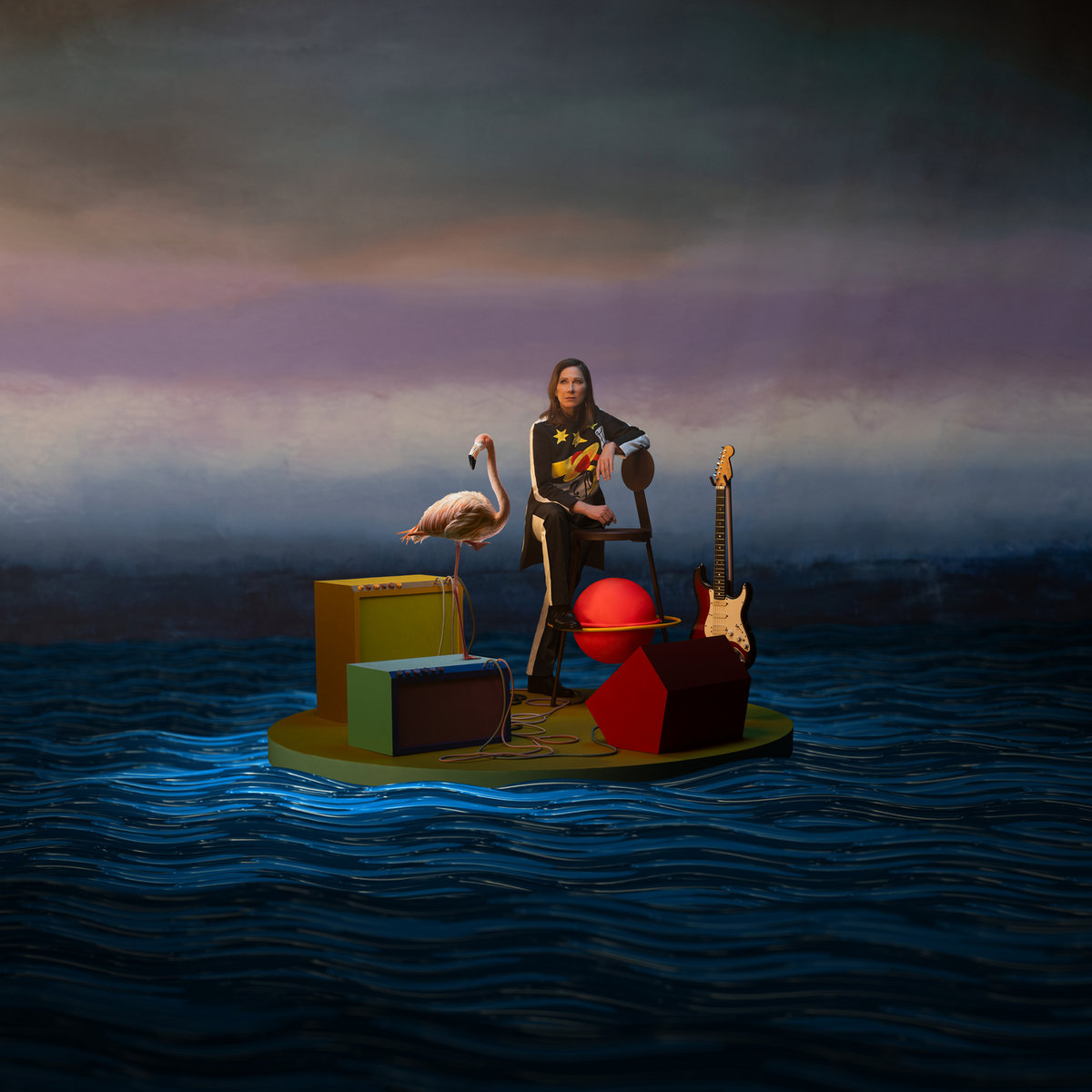
All that is left, then, is to declare the Arcana album of the year…to The Pixies’ Kim Deal, and her first solo album Nobody Loves You More. What a treat it is!

Now you might be following Kim’s advice on one of her singles to head for The Coast…but whether you are or not, we at Arcana thank you for reading our articles this year and for your general encouragement. We’re taking a break for a couple of weeks, but look forward to returning in 2025 for another year of music, new and old. If you want to contribute, do get in touch…but for now, Merry Christmas and / or Happy Holidays, and here’s to another year of sharing music we love.

Ben Hogwood editor, Arcana.fm

Published post no.2,403 – Tuesday 24 December 2024

Switched On – Various Artists: Pop Ambient 2025 (Kompakt)

Reviewed by Ben Hogwood

What’s the story?

If it’s getting towards Christmas then it is most certainly time for the latest in Kompakt’s Pop Ambient series. The Cologne label have been delivering a compilation of soothing selections for a quarter of a century now – and co-founder Wolfgang Voigt has this to say:

“25 years in increasingly fast-moving times in the even faster-moving music business is an eternity that doesn’t just feel like it. It is all the more remarkable how I, as someone who is always restless and often driven by this fast pace himself, pleasantly almost haven’t realised how – in pop-ambient contexts – time does not pass (or passes differently) in the best sense.

When compiling the 25th edition I was asked, among other things, what it was like that I was still doing this and whether I had a favourite track. In the spirit of bringing all the tracks together I don’t have a favourite track, or all of them. But I have a favourite moment that I played. In this case it was a broad chord in a change of key at minute 2:55 in the piece Circles by Max Würden. A moment of majesty and familiarity that, at that moment, contains the entire Pop Ambient cosmos, that just works and doesn’t explain anything – and I said: “…that’s the reason why I’m still doing this…”

Pop Ambient is a statement without demands. Is promise without expectation. Is a path without a destination. Every year again.”

What’s the music like?

As soothing as you could wish…and with it being Kompakt, they rarely if ever resort to cliché. That means the chosen selections are purely mindful pieces of ambience. The moment Voigt refers to, in Max Würden’s Circles, is indeed lovely – adding an extra dimension to music that was already a horizontal beauty. Meanwhile Würden’s collaboration with Lukas Schäfer, Analysis Of Variance ii, is easy to dive into, with fuzzy noise and displaced sounds appearing at irregular but pleasing intervals, like being in the middle of a musical forest.

Similarly Segensklang’s Artifacts of Synthese is a lovely slab of ambience, a thick blanket enveloping the listener. By contrast Ümit Han’s Im Delirium is quite restless, a freeform bit of synthesized improvisation.

Blank Gloss bring their characteristically open sound to the party, Jennifer’s Convertible a widely-spaced panorama, while other soft-centred moments from Leandro Fresco / Thore Pfeiffer and Tamarma & Sebastian Mullaert are immediately appealing.

Does it all work?

It does. Pop Ambient is a tried and tested formula, but there is no sign of Voigt and co resting on their laurels just yet.

Is it recommended?

Most definitely. If you’re a seasoned collector in the series then you will need no further encouragement, but Pop Ambient really does take the edge off the day with music of serene beauty.

Listen & Buy

Published post no.2,400 – Saturday 21 December 2024