
Signing off – Arcana’s pick of 2024

As every year passes, it seems to me the importance of music and culture in our lives gets ever greater. Unfortunately this is not recognised by the vast majority of our politicians or those in education. Shouting our love of music from the rooftops is therefore more important than ever! It’s something Arcana has done for nearly 10 years…and as we close in on that special anniversary we do so with a mixture of thankfulness and regret.

I am incredibly grateful to have the new music that we have enjoyed together – and to have Richard Whitehouse giving regular despatches and typically probing insight from Birmingham and the classical recording world. This is along with John Earls whose London gig-going and home reading contributions have been incredibly welcome – along with a couple of very welcome reports from Jon Jacob.

My principal regret with Arcana is that I don’t have enough time to devote to it, with a day job that takes care of the working hours – but I do feel incredibly privileged to be able to bring to you another set of thoughts on the best of 2024 as experienced on these pages.

As you may know Arcana tends to focus on music we either like or are likely to enjoy. This means the review pages tend to celebrate more than criticize, though rest assured we won’t hesitate to if we need to! I see this sort of site as a place for communal enjoyment, to share what we love – with classical and electronic music as two main points of reference, with rock and pop orbiting close around. There are no rules to what we cover, and if it’s good it’s more likely to be written about! On which note…

Thank you to some most enjoyable interviews across 2024 – including cellist Steven Isserlis, conductor Paul Agnew, soprano Claire Booth and the double header of Aldeburgh artists in residence, composer Unsuk Chin and cellist Alban Gerhardt.

Our classical albums of the year include Philip Sawyers’ adventurous Mayflower on the Sea of Time, another instalment in an excellent series of his music from Nimbus, an outstanding recording of symphonies from John Pickard on BIS, a welcome debut for Jaakko Kuusisto’s Symphony on the same label, and an important recording of George Benjamin’s opera Picture A Day Like This

Right on the junction between classical and electronic sits Belle Chen, whose inventive Ravel in the Forest, on the excellent Platoon label, cast an enchanting spell with its tasteful reimagining of the French master’s music. Also occupying this space is Erland Cooper, whose Carve The Runes…was a culmination of a captivating story of loss and recovery – and Debbie Wiseman, whose spellbinding music for Wolf Hall: The Mirror and The Light captured our hearts.

Not far from here musically were two excellent contributions on the LEAF label, MINING’s Chimet and Craven Faults’ Bounds, Adam Wiltzie’s Eleven Fugues for Sodium Pentothal, a sublime contribution from the one time Stars Of The Lid member, or Krononaut II, a fascinating discourse from Leo Abrahams and the much-missed Martin France.

Also incorporating improvisation were The Utopia Strong, and their outstanding BBC Sessions, the excellent trio of Dave Harrington, Max Jaffe and Patrick Shroishi – another winner from AKP Recordings, and the brilliant BEAK>>, with their final album >>>>

Moving towards the dancefloor, I really enjoyed the minimal but striking T.O.R. LP001 from Robag Wruhme, the technicolour Cascade from Floating Points and a dazzling second album from Jamie xx. The best compilations included 20 Years of Phonica, a thrill-a-minute collection of house music, and a selection of classic house on Defected’s House Masters compilation devoted to Marshall Jefferson

Our favourite pop / rock, meanwhile, included Ride’s Interplay, Jordan Rakei’s richly soulful The Loop, the dappled leftfield songwriting of Jon McKiel’s Hex and a fantastic compilation celebrating 20 years of Sonic Cathedral.

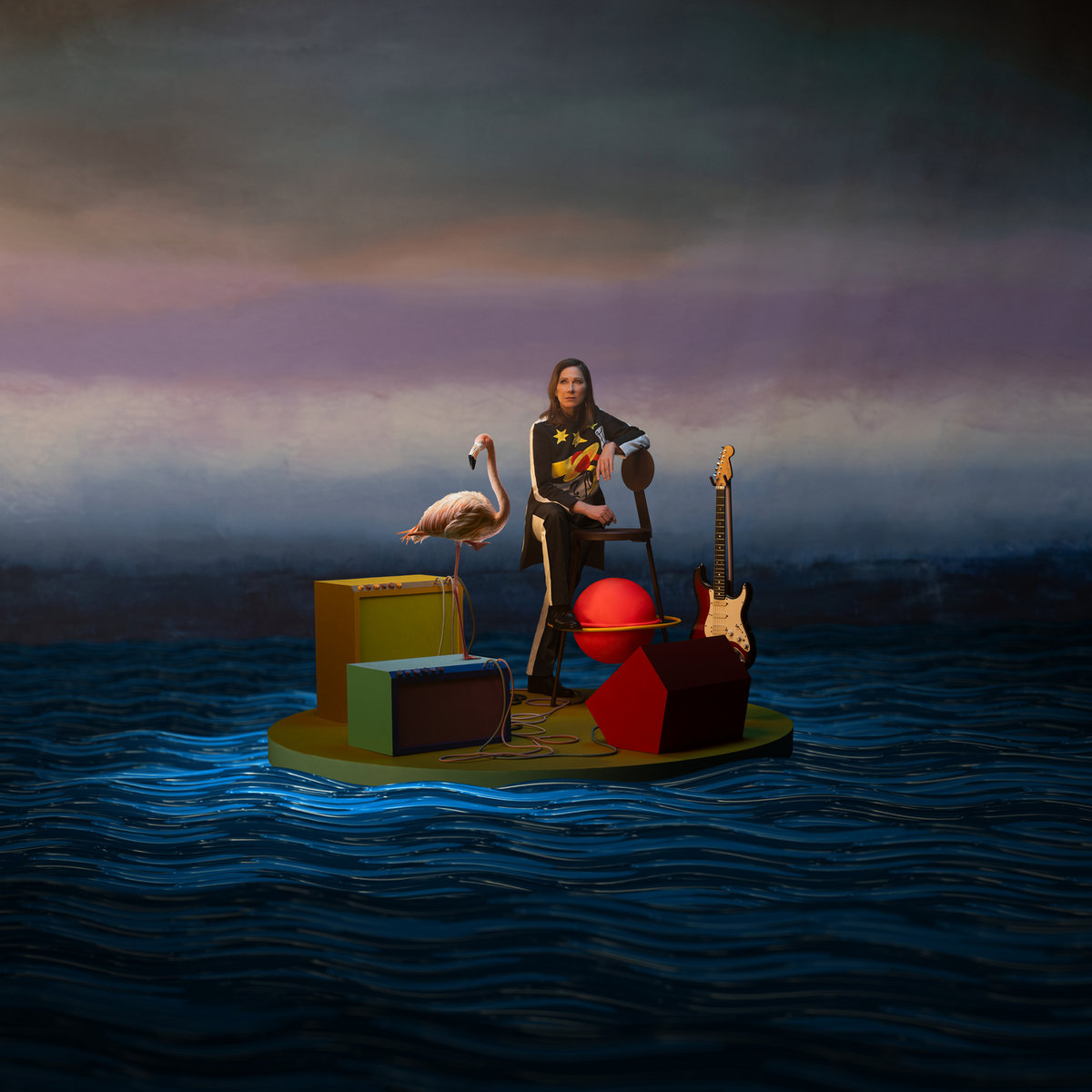
All that is left, then, is to declare the Arcana album of the year…to The Pixies’ Kim Deal, and her first solo album Nobody Loves You More. What a treat it is!

Now you might be following Kim’s advice on one of her singles to head for The Coast…but whether you are or not, we at Arcana thank you for reading our articles this year and for your general encouragement. We’re taking a break for a couple of weeks, but look forward to returning in 2025 for another year of music, new and old. If you want to contribute, do get in touch…but for now, Merry Christmas and / or Happy Holidays, and here’s to another year of sharing music we love.

Ben Hogwood editor, Arcana.fm

Published post no.2,403 – Tuesday 24 December 2024
Switched On – Various Artists: Pop Ambient 2025 (Kompakt)

Reviewed by Ben Hogwood

What’s the story?

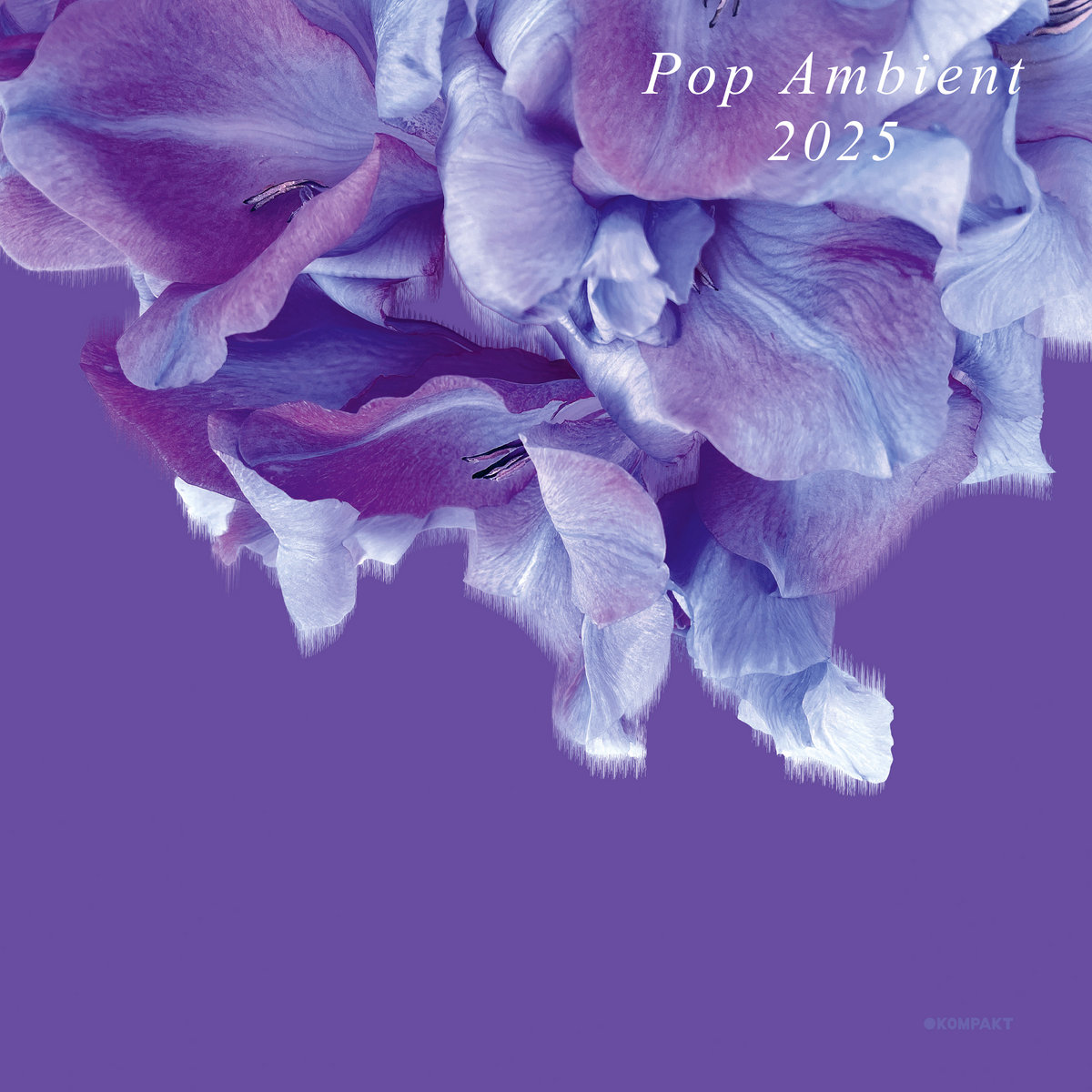
If it’s getting towards Christmas then it is most certainly time for the latest in Kompakt’s Pop Ambient series. The Cologne label have been delivering a compilation of soothing selections for a quarter of a century now – and co-founder Wolfgang Voigt has this to say:

“25 years in increasingly fast-moving times in the even faster-moving music business is an eternity that doesn’t just feel like it. It is all the more remarkable how I, as someone who is always restless and often driven by this fast pace himself, pleasantly almost haven’t realised how – in pop-ambient contexts – time does not pass (or passes differently) in the best sense.

When compiling the 25th edition I was asked, among other things, what it was like that I was still doing this and whether I had a favourite track. In the spirit of bringing all the tracks together I don’t have a favourite track, or all of them. But I have a favourite moment that I played. In this case it was a broad chord in a change of key at minute 2:55 in the piece Circles by Max Würden. A moment of majesty and familiarity that, at that moment, contains the entire Pop Ambient cosmos, that just works and doesn’t explain anything – and I said: “…that’s the reason why I’m still doing this…”

Pop Ambient is a statement without demands. Is promise without expectation. Is a path without a destination. Every year again.”

What’s the music like?

As soothing as you could wish…and with it being Kompakt, they rarely if ever resort to cliché. That means the chosen selections are purely mindful pieces of ambience. The moment Voigt refers to, in Max Würden’s Circles, is indeed lovely – adding an extra dimension to music that was already a horizontal beauty. Meanwhile Würden’s collaboration with Lukas Schäfer, Analysis Of Variance ii, is easy to dive into, with fuzzy noise and displaced sounds appearing at irregular but pleasing intervals, like being in the middle of a musical forest.

Similarly Segensklang’s Artifacts of Synthese is a lovely slab of ambience, a thick blanket enveloping the listener. By contrast Ümit Han’s Im Delirium is quite restless, a freeform bit of synthesized improvisation.

Blank Gloss bring their characteristically open sound to the party, Jennifer’s Convertible a widely-spaced panorama, while other soft-centred moments from Leandro Fresco / Thore Pfeiffer and Tamarma & Sebastian Mullaert are immediately appealing.

Does it all work?

It does. Pop Ambient is a tried and tested formula, but there is no sign of Voigt and co resting on their laurels just yet.

Is it recommended?

Most definitely. If you’re a seasoned collector in the series then you will need no further encouragement, but Pop Ambient really does take the edge off the day with music of serene beauty.

Listen & Buy

Published post no.2,400 – Saturday 21 December 2024

Switched On – Earthen Sea: Recollection (Kranky)

by Ben Hogwood

What’s the story?

Earthen Sea is the pseudonym under which Jacob Long operates – and Recollection is his fourth album for the Kranky label.

It began life as a piano trio, inspired by a year-long immersion in the music of ECM – but soon Long’s writing became more individual and complex. The resultant blend of live band and downtempo loops has been given a natural clothing that suggests it was made much more instinctively. As the press release suggests, the music can be heard ‘shuffling and rippling like uncertain memories at strange hours’.

What’s the music like?

Immediately restful. Recollection unfolds at a slow tempo, dreamy and fuzzy as it runs over melodic snippets and beats that are incredibly easy on the ear.

Long has a spacious audio palette, the reminiscences spread over a wide angle lens to give space around the listener. On occasion there are melodic thoughts in intimate close-up, but generally the music moves across the sky with an ambient yet steady tread.

Highlights include Sunlit Leaving, a warm-hearted reverie loosely led by the piano, with a drum rhythm dragging its heels lazily in the sand behind. A Single Pub is enjoyably woozy, its piano loop ambling through the space left for it by the beats and atmospherics.

The sleepy, distracted mood continues throughout in a most appealing way, the musical equivalent of an early afternoon reverie in the hot sun – and all the more appealing for it. This is typified by the closing White Sky, thick in ambience and with dappled light emanating from a keyboard line.

Does it all work?

It does. Long’s instrumental shading is rather beautiful, casting shadows on the melodic material but always with a brighter backdrop.

Is it recommended?

Yes. This is music that will help the listener attain a better state of mindfulness, a relaxing album that lowers the blood pressure and eases the brain. We could certainly do with more of that right now!

For fans of… Blockhead, RJD2, Skalpel, Cinematic Orchestra

Listen & Buy

Published post no.2,390 – Wednesday 11 December 2024

Switched On – Amongst The Pigeons: Exit Strategy (Peace & Feathers)

by Ben Hogwood

What’s the story?

Daniel Parsons has been busy in the last five years! Under the moniker Amongst The Pigeons he has now notched up seven albums, three in the last two calendar years.

The number 7…or more specifically, 007…assumed greater importance as he was writing Exit Strategy, with a fascination developing around the world of living a double life, and themes of spies and secrets in particular.

He has hinted that this might be a swansong for this particular pseudonym, but perhaps that means plans are afoot to go even deeper under cover!

What’s the music like?

A constant in the music of Amongst The Pigeons is the melodic activity, which is there in abundance wherever Parsons lends his talents. Exit Strategy is no different, with a bubbling cauldron of inventive beats, propulsive beats and rhythms that – while tending to the Bond theme – also broaden out to address current political and social concerns.

These are often delivered with a dash of wit, as in AI Heart U, which manages to be both humourous and a bit creepy at the same time! Monalisa Smile also straddles that emotional meeting point, while Sugercoated Poison is initially playful but grows into an imposing track of some stature.

Watch The World Burn is an intricate rhythmic workout, with bubbling mid-range sonics, while to complement it Cloudbursts takes a step back, panning out to a much bigger space. Space is also found during A Thousand Possibilities, through electronic music of a more delicate persuasion.

Parsons saves the best until last, Not Without Danger starting with watery loops that flow easily while the rhythms get progressively bigger, working to an epic finish.

Does it all work?

It does. The personal, intimate construction of Amongst The Pigeons music makes it easy to relate to, while there is always a hook to hang your coat on!

Is it recommended?

It is indeed. For anyone who enjoys electronic music with character and meaning, this is an easy album to recommend.

For fans of… DJ Food, Plaid, Orbital, Hexstatic

Listen & Buy

Published post no.2,388 – Monday 9 December 2024

Switched On – Lia Bosch: Polar Code (Glacial Movements)

by Ben Hogwood

What’s the story?

Story, visuals and music come together in the work of Italian Lia Bosch, the first woman to record on the Glacial Movements label in its history. Described as ‘a multi-dimensional work that encourages deep reflection on existential and social themes’, Polar Code unfolds with the following plot:

Polar Code unfolds through a story set in an abandoned alien base in Antarctica, a remote and mysterious location where ancient human experiments once took place.

The protagonist, a researcher sent by a secret government agency, is tasked with investigating unusual activity detected in the region. Upon arrival, he encounters a desolate, eerie landscape filled with darkness and secrets, where every corner hides traces of a vanished alien presence that still feels ominously close. As the researcher explores the facility, he comes across the symbol of infinity, a glowing, pulsating portal that seems to be the key to understanding the connection between all life forms in the universe. This symbol becomes the focal point of the narrative, conveying a profound message about interconnection: every human action, every choice, has repercussions that extend beyond time and space.

The researcher is thus plunged into a deep existential reflection on his own existence and humanity’s role in a vast, intricate cosmos. The symbol of infinity, laden with meaning, is not merely a scientific discovery but an ethical and philosophical call. It embodies a profound truth: no matter how separate or superior humans may believe themselves to be, they are an integral part of a universal, interconnected system. The information contained within the symbol offers humanity a chance for redemption and salvation, but it also demands an acknowledgment of human fragility and the oppressive structures that underpin society.

The protagonist faces a crucial decision: to accept the revelation of the symbol and risk disrupting the global order, or to turn away from the opportunity to change humanity’s fate. This choice presents a profound moral dilemma, in which the potential to reform society—currently rooted in exploitation and conflict—collides with the risk of unleashing further destruction. Bosch delves into the tension between the need for renewal and the dangers inherent in transformation. Polar Code stands out as a work that transcends simple storytelling, weaving together sound, images, and words to provoke reflection on power dynamics, human fragility, and cosmic.

What’s the music like?

Compelling – and not a little eerie.

Polar Code opens with thick ambience, the remoteness of the location described by music that is simultaneously comforting and a little oppressive, the audio equivalent of lying under a thick duvet.

Gradually the sonic perspective widens and Bosch reveals her descriptive powers. Secret Frequencies pulses with activity, while the frequencies reach higher in Resonance. Stepping Beyond caries with it the danger of exploring hidden places and dark corners, the thickness of the sound closing in. Unknown System and Alien Circuit provide a little relief from this but presents mysterious vistas, created through subtle harmonic implications.

As the explorations continue so Bosch’s noise spectrum broadens still further, with long notes of New Parameters ushering in the striking scenes of Unveiling, where single notes in shrill timbres paint vivid pictures. Infinity has a sprawling, semi-industrial outlook, still cold but with various machine workings spotlit. Gradually the sound retreats, with Insight offering a reflection then a sonorous blast of ambient noise.

Does it all work?

Yes, but is all the more effective if the listener has the story close by. Then the full range of Lia Bosch’s painting in sound can be fully appreciated.

Is it recommended?

It is indeed. Polar Code presents a cold outlook and is often bleak in its canvas, but there is real storytelling afoot here, and for Bosch to achieve that in a small number of meaningfully deployed notes is most impressive.

For fans of… Loscil, Autechre, Cabaret Voltaire, Tim Hecker, Biosphere

Listen & Buy

Polar Code is released on Friday 5 December – at which point you will be able to listen to it via Bandcamp here:

Published post no.2,381 – Monday 2 December 2024