Berlin label Tresor Records have announced that Moritz von Oswald, one of their longest-serving artists, will be releasing new album Silencio on 10 November.
Its outline is intriguing, with von Oswald looking to explore the differences between human and artificial sound, particularly using the voice. To do this he will be referring to a lineage of works from composers such as Varèse, Ligeti and Xenakis, in the company of Vocalconsort Berlin. Here is a short teaser for the album:
There is also a sizeable excerpt in the form of Infinito, the first single from the album. It is an intriguing and eerie meeting point between synthesizers and voices, music that carries very little weight in the form of bass but a good deal of intensity as it slowly unfolds. The synthesizers carry a short motif of five notes that underpins the hypnotic vocals:
Silencio will be released by Tresor Records on 10 November, while the new single Infinito will be followed by Colpo (6 October) and Opaco (20 October). For buying options and more information, head to the Bandcamp page below:
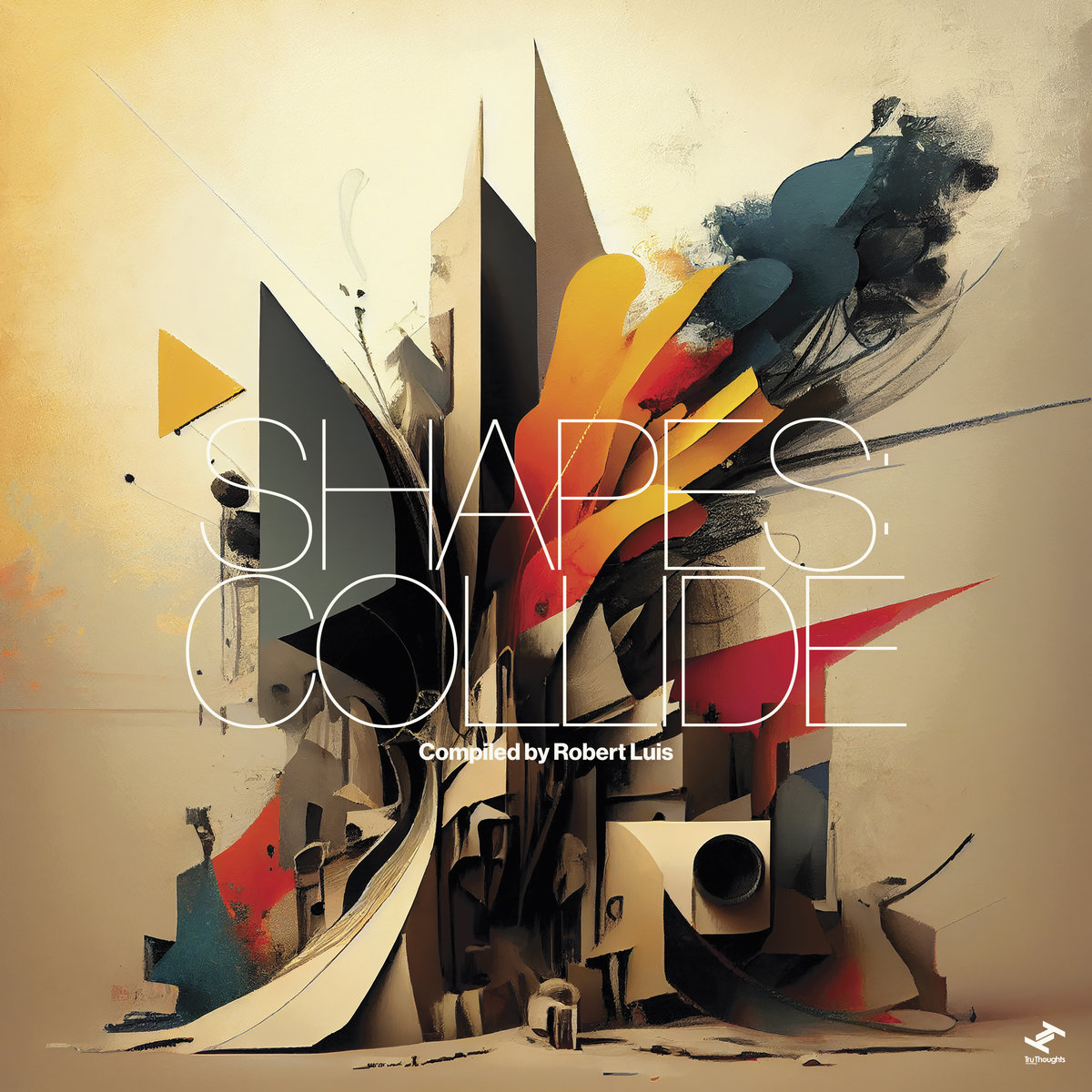
The ‘Shapes’ compilation series has been an integral part of Tru Thoughts’ make-up throughout their 24-year history. Robert Luis’ label continues to bring a wide variety of music to the table, and this is the ideal platform on which to showcase it – whether soulful, song-based, cosmopolitan or beat-driven, a flavour of the label is here.
Luis curates the selection, bringing a healthy mixture of label staples, remixes and a few rarities to spice things up.
What’sthemusiclike?
Eclectic and open-minded, as the label themselves describe.
Among the many highlights are a couple of sassy numbers in MELONYX’s Melanin Queens, which is soul music with an edge, and The Sindecut & Ijeoma, whose club mix of Stand Tall is firmly uplifting. The combination hit the jackpot a second time with Different, where multilayered vocals combine with a big screen backdrop.
Meanwhile Running Loving Something contribute the breezy I Love The Feeling, while there are two rather special remixes of Anchorsong – the Salamanda take on Windmills and the Azido 88 Remix of Common Ground, which makes a play of the wordless vocal and broken beat.
Label stalwart Rhi impresses with the close-up intimacy of Craving Your Love, while Luman Child – via the North Street West Vocal Remix – sing out a gospel house treat with Robert Gee in Grateful. Sunny climes are explored by STR4TA in an excellent remix of Anushka’s Bad Weather, while once the sun goes down Bruk Rogers impresses with the nocturnal LDN 313.
Does it all work?
Pretty much. There is such a wide variety of music on show here there is something for everyone – and to be honest there are many more hits than misses.
Is it recommended?
It’s a no-brainer – 2 hours and 40 minutes of the best of a wide-ranging label, available for the cost of a pint of beer. What’s not to love?
Speaker Music is the work of writer and producer DeForrest Brown Jr., who describes his work as “abstracting Blackness through information overload” or, in the first track, “Black music that sounds technological, rather than music made with technology.” He does this through a combination of live and pre-edited music.
Techxodus is designed as an epilogue to Brown’s book Assembling A Black Counter Culture, or – as he describes it again – as “an extension of the Drexciya Mythos; researching and reimagining the artefacts and stories of Drexciya with new maps, ideas and music, in particular reflecting on the ‘Seven Storms’, seven albums that came out in quick succession around the death of Drexciya member James Stinson, which seemed to herald Drexciyans in the attack mode.”
What’sthemusiclike?
Brown Jr. sets out the principles behind the album over a single, thickly textured chord – an oceanic drone, if you like, and the ideal way into the album. Gradually the wholeness starts to break up, with muted trumpet and flickering percussion that carries into Techno-Vernacular Phreak. The percussion cuts loose, the harmonies start to wander, and a certain tension is introduced.
The treble lines have a piercing, acidic qualities that Brown offsets with these lovely, deep-dive drones such as the one that starts Holosonic Rebellion. This track grows into a depiction of an uprising, thrilling on one hand but disconcerting on the other. The intensity grows through Dr Rock’s PowerNomics Vision, threatening to spill over as the drumming becomes more insistent and the vocals edgier. Jes Grew brings this to a peak, with thrilling walls of sound from the brass that sound like insistent train horns, broken up by the frenetic drumming. Our Starship To Ociya Syndor returns to the rich drone-based approach, with wordless voices borne on the airwaves beneath shrill sonic signals. The intensity subsides – but only a little – before the scattergun drumming and distortion combine to bring Feenin’ to a coruscating peak. Finally Astro-Black Consciousness returns us to the mood of the opening, journey complete but with the wailing of gospel voices in the middle ground.
Does it all work?
It does – because Speaker Music has a style all of his own, a fascinating intersection of experimental jazz and techno that proves difficult to break down. New technology provides part of the thrill, but also a hidden menace.
Is it recommended?
It is indeed. Techxodus is a powerful and highly emotive listening experience, which only grows in stature the more you hear it.
There’s Always Next Year has a very English feel to its title, though its roots lie more accurately in shattered sports fantasies. It is, says Sean La’Brooy, ‘a tribute to the misguided hopes and dreams of a sports fan. Field recordings and commentary from a range of codes weave between silky saxophone lines and piano chords in what is a textbook showcase of the classic Analogue Attic downtempo and early evening sound we’ve come to know.’
It is La’Brooy’s second solo release, a complement to his work in tandem with Alex Albrecht as one half of Albrecht La’Brooy.
What’sthemusiclike?
One of those silky saxophone lines can be heard early on in Offseason Getaway, courtesy of Greg Carleton – who allows the instrument to wander above active yet sensitive drumming from Leo Yucht.
The music has a wider, outdoor span thanks to La’Brooy’s roomy production – and that comes into its own for the beautiful scenes painted by Curse and 3rd and 28, where the commentary field recordings only heighten the ambience. Carleton returns for a delightfully lazy contribution to the atmospheric 140 to the Pin, where the pace quickens and the style switches to deep house. There it stays for the much busier Let, with bell-like melodic loops and urgent beats.
Finally we return to a trio with Carleton and Yucht for the regret-laden title track, with airy consolation found from keyboards too.
Does it all work?
It does. Consolation for sports fans is close at hand!
Is it recommended?
Very much so – if you’ve been following La’Brooy or Albrecht, you will find much to enjoy here. It is music to slow the pace and soothe the fevered brow of modern life.
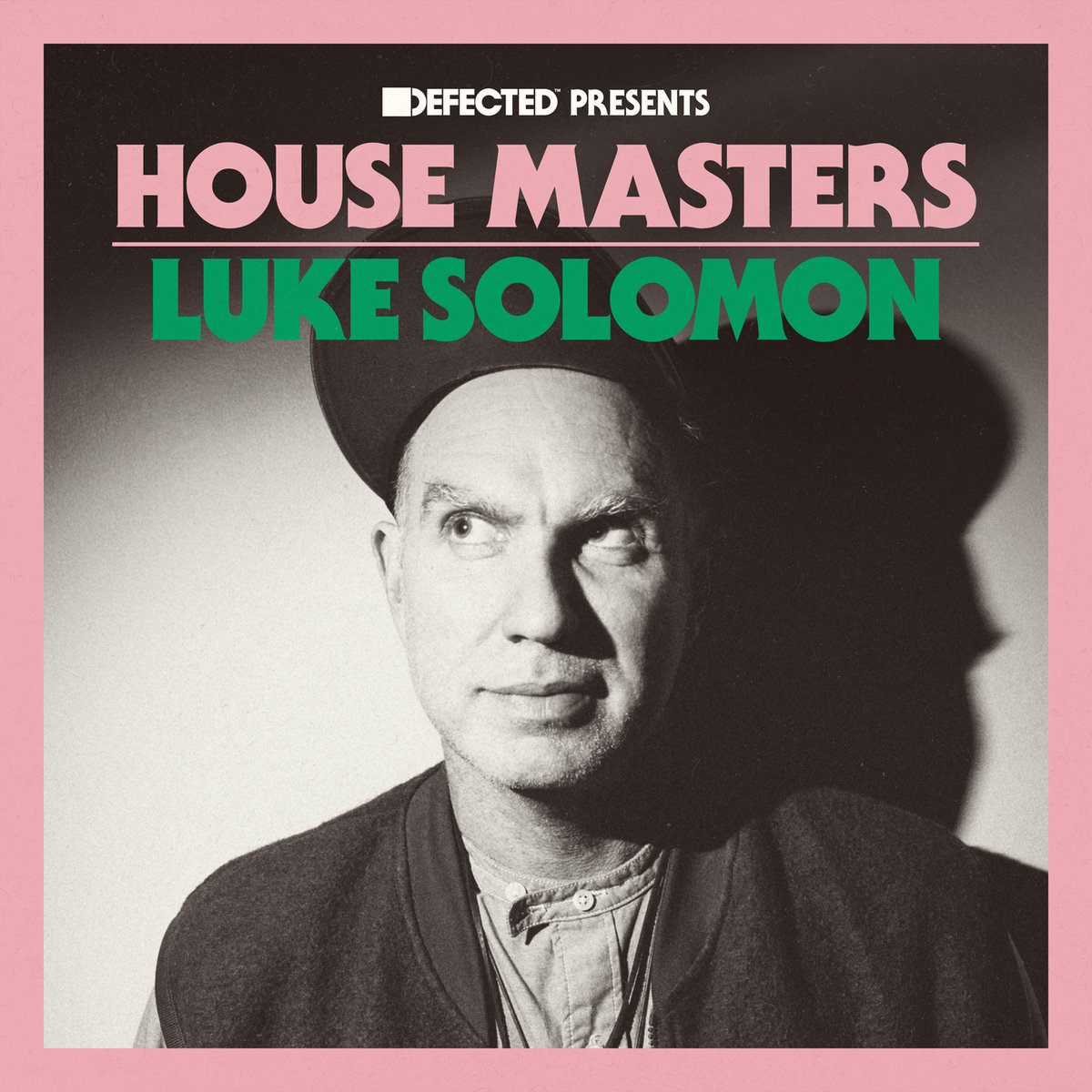
Luke Solomon has been making house music for getting on 25 years, and for much of that time has been running the Classic label with Derrick Carter. With their concern now more intertwined with Defected, it is great to see him added to their House Masters roster – which has built up a formidable collection of US heavyweights and label-honed talent.
Recently Solomon has contributed to albums by Beyoncé and Honey Dijon, while honing his craft as a remixer – and this 35-track strong compilation brings that discipline together with original tracks.
What’s the music like?
Excellent – very danceable and a lot of fun. Solomon has been a consistent source of good time house music since he started making it, and this selection of tunes show just how versatile he is, too.
The ability to make listeners and dancers alike smile frequently is clear throughout, his sense of humour bubbling just below or above the surface a lot of the time. Highlights include a brilliant take on Powerdance‘s A Safe And Happy Place, and two mixes of Isolée’s Beau Mot Plage – that show off two fresh strings to his bow. There is a lovely disco infusion on Freesoul‘s Sane/Eyes and a super low slung groove for Horse Meat Disco and Kathy Sledge‘s Jump Into The Light. Light You Up – featuring Queen Rose and Amy Douglas – will put a smile on anyone’s face, with its uplifting lyrics, as will the Amp Fiddler-fronted Come On Over and Jon Marsh-featuring Lonely Dancer.
Does it all work?
It does indeed. Defected have pulled together the ideal career retrospective, but at the same time have been keen to emphasise that Solomon is still very much at the top of his game.
Is it recommended?
Enthusiastically. Luke Solomon has been at the forefront of UK house music for the last three decades, and his contribution to its excellence is heartily applauded here. He makes house music in a consistently inventive way while keeping to first principles, making it fun and entertaining. Go forth and purchase!




 Arcana.fm