There is no sub plot to Crystal Vision, Nathan Fake’s sixth album.
The Norfolk-based producer describes his approach as “music for music’s sake – recorded without angles, agendas and themes”. This means a continuation of his energetic electronica, creating powerful minds-eye visions with its bold colours and busy rhythms.
What’s the music like?
Crystal Vision pulses with energy. The music here often feels like part of a bigger machine, especially in the cymbal-rich percussion, which on tracks like Boss Core feels like some sort of euphoric process, the repetitive motion of its beats leading to greater highs.
Vimana is a bracing and colourful track, using its synths to trace bright lights across the sky. Bibled grows inexorably over a thudding breakbeat, while the urgency of Hawk also whips up a storm, while uncannily describing its subject matter.
Wizard Apprentice gives an appropriately cool vocal to The Grass, while the closing Outsider is a busy and rewarding collaboration with Clark that takes a restless, probing single line and spins it out across an urgent beat and a wide sonic panorama, the music becoming ever more dense and thrilling as it progresses.
Does it all work?
Yes, it does – fulfilling Fake’s promise that the music is there for its own sake, creating positive energy and thoroughly rewarding experiences.
Is it recommended?
It is indeed, enthusiastically so – a strong addition to what is now a formidable discography.
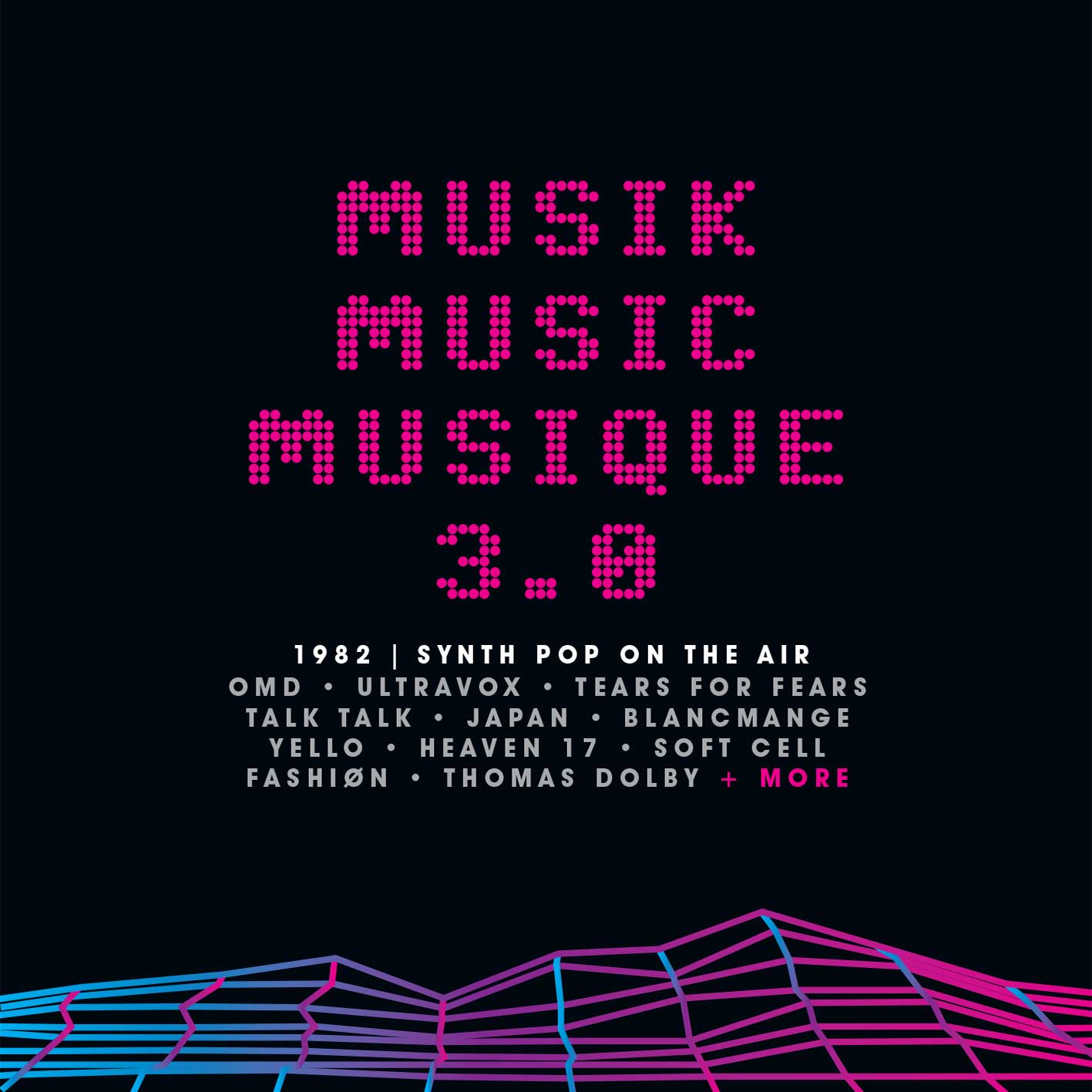
So good they named it thrice! Cherry Red build on the success they have enjoyed with the first two compilations in this series, which takes its name from the track of the same name by Zeus. On the first triple album they looked at music in 1980, and ‘the dawn of synth pop’ – followed by the rise of the same style in 1981.
Now we reach 1982 and synth pop is ‘on the air’ – and the shift in musical style as it starts to take over the airwaves is tangible.
What’s the music like?
A fascinating electronic diary. There is lots to discover here, whether you approach the collection as a knowledgeable pop music fan, or if you come in from the cold. It gets off to the best possible and most appropriate start, too. Radio Silence starts the first of three instalments, a great, deadpan start with Thomas Dolby‘s plea to ‘tune in tonight’. Elsewhere the joyous song The Passage, from XOYO, makes a strong impression, as does the poise of Talk Talk‘s Mirror Man. Orchestral Manoeuvres In The Dark make a majestic contribution with, as do Blancmange, who bring some gravitas with I’ve Seen The Word. Streetplayer is a bright and brassy number from Fashiøn, before Tears For Fears bring the emotion and the harmonic twists with Pale Shelter. Arthur Brown, Planning By Numbers and Ultravox complete a winning first part.
Part two starts strongly too, with Dramatis‘s The Shame and Fiat Lux‘s surprisingly graceful This Illness. New Order‘s Temptation could hardly be bettered in ’82, but cuts like Dead Or Alive‘s What I Want show there was plenty in reserve elsewhere. Soft Cell‘s Sex Dwarf and Yello‘s Heavy Whispers show just what variety there was too! The Human League‘s offbeat You Remind Me Of Gold shows a darker side, while the rougher sounding Hold Me by Section 25 shows electronic music in a murkier state, finding the middle of a darker dancefloor.
Clattering drums give way to elegance in Heaven 17‘s Let Me Go!, again a complete polar opposite to the scuttling beat of Siegmund Freud’s Party from Telex. Falco proves in the course of Maschine Brennt that he was capable of much more than one big hit, too. On this third part Cherry Red push the boat out further, Mikado‘s Par Hasard making an elegant impression, in contrast to Those French Girls and Sorry Sorry. Ukraine‘s Remote Control is brilliantly lo-fi, with cavernous production and a funky bass, but then Sergeant Frog‘s Profile Dance is compact and nippy. A final surprise awaits in the form of Omega Theatre‘s decidedly odd Robots, Machines and Silicon Dreams, moving between intimacy and choral bursts.
Does it all work?
Yes, mostly. The surprising aspect of this compilation is just how modern and fresh everything sounds, as though producers had just been let through the doors of their own studios. Not everything has aged ideally, but because the track ordering is so well thought out, there are natural peaks and troughs.
Is it recommended?
It is – and so is the series, going from strength to strength.
Anyone closely following the career of John Foxx over the last ten years will have been fascinated by his powers of invention. He is a rejuvenated musical presence, prolific in disciplines that include (but are not restricted to) electronic pop, broad musical ambience with substance, short stories (The Quiet Man, published by Essential Works in 2020) and now a first foray into the world of the solo piano.
Given his previous musical exploits, the only surprise here is that Foxx hasn’t done it before – but the time taken to enter such a crowded field is understandable. The Arcades Project takes its lead from a text by Walter Benjamin that Foxx read at art school in the 1960s, but which mysteriously disappeared from circulation until the internet made it available.
Foxx describes the book as “a sort of stroll through new ideas emerging from the city life of Paris in the 19th and early 20th century. It was also concerned with what the French poet Baudelaire had termed flâneurism. The flâneur enjoys walking randomly, drifting with the tides on the streets, taking great pleasure in a dreamlike state of coincidentalism – being open to all the unfolding daily events of a great modern city.”
What’s the music like?
The description of the book could also be levelled at the music John Foxx writes in response. For here is a true meander, the artist enjoying a slow pace in spite of the busy streets around him, operating at a much slower tempo.
That sensation comes through to the listener, should they walk with this music – which is a highly effective way to hear it. Somehow Foxx’s imprints are immediately recognisable. The restraint with which he uses the piano is commendable, but so is the manner in which its contributions are shaded, with reverb added to soften the sound and give it depth, without ever obscuring the melodic phrases.
A Formal Arrangement has a simple construction but is a thoughtful piece of music, while Floral Arithmetic sets off on a starry path, a single right hand phrase like a shooting star tracing across the sky. Daylight Ghost is not as eerie as you might expect; rather its airiness has an air of mystery behind it. In All Your Glory takes a sharper tone, securing a brighter colour, which ebbs on the softer hue of the mellow Last Golden Light.
Momentary Paris, through its title, conjures dreamy impressions of back streets and unexpectedly quiet reveries, away from the rushing traffic. Forgotten In Manhattan, meanwhile, has a penetrating piano sound with graceful wisps of accompaniment, very much in Foxx’s own distinctive style.
The Sea Inside is one of the more expansive pieces in the collection, and also the warmest, its blue waters inviting relaxation. Lovers And Strangers goes deeper still with a wistful melody, while Starlit Summer Night evokes the sort of sky Vincent Van Gogh would have been painting, taking the profile of a Satie piece but adding a roomy backdrop to the action close at hand.
Coincidentalism is a beauty, very much a case of less is more as each note is sustained across the musical sky, coming down to earth at the consonant close. This Evening needs even less on the note count to make its point, capturing the shutdown of the mind at this point in the day.
Does it all work?
It does, in a very unhurried sense. First time listeners to this area of John Foxx’s style may think there is not much going on, but as the album unfolds it is clear – as with all of his ambient music – that less is most definitely more.
Is it recommended?
Yes. This is another of John Foxx’s ambient works that hits the spot but remains slightly elusive in just how it does so. The piano is a very sympathetic vehicle for his music, and we will hopefully see further inspiration from this source.
JVXTA is presented as a relatively anonymous DJ project – but it turns out to be the London-based DJ Charles Field, who runs his own label Hardmatter. This release, slightly confusingly, references a London area in the title but is released on Brooklyn-based imprint Scissor and Thread. Field wanted it to work across a number of genres, utilising elements of deeper and classic house, improvisation and experimentation – all with an ambient finish.
What’s the music like?
Euston Blues has a very satisfying ebb and flow, down and up. We start in relative stillness, with the murky textures of No One Needs To Know, which blossoms into the classic deep house of Hold On, equal parts Detroit and Chicago in style but with a piano profile that takes on an improvised life of its own.
Water Temple goes deep too, before reaching for the stars with richly voiced keyboards – after which a nocturnal piano solo takes over. The city mood continues as a saxophone leads Lost In Place, another classy house number, and then to Beyond, which has the thick ambience of a city at night. The Stolen Child adds a strong sense of mystery, piano and flute duelling in the heights, before the closing title track, a broadly conceived nocturnal sketch of eleven minutes. It ends the album in softer ambience, though a busy drum track gives it energy three minutes in.
Does it all work?
Most of the time. A lot of Euston Blues is mood music, meaning it doesn’t always hold melodic interest, but it is never less than descriptive.
Is it recommended?
It is. Subtle on the surface but giving more reward to closer listening, this is a deep and evocative piece of work from a talented producer.
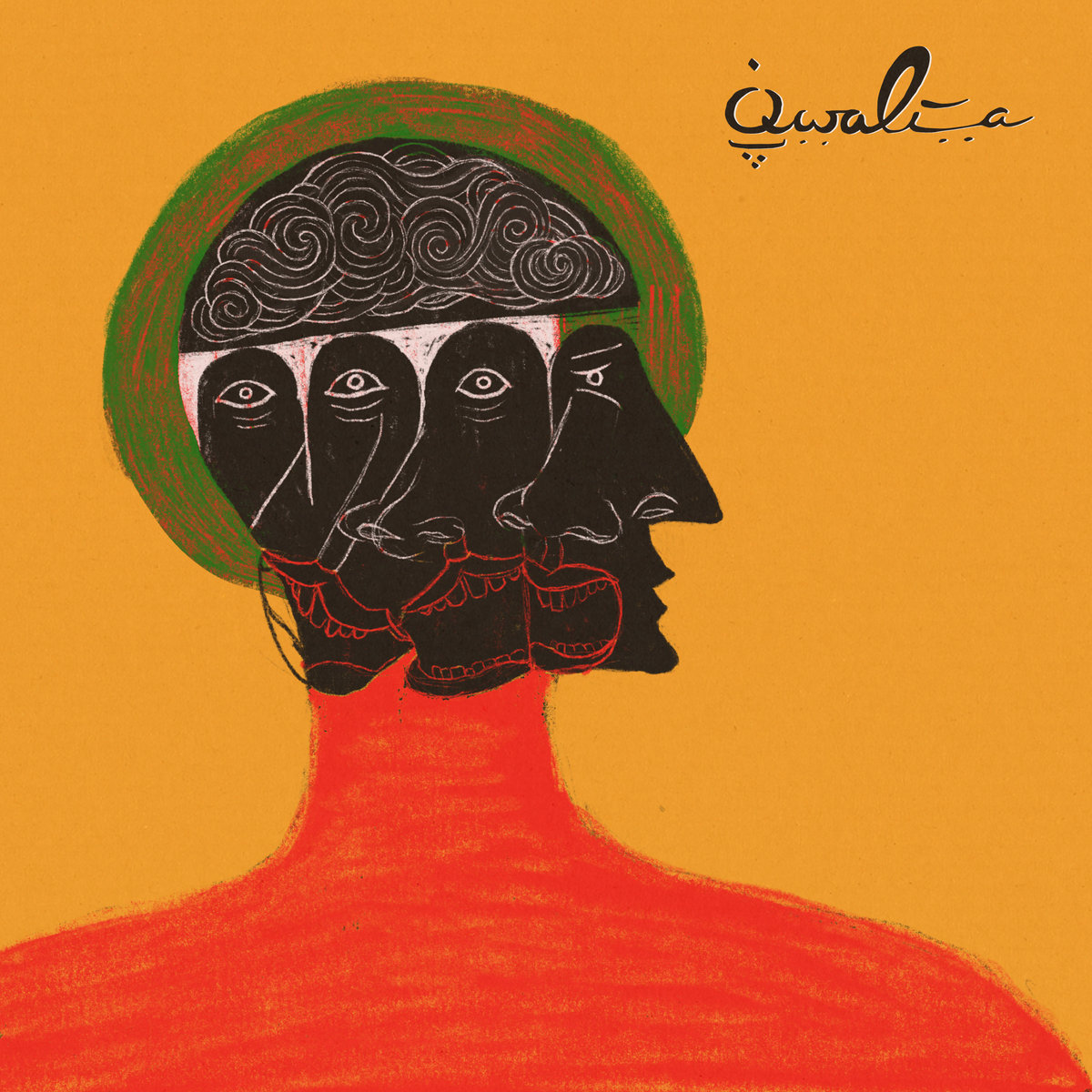
Qwalia are a quartet making music in the most instinctive way possible. The four musicians have illustrious connections – headed by drummer Yusuf Ahmed, they also include Tal Janes (guitar and vocals), Ben Reed (bass) and Joseph Costi (keyboard), All have plenty of experience with ‘featured’ artists such as Frank Ocean, Jordan Rakei, Orlando Weeks and Hayden Thorpe – but this project represents a healthy artistic freedom dating back to the pandemic.
Setting up in a studio for two days in April 2021, they made recordings of pure improvisation, since distilled into an album of seven tracks.
What’s the music like?
The drum tracks do dictate the outcome on this album, but in a wholly musical way. Listen to The Trip, a fine opener whose percussion track is complemented by plush synth line – or the title track, which has an easy, low slung groove and good vocals. Meanwhile Electric Highway has a slightly staggered gait, whereas Haven’t You Heard is spacious, syncopated and with a chance for the keyboards to wig out. The initially woozy Waghera actually has animated vocals, while In Your Own Words becomes a thoughtful piano contemplation over thoughtful drums.
Fool Me Once is one of the best moments, a first track that has a catchy line but opens out nicely, with spacey keyboards
Does it all work?
Yes – the instinctive approach reaps dividends, and the music bursts with ideas. The drum lead from Ahmed is very strong, too.
Is it recommended?
Yes. Jazz and funk bases are safely covered, with a healthy amount of experimentation too.




 Arcana.fm