On Record: s t a r g a z e – ONE (Transgressive Records)

by Ben Hogwood

What’s the story?

s t a r g a z e is both an innovative ensemble crossing borders between classical and modern music, and a typist’s nightmare! The group was founded in Berlin and Amsterdam, and prides itself on a flexible and collaborative musical approach.

Collaboration was certainly the name of the game with ONE, whereby five different composers from around the world wrote a piece remotely in lockdown-imposed isolation. The music was then arranged for and with the help of the s t a r g a z e group, who recorded it online, part by part.

What’s the music like?

Engaging. Greg Saunier’s Metaphor begins in reserved fashion, with serious intonations that grow into more colourful statements, the wind section of the orchestra taking the lead. The orchestration has a timbre suggesting the 1920s, though as it progresses the music becomes more animated and a little playful, before an extended chorale led by the piano.

Arone Dyer’s Voicecream is much less conservative in its output, with sweeping statements suggesting an orchestra on the edge, with melodic movements that are much more difficult to predict or trace. A series of punchy block chords takes over half way through, stalling the momentum but adding impressive gravitas to the music.

Vacancy, written by Tyondai Braxton, is a compelling conversation between very different viewpoints – one, a series of swirling motifs, another a more relaxed but authoritative series of chords, yet another voice given out in flurries of woodwind. Nik Colk Void’s Recollection Pulse #3 is similarly convincing, though uses much more minimal material in its percussion. Just the one chord, repeated in syncopation, pushes this music forward over bass notes that effectively stand for the strokes of the oars on a boat. Gradually and inevitably the piece moves forwards before grinding into the dust somewhat, reaching an eerie and evocative conclusion.

Finally Descend, from Aart Strootman, evolves under a haze of orchestral light, some beautiful colours extracted from relatively coarse string and wind textures. A drone-like effect is cast, but with largely consonant harmonies that transport the listener into a comforting cloud, growing ever denser as they progress and then relaxing to softer, wind-based colours and a gently oscillating coda.

Does it all work?

Yes. It is tempting to say that a bit of spontaneity is lost in the recording method, but great credit should go to musicians and composers alike for ensuring that more often than not the musicians and instruments feel like they were recorded in the same room.

Is it recommended?

Yes. An intriguing suite for sure – with music that successfully sits at a junction between modern classical and improvisation, evading categorisation with grace, poise and a welcome dash of humour.

Listen

Buy
Switched On – Clarice Jensen: Esthesis (130701)

Reviewed by Ben Hogwood

What’s the story?

Esthesis is the third album from cellist and composer Clarice Jensen. Initially it was to be a concert experience, comprising a series of long drones that would cycle sequentially through the ‘circle of fifths’, moving from the pitches of C to F.

Unfortunately the pandemic put paid to any plans for a live experience, and Jensen regrouped to realise the concept in solitary form. As she writes, “I expanded my usual palette of layered and treated cellos without the effect of a more grandiose or large-scale feeling of timbre; I wished to employ additional media in an effort to further portray the idea of isolation and containment.”

Jensen goes on to describe the album. “’Sadness is a setting of Purcell’s Dido’s Lament. Liking begins with tentative hope and then blossoms, using an additive compositional process, whereas Disliking is subtractive. Anger uses text taken from Simone de Beauvoir’s letters to Nelson Algren. Fear attempts to simply portray breathing and absence. The organs used on Love suggest hallowed spaces, employing only a short progression that always returns to the same but becomes layered, out-of-sync and lost, but simplest at its end.

What’s the music like?

Deeply intimate – but not in an intrusive way.

Liking sets the tone, using the ‘home’ key of the cello if you like, with the C string being its lowest uniform note, and it builds in layers before settling on a drone that gives an immensely ambient sonority. Sadness takes on an ethereal chill, bright but with soft and mournful tones while Anger really is a striking piece, the emotion portrayed first through disorientating voices but then through an increasingly bothersome treble drone, held above low rumblings in the bass.

Disliking assembles a pile of ambient textures, and while not as confrontational as its title suggests it definitely carries an undercurrent. Joy, on the other hand, is rich and colourful, the sun streaming through an imaginary window as its oscillations proceed, before a softly undulating piano takes hold.

Fear – an all too real emotion during the pandemic – lives up to its billing with discomforting textures and figurations, and the return of that high pitch. Thankfully this is not the final emotion, as Love puts everything back in its rightful place, with consonant harmonies and cushioned textures.

Does it all work?

It does – and as a whole, rather than split into the engaging sections.

Is it recommended?

Yes – a compelling cycle of emotions to which we can all relate, beautifully played and recorded.

Listen

Buy

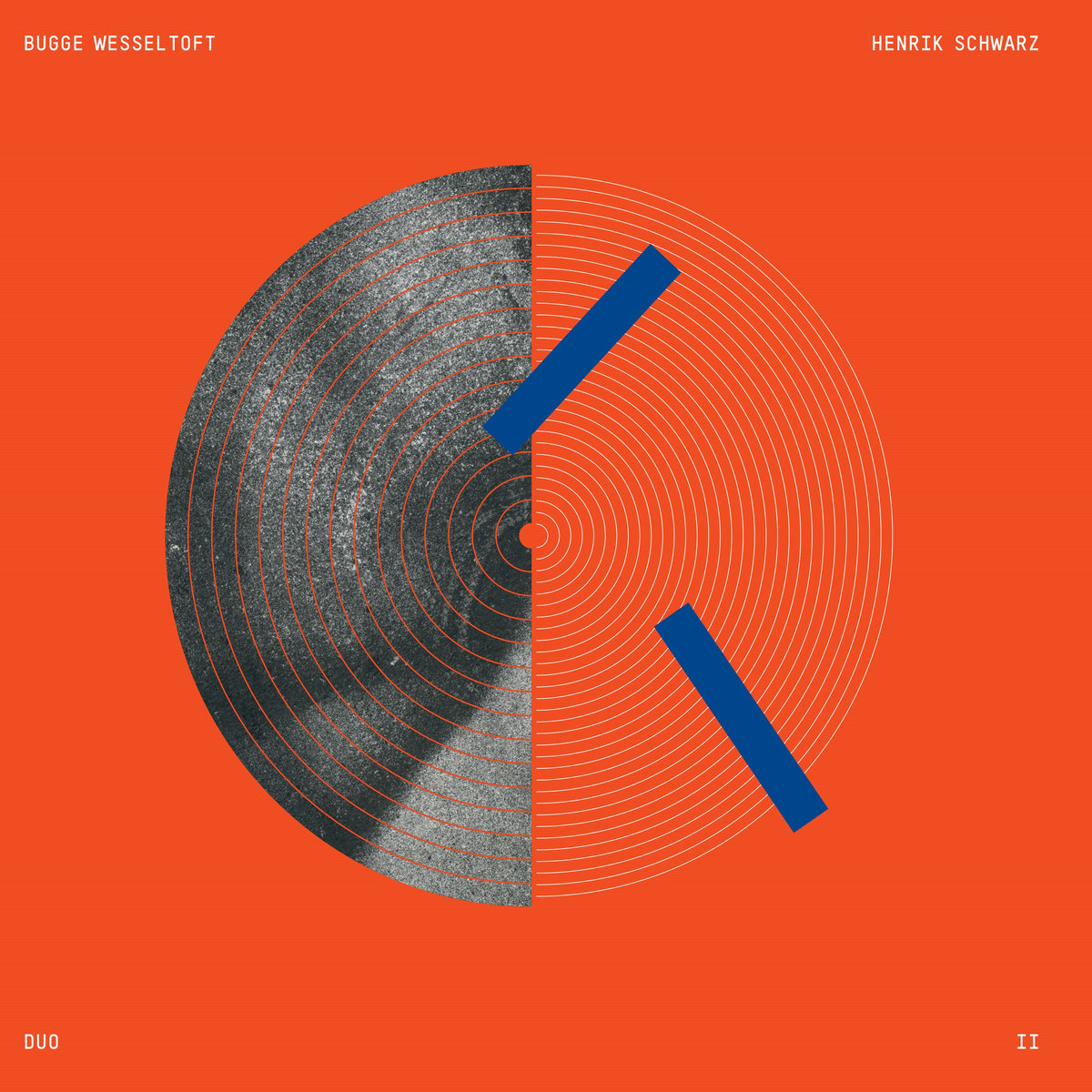
Switched On – Wesseltoft | Schwarz: DUOII (Jazzland)

Reviewed by Ben Hogwood

What’s the story?

Norwegian composer and keyboard player Bugge Wesseltoft and German multi-instrumentalist Henrik Schwarz have long enjoyed a productive musical chemistry. This has been realised both in the live environment, where their targeted improvising brings richly creative results, and on record too.

This is their second official record as a duo, though this time they open the doors to accommodate a few guest performers.

What’s the music like?

Really engaging – and written in a way that plays to the strengths not just of the main protagonists but also the guests.

The album is well structured, mixing instrumental and vocal tracks, and ushering us in with a soft marimba of Woodened Stone, leading to a dreamy and fuzzy soundscape. My First Life then has more fidgety movements from the electronics, with signs of a more expansive piano with rippling figures from Wesseltoft.

The guests are well chosen. The most immediate is trumpeter Sebastian Studnitzky, who appears on Basstorious. He offers an impudent riff off which Wesseltoft and Schwarz feed, with more percussion added to their arguments. Meanwhile the breathy vocal of Kid Be Kid works well on My First Life, nicely structured as a verse and response before a lovely vocalise at the end.

Duolism sparkles, with good interaction between piano and strings, while Eye For An Eye plays to the vocal strengths of Jenniffer Kae, Jemma Endersby and Catharina Schorling, complemented by Wesseltoft’s purposeful piano.

Future Strings is beautifully scored, ripe for the big screen, while Now I Am Better provides a strongly voiced closing track, with piano, vibes and synthesizers all germinating ideas above a bouncy four to the floor beat.

Does it all work?

It does. Both instrumentalists bring a fresh approach to their music making, which gives the impression to the listener that the ink is still drying on the page.

Is it recommended?

Yes. If you’re familiar with either artist and their work, either in a solo capacity or as a duo, then you need not hesitate. If the names are new to you, then jump right in, for this is an album where the balance between improvisation and composition is beautifully judged. Bugge Wesseltoft and Henrik Schwarz clearly had a lot of fun making the album, and as a listener you will have the same experience!

Listen

Buy

Switched On – Plaid: Feorm Falorx (Warp Records)

Reviewed by Ben Hogwood

What’s the story?

Plaid have now been with Warp Records for 30 years, which is an astonishing length of time in electronic music. In that time they have established themselves as a consistent source of innovation and quality, with a distinctive musical style that evades categorisation but still provides a great deal of harmonic and colourful interest.

To say that the duo – Ed Handley and Andy Turner – are underrated would be judging it about right, for audiences have simply grown accustomed to their regular output of interesting and vital music. As with the previous ten albums, Feorm Falorx has a curious title, which relates to an imaginary performance at the Feorm festival on the planet Falorx, where musicians are removed from time, space and the physical limitations of their bodies.

The album is a proper concept, to be accompanied with visual content and a graphic novel.

What’s the music like?

Plaid’s music continues in a life all of its own, and true to form this album is a distinctive yet elusive set of compositions. Alternately serious and playful, their music still sounds incredibly fresh – and, appropriately, as though it has beamed in from another planet.

There is so much going on in a typical Plaid track, with so many nuances and instinctive changes of gear, that it takes several listens for thorough appreciation of what the pair achieve in the course of their tracks.

The fictional festival set bursts into life with Perspex, a rush of spring-like germination which also sounds like a set of melodic wind chimes. The following Modenet has a foursquare rhythm, but as with a lot of Plaid’s work there is syncopation in play, giving it a slightly quirky disposition.

Elsewhere, Wondergan is as close as Plaid will surely get to the disco, with its chirpy riffing and swinging rhythm, while the Mason Bee collaboration Nightcrawler has a momentum borne of Krautrock.

C.A. has an impressive scope and a longer, majestic line, going deeper in its emotion. Meanwhile Cwtchr starts brightly but gradually a shadow falls over its complexion through the darker shades of the bass. Speaking of bass, Bowl is appropriately named, powered by a sonorous and rounded lower line.

Return To Return reminds us of how many layers Plaid can get into a track, with rich sounds that are stripped away to reveal the workings of their rhythm section. Later on, as the set hits its peak, the stabbing riffs of Tomason and the increasingly sharp synth lines of Wide I cut through like otherworldly rave anthems.

Does it all work?

It does. There is a lot going on here, but as always with Plaid nothing is superfluous, and the sheer enjoyment of making electronic music comes through.

Is it recommended?

It is – and it really is time that we stopped taking Plaid for granted as much as they do. They continue to make exquisitely crafted music, beautifully shaped and richly coloured. Those on the planet of Falorx are in for a treat!

Listen

Buy

Switched On – Gold Panda: The Work (City Slang)

Reviewed by Ben Hogwood

What’s the story?

Derwin Dicker’s fourth album under the Gold Panda alias arrives with a new outlook from the producer on looking after his mental health.

In a refreshingly frank press release, he talks of the difficulty of looking after a new person with the birth of his first daughter, and the challenges that brought to his own self-care. In particular he refers to a eureka moment in a Japanese hotel, where he realised the destructive aftereffects of alcohol on his wellbeing. The album’s title The Work reflects the efforts made to look at things from a different perspective, and a self-help program including therapy, running, pilates and an osteopath.

Dicker has always been very open about his state of mind and its influence on his music, and now it looks as though he has arrived at a happy place. “I don’t know where I fit in”, he says, “and maybe that’s good.”

What’s the music like?

A breath of fresh air – but one that draws in oxygen from more than one continent.

After a gentle start on Swimmer, where electronic waves lap at an imaginary shore, The Dream introduces bright colours and easy beats, along with a vibrant harp solo that adds a distinctly Eastern colour.

This inter-continental approach has always been one of Gold Panda’s strongest qualities, and it proves to be the case once again here. Similarly his awareness of instrumental colour leads to consistently fresh approaches, giving his sound a bright treble and a wide, open-air perspective.

The beatless Anima reflects this with some lovely colours, while deeper shades run through Chrome. The Want is built on a distracted loop that acquires a jumpy, energetic rhythm and bass line, as though two songs have merged from different directions. One is drowsy and the other energetic, leading to a strange but invigorating tension in the middle, topped again by electronic harp.

I’ve Felt Better (Than I Do Now) is more club-based, powered by a four to the floor rhythm and with several interlocking hooks before cutting to slower, more exotic passage. Perhaps the best track is Plastic Future, a multi-layered track mixing percussive thoughts and a high harp line, shot through with warm keyboards in the centre – a feeling on which New Days and I Spiral capitalize.

Does it all work?

It does. Dicker’s music never feels too processed, with a freshness running through the textures akin to opening the curtains for the first time on a sunny day.

Is it recommended?

Yes, enthusiastically. The Gold Panda body of work is consistently stimulating, and this colourful album is one of Derwin Dicker’s finest achievements within that.

Listen

Buy