Switched On – Au Suisse: Au Suisse (City Slang)

Reviewed by Ben Hogwood

What’s the story?

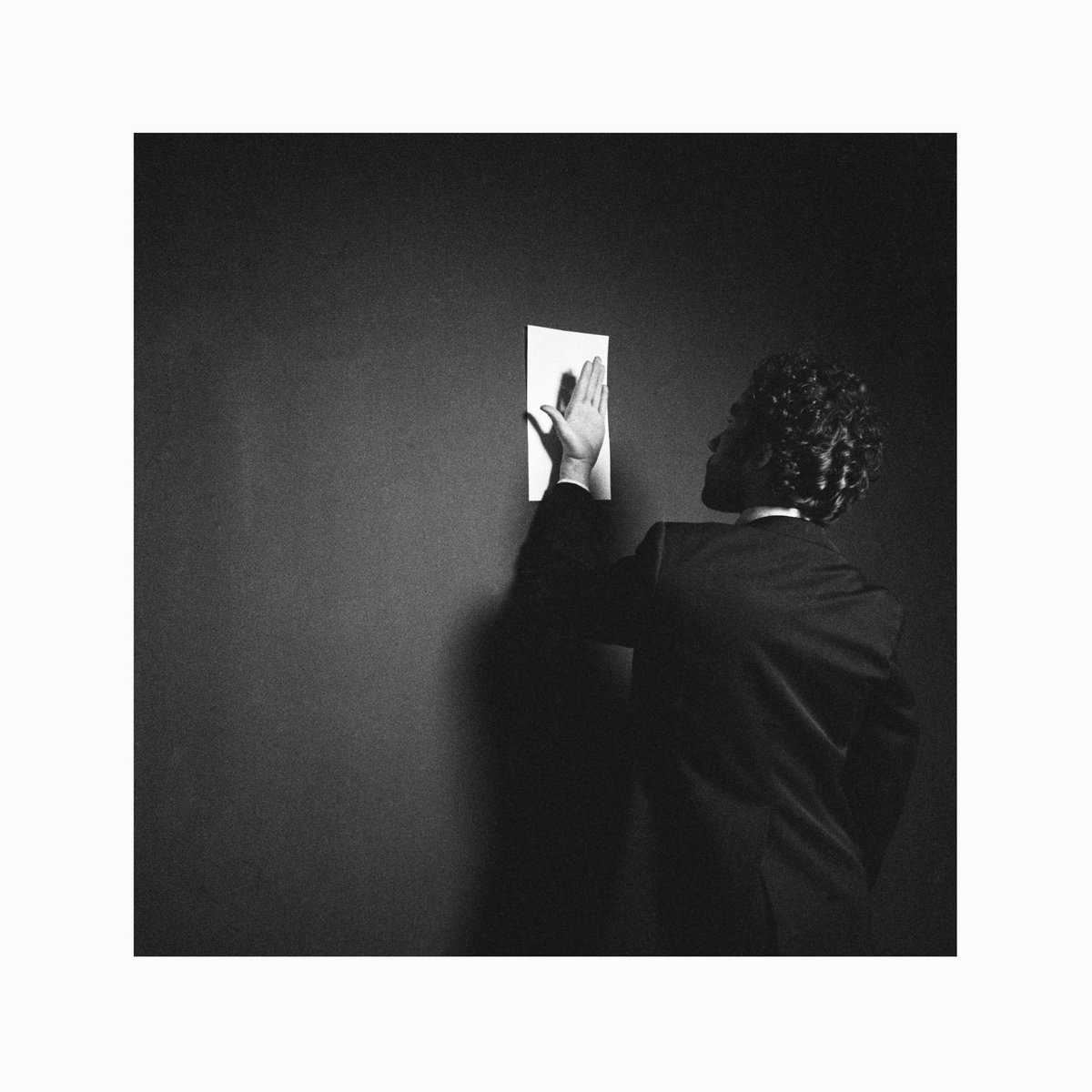
Au Suisse is the much-anticipated pairing of producer Morgan Geist and vocalist Kelley Polar, aka Mike Kelley. Though perhaps that should read ‘re-pairing’, as the pair have a good deal of previous since they met at Ohio’s Oberlin College in the early 1990s. They worked together when Geist was part of the revered house / techno duo Metro Area, Kelley guesting on some of their vocal tracks, while Geist produced two Kelley Polar albums on his Environ label – records that really should be better known.

Au Suisse has a slightly different balance, as it finds them enjoying their first collaboration as equal partners, writing songs together rather than apart.

What’s the music like?

Rather special. As old friends, these two know what makes each other tick, and they clearly enjoy making music together – but there is something about the new venture that goes more deeply into personal experience than before. It almost goes without saying that Geist and Kelley would make elegant and classy electro pop, but the music of Au Suisse is like a beautifully coiffured object, with a series of influences stretching back to the 1980s.

Control is an atmospheric and poised first song, ghosting in on a single held note and holding back so you can hear every word before the electronics properly kick in. By contrast Thing is an uptempo workout, with urgency from the keyboards.

GC is a striking song, with a lush backdrop of keyboards and the striking observation of its controlling subject, “It’s how you pull the strings from so far away”. The dappled keyboards of Vesna are beautifully realised, and here Kelley’s vocals evoke Green Gartside of Scritti Politti or Paddy McAloon of 1980s Prefab Sprout, emitting a subtle euphoria but not without pain and regret behind. Indeed, Pain And Regret is the title of one of the songs, with an account of how “We know we tear each other apart”. Eely strips back to minimal thoughts and textures, a little more soulful in Kelley’s vocal, while the bass line for Plans curls round the edges like a lazy flame, the keyboards panning out for more thoughtful pop. The closing AG is a broadly sketched beauty, with ticking hi hat and piled-on reverb, as though Kelley has turned round at the door to give us some final thoughts in falsetto before the pair take their leave.

If it sounds like the music of Au Suisse is on a bit of a downer, that is emphatically not the case – rather it is bittersweet, elegant and beautifully poised. These two know what they’re doing, and classy pop music comes naturally to them.

Does it all work?

It does indeed. These songs are exquisitely crafted, with not a note out of place. The hushed vocals pull the ear in, and at the same time offer the opportunity to appreciate Morgan Geist’s beautiful production sets.

Is it recommended?

An easy decision. Au Suisse is like meeting an old friend – which ironically is the root of the whole project. Morgan Geist and Kelley Polar have crafted an exquisite album which is by turns classy, cultured and subtly uplifting.

Listen

Buy

Switched On – Szun Waves: Earth Patterns (The Leaf Label)

Reviewed by Ben Hogwood

What’s the story?

Earth Patterns is the third album from the creative spirits of Szun Waves – saxophonist Jack Wyllie, keyboard maestro Luke Abbott and percussionist Laurence Pike.

The sessions took place in late 2019, where a succession of ideas germinated through improvisation – and after honing the tracks with James Holden and producer David Pye they have emerged with what is described as ‘the most fully-formed Szun Waves record to date’.

New Hymn To Freedom, their second album, looked up towards the stars – but Earth Patterns is very much of this planet, an organic affair where the music grows from small cells.

What’s the music like?

There is undoubtedly a special chemistry at work in Szun Waves. Each of the protagonists has their own special contribution to make, and there are so many notes produced in Earth Patterns, but somehow the trio and their studio team make room for all of them, crafting an album where each track goes on its own meaningful journey.

The album gets off to quite a chaotic but thrilling start, Exploding Upwards establishing the myriad of colours on offer from the trio, with surges of analogue synthesizers and saxophone alike. New Universe evolves at a gradual pace but ends up in an even more exalted and euphoric state, the saxophone flying high.

As the album progresses so the range of colours broadens, and In The Moon House features shimmering metallic instruments above a drone, with deeply soulful thoughts from the saxophone. Be A Pattern For The World builds its intensity through long notes, the saxophone starting to strain in its upper register.

Final track Atomkerne is poised, the saxophone like a massive, overarching presence, as figures flit back and forwards in the middle ground with a low drone buzzing away underneath. What unites all of these ideas is the sheer strength of feeling behind them. Jack Wyllie plays his saxophone like his life depends on it, with a dizzying range of pitches from soft, low thoughts to soaring high phrases. Luke Abbott marshals the electronics beautifully, ensuring we hear the colours of the analogue synths but that they bubble respectfully when other instruments play, surging to the front when their moment is called. Laurence Pike gives us the icing on the cake with intricate, detailed percussion that can focus on metallic treble-based material one minute, then fulsome lower range instruments the next.

Does it all work?

It does – and hangs together emotionally too, for Earth Patterns is certainly Szun Waves’ most deeply felt album to date.

Is it recommended?

Yes, without hesitation. Anyone following the musical progression of any of these three artists will want to snap this one up without delay – and anyone enjoying the intersection of jazz and electronica should also do the same. A Mercury nomination would not seem to be out of the question for next year, even at this stage!.

Listen

Buy

Switched On – Indian Wells: No One Really Listens To Oscillators (Mesh)

Reviewed by Ben Hogwood

What’s the story?

Pietro Iannuzzi’s latest album as Indian Wells may have a humorous title, inspired by a fit of pique while working in the studio, but it contains music of much greater personal meaning.

His concept with the album was to reflect the fact that it is possible to grow up around half-finished buildings that become a part of the landscape without anybody noticing – and that this leads to a distorted reality, that we very quickly become accustomed to.

What’s the music like?

Multilayered and compelling. The distortion Iannuzzi refers to can be felt immediately on the first track, An escalator in a storm (Incomputio Part I), where voices and snatches of sound flit across the picture of what would otherwise have been the serene progress of slow moving musical figures.

Life of JS (Incomputio Part II) has a deeply personal resonance, written about his daughter who was born in early lockdown and found to have Down Syndrome. Research around the condition lead him to the American artist Judith Scott, a self-declared ‘unfinished’ person – and who is the dedicatee of this beautifully cloudy music, with its twists and swirls. Iannuzzi’s daughter also inspired Before Life, the closing track, which starts with a recording of her foetal heartbeat and grows into a really impressive and emotive piece of work, the choice cut on the album.

Elsewhere the music is shot through with movement and positive kinetic energy. Four Walls bubbles and flickers in the half light, while Against Numbers uses its glitchy beats and motifs in a thought provoking way while also cutting loose with white noise.

The title track progresses with a stately poise, the oscillations holding up well! – while Habitat also enjoys wide-ranging squiggles before kicking into a more conventional four to the floor rhythm. Calabrian Woods breaks into this area too, retreating to a warning motto over soft keyboard pads before launching into a full breakout.

Does it all work?

Yes – each track works well in isolation but the album works best when experienced in one setting, with a very satisfying ebb and flow.

Is it recommended?

Yes. Anyone who has enjoyed the music of Max Cooper will surely warm to the music of his labelmate, whose personal experiences bring deeper meaning to this thoughtful but ultimately positive music.

Listen

Buy

Switched On – Arthur King: Changing Landscapes (Mina Las Pintadas) (AKP Recordings)

Reviewed by Ben Hogwood

What’s the story?

The Changing Landscapes series has already reaped handsome sonic rewards for Arthur King, the multimedia project spearheaded by electronic craftsman Peter Walker.

He has already given us dispatches from the Utah desert, a farm in Iowa and the Isle of Eigg, but for this latest instalment King heads underground to a copper mine in Chile.

What’s the music like?

Descriptive and compelling. As in previous instalments, Arthur King uses field recordings of the mine’s machinery and environment, looking to get to the heart of its workings.

The mechanical processes are the ideal foil to a plethora of interesting melodic ideas, presented in rich and evocative colours. Because of the dark subject matter a lot of this music feels nocturnal, with the colour added by ticking machinery or sonorous brass instruments.

There is easy ambience to start with, and the machinery of the mine can be heard supporting the soft timbres of Gracias a San Lorenzo. Tierra Amarilla has evocative, nocturnal brass and scratchy, turntable derived percussion, the brass drawing a few parallels towards Jóhann Jóhannsson’s The Miner’s Hymns.

La Farola has a steady drip drip of percussion, but also operates on a wider sonic scope, allowing the ear to choose between the two – a familiar characteristic of this music Soon some solemn brass intonation can be heard, taking on a mournful discourse towards the end. A substantial track, it is compelling from start to finish. Caminando has soft tones but the ticking clock adds urgency and momentum.

Does it all work?

Consistently. Headphones reveal the wide range of sounds and textures, while the longer musical structures are very satisfying in the way they evolve and stretch out. The range of colours and breadth of imagination are also deeply impressive.

Is it recommended?

Yes – a fascinating aural portrait but also a powerful and evocative sequence of music. Once youve spent time in the Chilean mine, a deep dive into the rest of Arthur King’s output is highly recommended.

Listen

Buy

On Record – Nightlands: Moonshine (Western Vinyl)

by Ben Hogwood

What’s the story?

Nightlands, the solo project of The War On Drugs bassist Dave Hartley, has reached its third instalment. Moonshine reflects a change in the pace of his home personal life, since leaving Philadelphia for the relatively deserted area of Asheville.

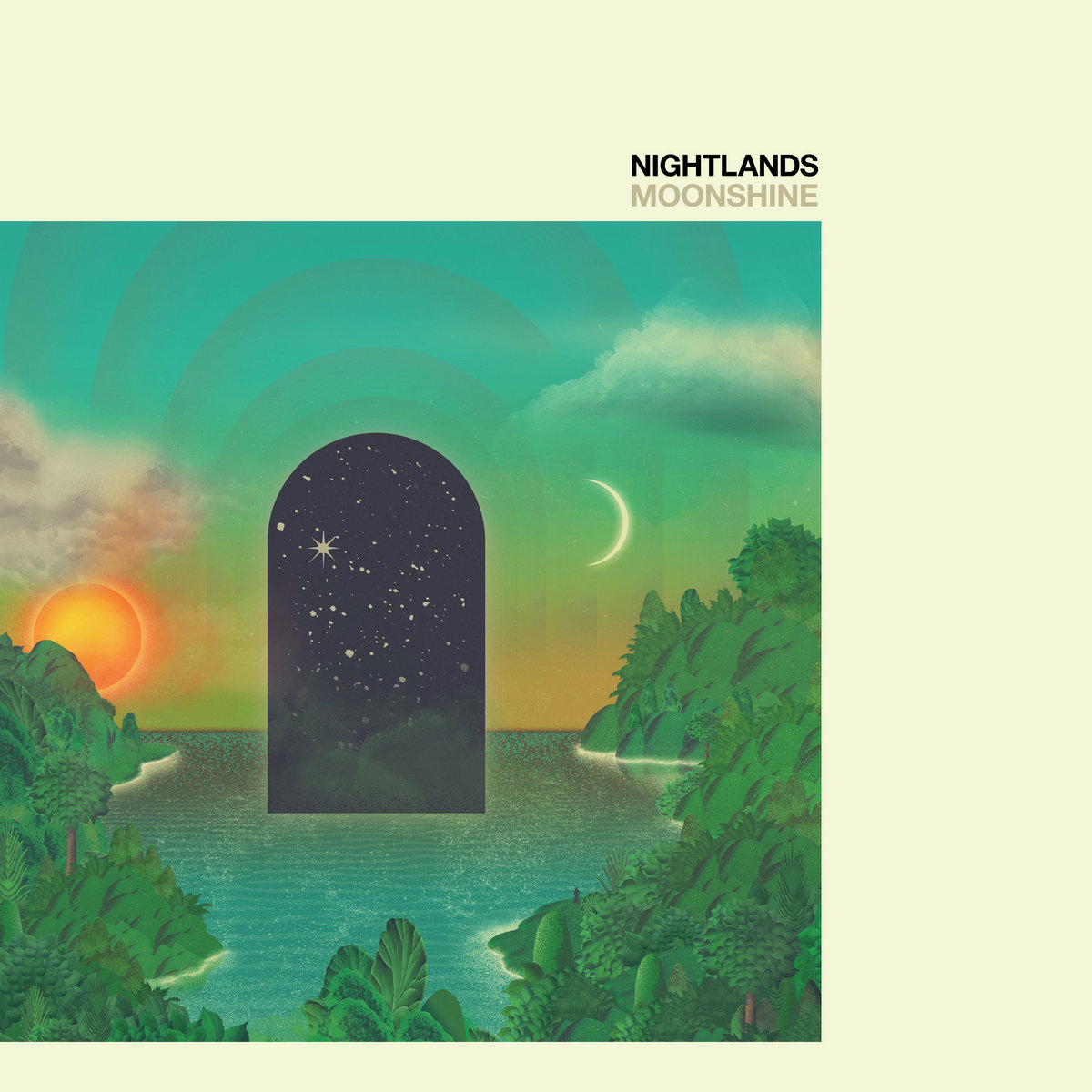
When crafting his music, Hartley has looked to build massive layers of keyboards and vocals on top of each other, creating ‘stacks’ of sound. They are in keeping with the album’s artwork, as the press release describes. “The surrealistic album art by Austin-based illustrator Jaime Zuverza depicts an archway opening to the stars over the surface of an idyllic sea flanked by both moon and sun”, it says. “Similarly, Moonshine reveals portals within portals leading to ever deeper places in Hartley’s vocal-centered labyrinth.”

What’s the music like?

As wide open as that introduction suggests it will be, but in spite of the big textures there is a touching intimacy too. On occasion it feels like the one person you are talking to has gone out for a quick smoke under the stars in a massive vista, and will be back inside shortly. The music pans out to give space to these thoughts, which are often tender and warm.

They are not without sharp-edged feeling, however. Stare Into The Sun has a direct observation on political machinations. “You’ve got your sheep but you’re no shepherd”, sings Hartley. “What does it mean…to buy everyone, and send someone’s son to Afghanistan?” No Kiss For The Lonely is equally pertinent, with its observation of “no love for you refugees, no rest for the weary”.

Most of the time, however, the album inhabits a calming place, the big vocals and keyboards complemented by languid saxophone lines and impressively supple rhythm tracks. The music unfolds with a slow and very natural groove, and Hartley’s warm-hearted vocals become its principle feature, often finding a style of music akin to a less troubled Bon Iver.

With You is a prime example, inhabiting a serene and content place, while Blue Wave goes even calmer, its keyboards like a slowly running stream.

Does it all work?

It does, especially at either end of the day. Moonshine has some very evocative moments, and it is beautifully written, rewarding background listening but also offering more to those paying attention to the lyrics.

Is it recommended?

Is it recommended?

Yes – an album of starry Americana that deserves its place in the moonlight.

Listen

Buy