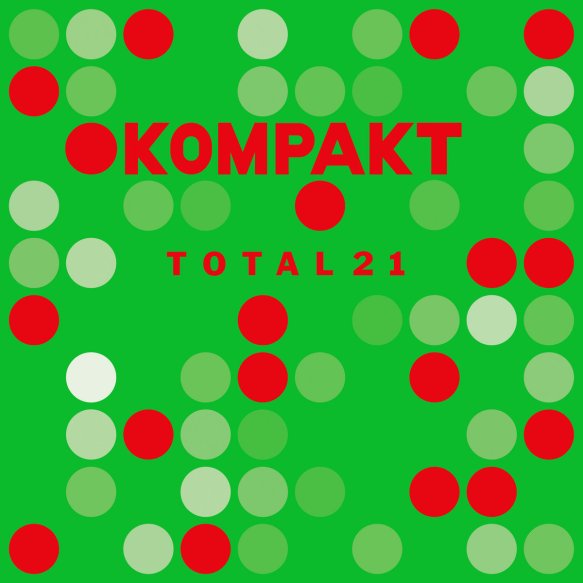
Switched On – Various Artists: Total 21 (Kompakt)

total-kompakt-21

reviewed by Ben Hogwood

What’s the story?

Kompakt’s annual compilation series rolls on, but on hitting the coming of age number the Cologne label have decided to put it on a diet. Slimmed down to a single disc / four sides of vinyl, it is a leaner beast but still packs in 13 tracks that cast the net across the label’s output.

Seasoned Kompakt regulars such as John Tejada, Jürgen Paape, Voigt & Voigt, Gui Boratto and label founder Michael Mayer rub shoulders with new talent to these pages – Kollmorgen, The Bionaut and Nicky Elisabeth.

What’s the music like?

Kompakt’s approach to techno is always pleasingly varied, and this set of tracks spreads itself nicely across the tempo and emotional spectrum. It doesn’t take long for us to be transported to warmer climes in the company of Jürgen Paape, whose La Guitarra Romantica is dreamy and exotic. The same words could apply to Roman Flügel’s remix of Nicky Elisabeth’s Celeste, though in truth this is a magical piece of work, beautifully floated above the deep beats.

“I Am A Dancer!”, proclaims the track from Marc Romboy & C.A.R. of the same name, an assertive piece of work shaking its booty from the off, while Jonathan Kaspar’s Von Draussen also hits the tougher spot with its rolling drum track. John Tejada contributes some typically thoughtful and nicely woven techno on Spectral Progressions, while Voigt & Voigt do similar with darker shades on Nicht Mein Job.

Michael Mayer’s contribution Happy plays around with spatial effects rather well, as does Sascha Funke’s Fasson, working in a nice broken beat and airy synths for good measure.

Does it all work?

It does. The decision to slim down to a CD’s worth of tracks pays off – not that the previous Total series instalments were overlong – but it works well because it brings the focus in to some really good compositions. The Kompakt catalogue is still in good shape, it would seem!

Is it recommended?

It is indeed. One for the seasoned Kompakt fans, but also an effective introduction to the label if you’re late to their recent output.

Stream

Buy

Switched On – Haiku Salut: The Hill, The Light, The Ghost (Secret Name)

haiku-salut-2021

reviewed by Ben Hogwood

What’s the story?

Derbyshire trio Haiku Salut relocate outdoors for this, their fifth album, which is in their words ‘an exploration of sound in relation to memory’. To fuel the latter they blend electronics and field recordings taken from a variety of sources, at all times seeking a personal touch or a story behind. The notes in the CD booklet document their findings, which range from natural sources to the strains of a ghostly piano in a large abandoned house, somewhere near Frankfurt.

What’s the music like?

Strange and captivating. Beginning with birdsong, Wide Awake is the ideal piece of music with which to start your day, soft strings and distant piano stretching the eardrums pleasantly. The mood changes with Entering, where a cold shiver runs through the arpeggios on the upper register of the ghostly piano. Gradually a mournful air descends on the instrument as it tolls slowly, beautifully played by band member Sophie Barkerwood.

A simpler, calmer piano informs the restful Trespass, while the tones are softer but the musical key remains the same for We Need These Beams, where a gently oscillating loop is gradually taken over by eerie displacement from the electronics. The sounds become increasingly wooden as the track dissolves.

I Dreamed I Was Awake For A Very Long Time is a lovely piece, a combination of a clipped piano phrase and stately chords over a steady, chugging beat. It really is a wonder, and is complemented by the wide open vista of How The Day Starts.

There are less field recordings evident for the friendly chatter of All Watched Over By Machines Of Loving Grace, an older track, but they come to the fore in the reassuring balm of Try Again And Again And Again, full of subtle positivity, and the closing All Clear, which brings back birdsong and strings akin to the start of the album.

Does it all work?

Yes, especially on headphones. Closer listening reveals the different layers and perspectives of the field recording, which is matched by the trio’s distinctive and carefully monitored musical complements. These are always pleasant to listen to at the very least but often take the breath subtly with moments of consonant beauty. There is, however, a dark undertone running through some of the memories, a shadow that once applied is hard to remove.

Is it recommended?

Yes. Another excellent set from one of our electronic musical treasures, who continue to fly just under the radar – when really they deserve to be held in much higher regard.

Stream

Buy

Switched On – R. Seiliog: Ash Dome (Cue Dot Records)

r-seiliog reviewed by Ben Hogwood What’s the story? For the eighth in the Cue Dot Series, Paul Scott turns to Wales and the Snowdonia-based Robin Edwards, aka R. Seiliog. Ash Dome is his first full length release since 2018, taking both its title and structure from a living sculpture by David Nash (below)
Seiliog writes ambient music and dresses his work on this album with field recordings made in Coed Camlyn between March and May 2021. What’s the music like? Beautifully restful. The field recordings are a lovely complement to Edwards’ textures, which are light in the extreme and often glint at the edges, as though catching the early morning sun. Rotunda is a good example of this, a sonic portrayal of how beaten metal might reflect bright sunlight. Mind Garden brings birdsong into the equation, a robin making itself known quite early on. There is a natural ebb and flow in the music, the wind in the branches portrayed through subtle, dappled electronic movements, with pockets of melody that take time establishing themselves, but make a subtle mark. 22 Onnen pulses softly with warm textures, while a steadier beat emerges during In The Direction Of Sunlight. Ultimately though this is music that works at its best without a beat marking time, and the treble-rich sounds give a lasting brightness. Does it all work? Yes. The musical representation of the sculpture is strong, but like the structure it also has an endearing vulnerability, reflecting the plight of treasured green spaces. The fact that the location of Nash’s sculpture had to be withheld shows how precious and endangered these things are, and that reflects in the slightly rarefied nature of Edwards’ music. Is it recommended? It is – an album that again with Cue Dot works on several levels, as a background balm or as thought provoking statement on the environment. Both are valid approaches from which to enjoy a rather lovely album. Stream and Buy

Switched On – Neil Cowley: Hall Of Mirrors – Reflected (Mote)

neil-cowley-remixed

reviewed by Ben Hogwood

What’s the story?

On its release in March, Neil Cowley’s Hall Of Mirrors album made a very strong impression, not least on Arcana – the verdict being ‘a heartfelt and inventive biography of his musical exploits to date’. The album focused on Cowley’s relationship with the piano, but now he hands it over to a carefully chosen set of collaborators for the remix treatment.

What’s the music like?

Cowley’s originals, beautiful and moving in their simplicity, are ripe for the remix treatment – and each of the ten remixers bring a respectful approach to the table, letting the originals speak for themselves, but each of them adding something new. Cowley himself remixes the last track, I Choose The Mountain, by which time the album’s raw material has worked its spell all over again.

Ben Lukas Boysen immerses Prayer in a few ambient clouds, the music floating slowly but surely like a plane crossing the sky. Berlin Nights introduces a few glitchy elements courtesy of Louf, with a dubby beat – a quality replicated by Jacana People for Souls Of The S-Bahn and applied with a bit more force to the bass end and a triple-time beat.

The Kilig remix of Circulation is an intimate, end of day moment, the conversational piano twinned with some quite busy but nicely worked beats. Kate Simko, meanwhile, takes Stand Amid The Roar to the Mediterranean poolside, in a fuzzy remix that Cowley’s old band Fragile State would have been very happy with. The fuzzy feeling continues into Seb Wildblood’s take on Just Above It All, with a lazy guitar, muted trumpet and dappled beats that give a bit more urgency to proceedings.

The Sad City remix of She Lives In Golden Sands has a lovely, windswept start before its amiable electronic chatter, and this moves on to Hector Plimmer’s thoughtful remake of Saudade, with some beautifully rich piano chords.

For the first time we hear a greater emphasis on the percussion in Otzeki’s remix of Tramlines, a dubby deep houser, then it’s back to a wider panorama for The Allegorist’s beatless encounter with Time Interrupted. Finally Cowley’s own work, I Choose The Mountain, takes an urgent beat but gets swept away in the heat haze.

Does it all work?

It does. These alternative versions work really well on their own but also make an album as carefully sequenced as the original Hall Of Mirrors. Cowley’s past as a member of Fragile State makes itself known more clearly in the execution of an album that would work perfectly as an accompaniment to sunset at Café Mambo, but it still keeps the intimacy of the original.

Is it recommended?

It is. The two Halls of Mirrors make ideal companions.

Stream

Buy

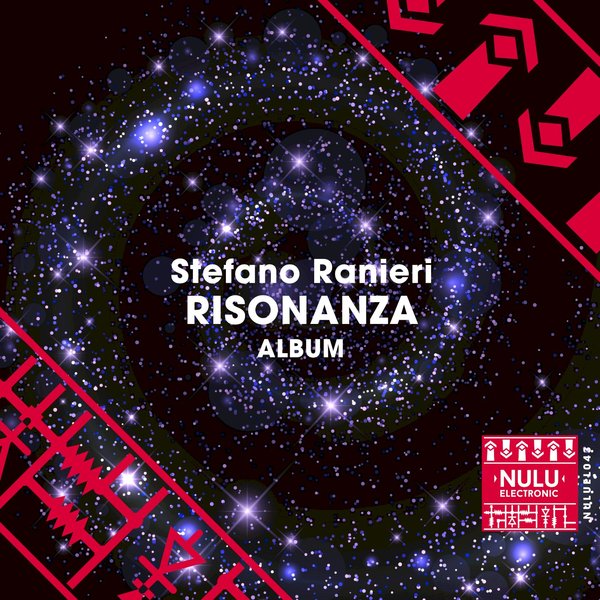
Let’s Dance – Stefano Ranieri: Risonanza (Nulu Electronic)

stefano-ranieri

reviewed by Ben Hogwood

What’s the story?

This is the first album for Italian producer Stefano Ranieri. He has been making and releasing music for around 15 years, and is now ready to dip his toes into the long player format. A list of the DJs supporting Ranieri’s work includes Carl Cox and Masters At Work, says much about his reputation built up in that time, and also the styles of dance music he gravitates towards.

What’s the music like?

Excellent. Ranieri uses all his experience of making dancefloors move to come up with a wide range of tracks that fulfill that brief perfectly. Koncept One has a touch of Lil Louis about it, with a great vocal rant ‘you’re not free, you’re a slave’. It comes after Your Time Is Up has set a smoky scene with a really good loping beat.

1942 has a powerful vocal and a strong piano line. C’est Terrible goes more acidic but counters that with a really good, slightly tribal sample. Saulè punches through a bassy electro riff, while a minimal cut like Karming Deep works really well as it has a good vocal cut to go with its keyboard hook. Die Of Pain has a real gravitas, taking the tail end of a Martin Luther King speech. Of Course is excellent too, rolling along nicely.

Does it all work?

Consistently. Ranieri knows what works on the most basic level, and has the confidence to let his beats do the talking. Each of the fifteen tracks is excellent, really well paced, and does all the right things – without ever being routine.

Is it recommended?

Enthusiastically. Risonanza is a really fine piece of work, whether you approach it from a house, techno or electro direction. Stefano Ranieri can be proud of his achievement.

Stream

Buy

You can listen to clips from the album and purchase Anywhere Here on Traxsource