Switched On: Grasscut: Haunts (Lo Recordings)

grasscut-haunts

reviewed by Ben Hogwood

What’s the story?

The roots for Grasscut’s new mini album lie in the footnotes of a previous long player. The 2015 opus Everyone Was A Bird, which explored meaningful places for the duo of Andrew Phillips and Marcus O’Dair, invited listeners to submit thoughts on their own significant places in the form of voicemail messages.

Phillips’ brief was initially to select one of these messages and turn it in to a fully-fledged composition, but it soon became apparent that the abundance and quality of material was way more than one recordings’ worth. The project sat on the back burner for a while but is fully realised as an extended EP. In the end six messages were chosen, with a web of music spun around each, painting pictures of locations from Brighton up to the Outer Hebrides.

What’s the music like?

Captivating – as are the descriptive messages themselves. Each of the six portraits is like an individual postcard, carefully stitched together, and the meaningful aspects of each location are clear in the emotion of the subjects. The places themselves are hugely varied – from Inchkeith Island, on the edge of Skye with a near-constant wind – to The Garden, a more private and domestic utterance.

The music in the latter is utterly charming, telling a story well before we hear the voicemail message, the song of a blackbird accompanied by the plaintive open strings of a violin, Inchkeith Island is on a larger scale, the water around ever-present, while Human Estuary uses a lovely chamber music group with violin, clarinet and double bass. The Pull is punctuated by an enchanted figure on the piano, its sound cushioned and mottled. Witley Common is similarly mysterious, while The Garden tells a vivid story even before the message, the open strings of a violin used as a countermelody to a blackbird breaking into song. Seacliff makes good use of a Kathleen Ferrier sample, as Phillips says, ‘singing like a mermaid in the distance’.

Does it all work?

Yes. The Overwinter album earlier this year was a timely reminder of Phillips and O’Dair’s ability to make music that transports their listener to another place, but with the voicemail messages setting the tone here, the accompanying pictures are ever more vivid. The only regret is that some of the compositions are not longer – Seacliff and The Pull especially have enough material to blossom into recordings double the length that they occupy.

Is it recommended?

Yes. Grasscut devotees will not need to hesitate as this mini-album continues their development as composers of meaningful music of time and place. Newcomers would also be advised to start here – but to carry on with the other albums, as this is a band hitting the sweet spot with an unerring accuracy.

Stream & Buy
Switched On – GusGus: Mobile Home (Oroom)

gus-gus

reviewed by Ben Hogwood

What’s the story?

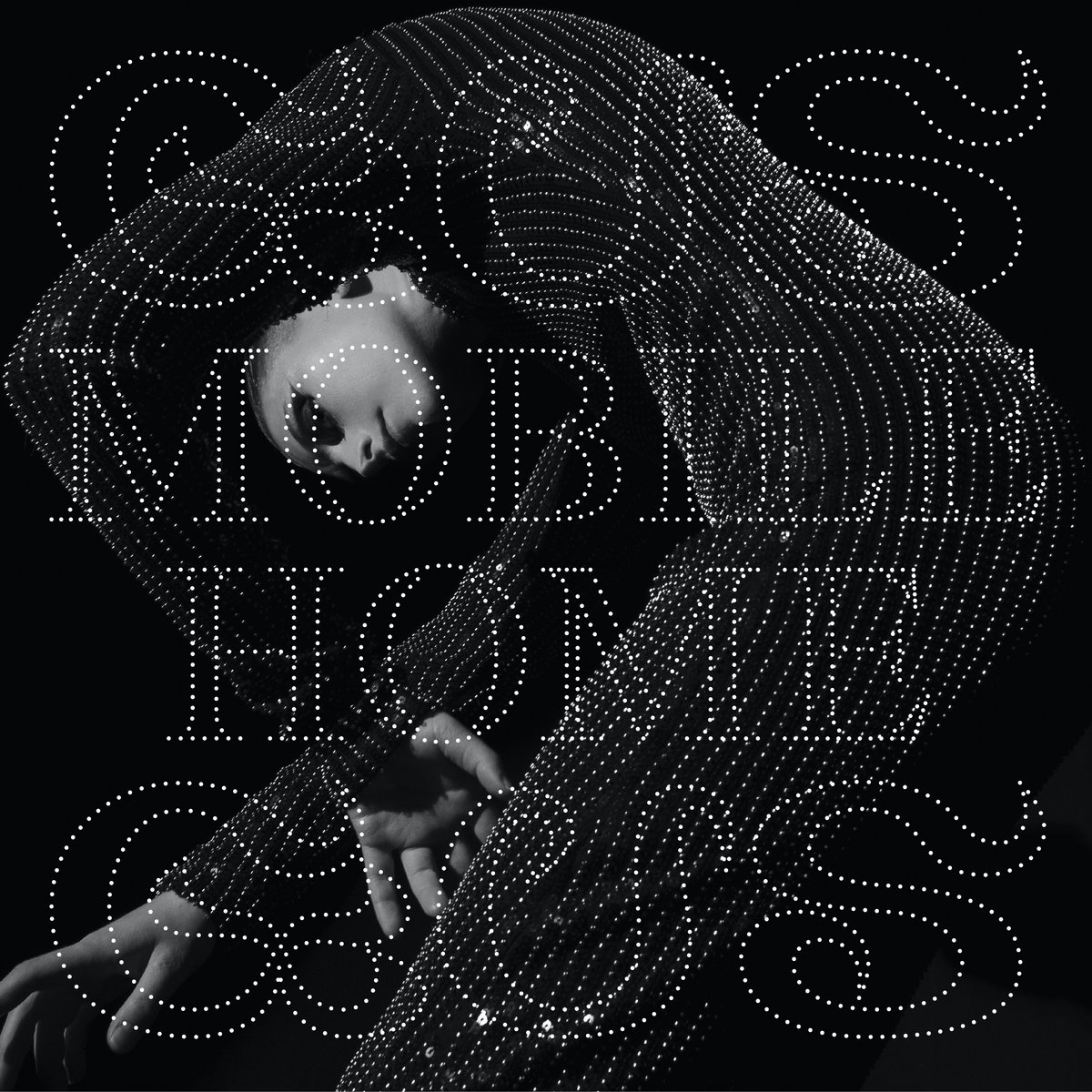
Icelandic band GusGus are electronic music royalty, but although Mobile Home is their eleventh studio album, it is the first one for three years. In keeping with the band’s fluid personnel roster, they welcome fellow-Icelandic singer Margrét Rán, from Reykjavík band VÖK – and chart a quarter of a century making music as they do so.

This album has a concept – the mobile home in question is Earth, but it is a futuristic world run by machines, a concept not too difficult to grasp as the advance of technology hurtles ever onwards. The main protagonist is experiencing very strong feelings of disconnection with the world, sharpened by lengthy bouts of solitude and alienation – again, a concept we can all identify with in some way after the events of the last year and a half.

What’s the music like?

Moody, but typically concentrated. The challenge for GusGus is to portray the heightened feelings of their concept without losing sight of their club roots, especially given the fact that most nightclubs remain resolutely shut. For much of Mobile Home they succeed in their aim, as the familiar cool beats and unhurried keyboard lines teaming up to great effect.

Higher is terrific, a solid four to the floor beat backing Rán’s continued assertion that ‘I need to get higher’, with pulsing keyboards swirling around like dry ice. Simple Tuesday is cut from similar cloth and written in the same key – as is Our World. On both tracks the vulnerable lyrics are now at odds with the heady music, creating a powerful and unresolved tension which is heightened by the offbeat stress in the latter track, where Rán and Daníel Haraldsson duet effectively.

Does it all work?

It does, but with considerably more tension and with a less instinctive approach than previous albums Lies Are More Flexible, Mexico and Arabian Horse. This time the lyrical content and vocals do not feel quite as inspired, though they do realise the album’s concept very effectively. Much of the album is at the same pitch – G – which may be a tactic to portray the feelings of isolation, but the ‘tingle factor’ is less than on each of the three albums mentioned above. That said, there is still plenty to enjoy, the beats are sleek and the keyboard lines effortlessly cool.

Is it recommended?

Yes. Mobile Home might not carry as much of a punch as some previous GusGus releases but it still has plenty to commend it.

Stream

Buy

You can listen to clips from Mobile Home and purchase via the Kompakt website


Switched On – Feiertag: Time To Recover (Sonar Kollektiv)

feiertag

reviewed by Ben Hogwood

What’s the story?

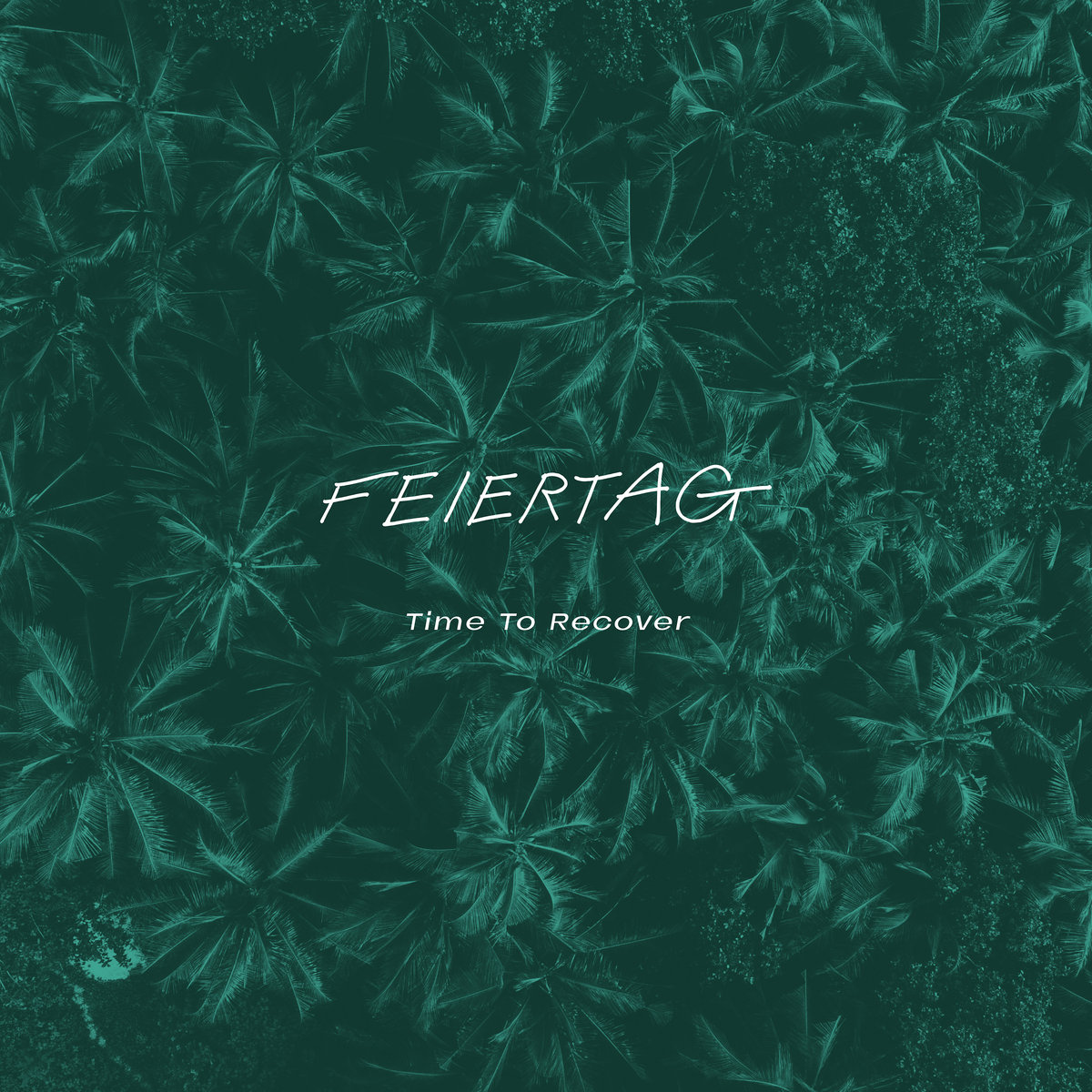
Dutch musician Joris Feiertag has a number of impressive disciplines on his CV, from drumming and production, but until now he had not delivered a long player. Time To Recover puts that right, released on Jazzanova’s Sonar Kollektiv label, and on the evidence of the music artist and imprint are an ideal match.

The 50-minute album has 16 tracks, three of which are cinematic interludes showing off Feiertag’s musical versatility. This extends to the songs themselves, a mixture of instrumental and vocal numbers. Guests include Tessa Rose Jackson, Oli Hannaford, Pete Josef and James Alexander Bright.

What’s the music like?

Cool and summery – ideal for a poolside soundtrack but never in danger of sinking into the background. That is because Feiertag’s songwriting and structures are tight, with plenty of riffs to hang on to and some bright, airy textures. The breezy It’s Alright is a lovely pop-infused number, an ideal match of James Alexander Bright’s vocals and the airy production. Yearn, meanwhile, is a softly affecting song where Tessa Rose Jackson and Oli Hannaford team up to pull the heartstrings. Jackson also features on Follow, a really nice bit of low-slung electro funk.

The instrumental Pretend shows off Feiertag’s ability to get a lovely blend of outdoor, blue sky vibes and intimate, indoor club music. There is a twist of jazz, too, a technique the excellent Saccharine uses more explicitly, constructing a sound and an approach Bonobo would be proud of.

The interludes are good but could easily be used as fully-fledged tracks themselves, especially the satisfying thrum of the flamenco guitar on Bilbao.

Does it all work?

Yes. Time To Recover doesn’t have any tracks worth skipping, the album hanging together logically and beautifully. Its hot weather vibes pull the listener in, while the vocal tracks are presented as meaningful songs. Only the interludes could do with extending further – which is a compliment in itself, as it is rare for a review to ask for a longer album!

Is it recommended?

Yes. Time To Recover is a summery album with a good deal of class.

Stream

Buy


Switched On – Loscil: Clara (Kranky)

loscil

reviewed by Ben Hogwood

What’s the story?

‘Clara’ is the Latin word for ‘bright’. It is employed by Vancouver’s Scott Morgan to describe his latest album under the Loscil moniker. Morgan is a highly productive musician known for making minimal material stretch a long way, but with Clara he has outdone himself.

Taking a three-minute piece for a 22-piece string orchestra, Morgan recorded the output but then subjected the recording to heavy treatment. The master was purposefully damaged, introducing surface noise to give the impression of recordings made outside in the field, with gravelly scratches and frissons of white noise.

To match this, Morgan took snapshots of the score, stretching them into almost unrecognisable, broad canvases – rather like the detail you would find on a set of micro-models. The effect, as he says, is that “shadows are amplified and bright spots dimmed.”

What’s the music like?

Too often music is described as immersive, but the music of Loscil cannot be seen as anything else. As it unfolds, Clara has the reassuring regularity of a tidal system, its rich colours mixed together in a slowly moving but utterly compelling cycle. The tracks work on their own terms but are best experienced as part of the whole, as material from the original three-minute track stretches out to 70 minutes.

Although this is the first time Loscil has explicitly taken the orchestra for his inspiration, his music has always had suitable dimensions for these large-scale arrangements, and so Clara represents more of a shift in colour than a change in textural depth. With this in mind, Lucida paints pastel shades while a single chime tolls, but while that track has a metronomic regularity, Stella reaches a beautiful stillness, the ebb and flow of just two repeated chords providing the ultimate ambience over a ten-minute structure. From here Loscil naturally segues into Vespera, where a regularly turning mechanism sounds like the onward motion of a boat. Aura exhibits a more remote beauty, looking farther afield after the slowly bubbling Sol. Darker tones are used for the title track, in spite of its Latin meaning, a rich chord building with purpose from the bass strings before we glimpse the light in the violins. Eventually it fades over the horizon like the setting sun.

Does it all work?

Emphatically. Morgan makes ever-more meaningful and powerful music, which remains by turns simple and incredibly pictorial. His music gives the listener a wider perspective, a grasp of the earth’s vast spaces from their own little corner of the world. It reminds us how, in an age of technology that moves faster than ever before, nature has not quickened its pace to follow suit, proceeding where possible with its same sure-footed and inevitable progress.

As Loscil, Morgan gives us the reassurance that despite those supposed human advances, the progress of geology and nature is unlikely to ever be fully checked.

Is it recommended?

Yes. Clara is another very strong addition to the remarkably consistent Loscil canon, which continues to evolve and develop without repeating itself. It provides another reminder of just how far Scott Morgan is able to stretch the barest of musical material, resulting in an album of awesome depth and presence.

Stream

Buy


Switched On – Georgia Anne Muldrow: VWETO III (Foreseen Entertainment / Epistrophik Peach Sound)

georgia-anne-muldrow-3

reviewed by Ben Hogwood

What’s the story?

“VWETO III is intended for movement”, writes Georgia Anne Muldrow on her Bandcamp page. “It’s to be played when you birth yourself back outside after a long introspective period to get the things you need.”

‘Vweto’ is a word in the Congolese Kikongo language meaning ‘gravity’ – and it suits Muldrow’s grounded approach, as she draws on hip hop, jazz, funk and soul for her inspirations.

Most of the album’s 17 tracks are instrumental, but space is allowed for vocals, “like DIY songs that people can have for themselves”, she writes. “I want to see the sisters rapping up a storm.”

What’s the music like?

Very much ‘alive’. Muldrow’s refusal to process her music too much leads right to the human heart of the music, with irregularities welcome in both pitch and rhythm. Just a few seconds of Old Jack Swings are what’s required, the low slung beats and grubby bass line combining in an earthy sound.

Georgia’s music is spaced out but with a firm sense of direction too, so the lovely wide-screen synth trappings and psychedelic loops are given solid, bassbin-bothering beats. Slave Revoltalleyway Boom has a great combination of squelchy bass, cool keyboard and a rhythm purposefully dragging its feet, while throwback baps gets its winding piano into a circular loop.

Meanwhile Slow Drag gives musical signposts towards one of Georgia’s mentors, Alice Coltrane, with its spiritually rich organ sound. Alternatively Grungepiece shreds its guitar against a sprinkling of piano dust.

The vocals are good, too – Love Call Groove has a sultry air, while the rapping on Ayun Vegas Session 1 matches Georgia’s rich alto


It is difficult to know where the analogue stops and the digital starts on VWETO III – proof of Muldrow’s successful fusion of past, present and future.

Does it all work?

Yes. As she did in the previous two volumes of this series, Georgia operates an extremely open musical policy, and the fresh improvisation on a lot of these tracks gives them a freshly minted feel.

Is it recommended?

It is. VWETO III achieves its aim of looking outwards and upwards, celebrating the likely return to the outdoors and positive living. Its freedom is at odds with the closed environments of the last year and a half, and its stylistic blends and inventions are invigorating. More power to her elbows!

Stream & Buy