
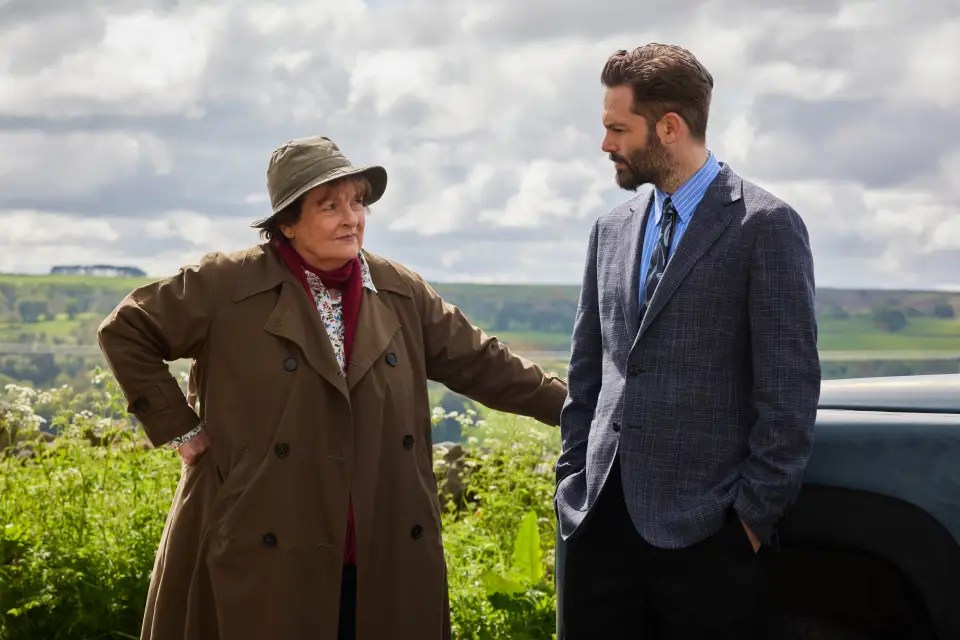
by Ben Hogwood. Picture (c) ITV Productions
The New Year is barely a week old, yet TV viewers in the UK have already said goodbye to a much-loved detective.
After 14 seasons DCI Vera Stanhope, played by the inimitable Brenda Blethyn (above), has hung up her hat – and with it brought the hugely successful ITV series of dramatisations of books by Jane Cleeves to an end.
There are several key elements to Vera’s success – led by Blethyn herself, a powerhouse character with a keen empathy for the victims of the crimes she is investigating, and an uncanny and occasionally sympathetic understanding of the perpetrators. She rules her team with a rod of iron, though this softer side does occasionally reveal itself.
The support cast are strong, notably David Leon (DI Joe Ashworth, above), Jon Morrison (DC Kenny Lockhart) and Cush Jumbo (DC Bethany Whelan), who met a tragic end in the sixth series.

Yet there are two other stars of the show. The Northumbrian scenery is one, beautifully brought to life by directors Adrian Shergold, Louise Hooper and Paul Whittington. The haunting music of Ben Bartlett is the other, so subtle that it didn’t even warrant a mention in ITV’s documentary about the series.
When you first watch Vera the music seems incidental – but that’s the point. Delve deeper and you will find it is written with forensic attention to detail, commentating wordlessly on each scene while keeping the tension bubbling.
Bartlett uses a mixture of acoustic and electronic sounds, with some dubby effevts giving perspective, often panning out to appreciate the wide open spaces of Northumberland. There is the odd sudden ‘whoosh’ of sound when a plot twist is revealed, and on occasion sonic atmospherics are used to portray the rarefied light often present at the North Sea coast.
The theme itself is also subtle, but memorable, a four-note murmur from strings that grows in presence and stature as the credits roll. Everything – in every episode I’ve watched to date – is rooted in the key of D minor. Bartlett uses this dark key as the basis for all his ideas, which relate back to the main theme without ever duplicating it – the composer adding or taking away layers, depending on the subject in hand.
Only once have I known Vera venture beyond the original score, in a memorable scene from the penultimate episode where its climax was accompanied by Northumbrian folk musicians The Unthanks, and their haunting song Magpie:
Yet the credit goes to Bartlett, whose brooding score deserves great credit for its economical use of a small amount of music, somehow never outstaying its welcome and always enhancing the story. Vera just wouldn’t be the same without it!
Published post no.2,404 – Tuesday 7 January 2025

 Arcana.fm