On Record – Jordan Rakei – The Loop (Decca)

by Ben Hogwood

What’s the story?

Singer-songwriter Jordan Rakei celebrates his move to Decca with a fifth album. There is definitely the sense of a new chapter beginning here, and not just with his record label, for Rakei has recently crossed into his thirties while becoming a father.

Remaining true to his soul roots, he has produced the album himself.

What’s the music like?

This is a heartfelt record, delivered by a songwriter who seems to have reached an extra depth in his work. Jordan Rakei has kept the polish that made his previous albums so good but has added an even more relatable level of emotion and depth.

Songs like Flowers show the emotional lengths he is prepared to go to, while Freedom is a properly uplifting piece of music with gospel choir in tow – surely one of the best new songs we will hear this year. There is a deep vulnerability here, expressed in songs like Forgive, and especially the closing pair Miracle and A Little Life which cuts deep.

The arrangements are beautifully wrought, especially the strings of Hopes And Dreams, another emotional high point – while the lyrics are more to the point than ever, no more so than Royal’s confession that “I’ve royally fucked up”.

Does it all work?

It does. Rakei is a fine and very relatable artist, communicating strongly but with a grace and elegance that stands him in good stead.

Is it recommended?

It is. Five albums in, and Jordan Rakei delivers something of a musical watershed.

For fans of… Sampha, SBTRKT, James Blake

Listen and Buy

You can explore purchase options at Jordan Rakei’s website

Published post no.2,178 – Tuesday 14 May 2024

In concert – Elizabeth Llewellyn, CBSO Youth Chorus & Orchestra / Jérémie Rhorer: Debussy, Ravel & Stravinsky

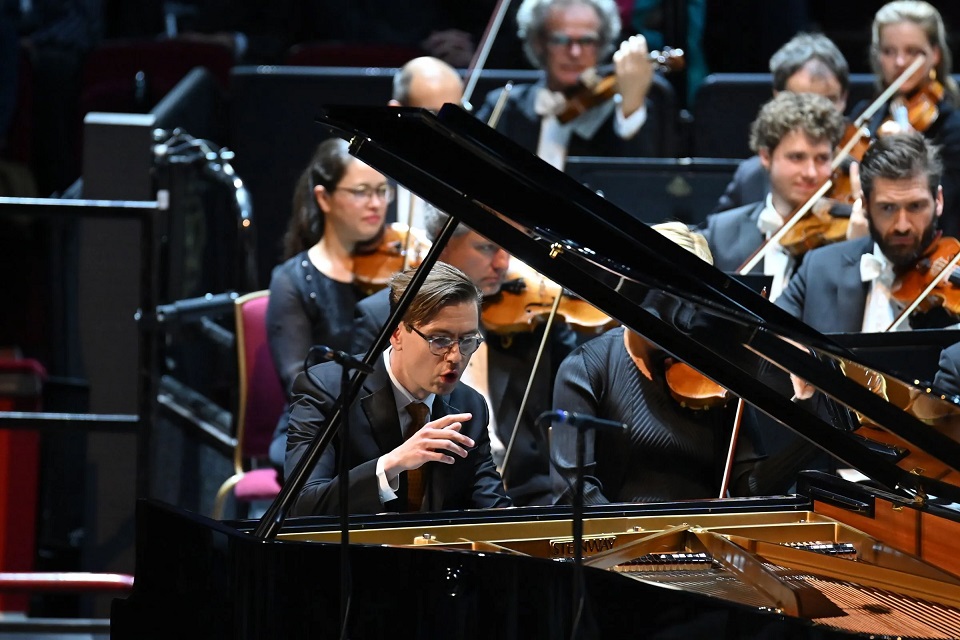
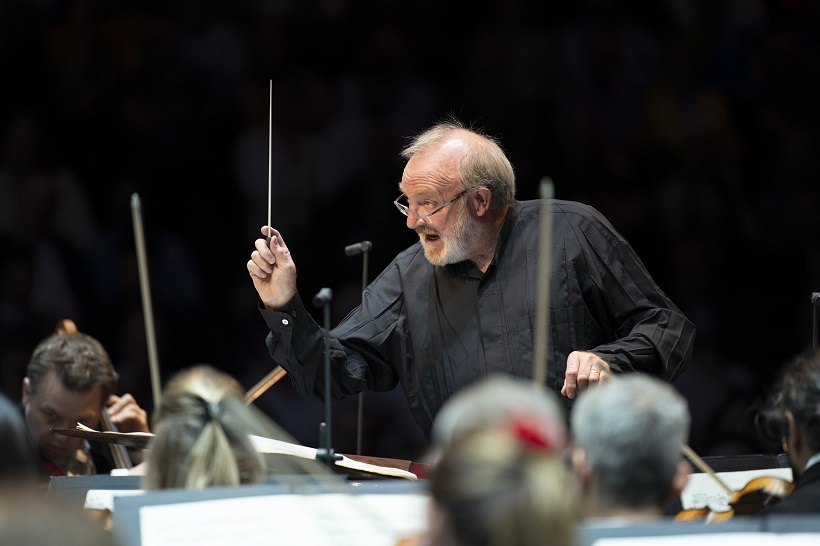
Elizabeth Llewellyn (soprano, below), CBSO Youth Chorus (chorus-master, Julian Wilkins), City of Birmingham Symphony Orchestra / Jérémie Rhorer

Debussy Nocturnes L98 (1899)
Ravel Shéhêrazade M41 (1903)
Debussy Prélude à l’après-midi d’un faune L86 (1894)
Stravinsky Symphony in Three Movements (1945)

Symphony Hall, Birmingham
Thursday 9 May 2024

Reviewed by Richard Whitehouse Picture of Jérémie Rhorer (c) Caroline Doutre, Elizabeth Llewellyn (c) Frances Marshall

Programmes featuring no Austro-German content are rarer than might be thought these days, so making this evening’s concert from the City of Birmingham Symphony Orchestra with the highly regarded conductor Jérémie Rhorer not only more unexpected but also more welcome.

There could be few more understated openings to such a programme than the Nocturnes that Debussy completed near the start of the 20th century, when the ‘impressionist’ tag randomly applied to his music was at its most relevant. Without denying its essentially rarified quality, Rhorer brought out the ominous undercurrents in Nuages, its emotional eddying abetted by Rachel Pankhurst’s soulful cor anglais while duly complemented by those fervid imaginings of Fêtes, where the central processional felt tangible in its implacability. Nor was there any undue reticence in Sirènes, the CBSO Youth Chorus here repeating its contribution from a couple of seasons ago with a response whose androgynous sound-world did not preclude an expressive poise coming to the fore through the remote ecstasy of this piece’s closing pages.

Among the most potent expressions from its composer’s early maturity, Ravel’s Shéhêrazade made for a natural follow-on. Less a cycle than a sequence of songs, it tends to be dominated by its initial Asie, which made Elizabeth Llewellyn’s performance the more admirable. Not that she ever under-characterized the images of wonder and terror such as pervade the poem’s ‘‘outdated language and cultural depictions’’ (to quote the rider in tonight’s programme), but these were harnessed to a cumulative build-up of intensity that held good over the capricious elegance of La Flûte enchantée, as enhanced by the artful finesse of flautist Marie-Christine Zupancic, then on to the sensuous ambiguity of L’Indifférent with its predictably equivocal close. Rhorer secured playing of subtlety and refinement throughout this memorable reading.

A suitably enervated if never flaccid account of Debussy’s Prélude à l’après-midi d’un faune launched the second half. Distinguished once more by Zupancic’s playing as well as an airily euphonious response by CBSO woodwind, Rhorer teased out the purpose behind any inertia.

Although it could not have made other than a jarring impression in this context, Stravinsky’s Symphony in Three Movements provided an instructive contrast (Roussel’s Third Symphony would have been more apposite – maybe another time?) in its presaging of rhythmic tensility over harmonic langour. Rhorer had the measure of the opening’s movement’s animation, for the most part simmering rather than overt (and some not quite spot-on entries a reminder that this music remains a stern test of technical accuracy), but the highlight was a central Andante whose alternating between the whimsical and beatific confirmed the film-world’s loss as the concert-hall’s gain. The transition into the finale saw a frisson of expectancy, duly confirmed by its remorseless progress toward what is the most visceral outcome in latter-day Stravinsky.

A fine showing, then, from the CBSO and a notable appearance by Rhorer who will hopefully return soon. Next week sees a welcome reappearance by Joshua Weilerstein, major works by Bernstein and Dvořák being set in relief with shorter pieces by Pavel Haas and Caroline Shaw.

Click on the link to read more on the current CBSO concert season, and on the names for more on soprano Elizabeth Llewellyn, conductor Jérémie Rhorer and the CBSO Youth Chorus

Published post no.2,177 – Monday 13 May 2024

New music – Warrington-Runcorn New Town Development Plan: A Shared Sense of Purpose (Castles In Space)

by Ben Hogwood

Published post no.2,176 – Sunday 12 May 2024

Let’s Dance – Various Artists: Balance presents Dave Seaman & Quivver (Balance)

by Ben Hogwood

What’s the story?

For their contribution to the esteemed Balance Series, Dave Seaman and Quivver have gone down the exclusive route. Each of the tracks chosen for the pair of mixes has not been released before, and both artists have cast the net across their network of contacts to ensure the quality remains high throughout.

That means exclusive tracks from the likes of Einmusik, Timo Maas, Just Her and Anthony Pappa, as well as a long sought-after and seldom-heard remix from Seaman, that of Underworld’s Low Burn.

The two friends have also locked horns on five new tracks which they present throughout the mixes.

What’s the music like?

When I say ‘solid’, that’s not meant as an insult – more an observation that while house music goes down some weird and wonderful avenues you can rely on these two for a consistently good mix. Their experience shines through in the pacing each mix receives, setting an airy atmosphere early on and then building inexorably to a strong finale.

The pair secure a typically atmospheric, smoky start, before the music gets progressively more full-bodied through tracks like Murat Uncuoglu’s Magico. Horizons, a collaboration between Kamilo Sanclemente, Anthony Pappa and Jamie Stevens, flickers atmospherically, then the sounds sharpen and the pace quickens for AIKON’s Hurricane and the excellent, moody Walensee from Einmusik. We then move through the gears for the excellent Seaman / Quivver co-productions Mushroom Embargo and Make This Disappear, with a feel of Dave Gahan in the vocals from Quivver, before Robert Babicz’s smouldering Mystik.

The second mix has impressive urgency from the start, toughening up with Timo Maas’ remix of pølaroit’s Apart, then leading through a shimmering breakdown from Jamie StevensThe Peace Machine before getting a shift on through Stas Drive’s Hold Me Tight.

The Low Burn remix is certainly worthy of the hype, Seaman sprinkling star dust over a strong beat with brooding interventions from the bass and Karl Hyde’s ‘be bold, be beautiful’ imprint whispered against the grain. From there to home there is more darkly magnificent music, the closing trio from Jamie Stevens (Verlaine), Chicola (Dust Coins) and Ron Flatter (Ovid)

Does it all work?

It does – the pair using all their dance music knowhow to get the pacing right, so that each mix feels like a single chapter of the night.

Is it recommended?

It is – quality house music delivered with style and polish.

Listen

Buy

You can explore purchase options and listen to excerpts from the mix on the Balance website

Published post no.2,175 – Saturday 11 May 2024

On Record – Peter Herresthal, Arctic Philharmonic, Bergen Philharmonic Orchestra – Missy Mazzoli: Dark with Excessive Bright (BIS)

abfPeter Herresthal (violin); bMembers of Arctic Philharmonic [Oganes Girunyan, Øyvind Mehus (violins), Natalya Girunyan (viola), Mary Auner (cello), Ingvild Maria Mehus (double bass)]; cdeArctic Philharmonic / Tim Weiss; aBergen Philharmonic Orchestra / James Gaffigan

Mazzoli
Dark with Excessive Bright (2021 – versions with string orchestra (a) and string quintet (b)). Sinfonia (for Orbiting Spheres) (2013)c
These Worlds in Us (2021)d
Orpheus Undone (2021)e
Vespers for Violin (2014)f

BIS BIS-2572 [66’22’’]
Producers Jørn Pedersen, Hans Kipfer Engineers Gunnar Herfel Nilsen, Håkan Ekman

Recorded 4 June 2021 (a) at Grieghallen, Bergen; March 2022 at Storman Concert Hall, Bodø

Reviewed by Richard Whitehouse

What’s the story?

BIS issues the first release to be devoted to the orchestral output of Missy Mazzoli (b.1980), New York-based and firmly established among the most significant opera composers of her generation, recorded with a stellar cast of musicians at venues on the west coast of Norway.

What’s the music like?

In his prefatory note, American author Garth Greenwell characterizes Mazzoli’s music thus – ‘‘Each piece is a journey no step of which is forgotten, so one arrives in a place that feels at once familiar and absolutely new’’, which seems a fair description of its audible connection with the past while, at the same time, absorbing accrued influences into an idiom wholly of today. That each of the works bears this out, albeit in different ways and with unpredictable outcomes, says much about the effectiveness of her modus operandi these past two decades.

Earliest here is These Worlds in Us – its title drawn from a poem by James Tate concerning the wartime death of his father, leading to music whose interplay between feelings of pain and elation is abetted by a tightly focussed evolution. An identical duration aside, Sinfonia (for Orbiting Spheres) could hardly be more removed in its formal corollary to that of the solar system; such abstraction offset by the ‘sinfonia’ connotations with a Medieval hurdy-gurdy whose modal drone, recreated here on an electronic keyboard, underlies the headily increasing velocity of this piece. Nominally the paraphrase of a larger work, Vespers for Violin combines solo violin with an electronic soundtrack where overtones of keyboards, voices and strings subsumed into a texture such as proves at once rarified and evocative.

Framing this release are two versions of the title-track. Having started out as a concerto for double bass and strings, Dark with Excessive Bright was reworked for violin at the request of Peter Herresthal – a quotation from Milton being the catalyst for a piece that refashions Baroque techniques from a present-day vantage, and one which succeeds equally well with orchestral strings or string quintet. Most compelling, though, is Orpheus Undone – a suite whose two movements (respectively 10 and five minutes) open-out that emotional trauma    of Eurydice’s death with a methodical while always cumulative inexorability as to suggest that Mazzoli could distinguish herself in the symphonic domain were she to take time-out from that of opera. Certainly, one of the most absorbing orchestral pieces of recent years.

Does it all work?

Pretty much always, though the composer is fortunate to have had such advocacy from the musicians heard here. Herresthal reaffirms his standing as go-to violinist for new music, his playing as subtle and as resourceful as this concerto requires. The much in-demand James Gaffigan gets luminous playing from the Bergen Philharmonic, as does Tim Weiss from the Arctic Philharmonic of whose Sinfonietta he is artistic director. Sound of spaciousness and clarity, along with succinctly informative notes by the composer, are further enhancements.

Is it recommended?

It is, and those suitably drawn into Mazzoli’s sound-world are encouraged to check out other releases – notably the powerful and unsettling opera Proving Up (Pentatone PTC5186754) or the endlessly thought-provoking Vespers for a New Dark Age (New Amsterdam NWAM062).

Listen

Buy

You can explore purchase options for this recording at the Presto website. Click on the names for more on the artists – Peter Herresthal, Tim Weiss, James Gaffigan, Arctic Philharmonic and the Bergen Philharmonic Orchestra – and for more on the composer Missy Mazzoli

Published post no.2,174 – Friday 9 May 2024