On Record: Richard Deering – William Wordsworth: Piano Music; Wilson & McGuire (Heritage)

Wordsworth
Piano Sonata in D minor Op.13 (1939)
Cheesecombe Suite Op.27 (1945)
Ballade Op.41 (1949)
Valediction Op.82 (1967)
Wilson
Incanabula (1983)
McGuire
Prelude 7 (1983)
Six Small Pieces in C (1971)

Richard Deering (piano)

Heritage HTGCD142 [77’42’’]
Producer/Engineer Paul Arden-Taylor (Piano Sonata), Robert Matthew-Walker
Recorded 1985 at University of Wales, Cardiff, 2023 at Wyastone Concert Hall, Wyastone Leys, Monmouth

written by Richard Whitehouse

What’s the story?

Heritage here continues its extensive coverage of British music with a release of piano music primarily by William Wordsworth, complemented with short pieces by Thomas Wilson and Edward McGuire, all of them heard in idiomatic and insightful readings by Richard Deering.

What’s the music like?

Although his music is now relatively well covered in terms of recording (thanks to Lyrita and, more recently, Toccata Classics), Wordsworth remains a difficult composer to pin down – not least because this understated and often taciturn idiom does not lend itself to casual listening.

Piano music features prominently in his earlier output, notably a Piano Sonata that can rank with the finest such works from the inter-war period. Its initial movement is introduced by a Maestoso whose baleful tone informs the impetuous and expressively volatile Allegro that follows. The central Largamente probes more equivocal and ambivalent emotions before it leads directly into a final Allegro whose declamatory and often martial character is briefly offset by an aching recall of previous material, prior to a conclusion of inexorable power.

His status as conscientious objector saw Wordsworth engaged in farm-work during wartime, the experiences and friendships of this time being commemorated in the Cheesecombe Suite whose lilting Prelude and lively Fughetta frame a quizzical Scherzo then a Nocturne of affecting pathos. Written for Clifford Curzon, Ballade is a methodical study in contrasts that makes for an ideal encore; as, too, might Valediction, but here emotions run deeper and more elusively as befits this memorial to a lifelong friend written later in the composer’s maturity.

As with Wordsworth, Thomas Wilson was an incomer to Scotland (albeit from the United States rather than England), and Incanabula typifies the searching though accessible quality of his later music – the six sections unfolding as if variants on each other before concluding in a mood whose calmness does not preclude a degree of restiveness. Scottish by birth and among the most wide-ranging composers of his generation (not least through a half-century association with traditional group The Whistlebinkies), Edward McGuire has written widely for piano – notably a series of Preludes, of which the seventh integrates minimalist and folk elements into its fluid and cumulative overall design. Simpler as to form and expression, Six Small Pieces in C Major evoke Satie and Cage in their lucid textures and disarming naivete.

Does it all work?

It does, and not least when Deering is so evidently attuned to this music – having premiered the Wilson piece and MacGuire Prelude. Margaret Kitchin recorded those three earlier pieces by Wordsworth in the 1960s (Lyrita), and Christopher Guild recently set down all four items with various miniatures in his complete survey (Toccata), but those wanting the major works cannot go wrong with this anthology. Other than McGuire, booklet notes are by John Dodd – a tireless advocate of British music with whom this reviewer was fortunate to be acquainted.

Is it recommended?

Indeed. The sound has a clarity and focus such as belies the almost four decades between the two sessions, and this makes a worthwhile follow-up to Deering’s recent collection of piano music by Parry [HTGCD140-141]. Hopefully there will be further releases from this source.

Listen & Buy

You can explore purchase options at the Heritage Records website, and find out more about Richard Deering here. Meanwhile for more on the composers, click on the names William Wordsworth, Thomas Wilson and Edward McGuire.

Published post no.1,983 – Thursday 19 October 2023
Switched On: Alphabox – Only Forward EP (VLSI)

by Ben Hogwood

What’s the story?

Alphabox is the new pseudonym under which Andrew Dobson is operating. Dobson has a good deal of previous form, as the much-loved Digitonial – where ambience could be found through cultured and beautifully sculpted electronica.

Alphabox looks to do similar, though is more beat-based and has a new home on the VLSI label.

What’s the music like?

Deeply satisfying – and, on the strength of this EP, music with staying power. The cool textures and easy profile of Feather set the tone, with the assurance that Dobson has clearly kept from his previous work. Gateway Station is relatively easy going, though there is more depth to the piano line than meets the eye, and a loop of consonant harmonies to go with the offbeat rhythm track which prove oddly reassuring.

Meanwhile the closing Blyth feels more like Plaid, but with a folky undertone containing a lot of agreeable melodic content, backed by a purposeful rhythm.

Does it all work?

It does indeed – and is beautifully produced by an expert hand.

Is it recommended?

It is – an auspicious beginning for a project that already looks like one to follow.

Listen and Buy

Switched On: Ambient Focus – Terry Riley & Cornelius

by Ben Hogwood

It is relatively rare for Arcana to recommend a radio program, but we are more than happy to make an exception for this rather wonderful two-hour slot. Taking the reins are Cornelius and Terry Riley, with two hours of ‘handpicked tracks curated in collaboration…featuring field recordings made in Kyoto by radio producer and sound artist Nick Luscombe. This Ambient Focus special celebrates the Ambient Kyoto Festival (2023), featuring performances by Terry Riley and Cornelius, both based in Japan.

There is a delicate intensity to the first two tracks we hear from Sleepy Dragon and Raymond Scott, before the beautiful Dream from Ryuichi Sakamoto. Riley’s own Journey From The Death Of A Friend picks up a compelling, understated momentum, as does the colourful orchestration of Toumani Diabeté’s Elyne Road in the hands of the London Symphony Orchestra. To be continued…with ever more adventurous work from John Zorn, Bill Frisell, Julien Lage and Gyan Riley (The Forking Path), Terry Riley (The Harp Of New Albion), and Jon Hassell (the gorgeous if haunting Last Night The Moon Came). The mix moves to beatific waters with Cornelius’ own Dream In The Mist and Kaitlyn Aurelia Smith’s Milk, finishing with restrained, thoughtful and exotic music from La Monte Young and Marian Zazeela, The Well-Tuned Piano in the Magenta Lights.

You can listen to the mix on BBC Sounds until the end of the year, here

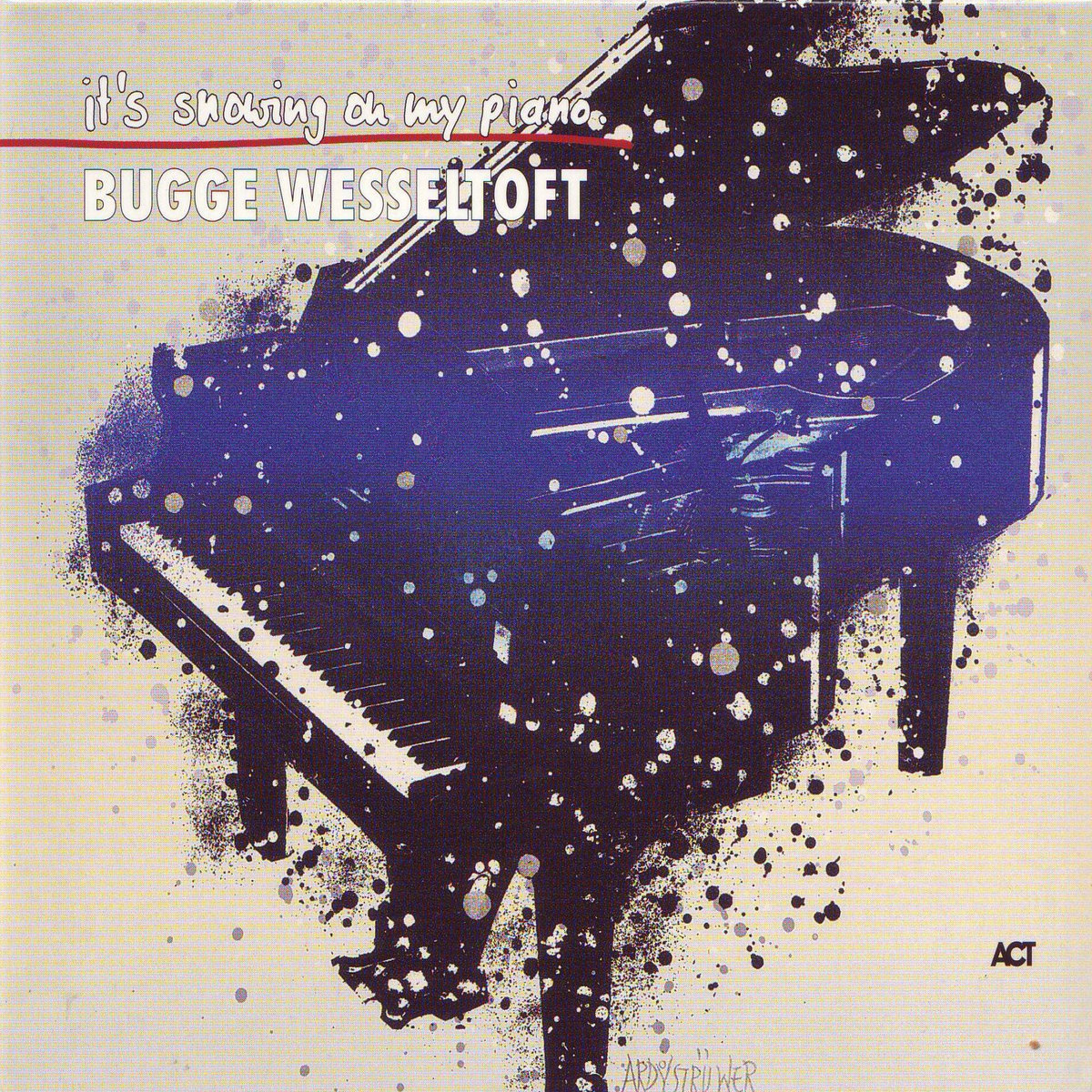
Christmas recommendation – Bugge Wesseltoft: It’s Snowing On My Piano

by Ben Hogwood

If you’re after something a little bit different music-wise over Christmas, let me point you in the direction of Bugge Wesseltoft, and the keyboard wizard’s exquisite 1997 album It’s Snowing On My Piano. It is an absolute treat, and includes this particularly beautiful rendition of the famous carol In Dulce Jubilo. Sometimes less is most definitely more!

You can purchase Bugge’s album from his Bandcamp site below:

On Record: Universal Harmonies & Frequencies – Tune IN (Yeyeh)

by Ben Hogwood

What’s the story?

Tune IN is the result of a five-day studio session that took place in Amsterdam in the summer of 2022, between saxophonist / composer Jerzy Maczyński and the Chicago DJ and producer Hieroglyphic Being. The two, introduced by Yeyeh founder Pieter Jensen, were supervised by recording and mix engineer Rein De Sauvage Nolting, otherwise known as RDS.

The sessions were highly productive, spawning 26 improvised compositions where Maczyński delivered saxophone and electronic ‘tools’, with Hieroglyphic Being contributing synthesizer parts and vocals.

After the sessions. RDS and Jensen sat down and worked the improvisations into coherent tracks, some of them fragmented and reconfigured – while Maczyński added more layers of instrumentation, creating a what is termed as a ‘whole digital band of reed instruments’. This post-production process proved every bit as important as the improvisations themselves.

What’s the music like?

This is a fascinating and energising listen. The musical chemistry between the two artists is evident, and the dozen tracks chosen for Tune IN reveal a wide range of colours, moods and styles. There is a cosmopolitan feel to a lot of the music made by the pair, extending well beyond Western approaches but taking those in mind.

It is impressive, too, that none of the compositions overstay their welcome – not even the title track with which the collection begins, clocking in at nearly 13 minutes. This is a fascinating scene setter, establishing the dominance of the saxophone but also showing the wide range of colours. It starts with a constant hook but the music really spreads its wings, the electronics and acoustics dovetailing beautifully.

Throughout there is a fertile musical imagination in play. Maczyński contributes some agile saxophone playing, especially on Can U Hear The Hum. Multidimensional Transformation is a completely different story, using a block rhythm in an oblique throwback to 80s funk, while Sam-Sa-Ra employs a grubby beat as melodic figures flitter around above like a group of swallows. Then another about turn, for two wide-eyed dreamscapes in The Book Of Forbidden Knowledge and Call Of The Wild.

Still the two are not done, with a flurry of activity on The End Of Ur World, the music circling around its central axis like a swarm of bees. The Emerald Tablet signs off with a bubbling cauldron of activity, set over a sure footed four to the floor beat.

There are many calling cards and influences at play here – Sun Ra, Kamasi Washington, Anouar Brahem even – and that’s just for the work at the treble end of things! Hieroglyphic Being thumbs through a wide range of rhythms in response, referencing but not restricting himself to house and experimentalism.

Does it all work?

It does – and Tune IN impresses not just through its continual invention but its ability to reign in most of the excesses. I would wager the tracks that didn’t make it are of a similar quality, given the consistently good work here!

Is it recommended?

It certainly is. This is an invigorating album, recommended to lovers of jazz and improvised music but also electronic afficionados. The two contrasting musical powers complement each other perfectly – and deliver a piece of work demanding your attention.

Listen & Buy

Published post no.2,034 – Saturday 9 December 2023