Electric Ballroom, Camden, London Thursday 19 October 2023
Reviewed by John Earls. Picture (c) John Earls
Chrissie Hynde, founder member, singer and leader of Pretenders has spoken about how this latest tour has focussed on playing nightclubs rather than theatres or arenas. And this performance at London’s 1500-capacity Camden Electric Ballroom amply demonstrated how this most enduring of bands can still cut it in this environment. And then some.
Losing My Sense of Taste is not just a gripping opener to their impressive latest (and twelfth) studio album Relentless but made for a powerful start to this 100-minute show that was full of energy, poise and attitude.
There certainly wasn’t any resting on the laurels of a ‘greatest hits’ package in a set that featured much relatively recent material. And how it rocked. Boots of Chinese Plastic and Don’t Cut Your Hair from 2008’s Break Up the Concrete were played back-to-back and were fast and furious but never out of control. Just one of many examples of how tight this iteration of the band are. Special praise to James Walbourne, co-songwriter on the more recent material, who played some magnificent guitar.
Of course, Pretenders have some well-known classics too and the two encores featured not only their excellent cover versions of The Kinks’ Stop Your Sobbing and I Go To Sleep but their own Back on the Chain Gang, Don’t Get Me Wrong as well as closing with ripping versions of Precious and Tattooed Love Boys from the very first Pretenders album released some 43 years ago.
This was sharp, powerful rock and roll with a nod to a punk sensibility including shout outs to Joe Strummer and Johnny Thunders. And of course no one quite sings a ballad like Chrissie Hynde, and stunning versions of You Can’t Hurt a Fool and Tequila proved to be cases in point. She remains one of the great voices of modern music. Actually, make that just one of the great voices.
John Earls is Director of Research at Unite the Union and tweets at @john_earls
You can listen to the new Pretenders album Relentless on Spotify below:
A new release on Lo Recordings that is well worth your time! In the words of the label’s press release:
“Musical innovators Red Snapper release a new album on Lo Recordings. Live at The Moth Club, the follow up to 2022’s acclaimed Everybody Is Somebody long player, features nine tracks from a vast and impressive back catalogue on Warp Records and Lo Recordings and captures perfectly the energy of their celebrated sold out London show from May 2022 in Hackney.
With an incredible and genre bursting career that spans nearly thirty years, the new album demonstrates the band’s ability to constantly rework classic and new tracks, keeping them impassioned, experimental and relevant. The collection includes a version of Suckerpunch which originally appeared on their 1998 album Making Bones.’ It was released as a single on 15 September.
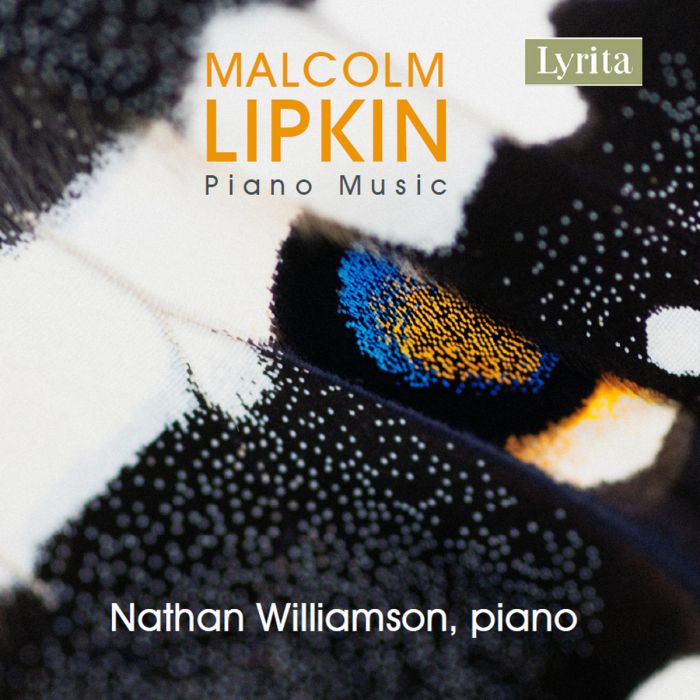
Lyrita SRCD.414 [68’55’’] Producer/Engineer Adrian Farmer Recorded 13-15 October 2021 at Wyastone Concert Hall, Wyastone Leys, Monmouth
written by Richard Whitehouse
What’s the story?
Following on from his three symphonies (SRCD.349), Lyrita here continues its coverage of Malcolm Lipkin (1932-2017) with this release featuring piano music from his later years – a cohesive body of work such as benefits from the insightful playing of Nathan Williamson.
What’s the music like?
While not lacking performances from the early 1950s onward, Lipkin remained a peripheral figure on the UK music scene until the premiere of his 1977 chamber work Clifford’s Tower (Divine Art DDA25202) – its powerfully humanist response to racial atrocity typifying the music from his maturity. The pieces on this new release appear dissimilar given their overt abstraction, but even a cursory hearing reveals many subtleties of expression arising directly out of the musical content which come increasingly into focus with each successive listen.
It was with his Third Sonata that Lipkin first came to attention, but there was a 32-year gap between its successor and the Fifth Sonata. Its two movements contrast with each other in every respect: the first, marked ‘Extremely slow’, starts then ends with a rapt inwardness that makes its ferocious central eruption more unnerving; the second, marked ‘Quite fast’, emerges as a toccata whose jazzy syncopation and technical virtuosity are carried forward to a decisive close. If the ‘Fantasy’ of the Sixth Sonata seems anti-climactic by comparison, its integrating of the nominal four movements (the ‘scherzo’ placed third) as a continuous discourse is brought off with absolute assurance. There is also a growing sense the outcome of its intriguing 15 minutes is unlikely to be that anticipated, which indeed proves the case.
It was none the less with his series of Nocturnes, composed over virtually two decades, that Lipkin made his defining contribution to piano literature. These take their cue from Chopin and Fauré, while adding a vein of ambiguity which is unique to this composer. Not least the First Nocturne with its distanced opening, hazy yet lucid evolution and ethereal close. The Second and Third pieces are respectively wistful and elegiac, then the remaining five each has a descriptive subtitle. Hence the Fourth Nocturne in its juxtaposing of the otherworldly and ominous, the Fifth with its winsome elegance, and the Sixth in its intuitive interplay of expressive types. The Seventh Nocturne has a more capricious demeanour, then the Eighth ends the series with its veiled allusiveness: ‘recollections’ in the fullest yet obliquest sense.
Does it all work?
Absolutely. Right from his first acknowledged pieces, Lipkin evinced craftsmanship of the highest order but it took time and experience to channel this into a wholly personal idiom. Such is everywhere evident in the piano music heard here, which also calls on pianism of the highest order. This it receives from Nathan Williamson (himself a composer of note), who has clearly devoted much time to evolving an all-round interpretive stance. With the Nocturnes in particular, it would hard to imagine more authoritative or sensitive readings.
Is it recommended?
Indeed. The spacious though focussed sound is up to Wyastone studio’s customary standard, and there are typically comprehensive annotations from Paul Conway. It is to be hoped that Lyrita will continue its Lipkin exploration with more of the chamber and orchestral output.
Sam Hayden Picking up the Pieces (1991, rev. 2019) – Darragh Morgan (violin) AXE[S] (1997, rev. 2009/19/21) – Mats Scheidegger (guitar) Frammenti di divenire (2018) – Gianpaolo Antongirolami (soprano saxophone); Michele Selva (baritone saxophone) Attente (2018-19) – Carla Rees (flute) Remnants I (2018-19) – Richard Haynes (contrabass clarinet) Remnants III (2021) – Karoline Öhman (cello), Tamriko Kordzaia (piano)
Métier MSV28622 [two discs, 84’51’’] Producers/Engineers Mikey Parsons (Picking up the Pieces), Mats Scheidegger (AXE[S]), Francesco Sardella (Frammenti di divenire), Simon Paterson (Attente), Fabio Oehrli (Remnants I), Marcel Babazadeh (Remnants III) Editing/Mixing Sam Hayden Recorded 11 July 2019 at King Charles Court, London (Picking up the Pieces), 21 September 2021 at SRF Studio, Zurich (Remnants III), 7 January 2022 at Nottingham University (Attente), 25 February – 8 May 2022 at Home Studio, Zurich (AXE[S]), 13 May 2022 at Helvetiaplatz, Bern (Remnants I), 29 June 2022 at Pinkhouse Studio, Ancona (Frammenti di divenire)
written by Richard Whitehouse
What’s the story?
Métier continues its coverage of Sam Hayden (following that of his piano music Becomings) with this collection of solo and duo pieces drawn from either end of his composing career.
What’s the music like?
As one would expect from Hayden, his music brooks no compromises and takes no prisoners. Heard in the running sequence specified here, the works run chronologically with those most recent pieces coming first. The Italian saxophone duo makes the most of the volatile textural layering and fractured spectral harmony in Frammenti di divenire, then Carla Rees is no less inside the tensely expressive idiom of Attente with its multi-section discourse (whether those designated ‘IIIa’ and ‘IIIb’ are intended to be heard continuously or as alternatives is unclear).
Next come the first and third items in the Remnants series (the worklist at Hayden’s website does not yet extend after 2018, but the second is for bass trombone). The first of these finds Richard Haynes forcefully ejecting sounds and sequences that are the ‘composed’ remains of an elaborate computer-generated process, while the third pursues a more flexible though still rebarbative dialogue between cello and piano, where a variation-like evolution can be sensed as part of an ongoing and combative interplay between microtonal and conventional tunings.
The second half of this set features two large-scale works from earlier in Hayden’s output, and his involvement with the ‘new complexity’ movement then at its most potent in the UK. Despite (even because of) its title, Picking Up the Pieces unfolds as a tautly focussed entity – made more so by its initial ‘motto’ phrase that remains detectible throughout all manner of transformation on the harmonic, rhythmic and textural levels. Superbly realized by Darragh Morgan, it is among the most impressive instances of cohesion wrested from fragmentation.
If the epic which is AXE[S] does not quite achieve such an overall unity, this is likely a result of the work’s overall scale (virtually half an hour of uninterrupted music) and its tendency to discursiveness evident in those numerous types of material that are continuously crosscut in what becomes an odyssey for the instrument and its performer as much as the actual content. Having commissioned, premiered and worked towards its realization this past 25 years, Mats Scheidegger embraces the challenge of presenting this piece in all its uncompromising glory.
Does it all work?
Yes, if each listener wishes it so. As has frequently been remarked, Hayden’s work has never made any concessions to those performing or hearing it; nor has his recent involvement with spectral techniques brought any lessening of the technical rigour or expressive vehemence as has characterized his thinking for over three decades. To do so would not have necessitated a response of such unwavering commitment from its exponents, who ensure that the demands made on them become integral to the overall experience of coming to terms with this music.
Is it recommended?
Yes. The all-round excellence of these performances is matched by the focus and immediacy of the sound in each instance, together with detailed while not unduly abstruse notes from the composer. Those coming to his music afresh are not likely to remain emotionally uninvolved.
Parry Piano Sonata no.1 in F major (1876) Piano Sonata no.2 in A minor (1878) Sieben Charakterbilder (1872) Five Miniatures (pub. 1926)
Richard Deering (piano)
Heritage Records HTGCD140-141 [two discs, 87’15’’] Producer/Engineer: Paul Arden-Taylor Recorded 15 July 2023 at Wyastone Concert Hall, Wyastone Leys, Monmouth
written by Richard Whitehouse
What’s the story?
Heritage continues its coverage of unfamiliar British music with this set featuring much of the music for solo piano by Hubert Parry, representative of those earlier years when his immersion in the Austro-German tradition was being leavened with a more personal vein of expression.
What’s the music like?
Although he had essayed two sets of shorter pieces in the late 1860s, Parry’s large-scale piano works come from the following decade. The First Piano Sonata owes a debt to Beethoven but also Mendelssohn and Weber, the eddying restraint of its first movement finding contrast with the capricious charm of its scherzo or wistful poise of its Andante. The finale duly heads from a pensive introduction to an elegant Allegretto that, in turn, finds greater animation in its coda. Modest in scope, the whole piece has a limpidity and understatement which is most appealing.
The Second Piano Sonata, if not that much longer, none the less leaves a greater impression – not least as the influences of Schumann and Brahms are more evident. The opening Allegro features a Maestoso introduction that recurs after the development and in the coda to deepen this music’s ingratiating manner, then the Adagio touches on deeper or even darker emotions. The ensuing Scherzo is more rhythmically incisive than its predecessor and while the finale is marked Allegretto, it builds to a decisive close – the introductory music again in evidence.
Before either of these sonatas, Parry composed a set of studies entitled Charakterbilder but with the intriguing subtitle Seven Ages of Mind, which suggests an evolving concept akin to several of Schumann’s collections. The Dreaming of a whimsical Prelude is followed by the impetuosity of Learning then the histrionics of Passion. The trenchancy of Striving precedes the eloquence of Longing then the elation of Triumphing, and though the final Adagio is untitled, its mood of inward rapture might well be thought of as being Fulfilling.
Parry soon went on to write a notable Piano Concerto and engaging Theme and Variations, but little further for the solo instrument until late in life. Published posthumously, the Five Miniatures likely emerged over a quarter-century – the initial Sleepy having an affecting charm complemented by the winsomeness of A Little Christmas Piece then wry humour of Capriccio. Greater profundity is hinted at in the ensuing Pause before this sequence reaches its close with the bittersweet resignation of Envoi – most delicate of miniatures.
Does it all work?
It does. Parry was still in the process of finding his own voice (which, as can be heard from his later choral and orchestral works, was a distinctive one) when writing this music, which should not detract from the technical finish and emotional warmth in much of what is heard here. It helps that Richard Deering brings out its salient qualities through playing responsive to the composer’s idiomatic if stylistically undemanding pianism, as rendered on a Steinway D which clarifies a preponderance of ‘middle range’ keyboard sonorities and passagework.
Is it recommended?
It is. The sound has all the clarity and perspective expected, and there are useful background notes by Lisa Hardy. A follow-up release featuring the Theme and Variations, along with the three sets of Sonnets and Songs without Words and the Schulbrede Tunes, would be welcome.





 Arcana.fm