Yesterday a memorial service was held for the much-loved and much-missed Paul Westcott, who sadly left us late last year.
Paul was for many best-known as the effervescent press officer for Chandos Records, a role he made his own. I think I speak for many of his friends, colleagues and associates when I say how grateful I am for his encouragement at every turn, his enthusiasm for the music he was working with, and his friendship.
The playlist below captures all the music either played or performed at the service, including several recordings either made or appreciated by Paul’s dear friend Richard Bonynge.
One notable omission from the playlist is Roger Webb‘s Theme from Hammer House of Horror – which is posted first to highlight Paul’s mischievous character!
If you live in London or the south of England and love the piano, then consider this: Did you know there is a fully-fledged, international piano competition right on your doorstep?
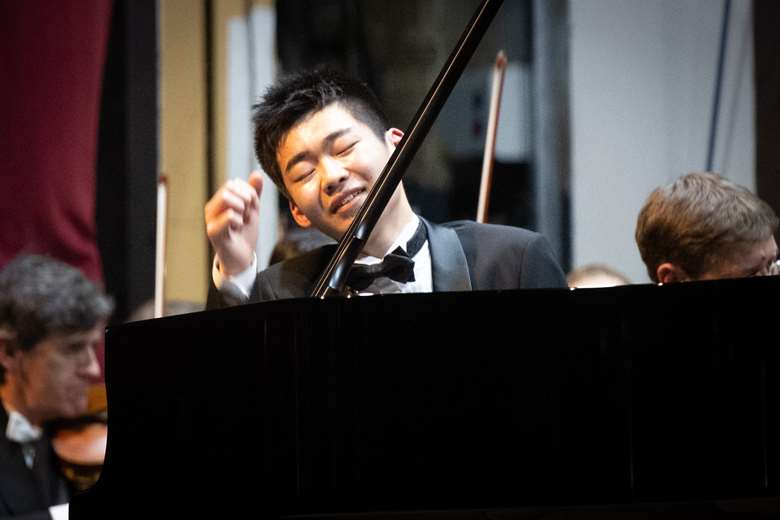
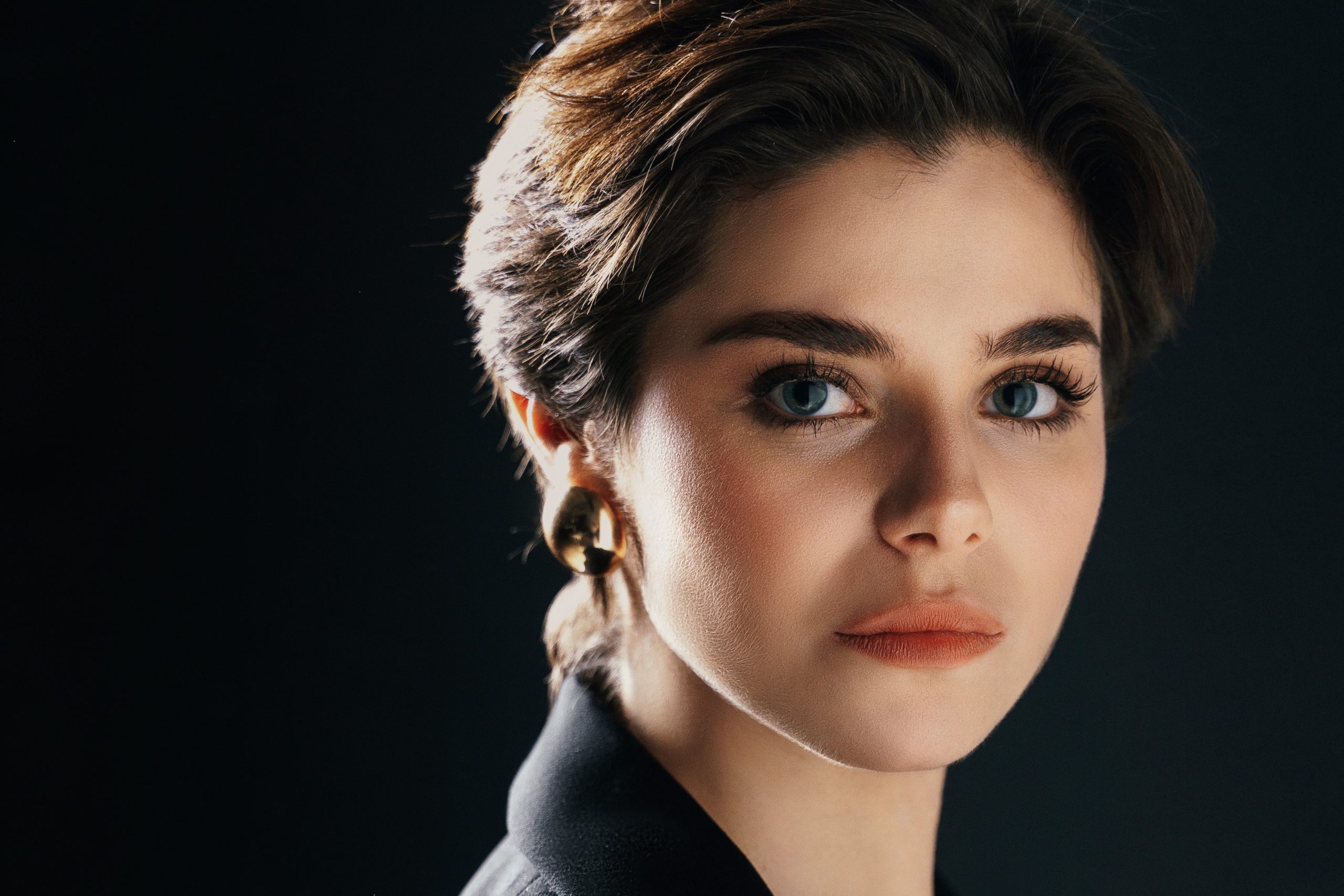
It is, of course, the Hastings International Piano Competition, hosting their Prize Winners’ Gala Concert at the White Rock Theatre in the town this Saturday 4 March. Performing at the concert, and accompanied by the Royal Philharmonic Orchestra under Rory Macdonald, will be two of the stars of last year’s competition. The winner, Japanese pianist Shunta Morimoto (above), will perform Beethoven’s Piano Concerto no.4, while third-placed Mariamna Sherling (below) will close the concert with Rachmaninov’s much-loved Rhapsody On A Theme of Paganini.
“It is a great honour for me to perform again on the historical stage of the White Rock Theatre”, said Sherling. “The Royal Philharmonic Orchestra is absolutely incredible! I was lucky to perform with this outstanding orchestra a year ago in the final of the Hastings International Piano Concerto Competition. I can’t wait to collaborate with them again.”
Shunta, meanwhile, is similarly excited for his performance of the Beethoven. “It will be my greatest delight to bring to my performance with the Royal Philharmonic Orchestra all the beauties I have uncovered studying the 4th concerto of Beethoven. It will be my honour to share this with the public of my most beloved city in England.”
The Hastings International Piano Competition is under the authoritative guidance of Paul Hughes who moved to the role from his previous post as Director of the BBC Symphony Orchestra. The competition itself has its roots in the Hastings Music Festival, which dates all the way back to 1908 – and it evolved from the festival, growing at a startling rate. Last year’s competition, says Hughes, was its best yet. “Yes, very much so. We had a record number of applicants – 360 – and a truly international field.”
Morimoto’s winning concerto in the 2022 competition, says Hughes, “demonstrated his extraordinary musicality and the maturity of his playing, as well as meeting all the technical demands of that particular work. Beethoven’s Piano Concerto no.4 has parallels in that it requires a deep understanding of the music, exceptional phrasing and an appreciation of the architecture of the concerto; all qualities that Shunta has in abundance.”
The concerto will begin with Dvořák‘s effervescent Carnival Overture, while Tchaikovsky’s Romeo and Juliet Fantasy Overture opens the second half – a prelude to Sherling’s Rachmaninov. “Mariamna (above) is the possessor of a fabulous technique, a razor-sharp mind and a sense of fun”, says Hughes. “I am expecting she will employ all of this to demonstrate many facets of Rachmaninov’s set of variations.”
Hastings has a reputation of being ‘The Friendly Competition’, which Hughes attributes to “a combination of the efficient organisation of HIPCC combined with the warmth of the community whose hospitality in looking after and supporting the young pianists at every stage of their progress through the competition makes such a difference. It is also the friendliness and openness of the jury who share insights and give constructive feedback to the competitors.”
Following the contestants after the competition has finished is imperative. “That is an important part of the Hastings International Piano experience”, he stresses. “We follow, support and offer performance opportunities to our pianists, and not just the finalists.” When choosing the winners, he says that “formally we don’t discuss the artists as a group of jurors. The range of experience within the jury means we are all looking for different aspects of a performance, and make our selections individually.”
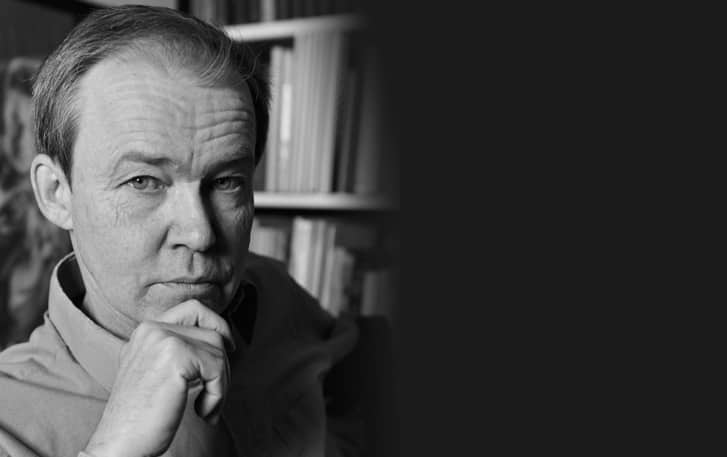
Hughes (above) considers the future of the competition to be rosy. “Professor Vanessa Latarche was President of the jury in 2022 and fulfilled that role magnificently. She is now Artistic Director of Hastings International Piano and so I am confident we will attract an even wider range of pianists from across the world. One of the elements of the competition that distinguishes it from many others is that it focuses predominantly on the piano concerto; to that end we have conductor Rory Macdonald returning to conduct not just the finals, but also the semi-final round. One further innovation new to the Hastings competition is that we are commissioning a new piano solo work that each competitor will be required to perform in their solo recital round.”
These exciting developments are a natural progression from Paul’s previous role with the BBC Symphony Orchestra. “In my role there I have worked with and presented very many pianists, from early career new generation artists to the most distinguished pianists working today. I have commissioned new work for them, supported and developed long term relationships with these amazing artists and fostered a sense of loyalty that I believe is so important in our profession. I am calling on all those experiences in Hastings to create a platform where we can discover, support and nurture young pianists and engage the Hastings community in the wonderfully exciting journey of a young pianist from competition to the very top of the profession.”
Philip Sawyers (above) Double Concerto for Violin and Cello (2020) Viola Concerto (2020)
Daniel Rowland (violin, viola), Maja Bogdanović (cello), English Symphony Orchestra / Kenneth Woods
Filmed at the Wyastone Concert Hall, Monmouth, Thursday 3 March 2022. Producer Phil Rowlands / Videographer Tim Burton
by Richard Whitehouse. Photo of Daniel Rowland and Maja Bogdanović (c) Stefan Bremer
Since returning to composition with a vengeance almost two decades ago, Philip Sawyers has created a varied output dominated by six symphonies along with five concertos that between them confirm the professionalism of his writing and a sensitivity to the instrument(s) at hand. Two of them were written, one after the other, in 2020 and received their public premieres at Hereford and Great Malvern in March last year.
Daniel Rowland (violin), Maja Bogdanović (cello)
Before that, they were recorded at one of the English Symphony Orchestra’s Wyastone sessions and it is these accounts which feature here. The live performances were covered when part of their respective concerts (see the reviews of the Double Concerto and Viola Concerto respectively), hence it only needs to be added that the studio recordings more than compensate for any lack of spontaneity with what they gain in subtlety of characterization.
The conviction of these readings should only be abetted when they are commercially issued on 6th March, as part of the ESO’s latest Sawyers release which also features his Octet for ensemble and Remembrance for strings (its public premiere to be given by the Leamington Chamber Orchestra at Holy Trinity Church, Leamington Spa on Sunday March 26th). Good news, moreover, that his oratorio Mayflower on the Sea of Time, whose premiere at the 2020 Three Choirs Festival fell victim to the pandemic, is to receive its first hearing later this year.
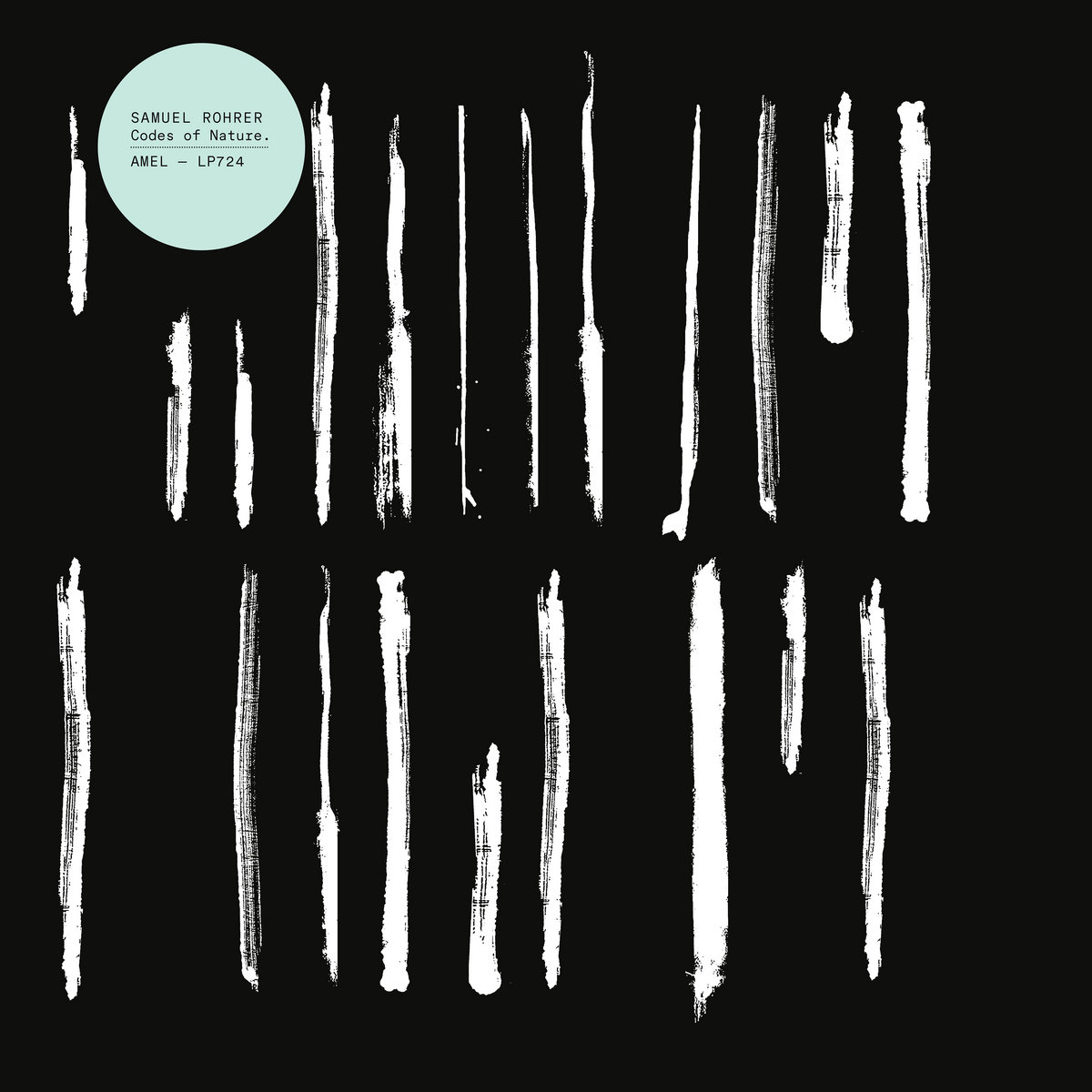
Samuel Rohrer thrives on collaboration within music. His credits are a veritable roll call of electronic and percussive music, listing Ambiq, Ricardo Villalobos, Max Loderbauer, Tobias Freund and Oren Ambarchi among his co-workers. On Codes Of Nature, however, the multi-skilled instrumentalist closes ranks and delivers an album as a one-man band.
His Bandcamp page credits Rohrer for contributions on drums, modular synths, electronics, keyboard, cymbals and percussion – a tightly knit unit that the prolific composer has wound into an album of six extended tracks.
What’s the music like?
Rohrer’s music is deceptive, a bubbling cooking pot of invention. On the surface the casual listener might think there is little going on, but delve deeper into his workings and all the percussive nuances and compressed melodic loops are revealed.
Body Of Lies is carefully moulded into a living, breathing organism, with plenty of small musical figures competing for space but complementing each other. Rohrer carefully adds light and shade to the track, with brushed percussion and trimmings of a slightly dubby nature.
Scapegoat Principle travels further afield, using distant vocal samples and stretched out, syncopated figures to create tension. The open-air approach gives the feeling of approaching a distant tribe, especially when Rohrer introduces a busy, shimmering figure.
On Fourth Density the textures open out, presenting a spacious sound before long melodic lines and intricate synth / percussion interplay take over. Clocking in at nearly eleven minutes, The Banality Of Evil is the longest track on the album, and it shows once again Rohrer’s easy grasp of bigger structures. The layer of percussion underneath the surface keeps things ticking over nicely, while drone-like figures drift in and out of focus above. Gradually the treble gets busier and the sounds become displaced, leaving a slightly woozy but oddly compelling outlook.
Talking To Nature Spirits is very easy on the ear, nearly ten minutes of aural balm with its oscillating loops and outdoor sounds. The pitch is firmly rooted but Rohrer plays clever tricks with cross rhythms, creating bursts of positive energy above the static undercarriage. Final track Resurrection responds to this with a more improvised outlook, scattered sounds and consonant harmonies creating an ambient collage.
Does it all work?
Yes, provided the right listening conditions are met. Listening to Codes Of Nature when on the move is unhelpful, for unless you have the right headphones a lot of its subtleties are lost to the surrounding noise. Better to be listening in a confined space, when all the workings can be revealed.
Is it recommended?
Yes – an atmospheric album that reveals more of its finely wrought treasures with each listen. A thoroughly intriguing and involving addition to Samuel Rohrer’s already impressive body of work.
Described as a ‘technicolour companion piece’ to last year’s Flicker album, his second release, Strange Loops & Outer Psych is a collection drawn from the EPs he has released in the intervening period.
To quote Bell himself, “Influences, stripped down acoustic reworks and remixes by my friends, comrades and heroes all hopefully help the listener see where my head was when I made Flicker, but also it stands up as a decent listen in its own right.
What’s the music like?
Bell is absolutely right – this is a really effective standalone piece in its own right, thanks to some judicious placing of extra tracks and quality remixes.
Maps in particular turn in an excellent contribution to the second category, James Chapman’s take on It Gets Easier presenting a starry-eyed throwback towards Hacienda days that complements the opener, David Holmes‘ dreamy rework of The Sky Without You. Richard Norris, meanwhile, uses a walking-pace beat to bring good vibes to Something Like Love. Claude Cooper adds a winning break beat to Sidewinder, while bdrmm bring sparkling treble and dubby bass to Way Of The World.
Meanwhile the original tracks find Bell in really strong vocal form, too – as good as at any point in his career. Listen, The Snow Is Falling is an evocative piece, while The Way Love Used To Be is unusually tender and affecting in its outlook. Bell’s voice is unforced in a similarly touching acoustic versions of She Calls The Tune, Love Is The Frequency, Lifeline and Something Like Love.
Countering this is the ‘psych’, a pulsing mix of World Of Echo from A Place To Bury Strangers.
Does it all work?
It does. An ideally named and appropriately dreamy collection.
Is it recommended?
It is. Andy Bell is in a particularly creative phase of his career, even for him – and whether it’s his instrumental GLOK project or this hazy, slightly retrospective workout, he is on fine form at every turn. Strange Loops & Outer Psych is a blissful, uplifting listen.




 Arcana.fm