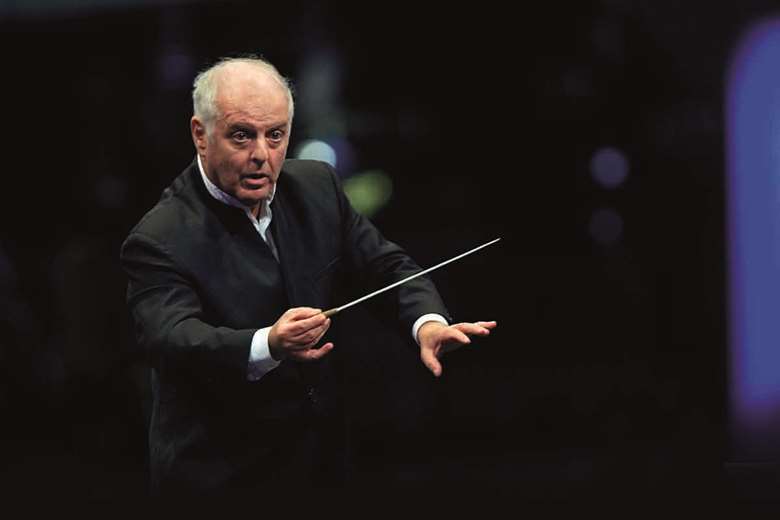
Yesterday marked the 80th birthday of the great pianist and conductor, Daniel Barenboim.
In celebration Arcana has compiled a playlist from just a fraction of his many, many recordings. There is so much from which to choose, as Barenboim’s discography runs from early days at EMI, and recordings with his late wife, cellist Jacqueline du Pré, through a substantial body of work for Warner Classics to his current ‘home’, Deutsche Grammophon.
Our small but perfectly formed playlist includes an extract from his most recent release of Schumann symphonies, with the Berlin Staatskapelle, but also some of those early recordings, including a Beethoven piano trio with du Pré and violinist Pinchas Zukerman:
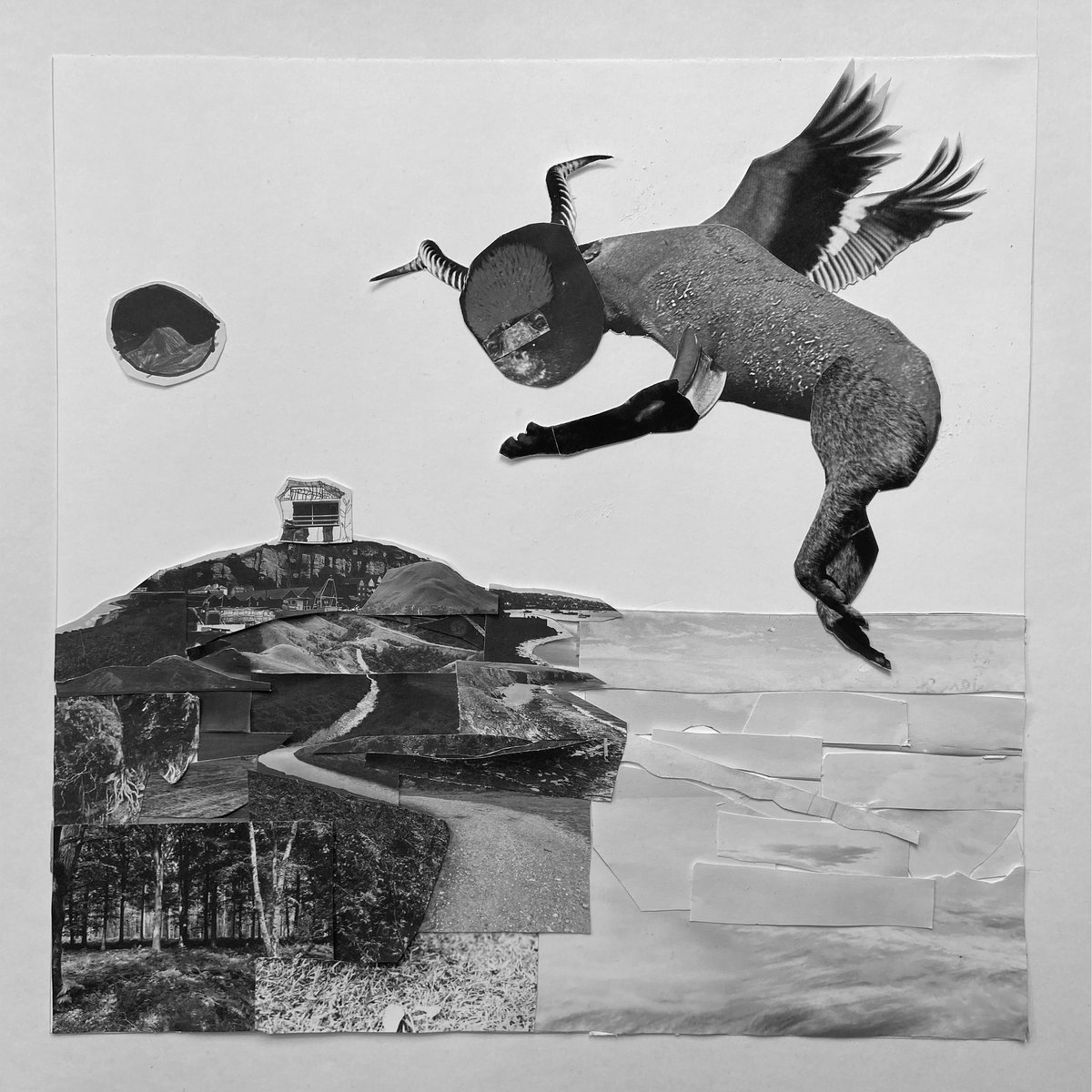
After a number of album releases for Ninja Tune (Projections, Love Songs: Part Two and Home), Romare sets sail on his own label You See. Here he delivers a new 8-track album, bringing more of his own instrumentation and vocals to the fore alongside previously honed sampling techniques. On Fantasy, Romare (real name Archie Fairhurst) is able to also bring in audio clips from 1970s fantasy cinema, which proved a lasting inspiration during lockdown.
Fairhurst also cites a love of the band Gryphon and the influence of Medieval music on the album.
What’s the music like?
Playful and affectionate, though not afraid to get down and dirty when it wants to. The influence of Medieval music is most evident in its touching simplicity, while on other occasions Romare’s music is a lot more layered, with plenty going on.
Priestless chugs along with displaced voices, brassy undertones and fun riffing, its direction never easy to trace. Dungeon and the excellent Seventh Seal are more beat driven too, the latter exploring suspended synths which are initially hazy but then let loose in thrilling fashion. Sunset is energetic and quite playful, too.
At the other end of the beat spectrum sits the blissful Walking In The Rain, an easy and effortless stroll where the rhythm track and vocal – perfect for this month’s British weather! – go hand in hand. Closing track The Fool taps into a similar vibe, showing how easily Romare can switch between intense sample-based workouts and pieces of music that take us outside for a breather.
Does it all work?
It does. There are no particular rules to Fantasy, which make the resultant music all the more winsome. Fairhurst’s blend of carefree structure and more careful, studied looping works really well.
Is it recommended?
It is. Previous albums showed Romare to be imaginative and creative in rhythm and sound – Fantasy builds on that and shows he is progressing to be a producer of some repute.
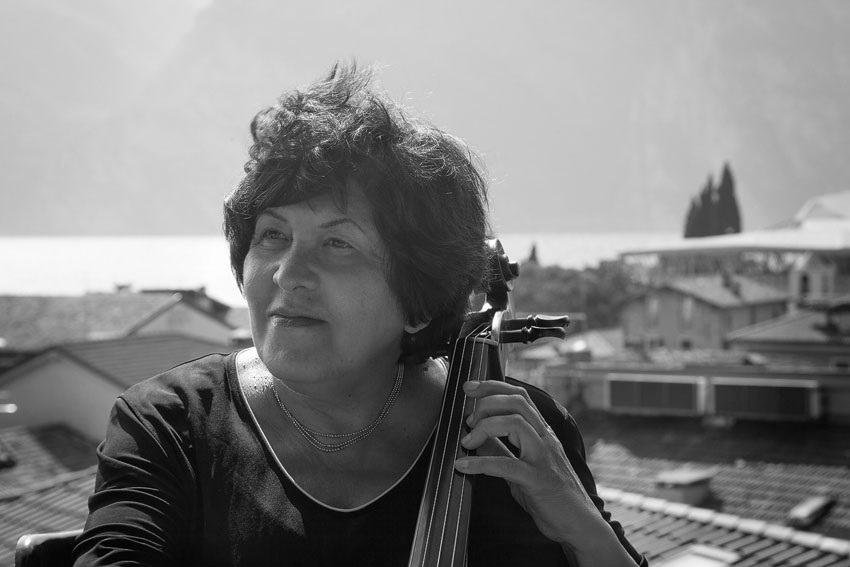
Today marks the 80th birthday of the distinguished Russian cellist Natalia Gutman.
A pupil of Mstislav Rostropovich, Gutman has performed and recorded with legendary conductors Kirill Kondrashin, Yevgeny Svetlanov, Gennadi Rozhdestvensky and Yuri Temirkanov among many others. Alfred Schnittke wrote a number of pieces for her, including his first Cello Concerto.
In the biography on her website, Elizabeth Wilson writes that ‘as an enthusiast of chamber music she formed an important musical relationship with the exceptional violinist Oleg Kagan, who became her husband. Together they formed a trio with Sviatoslav Richter, who also frequently acted as Natalia’s duo partner.
You can enjoy her artistry through the Spotify playlist below, including recordings of concertos by Shostakovich and that dedication from Schnittke:
Vaughan Williams Scott of the Antarctic (1948) Directed by Charles Frend Music by Ralph Vaughan Williams Presented by Big Screen Live
Kate Trethewey (soprano), CBSO Youth Chorus, City of Birmingham Symphony Orchestra / Martyn Brabbins
Symphony Hall, Birmingham Friday 11 November 2022
Reviewed by Richard Whitehouse
The City of Birmingham Symphony Orchestra’s commemoration of the 150th anniversary of Vaughan Williams’s birth concluding this evening in a showing, with live orchestral accompaniment, of Scott of the Antarctic which proved to be the composer’s most ambitious cinema project.
Directed by Charles Frend (who presided over several UK films in the 1940s and ‘50s, before having an equally prominent role in television) and released in November 1948, the film was a commercial success not least owing to the expressive scope and richness of its music. This extended to some 80 minutes, but Vaughan Williams was more than happy for it to be edited as required and was so in accord with Ernest Irving (director of music at Ealing Studios) that he dedicated to him his Sinfonia Antartica, evolved from the original score, four years later.
It was this close synchronization between image and music that Tommy Pearson (director of Big Screen Live) was intent on capturing when he prepared the film for concert presentation (and the background to which was described in entertaining detail in the programme for these concerts). Suffice to add while the overhauled soundtrack, consisting of dialogue and sound-effects, was all too evidently recorded in mono so that it is easily obscured by the music, the visual component has an opulence and immediacy as transcends its more than seven decades.
Occupying a space equivalent to the lower half of the organ in Symphony Hall, the screen was less dominant in a venue of this size than it would have been even in larger cinemas, but any wider or wrap-round treatment would doubtless have raised many technical obstacles and the print had, in any case, a clarity evident from the rear of the stalls. Much the same could also be said of the orchestra’s contribution, even if its seating on a level platform meant certain of those more intricate details and textures seemed less prominent than under concert conditions.
There can be little but praise for Martyn Brabbins’s direction. A Vaughan Williams exponent of stature (the latest instalment in his traversal of the symphonies has recently been issued on Hyperion), he has an instinctive feel for the emotional highs and lows of this music along with its myriad instrumental subtleties. That divide between what was retained for the soundtrack and what became the composer’s Seventh Symphony is greater than is often supposed, yet the degree to which the former effects and enhances one’s experience of the film is considerable.
This is not the place for any detailed overview of the film itself, though it is notable just how restrained and even absent is the music from the latter stages when Robert Scott and his team head towards oblivion the further they seem to be heading on their return journey. This might have been more to do with Frend or even Irving, but the resulting psychological dimension – beholden neither to inter-war expressionism nor wartime realism – was ostensibly new in a cinematic epic of this kind and makes the film historically as well as artistically significant.
The singing of Katie Tretheway and the CBSO Youth Chorus left nothing to be desired, but many attendees having stocked up on liquid refreshment beforehand saw a steady coming and going over much of the two hours: something that would not be tolerated in a concert, so why here?
Vaughan Williams The Wasps – Overture (1909); Towards the Unknown Region (1906-07); Five Mystical Songs (1906-11); Symphony no.5 in D major (1938-43)
Roderick Williams (baritone, above), CBSO Chorus, City of Birmingham Symphony Orchestra / Michael Seal
Symphony Hall, Birmingham Thursday 10 November 2022
Reviewed by Richard Whitehouse
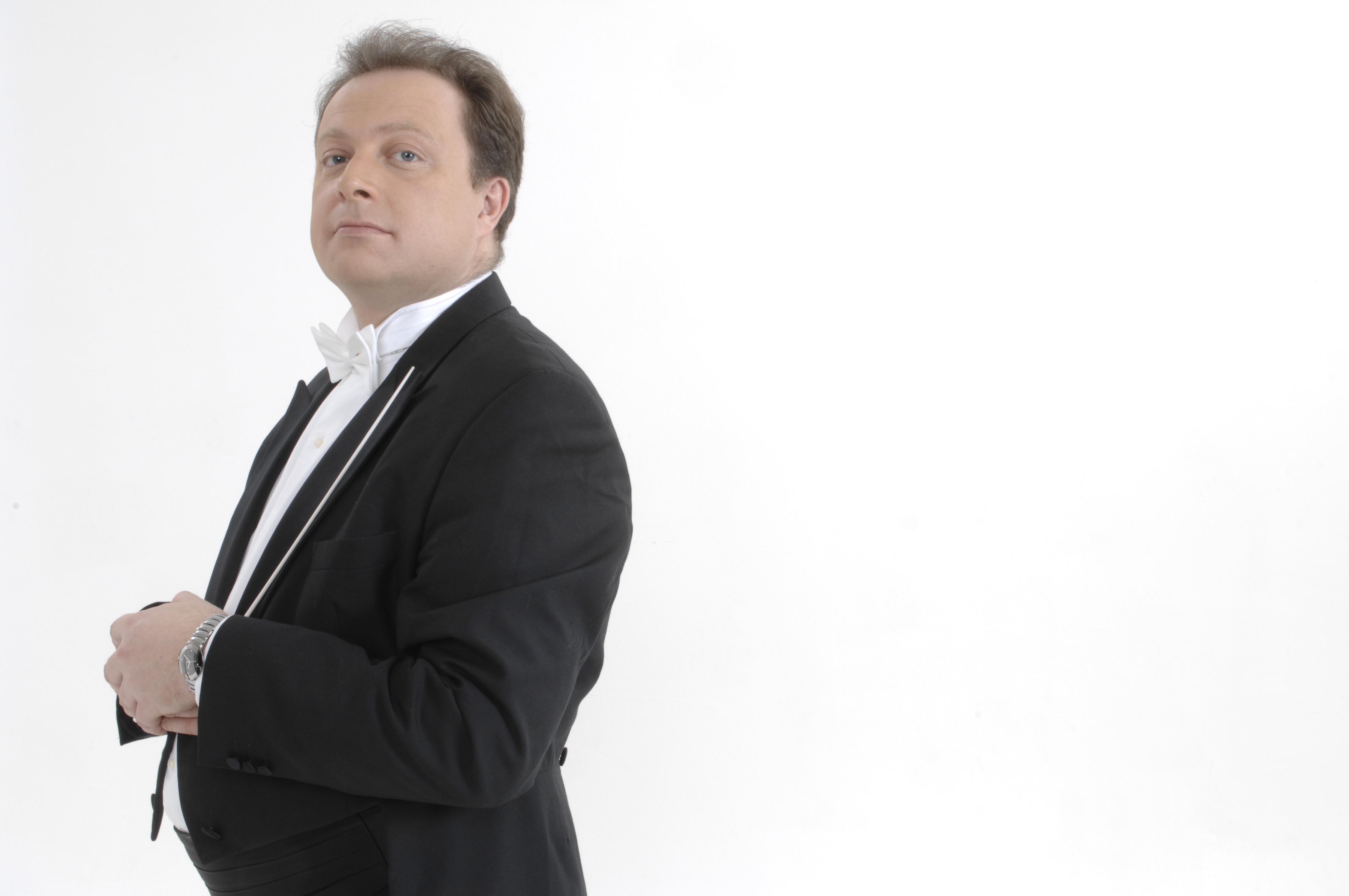
The City of Birmingham Symphony Orchestra’s mini-series devoted to Vaughan Williams continued this evening with the overture from his music to Aristophenes’ satire The Wasps, paced by Michael Seal (below) so its animated and soulful themes complemented each other perfectly.
Judicious was no less true of this first half with its overview of the composer’s music across the first decade of the last century. Its premiere at the Leeds Festival bringing a first taste of national acclaim, his ‘song for chorus and orchestra’ Toward the Unknown Region sets Walt Whitman with assurance and imagination in its evocative opening section, and if the ensuing peroration feels a little contrived – the journey proving more memorable than the destination – that was no fault of the CBSO Chorus whose contribution was sensitively attuned throughout.
As it was with those Five Mystical Songs in which the composer gave full vent to his love for the Metaphysical poets and George Herbert in particular. A curiously hybrid conception, the chorus is very much secondary to the baritone soloist throughout much of the first three songs – a congregational presence in the processional Easter and then underpinning the emotional intimacy of I Got Me Flowers or confiding profundity of Love Bade Me Welcome, before falling silent in The Call. Roderick Williams was eloquence itself in this latter setting and a forthright presence in the preceding, before sitting out the Antiphon with its pealing bells and mounting exultation. Williams has recently given the rarely heard version of these songs with piano but hearing them with such burnished splendour as here was its own justification.
Is the Fifth Symphony unduly exposed nowadays? The composer’s most characteristic and culturally significant such piece might risk palling with too much repetition, but there was no chance of that here. Seal (above) set a flowing if not too swift tempo for the Preludio, pointing up the radiant tonal contrast between its themes – the second of them capping the movement to thrilling effect towards its close. Its rhythmic pitfalls ably negotiated, the Scherzo had the requisite deftness and mystery while taking on a degree of malevolence over its later stages. The Romanza then emerged surely yet unforcedly through glowing chorales and plaintive soliloquy (CBSO woodwind at its most felicitous) to a heartfelt culmination before subsiding into a hardly less enveloping serenity – its inspiration in John Bunyan tacitly acknowledged.
Enough had wisely been kept in reserve for the final Passacaglia – its initial stages evincing an almost nonchalant gaiety as only clouded towards its centre with the recollection of earlier ideas. By making it the work’s emotional highpoint, moreover, Seal ensured that the epilogue capped not just this movement but the work overall – its transcendence (hopefully) speaking as directly to listeners today as those at the premiere almost 80 years ago. Certainly, it would be a real misfortune were this music ever to be viewed solely from the perspective of the past.
An absorbing performance, then, that reaffirmed the greatness of this music to an enthusiastic audience. Vaughan Williams at 50 concludes tomorrow evening with the CBSO providing a live soundtrack to the composer’s most ambitious cinematic project – Scott of the Antarctic.
You can read all about the 2022/23 season and book tickets at the CBSO website. For more information on Scott of the Antarctic, click here – and click on the artist names for more on Roderick Williams, the CBSO Chorus and Michael Seal



 Arcana.fm