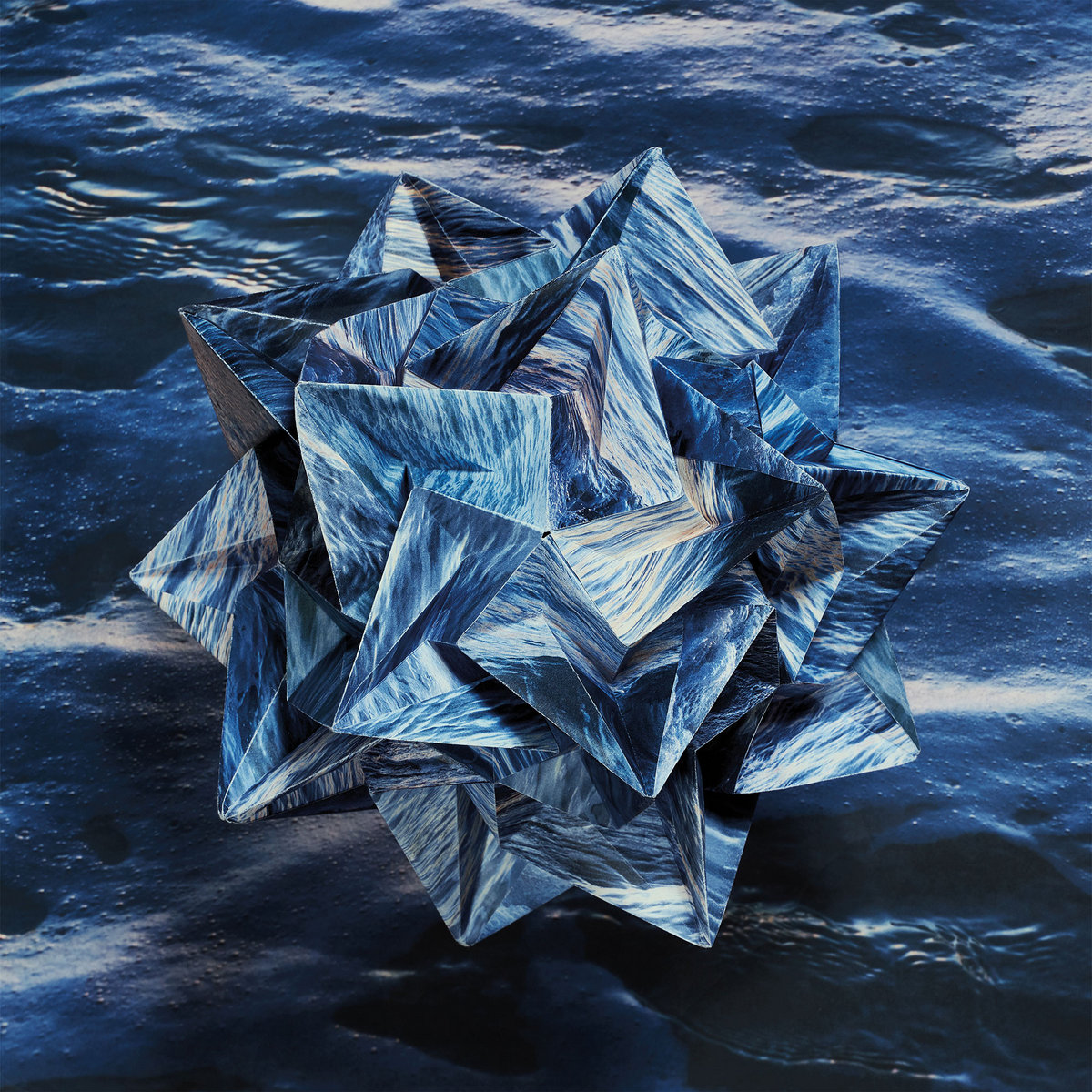
There are just two tracks on Electronic Breeze, an album whose name really is matched by its contents. The composer is Simon James, described on the press release as ‘a master of electronic manipulation’.
The two tracks were written as a sound installation for the Lowry Gallery in Salford. James describes them on his blog as ‘durational environmental sound pieces’.
The electronic breeze of the title is a semi-random construction, made with wind chimes, modular synth clusters arranged in loops and field recordings. While using wind chimes, James was keen to avoid the clichés that can occur when they have been used in New Age music. Instead he chose a different set for each track to depict different times of the day, and programmed his Buchla synthesizer to randomly play back the notes from each chime, never repeating itself.
What’sTheMusicLike?
While the initial method of construction might sound like a cop-out initially, James used it as a springboard to begin his own composition, using the ‘breeze’ to dictate other musical events such as intensity, speed, pitch. Then he added the wind chimes themselves. At all times he wanted to complement the installation – so that means the dynamic level of the piece is low, and best enjoyed in isolation.
If you have the right listening conditions then Electronic Breeze is a piece in which to let your mind run free. The two extended sections complement each other, and the resultant sounds, which occupy mid to upper pitches most of the time, give the impression of floating. It is in effect the musical equivalent of gliding.
Does It All Work?
It does – certainly as background music to ease the troubled mind, and as a helpful accompaniment for mindfulness sessions or meditation.
Is It Recommended?
Yes. Electronic Breeze is a soothing way to spend just north of an hour, taking the edge away from the pressures of everyday life.
It gives us great pleasure to welcome Mark Peters (above) for the latest Arcana playlist guest turn.
Mark has recently released a new album, Red Sunset Dreams, through the rather wonderful Sonic Cathedral label, complementing his previous release Innerland. Where that album painted pictures of the windswept countryside in the north of England, the new opus reports from across the Atlantic with a set of weather-beaten, dusty portraits.
Peters – whose interview with Arcana will be published soon – has given us a snapshot of his listening habits while the album was being made. They show a form of ‘ambient country’ along the lines of his own blissful achievement.
Among the many highlights are slow burning tracks from Cowboy Junkies (a smoky, harmonica-infused Powderfinger), a layered treat of vocals and slide guitars from Nancy Sinatra, in sorrowful mode with When It’s Over, and a rich set of strings setting the scene for Lee Hazlewood to sing Your Sweet Love.
Other high points include the beautiful Optimistic from Skeeter Davis and the airy Dreaming My Dreams, showcasing the sonorous voice of Waylon Jennings. Dolly Parton also appears, In The Good Old Days, while you should definitely take time for gems from Ry Cooder, Gene Clark, Floyd Cramer and a breezy final song from Michael Nesmith, Two Different Roads.
Our grateful thanks to Mark for his selection. Give yourself an hour, turn off all distractions, kick back and enjoy:
Recorded at Wyastone Concert Hall, Monmouth, 2 December 2021
by Richard Whitehouse
The English Symphony Orchestra has been assiduous in promoting Steven R. Gerber (below), not least with a release of string-orchestra arrangements of his chamber music from Darron Hagen and Adrian Williams (Nimbus NI6423), and now this online performance of Music in Dark Times.
Written to a commission by Vladimir Ashkenazy and the San Francisco Symphony Orchestra, who gave the first performance in March 2009, this is very much a synthesis of traits from its composer’s maturity and, in contrast to the largely interiorized world of his chamber output at this time, a demonstrably public statement with resonances beyond its immediately American context. Opening with an expanded version of the Fanfare for the Voice of America, written in the aftermath of those events of 9/11, it continues with a Pavane featuring the diaphanous interplay of brass and strings, then by a Dance of Death whose tarantella-like underpinning adds greatly to its malevolence. This, in turn, finds contrast in a Dead March which builds in a steady crescendo towards a climax left ominously unresolved. It remains for an Elegy, scored only for strings, to provide a measure of solace in music that reaches back to pieces by composers such as Piston, Carter and Barber; after which – a full orchestral Fanfare brings this sequence to a close which, while far from affirmative, offers at least a glimmer of hope.
Although scored for sizable forces – including triple woodwind, five horns and four trumpets – Music in Dark Times is resourcefully as well as atmospherically orchestrated so that salient details are always heard to register. The ESO players are audibly at home in this piece, while Kenneth Woods directs with assurance music he clearly – and rightly – believes in. Hopefully it will be issued on a future release of Gerber’s orchestral work (including the still unrecorded Second Symphony), but for now this latest ESO online offering can be well recommended.
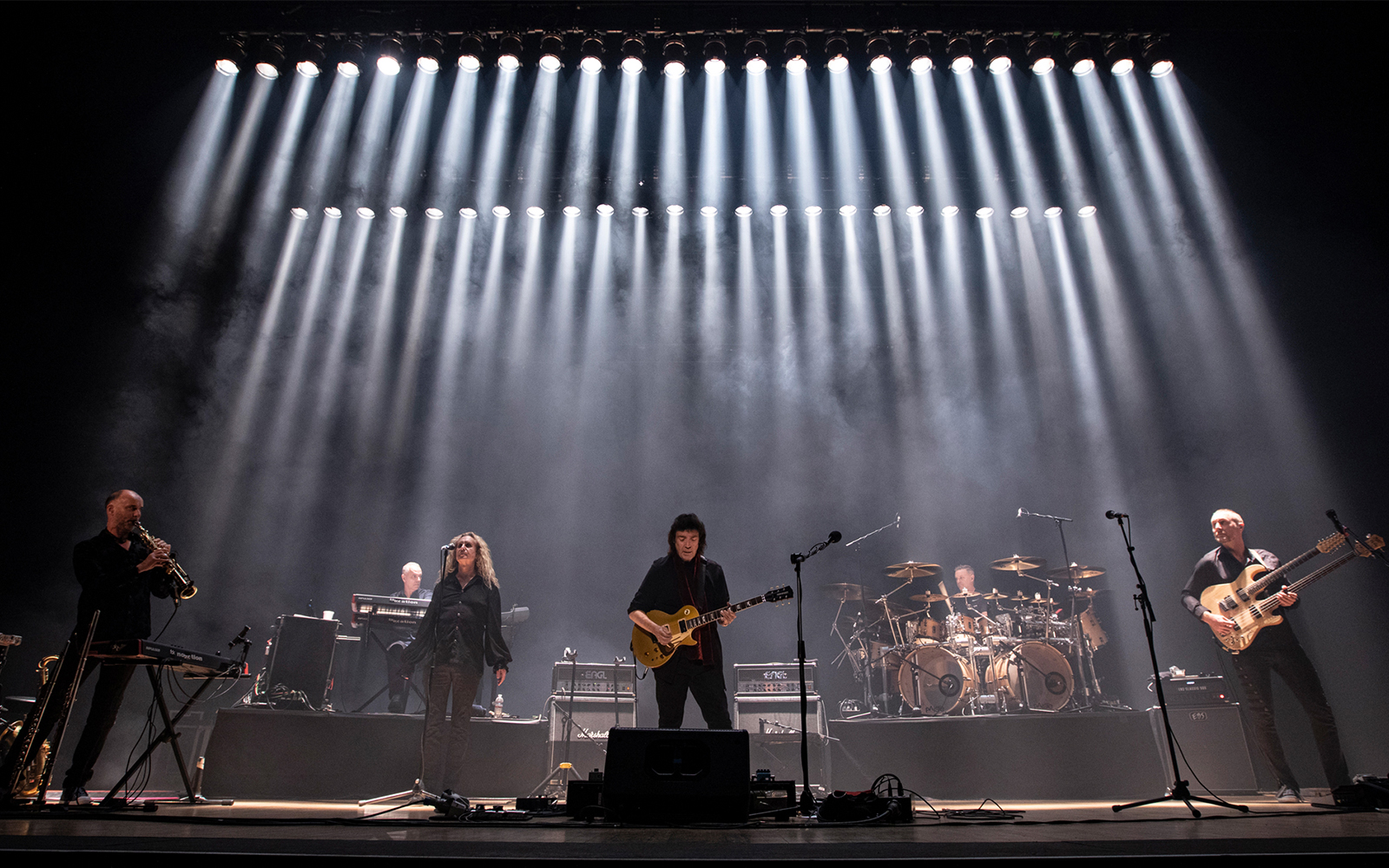
Steve Hackett (vocals, guitar), Nad Sylvan (vocals), Roger King (keyboards, vocals) Rob Townsend (saxophone, flute, keyboards, percussion, vocals, Jonas Reingold (bass guitar, vocals), Craig Blundell (drums), Amanda Lehmann (additional guitar, vocals)
Reviewed by Ben Hogwood
Nearly 50 years to the day after it was released, Genesis‘ album Foxtrot is back for another turn. With Peter Gabriel as lead vocalist, it proved one of many peaks from the group’s defining line-up on its release, and to this day retains an air of exploration – both musically and lyrically – and a sense of peculiarly English mystery.
Steve Hackett was an integral part of the group when it was recorded, his role as principal lead guitarist a key driver for the music’s melodic content, sonorous acoustics and semi-classical demeanour. Since he left Genesis in 1977, Hackett has maintained a richly productive solo career notable for its consistency and elegance. We heard a number of excellent examples in the first half of this concert, some of them springing from the sessions for the Foxtrot album itself.
Nowadays, Hackett’s live band speak as he does, with little fuss made during their virtuosic contributions – save perhaps for multi-instrumentalist Rob Townsend, prodigiously talented through turns on saxophone, flute, keyboard, vocals and percussion – and the first to get the audience on side as part of the theatre. Behind him sat Roger King, an authoritative presence on keyboards who brought new orchestral elements to A Tower Struck Down along with the deep-throated roar of the organ sound on a thrilling performance of The Devil’s Cathedral.
Bassist Jonas Reingold was part of a solid foundation with the fluid drumming of Craig Blundell, and both were afforded lengthy solos in the concert which, while impressive, didn’t always complement the material. Less was definitely more here, as we found out even when Amanda Lehmann joined as an extra guitarist and vocalist. As a seven piece the band delivered one of Hackett’s calling cards, Spectral Mornings, with a mixture of mystery and grace. This segued nicely into the bright pop of Every Day, its five-part vocal harmonies dressing a tune with more than a passing resemblance to Beethoven’s Ode to Joy.
The first hour made a strong impression, Hackett’s solo material unquestionably up to the task, though many of the audience sat up noticeably after the interval for a second half account of Foxtrot. Now it was vocalist Nad Sylvan’s turn to take the lead, which he did impressively, his voice intriguingly balanced between early Phil Collins and Peter Gabriel – a nice fluke, since he sang naturally throughout. There was some theatre, too – a telescope pointed emphatically to the heavens at the end of a powerful Watcher Of The Skies, where laser eyes were also in play. His attention to detail was commendable, while never trying to imitate his predecessors.
The band allowed plenty of room for the weird and wonderful lyrical content of Foxtrot to come through, still drawing sharp parallels to the current situation in the UK, where little about human nature has changed in 50 years. Get ‘em Out by Friday was sharply observed, with its references to the new town of Harlow and property evictions around. The more reserved Time Table, found King’s piano ideally weighted, Sylvan’s voice emotive in response. The singer also held Can-utility And The Coastliners in his grasp, initially wistful but handling the song’s unusual melody with commendable control. The guitar sound, spearheaded by the modest Hackett from centre stage, was a constant joy, a lovely blend of acoustic and electric with intricate detail to bring out the album’s slightly pastoral leanings. The syncopations and changes of time signature were expertly handled by the band, to whom this album is now second nature.
The album’s key track, Supper’s Ready, was a fitting summit the band scaled with poise and intensity. A firm fan favourite after all this time, its ebb and flow was compelling, Hackett clearly enjoying himself with a wry smile now and then. The blistering finale turned everything up to eleven, Sylvan nailing the high notes if slightly backward in the audio mix.
A Genesis encore double included Firth Of Fifth, where King excelled on electric piano once again, and Los Endos / Slogans / Los Endos, starting languorously but growing to a flurry of colourful activity, and showing in the process how adventurous this music still sounds, five decades on.
Hearing the whole of Foxtrot without a break was a thrill, like sitting through an orchestral symphony, and witnessing Steve Hackett’s satisfaction was a considerable boon too. With his 25-date tour now complete, he continues as one of the hardest working man in progressive rock. This particular instalment showed him to be a modest and deeply caring musician, at his happiest when playing guitar centre-stage. That kind of thrill looks set to stay with him for a long while yet.



 Arcana.fm