
New music – Clarice Jensen: Unity

Clarice Jensen unveils new single Unity from her upcoming fourth solo album In holiday clothing, out of the great darkness.

Composer and cellist Clarice Jensen unveiled Unity, the second single taken from her upcoming fourth solo album, In holiday clothing, out of the great darkness, out on October 17, 2025 via FatCat Records’ 130701 imprint.

In ‘Unity’, Jensen builds a symmetrical four-chord pattern that repeats steadily, through looping. Upon this she imposes a scampering arpeggio pattern that is irregular and additive, elongating itself through the repeats. She says,’The concept of unity suggests that many are being joined as a whole. In mathematics it is literally the number one. Unity depicts the multitudes (the evolving arpeggios) contained within a unified whole (the four-chord motif), examining the implications of one, or solo, or solitude and how oneness can imply both solitude and interconnectedness.’

‘Unity’ is the second glimpse of Jensen’s new material, following July’s ‘From a to b’. Jensen has been performing ‘from a to b’ as a solo piece while touring with My Chemical Romance, where it has resonated strongly with audiences. The track explores the idea of how and when a solo line becomes two, and how a singular melodic voice can become its own counterpoint.

In holiday clothing, out of the great darkness showcases Jensen’s distinctive compositional approach, in which she improvises and layers her cello through shifting loops and a chain of electronic effects, exploring a series of rich, drone-based sound fields. Pulsing, visceral and full of color, her work is deeply immersive, marked by a wonderful sense of restraint and an almost hallucinatory clarity. The album was recorded as part of the Visiting Artist Programme at Studio Richter Mahr, the creative space co-founded by Yulia Mahr and Max Richter in Oxfordshire, England.

Having made a solo move to the Berkshire Mountains in upstate New York in September 2020 after many years living in Brooklyn, Jensen found herself confronting and enjoying a newfound solitude as the non-stop movement and collaboration of city life as a musician had come to a standstill. The first LP she made post-move – Esthesis, released on 130701 in 2022 – is largely devoid of cello, synth heavy, and examines emotions in a self-conscious way from an isolated point of view that is nearly one-dimensional.

Jensen sets new parameters for In holiday clothing, placing the acoustic sound of the cello at the fore, and affecting the sound only through a few effects (octave displacement, delay, tremolo and looping). ‘It felt necessary to return to the rich acoustic sound of the cello that I’ve loved and produced for nearly my entire life, and to return to an expression of emotion that’s multi-dimensional and sincere,’ she notes.

As a soloist, Jensen endeavors to establish a new tradition of solo cello performance that integrates electronics with the storied and beloved performance practice intrinsic to the instrument. She places great importance on finding and working with effects pedals that integrate well with the cello, and avoids overt use of plugins or playback. Jensen considers the solo cello works of Johann Sebastian Bach as a central backdrop to this new album. Bach’s Solo Cello Suites display a rich range of voices created by one instrument. Having found ways to expand the sound and voice of the instrument through electronics, Jensen found it fitting to return to Bach’s works – music she has played for many years – as a way to touch back in with the tradition of the instrument.

As a composer, Jensen insists that the programmatic elements of her albums align and ring true. This album’s title is taken from the quote from Rainer Maria Rilke’s Letters to a Young Poet, ‘… what steps forth, in holiday clothing, out of the great darkness’. She writes, “the quote from Rilke had been bouncing around my mind for many years; the visualisation of musical ideas being born and echoing inside a ‘great darkness,’ then emerging ‘in holiday clothing’ felt very beautiful and tangible, and this essay, which to me is a manifesto in celebration of solitude, depicts what so many artists and composers experience when they endeavor solitary work. This album reflects a personal and conceptual exploration of what solo means.”

In holiday clothing, out of the great darkness is due out on 17th October 2025, and is available for pre-order on vinyl and pre-save on supporting digital streaming platforms.

Switched On – Molly Joyce: State Change (130701)

by Ben Hogwood

What’s the story?

State Change is a suite of ‘seven electro-acoustic tone poems’, from a deeply personal source. When aged seven, Molly Joyce was involved in a car accident that resulted in a permanent injury to her left hand, which was nearly amputated. A great deal of surgery was carried out to restore the hand to something approaching working order, though even now it is still impaired.

State Change is a musical representation of the medical procedures and records behind the slow route to recovery. Joyce was keen, however, for the album not to be a ‘pity party’, but to turn her experience into music.

What’s the music like?

Direct and unflinching, the album unfolds with seven tracks whose titles reflect key dates in the injury and recovery process. August 6, 1999 – the day of the accident – opens with a single, unblinking sine wave, that proves a little uncomfortable in the wrong environment, but opens out to be quite a sonorous drone accompaniment to a melody of long phrases, its roots in chant. The words are matter of fact but describe the situation with unflinching accuracy – ‘Skin is…minimal…flap is…needed.

August 9 1999 is painful, recovery far from the mind as Joyce deploys her ‘chest voice’, shrouded in distortion. The next week, just after a solar eclipse, August 13 + 16 1999 are more fragile but also submissive, the procedure of back to back surgeries showing the shoots of recovery. Distortion and drones are the constant accompaniment, at times intensely threatening – the surgery especially – and culminating in a scream generated by experimental artist Fire-Toolz.

At other times the drones provide comfort, especially when surgery is done. November 24, 1999 moves slowly, Joyce’s vocal an out of body experience, before April 19, 2000 and October 26, 2001 find calmer waters, the latter a release through the removal of pins from her hand. July 27, 2007 is made with the left hand itself using a music glove, and produces music of rare tenderness and vulnerability, the scar size reduced.

Does it all work?

This is vividly descriptive music, and its intensity certainly won’t suit all occasions. Yet State Change is fiercely personal, and has at its core a lasting resolve that makes a strong impact on the listener.

Is it recommended?

It is. A deeply courageous album, a story of overcoming adversity. State Change may be slow moving and is occasionally painful to take in, but it is ultimately a life-affirming album, a release from captivity.

Listen / Buy

Published post no.2,624 – Tuesday 12 August 2025

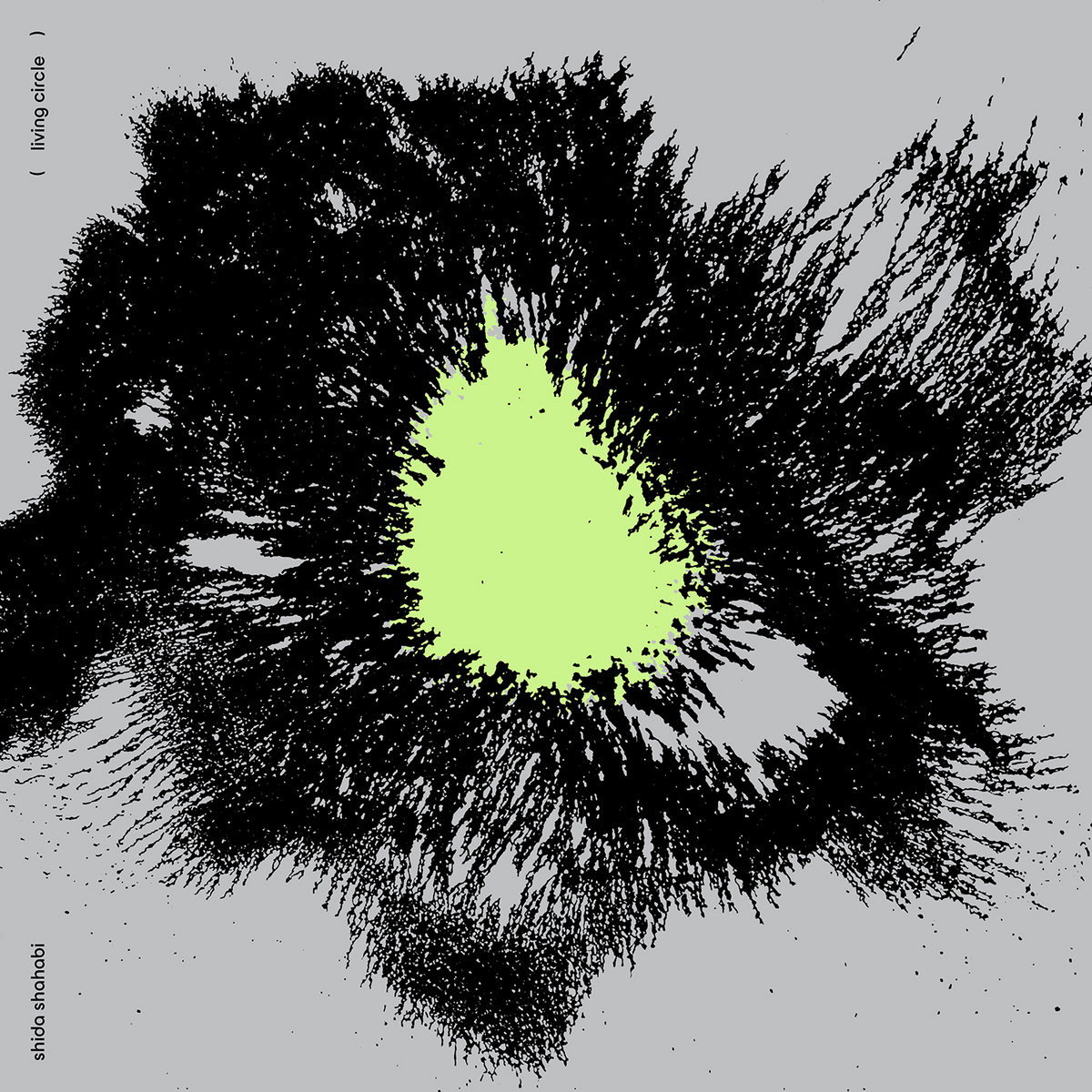
Switched On: Shida Shahabi – Living Circle (130701)

by Ben Hogwood

What’s the story?

For her second album, the Swedish-Iranian composer Shida Shahabi reaches beyond the intimacy of the piano, looking for bigger surrounds. Homes, her first album in 2018, drew acclaim for its intimacy and storytelling from the solo instrument, but this time the unhurried music has a bigger stage from which to make itself known.

What’s the music like?

Deep and meaningful. This time Shahabi operates within larger structures – two tracks push ten minutes, while two are just shy of seven. With that said, the seven tracks are effectively movements of the same suite.

Living Circle begins in meditative mood. Over a low drone, featuring scrunched up double bass parts for Gus Loxbo, a lone cello (Linnea Olsson) intones a chant of deep resonance for Kinsei. This opens out beautifully into the wide-open textures of Deep Violet Of Gold. The cello is present here too, in its rawest form, but the melodic lines reach for higher points to a backdrop of soft, cloudy textures. Gradually the backdrop cracks under the weight of white noise, and the track becomes a great whoosh of sound through which the low cello can still be heard, before reaching a remarkably powerful coda. The title track brings in softly tolling piano, over which the cello lines soar as though on the wind. The music takes slow twists and turns, telling a deeply spiritual tale.

After these two substantial tracks the music pulls back for a thoughtful meditation, beautifully managed in Aestus, which, like Deep Violet Of Gold, features the pure tones of vocalists Julia Ringdahl and Nina Kinert. Tecum is more of a portrait, shaded by electronics and a cloudy backdrop taking Shahabi’s music closer to the world of science fiction. The increasingly serrated bass tones suggest a threatening presence.

Remain is a calming response, initially with lightly brushed solo piano but with the gradual introduction of touching strings from the back to the front. To close, Tree Mountain is rich with thick ambience, one of those drones the listener can dive into, while the solitary cello intones again, recreating the atmosphere if not the same music as the start.

Does it all work?

It does – but for maximum impact listening to the whole album is recommended. An immersive listening experience is also more rewarding, either on headphones or a surround sound system, allowing Shahabi’s manipulations of perspective to cast their full spell.

Is it recommended?

Yes. Living Circle is an absorbing, compelling album that shows just how far Shida Shahabi is developing as a composer. Her music makes a lasting impression.

Listen

Buy

On Record: Set Fire To Flames – Sings Reign Rebuilder (21st anniversary reissue) (130701)

by Ben Hogwood

What’s the story?

The collective Set Fire To Flames were destined to release just two albums – but their debut Sings Reign Rebuilder has developed something of a cult following since its release in 2001. In the UK it was released on the Fat Cat imprint 130701 as its first ever release, the reason the whole label was begun – and it sold out within weeks. 21 years later it returns in the form of a remaster, reissued on a heavyweight black vinyl double LP.

Set Fire To Flames were a 14-piece collective set up in Montreal, with links to all manner of post rock or experimental outfits, including Godspeed You! Black Emperor, A Silver Mt Zion, Exhaust, Fly Pan Am and Hangedup. Godspeed’s guitarist David Bryant was effectively the group supervisor, establishing the membership and taking ownership of the recording, which took place in one heavily concentrated improvisation session.

For five days in an old Montreal house, the newly assembled band explored making music in one confined space, in various states of sleep deprivation and intoxication. The many hours resulting from the sessions were heavily edited, with Sings Reign Rebuilder the result.

What’s the music like?

In a word, uneasy! Yet that would be to throw away the obvious amount of effort that went into both the recording and editing processes.

Despite the name of the collective, Sings Reign Rebuilder is seriously dark and often mournful music. It does however have an intensity that is rare in instrumental music, the strength of feeling you would associate with classical music from the likes of Penderecki or Gorecki – even though this is improvised music from Montreal.

The band’s use of stringed instruments is especially gripping. Omaha… begins as a sorrowful duet, while the towering slow burner that is Shit-Heap-Gloria Of The New Town Planning… has a very steady build that culminates with the oscillation of two violins in a dark duet. There is also intense cello interplay on Two Tears In A Bucket.

Elsewhere the outlook tends to be rooted in noise – and a good deal of that is unsettling, with scratchy effects not too far removed from nails down a blackboard, or traffic-based noises that have a more mechanical basis. Vienna Arcweld… behaves like an instrument that refuses to function fully, with a sawing motion in the treble register, while Cote D’Abrahams Room Tone starts with what sounds like roadworks – and yet somehow possesses an ambience of the everyday. Injur: Gutted Two-Track also fidgets with extraneous noise.

Vocals are rare, though those used on Wild Dogs Of The Thunderbolt draw the listener in.

Does it all work?

It does – but the unremitting intensity and darkly shaded processes mean that this is not music for all seasons or moods. When it crackles into life, though, the music of Set Fire To Flames is hypnotic and magnificently brooding with its drones and subtle melodic interplay.

Is it recommended?

It is, as a highly effective project with compelling musical results. In remastered form, Sings Reign Rebuilder is even more gripping than it was in 2001.

Listen & Buy

Switched On – Ian William Craig: Red Sun Through Smoke (130701)

reviewed by Ben Hogwood

What’s the story?

Before listening to this album, read the story behind it on Ian William Craig’s Bandcamp page. It may initially look like a long piece of text but there is a reason for that, as so much happened in his life when this album was being made. Looking back, it’s a minor miracle it was made at all.

Yet the music clearly powered Craig through an incredibly eventful and difficult passage of his life. Red Sun Through Smoke began as an album documenting the increasingly powerful and consuming forest fires experienced throughout British Columbia each summertime, but once Craig was recording it at his granddads, it took on extremely personal dimensions.

Craig lost his grandfather during the recording of the album, but with his family’s blessing and encouragement continued to record at his home, and use his piano, across the street from the care home where he died. Almost simultaneously he also fell in love, but had to manage his relationship remotely between Vancouver, his home, and the subject of his affections, who had recently moved to Paris.

All these things – grief, love, anger, affection and musicality – feed into the music of Red Sun Through Smoke, where they are led by the piano, the first time Craig has turned to the instrument in a while.

What’s the music like?

Given the emotional baggage surrounding this album Craig could be forgiven for musical indulgence. Yet that is never the case, for as the music unfolds with a wide array of shades and colours, it tells the story in a way only music can. Knowing the tale beforehand is undoubtedly helpful, giving insight into the twists and turns we experience.

There are several acappella tracks, the first of which – Random – begins the album with an almost nostalgic air. It harks back towards the sound of more primitive North American hymns, with open fifths and a relatively coarse timbre. Later on, Comma climbs higher, while the third unaccompanied vocal track, Take, also hits the heights. Craig’s vibrato-rich voice is heard alone, then layered, on Weight, while in the brief Supper he laments on how ‘we had grief for supper’. Far and Then Farther, also unaccompanied, moves towards consolation.

Despite all the vocals the piano remains the star. It takes the edge off with the mottled textures of The Smokefallen, and appears in distracted form on Last Of The Lantern Oil, an incredibly distinctive track with beautiful spatial effects to stop the listener in their tracks.

Craig uses thick distortion on the dense and rather threatening Condx QRN, which is calmed by the reappearance of the piano on Mountains Astray. Both elements combine on Open Like A Loss, a tense piece of contrary emotions.

Does it all work?

As a piece of descriptive work Red Sun Through Smoke is incredibly effective and really takes its listener through the emotional and physical impact of the unfolding story. Because of that it is not really suitable for passive listening, and nor will the layered vocals be to everybody’s taste. That is absolutely no reflection on their quality or meaning; more an indication of how individual they are, and how profound they turn out to be.

Is it recommended?

Yes. Ian William Craig tells a very powerful story here, made even more meaningful by its restraint and deep set emotion. As a historical document in British Columbia’s recent history it also deserves to be widely heard, carrying as it does a number of keenly felt warnings for the future.

Stream

Buy