
by Ben Hogwood
What’s the story?
Aidan Baker’s principal currency in music is the electric guitar, but in reality he is a multi-instrumentalist, able to use the guitar along with electronic manipulation, and in a way that moves easily between musical forms.
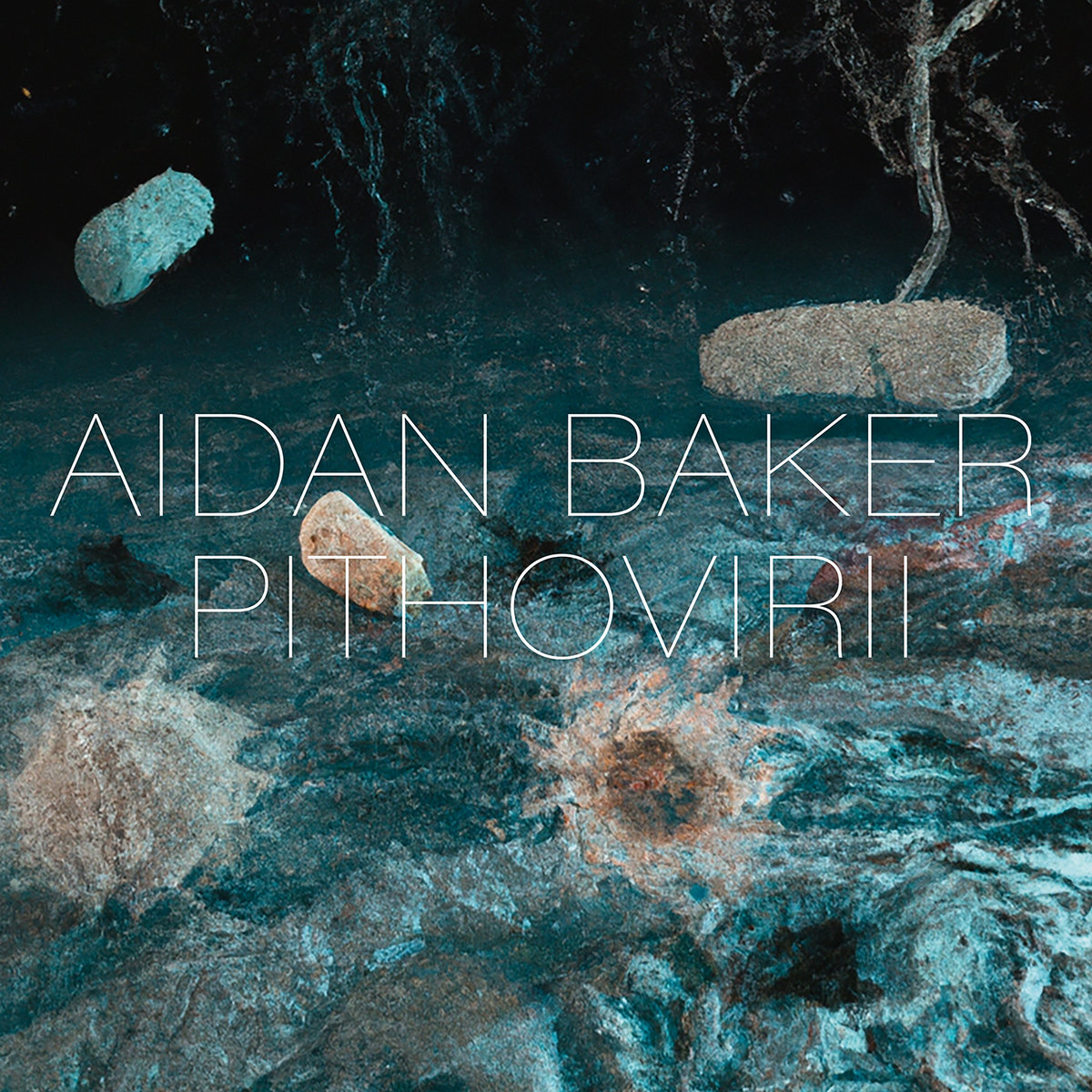
Pithovirii, the Canadian composer’s first release on the Glacial Movements label, takes its inspiration from Vladimir Sorokin’s novel Ice Trilogy. This led Baker down a rabbit hole, reading about the destructive Tunguska meteor that fell on Siberia in 1908, flattening an estimated 80 million trees, and then more reading about truly ancient viruses found in glacier ice – known as ‘pithovirii’.
Using his electric guitar with effects pedals, Baker has attempted a musical depiction to convey the idea of glacial density, and “stasis within which lurk potentially malevolent microbiome”.
What’s the music like?
Baker certainly catches the almost complete stasis of a glacier in the two long-form tracks that make up Pithovirii. There is an ominous feel to Sibericum, a kind of omnipresent threat that hovers over the music. As it slowly evolves the dark colours of Baker’s vision come in to view, dense clouds of sound working in slow-moving waves that wash over the listener. This is certainly musical ambience, and is meditative to a degree, but it is also quite oppressive in the way it takes over the sonic spectrum, working as a very gradual crescendo.
Massiliensis is named after a mysterious form of bacteria that appears to still be under exploration. The light ‘hiss’ that Baker has around the edge of the sound is both ambient and disarming, as a long unison note makes itself known, slightly metallic in texture – and the hiss becomes a thick, woolly drone of sound. As the track unfolds the sonics combine to make the audio equivalent of hearing a massive church organ from the far end of the building, sustaining a long note whose overtones work in and out of consciousness – and gradually change and even modulate over time, taking over most of the aural spectrum. The thick outer coating to the music remains, fed through Baker’s electronic prism.
Does it all work?
It does, with a couple of caveats. The obvious criticism to level at Baker’s work would be that there is not a lot going on – but that is the whole point. To fully experience and appreciate these big blocks of sound the listener needs to be somewhere quiet, with all frequencies available.
Is it recommended?
Yes. Baker is a natural fit for Glacial Movements (in title alone!) but he has written two extremely evocative pieces here. Together they make a whole that somehow captures the state of the remote ice regions of our planet in this day and age.
Listen & Buy
Pithovirii is released tomorrow, Friday 8 March – at which point you will be able to hear it in full here:
Published post no.2,110 – Thursday 7 March 2024
 Arcana.fm