Rattle conducts Sibelius – Symphony no.3

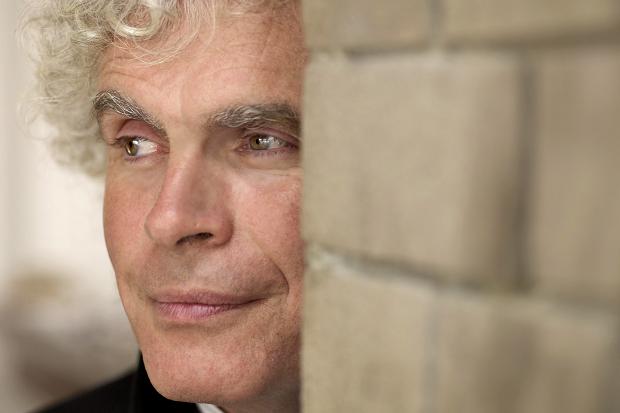
Rattle conducts Sibelius – Symphony no.3, in the second of a three-concert residency from the Berlin Philharmonic Orchestra, performing all the composer’s symphonies
sibelius-symphony-3

Berlin Philharmonic Orchestra / Sir Simon Rattle – Barbican Hall, live on BBC Radio 3, 11 February 2015.

Listening link (opens in a new window):

http://www.bbc.co.uk/programmes/b051czq9

on the iPlayer until 12 March

For those unable to hear the broadcast, here is a Spotify link. Although Sir Simon has recorded the first symphony, with the City of Birmingham Symphony Orchestra, I could not find this for listening. I have therefore inserted a ‘replacement’ version with the City of Birmingham Symphony Orchestra for EMI.

What’s the music?

sibelius-3-dad
© Brian Hogwood

Sibelius – Symphony no.3 in C major, Op.52 (1907) (27 minutes)

What about the music? ‘The most beloved and least fortunate of my children’, was Sibelius’ description of his Symphony no.3.

I would tend to agree with him – for it is a work that for one reason or another is my personal favourite among the composer’s seven symphonies.

It is effectively the start of a new phase of development for the composer, an enigmatic piece of work that deliberately shies away from the relatively grand gestures of the first two symphonies and adopts a leaner frame. Gone are the big, romantic sweeps – for here is music that uses the orchestra with greater economy and a more obvious focus on rhythmic cells, the sort of busy orchestral sounds that begin to look forward towards the ‘minimal’ writing of Steve Reich and John Adams.

Sir Simon Rattle notes this as well, comparing the change in Sibelius’ writing to a Finnish trait he had discovered, which is that when they have finished speaking, they walk away. He said the same of the music in this symphony, which explains why it stops suddenly!

Performance verdict

Rattle sees a lot of graceful figures in this symphony, where other conductors prefer more obvious rhythmic thrust. In fact the energy sags in the middle of the first movement, until the momentum begins to build.

This also occurs in the finale, so I found this was a reading with less ‘cut and thrust’ than I personally would want to hear in this piece. There is, however, a rather beautiful slow movement placed second, for which Rattle clearly has considerable affection.

First movement (marked Allegro moderato) (moderately fast)

4:05 – the lower strings start with a murky figure that grows like a sort of atomic fission

5:22 – a contrasting theme on the cellos, more lyrical – which starts to break apart at 5:53 and wheel around in a circle, rhythmically

8:49 – we hear the second theme on the bassoon above the increasingly agitated violas, returning to the main tune at 9:39

11:45 – the rolling of the timpani is prominent as the rhythmic figure continues to get passed around the orchestra. Then the texture thins at 12:18 to plucked strings only, as if pausing for thought, before a solemn statement ends the movement.

Second movement (marked Andantino con moto, quasi allegretto) (quite slow, but not too much)

15:06 – a change of mood and a sense of melancholy to the tune from the woodwind. Clarinet and flute have some rather beautiful short solos here.

19:11 – the woodwind play together in contemplation, the strings responding as the music slows still further at 19:52 – which leads to a return to the tune on clarinets. Listen carefully, however, and you will hear a creeping note in the bass strings that offsets with a mood of uncertainty. The texture is now so much lighter than the previous two symphonies.

22:39 – the strings take up the tune and the music gathers a little more urgency, the mood more optimistic as a result.

Third movement (Moderato – Allegro ma non tanto) (moderately fast – and then a little faster)

24:54 – immediately a return to a positive mood from the woodwind, and a brisk, forward movement after the contemplation of the previous movement.

26:57 – Sibelius’ fascination with repetition continues in this section, with a four-note figure on violins insistent in the background before coming through towards the front. The music grows much more agitated towards a big, timpani-fuelled release at 27:51. Not many of those in this symphony!

29:01 – even in this leaner work Sibelius is still capable of more romantic thoughts, and here is one such instance on full strings, violas and cellos combining in music of great nobility. This passage gathers strength until around 32:00 where another insistent rhythmic figure powers the music through to the finish. A really positive and energetic close to the symphony.

Want to hear more?

After the Symphony no.3, another piece to hear – in the same key – is the incidental music to Pelleas und Melisande – the first bit of which has been used famously by the BBC for the theme tune to The Sky at Night. You can hear it on Spotify here (track 11):

For more concerts click here

Rattle conducts Sibelius – Symphony no.2

Rattle conducts Sibelius – Symphony no.2, part of a three-concert residency from the Berlin Philharmonic Orchestra, performing all the composer’s symphonies

sibelius-2
Credit: newspaper.li

Berlin Philharmonic Orchestra / Sir Simon Rattle – Barbican Hall, live on BBC Radio 3, 11 February 2015.

Listening link (opens in a new window):

http://www.bbc.co.uk/programmes/b051czq9

on the iPlayer until 11 March

For non-UK listeners, here is a Spotify link. Although Sir Simon has recorded the first symphony, with the City of Birmingham Symphony Orchestra, I could not find this for listening. I have therefore inserted a ‘replacement’ version with the London Symphony Orchestra and Sir Colin Davis:

What’s the music?

sibelius-2-dad
© Brian Hogwood

Sibelius – Symphony no.2 in D major, Op.43 (1901-2) (44 minutes)

What about the music? Just two years after his first symphony, Sibelius showed he was really warming to the form with the second. Before the writing of his Second Symphony, Sibelius visited Rapallo in Italy.

While there, however, his children’s health suffered, and he completed the work back in Finland in 1902.
As a concert piece the Second is especially popular, for its positivity and economy – despite running for 44 minutes it feels like barely a second of music is wasted. It also follows a classic ‘darkness to light’ trajectory, where some of the more troubled music in the middle movements is removed by a finale that crosses into much brighter music.

Commentators admire the piece for its construction, Sibelius managing the difficult trick of appealing to the academic through the close relation of each of his melodies, while appealing to the casual listener through the direct emotion and memorable themes.

Performance verdict

This is a thoroughly convincing performance, with Rattle keen not to over-romanticise the Second Symphony but allowing the music its full feeling when the climax of the finale arrives.

The performance is also aware of Sibelius’s technical mastery, and it feels as if the whole piece hangs together as one, each section aware of the ones around it, all the while heading for the big climax to the last of the four movements.

What should I listen out for?

First movement (which has a whole host of tempo markings)

1:10:17 – the symphony begins like a boat bobbing at sea, with six in a bar rather than the normal four. The mood is positive if not altogether settled in one mood.

1:13:10 – a gathering of momentum, the opening subject reappearing in the ‘dominant’* key. This is a sign Sibelius is closely following a more classical form of symphonic thought.

1:16:43 – the sheer ‘togetherness’ of the Berlin Philharmonic Orchestra can be fully appreciated here in the strings’ tune, but also in the superlative contribution of the brass. The strings’ pizzicato at 1:18:38 is another example of near-faultless ensemble.

1:19:20 – a return to the music of the opening, but Sibelius seems distracted and the music closes.

Second movement (again, a large number of tempo markings)

1:19:58 – you might need to turn the volume up a bit here, as the murky start to the second movement unfolds, before a solemn woodwind chorale around one minute in.

1:22:34 – a climax point of sorts is reached over a low bassoon note but the music remains restless, and the cadence point from 1:23:30 turns the music to the minor key and a greater degree of anxiety. This figure subtly dominates the arguments of the whole movement, though when it returns at 1:28:25 Rattle makes the music sound much less certain of its direction.

1:31:52 – finally the music arrives at greater surety, and the held bass note supports a show of strength while the strings sing above. However barely 20 seconds later and the violin lines twist – back to the old anxiety in the minor key again, where it ends at 1:34:03.

Third movement (Predominantly marked as Vivacissimo – very lively)

1:34:24 – quick tremolo figures on strings hurry us through the opening bars of this movement.

1:36:03 – the trio section is reached, with a much slower theme from the oboe that swells when transferred to the strings.

1:37:18 – the genial mood is short-lived as the scherzo returns, with even greater vigour from Rattle this time on the strings’ tremolos.

1:38:57 – the oboe melody from the trio again, this time scarred after the rude interruption.

1:40:06 – the big build-up begins, with ascending scales to lead straight into…

Fourth movement (again, a large number of tempo markings)

1:40:22 – Rattle is much less ‘triumphant’ than some conductors here, as if the ending of the symphony still has to be earned. This is still terrifically rousing music, however, especially when the tune returns at 1:41:06. Again we hear some of the Tchaikovsky from the First Symphony.

1:44:28 – a much quieter recollection of the movement’s main tune. This passage is almost Schubert-like in its delicacy.

1:46:49 – a return to the big unison string theme, sweeping all before it – though to me the accompaniment still feels a little ‘at sea’ in the undulating bass. However the return of the theme for the full orchestra quashes most of that. Then the music subsides to the middle distance, before building again, seemingly over the wave – but in the minor key, all the way until 1:52:46, when the music shifts irrevocably to the major – and a tremendous orchestral wall of sound takes us over the finish line, headed by a brass chorale, to the end at 1:54:13.

Want to hear more?

The best thing to suggest after Sibelius’s Second Symphony…is the Third! This is a very different animal, as Arcana will explore in the next instalment of Rattle’s cycle.

In the meantime a suggested interlude would be the Valse triste, part of some music Sibelius wrote for his brother-in-law’s play Kuolema. It is available to listen to here:

For more concerts click here

Rattle conducts Sibelius – Symphony no.1

Rattle conducts Sibelius – Symphony no.1, the start of a three-concert residency from the Berlin Philharmonic Orchestra, performing all the composer’s symphonies

sibelius-1-rattle

Berlin Philharmonic Orchestra / Sir Simon Rattle – Barbican Hall, live on BBC Radio 3, 11 February 2015.

Listening link (opens in a new window):

http://www.bbc.co.uk/programmes/b051czq9

on the iPlayer until 11 March

For non-UK listeners, here is a Spotify link. Although Sir Simon has recorded the first symphony, with the City of Birmingham Symphony Orchestra, I could not find this for listening. I have therefore inserted a ‘replacement’ version with the London Symphony Orchestra conducted by Sir Colin Davis:

What’s the music?

sibelius-symphony-1
© Brian Hogwood

Sibelius – Symphony no.1 in E minor, Op.39 (1899) (39 minutes)

What about the music? With his first symphony Sibelius begins one of the most important canons of music in the 20th century. Quite appropriately the work sits just at the turn of the century, absorbing influences from the likes of Berlioz and Tchaikovsky but showing signs of speaking with a new and very clear voice.

It is also clear that the 33-year old composer already has a very strong instinct for structure and what commentators call ‘symphonic thought’. Sibelius structures the four movements in a way that acknowledges the past masters in the form, but there is some really vital and emotional material here too.

Although the symphony does not have a subtitle it was interpreted as Nationalistic by the Finnish people, especially as the Russian presence in and dominance over the country was increasing all the time. but showing signs of speaking with a new and very clear voice.

Performance verdict

Sir Simon Rattle finds the drama in this music from the off, but is keen to also show off the inner workings of Sibelius’s distinctive orchestration – an invitation the Berlin Philharmonic is hardly going to pass up!

There is a lean sound to the strings, and particularly the violins, with very little in the way of padding to the sound. The sense of music pushing forward is always there, Rattle focused on the symphony’s overall sweep rather than picking out particular solos.

The woodwind playing is superb, and because the orchestra are so well drilled Rattle’s tempi make sense – a quick first movement and Scherzo work really well here. Occasionally the conductor is a bit perfunctory where others make more of the Romantic gestures, but that is a question of taste rather than accuracy.

What should I listen out for?

First movement (marked Andante, ma non troppo – Allegro energico) (at a walking pace but not too fast…then fast and energetic)

4:00 – the clarinet solo that begins the work, wonderfully played by the Berlin Philharmonic clarinettist Andreas Ottensamer with quietly rolling timpani in the background

6:28 – the culmination of the first part of the first movement, with surging strings and simmering lower voices of the orchestra

12:04 – the main idea of the first movement sings out on the violins, with timpani thundering in response

14:00 – a tremendous build up from the orchestra, which subsides to two pizzicato chords from the strings (14:41)

Second movement (marked Andante (ma non troppo lento)) (at a walking pace, but not becoming too slow)

15:22 – the murky beginning to the second movement, beginning almost as an apparition of Tchaikovsky in the melody for strings

18:24 – the pulsing woodwind lead to a more luxuriant passage supported by harp

20:47 – Rattle moves up a gear here, the distinctive motif passed from strings to woodwind

23:05 – a return to the main theme, a little detached on violins now, subsiding to the end (24:50)

Third movement (Scherzo*: marked Allegro) (fast)

25:07 – quick, urgent delivery of the distinctive seven-note theme from Rattle and his charges here. The timpani once again are at the root of much of Sibelius’ thinking when writing for orchestra.

27:02 – the trio, a brass chorale that sounds slightly awkward in its means of expression (not a criticism!)

29:04 – the scherzo theme returns and the music wheels ever faster to its end (30:17)

Fourth movement (marked Finale: Andante – Allegro molto – Andante assai – Allegro molto come prima – Andante (ma non troppo)( alternating slow and fast passages)

30:26 – the passionate outpouring from the violins with which the fourth movement begins. The music gathers itself until…

32:57 – a quick statement of a faster tune. Rattle is quite matter-of-fact here; some conductors allow the music to take a big breath at this point, but Rattle surges forwards

35:10 – a thick string section and harps with another deeply felt tune

38:02 – a reflective and almost sorrowful return to the clarinet theme from the first movement, joined by the woodwind

39:20 – a sublime expansion of this melody on the strings, waking the ghost of Tchaikovsky once again. All this takes place over huge, long bass ‘pedal’ notes, a great illustration of the massive expanse Sibelius can achieve with the orchestra. Then there is a build towards the end (41:57) at which point Rattle slows, labouring the big chords, until the big fnish, timpani right at the limit (42:50)

Want to hear more?

The best thing to suggest after Sibelius’s First Symphony…is his Second, coming up soon on Arcana!

Glossary

*Scherzo – a term used for a faster section of music, usually placed second or third in a piece that has four movements. It originated with Beethoven and his contemporaries, who often added a touch of humour to the music.

For more concerts click here