In concert – CBSO Strings / Eugene Tzikindelean: Bach: Goldberg Variations

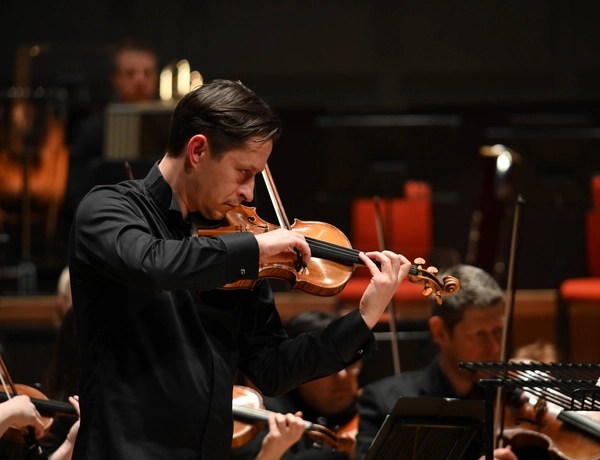
City of Birmingham Symphony Orchestra Strings / Eugene Tzikindelean (above)

J.S. Bach arr. D. Sitkovetsky Goldberg Variations BWV988 (c1740)

Town Hall, Birmingham
Sunday 10 November 2024, 3pm

Reviewed by Richard Whitehouse Picture (c) Beki Smith

Having already made his mark other than as leader of the City of Birmingham Symphony Orchestra with his performances in recent seasons of concertos by Nielsen and Walton, Eugene Tzikindelean this afternoon directed the orchestra’s strings in a performance of Bach’s Goldberg Variations.

First published 323 years ago, the ‘Goldbergs’ launched the series of works from Bach’s final decade in which formal and technical procedures take on an almost arcane dimension, though this music is always realizable in practical terms whatever its abstraction. Taken up by leading virtuosos in the wake of Liszt, notably Busoni who fashioned his ‘concerto without orchestra’ in 1914, it became synonymous with Glenn Gould whose 1955 recording launched his career internationally as surely as it established Bach’s work in the minds of listeners the world over.

More recently the variations have been arranged for a variety of media, among which that by the violinist Dmitry Sitkovetsky has become among the most familiar – firstly as realized for string trio in 1984, then for string ensemble eight years later. The question as to how large a body of strings is left to the musicians: the present account amounted to 38 players including harpsichord, ideal for the acoustic of Birmingham Town Hall and what was a commendably sizable house. Not the least attraction of this arrangement is the skill with which Sitkovetsky has translated the timbral and textural possibilities of the harpsichord original, such that they sound entirely idiomatic in this context as well as capable of a variety of interpretive nuance; with this aspect proving crucial to the overall persuasiveness of the performance heard here.

The duration of the ‘Goldbergs’ can vary widely, according to just how many of the first-half or second-half repeats of its 30 variations are taken. Those anticipating an account around 78 minutes (given in the programme) might have been disconcerted with the hour-long rendition that resulted, but Tzikindelean’s approach in this respect was wholly consistent in placing the emphasis on those variations which mark strategic formal and expressive junctures. Thus the 15th with its starkly fatalistic aura; the 25th, described by harpsichordist Wanda Landowska as the ‘‘black pearl’’ and an adagio of simmering emotional charge; then the 30th, unfolding as a ‘quodlibet’ of popular melodies which seems intent on countering any previous austerity as it builds to a culmination where the Aria da Capo can bring the whole concept full circle.

Such was certainly true of this superbly realized reading, directed by Tzikindelean with that combination of focus and spontaneity as characterizes his work as leader. It would be wrong, moreover, not to single out those other section-leaders whose contributions were hardly less vital to its success – hence second violinist Lowri Porter, violist Chris Yates, cellist Bozidar Vukotic and double bassist Anthony Alcock; Martin Perkins was a lively continuo presence who enhanced successive variations without ever interposing himself on the overall sound.

A fine demonstration of the collective prowess of the CBSO strings, and there will be similar opportunities to hear the orchestra’s woodwind then brass and percussion at Sunday afternoon concerts in January and March next year, which will hopefully prove to be just as memorable.

For details on the 2024-25 season A Season of Joy, head to the City of Birmingham Symphony Orchestra website. Click on the names to read more about violinist Eugene Tzikindelean and arranger / violinist / conductor Dmitry Sitkovetsky

Published post no.2,359 – Monday 11 November 2024
Live review – Hannah Hipp, CBSO / François Leleux: Mendelssohn & Berlioz

Hannah Hipp (mezzo-soprano), City of Birmingham Symphony Orchestra / François Leleux (conductor/oboe)

Town Hall, Birmingham
Wednesday 4 December 2019

Mendelssohn Overture to A Midsummer Night’s Dream Op.21 (1826)
Berlioz Les Nuits d’été, Op. 7 (1840/1, orch. 1856)
Mendelssohn arr. Tarkmann Five Songs Without Words (arr. 2009)
Mendelssohn Symphony no.3 in A minor Op.56 ‘Scottish’ (1829-31, 1841/2)

Written by Richard Whitehouse
Photo credits François Leleux: © HR/Thomas Kost; Hannah Hipp: Matthew Plummer

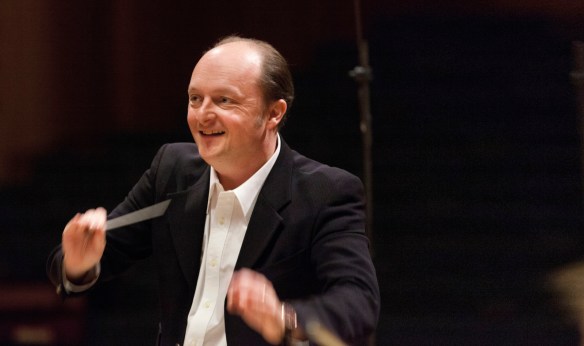
No doubt about it – Mendelssohn is still a prime attraction in Birmingham, the near-capacity audience for last month’s Elijah at Symphony Hall matched by that at Town Hall for tonight’s programme in which the City of Birmingham Symphony Orchestra was conducted by François Leleux.

Oboists turned conductors have a formidable precedent in Heinz Holliger, but even he cannot often have directed from his instrument as did Leleux when, commencing the second half, he presided over a selection of Mendelssohn Songs Without Words in an appealing arrangement by Andreas Tarkmann. Lauded in their day only to be patronized by subsequent generations, the pieces retain a melodic appeal exemplified by Venetian Goldola Song as its centrepiece. Switching adeptly between playing and directing, Leleux certainly relished them to the full.

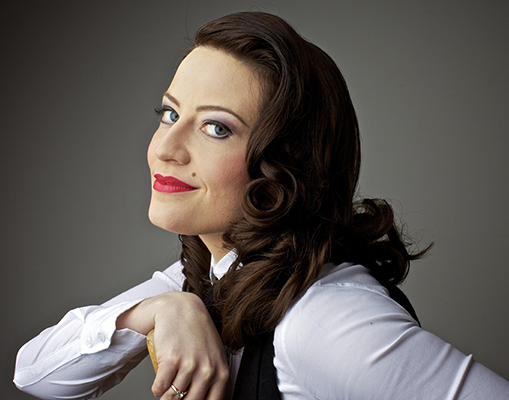
Prior to the interval, he had partnered mezzo Hannah Hipp (above) in Berlioz‘s Les nuits d’été. Often considered the first orchestral song-cycle, these six songs to texts by Theophile Gautier were only belatedly orchestrated and are linked more by shared expression then any overt thematic links. Nor are they easily encompassed by one singer, but Hipp tackled their highly distinct tessitura with some confidence – moving seamlessly from the whimsy of Villanelle, via the distanced eloquence of La Spectre de la rose to the enfolding inertia of Sur les lagunes; then from the stark anguish of Absence, via the poetic fatalism of Au cimetière, to the impulsive anticipation of L’ile inconnue. For his part, Leleux ensured that those diaphanous and subtly differentiated orchestral textures audibly underpinned the often heady emotional sentiments.

Pieces from Mendelssohn’s earlier and later maturity framed this concert. The overture to A Midsummer Night’s Dream remains a teenage masterpiece by any standards, not least for its evocation of the spirit-world to whose quicksilver elegance the CBSO did ample justice. If the more demonstrative passages sounded a little too generalized in expression, there was no lack of projection overall or doubt as to Leleux’s welding of these elements into an integrated whole. Only the forward ambience of the refurbished Town Hall prevented a true pianissimo.

Dynamic niceties are less of an issue with the Scottish Symphony, its lengthy gestation likely indicating a summative intention on the part of the composer. The first movement’s resigned introduction was superbly rendered, though the ensuing Allegro lacked focus in its trenchant development and surging coda. Not over-driven as often can be, the Scherzo exuded humour alongside its incisiveness, while the Adagio had both grace and suppleness to offset any risk of earnestness or stolidity. Nor did the finale want for energy or purpose, and if Leleux was more insightful during its hesitant transition than the triumphal apotheosis that follows, there was no doubting the underlying conclusiveness with which it rounded off this most inclusive and ambitious of Mendelssohn’s orchestral works – to the evident delight of those present.

A well balanced and immensely enjoyable concert, then, which further attests to the rapport that Leleux enjoys with these musicians. The CBSO is back in Symphony Hall next Thursday for another of the orchestra’s Centenary Commissions alongside music by Elgar and Brahms.

Further listening

With the exception of the Songs Without Words arrangements, the music in this concert can be heard on the Spotify playlist below. This includes recent recordings of the Mendelssohn pieces by the CBSO themselves, conducted by Edward Gardner:

For further information on the orchestra’s next concert, under their chief conductor Mirga Gražinytė-Tyla, click here