On Record – BBC Singers / Martyn Brabbins – John Pickard: Mass in Troubled Times (BIS)

John Pickard
Three Latin Motets (1983-7)
O magnum mysterium (2015)
Orion (2004)
Ave Maris Stella (1992)
Ozymandias (1983)
Tesserae (2009)
Mass in Troubled Times (2018)

BBC Singers / Martyn Brabbins with Chloë Abbott (trumpet/flugelhorn, Orion); David Goode (organ, Orion and Tesserae)

BIS 2651 [74’30’’] Texts and English translations included

Producer Adrian Peacock Engineer Pete Smith
Recorded 13 & 14 October, St Jude-on-the-Hill, Hampstead, London

Written by Richard Whitehouse

What’s the story?

Although known primarily for his substantial orchestral and chamber output, John Pickard has written several notable choral pieces. This latest release from BIS to be devoted to his music brings most of them together, and in the company of two major instrumental works.

What’s the music like?

Ranging across 35 years of his music, the collection features Pickard’s earliest acknowledged work – a teenage setting of Shelley’s Ozymandias that elicits a response both imaginative and impassioned. Already assured, his choral writing was further honed and refined in Three Latin Motets where limpid renderings of O nata lux and Ubi caritas et amor frame a melting Te lucis ante terminum for female voices. A rapturous Ave Maris stella and touchingly restrained O magnum mysterium duly reinforce Pickard’s confident handling of the a-cappella medium.

The two non-choral items indicate their composer’s abiding fascination with astronomy and antiquity. Scored for trumpet and organ, Orion strikingly evokes said constellation from the vantage of increasing energy in Nebula, an alternating lyricism (courtesy of the flugelhorn) and impetus in Alnitak, then incisive rhythmic interplay of Betelgeuse with its distanced close. Its title indicating those ‘tiles’ used in a mosaic, Tesserae builds cohesion via a steadily accumulating momentum such as tellingly underlies this showpiece with substance for organ.

For 18 unaccompanied voices (in six groups), Mass in Troubled Times is not a setting of the Mass, but a text assembled by the author Gavin D’Costa – lines from T. S. Eliot, Edith Sitwell and Matthew Arnold heard alongside extracts from the Syriac Orthodox Liturgy, the Shahada and the Qur’an. The key is a Turkish Twitter-hashtag from 2015, “Humanity washed ashore”, relating the flight from Aleppo then the drowning of Ayesha – her tragedy an emotional focus over six sections whose expressive intensity seems the greater for their formal concentration.

An Introitus precedes the customary sections of the Mass – reaching a dramatic apex at the climax of the Gloria while carrying the accrued intensity through those that follow; ending with the juxtaposition of lines from William Blake and thrice-repeated Agnus Dei that, next to an evocation of the child’s body off Palermo, has a poignancy shorn of sentiment thanks to Pickard’s acute eloquence. With its wide range of vocal techniques and demanding tessitura, Mass in Troubled Times is a rewarding challenge which all enterprising choirs should tackle.

Does it all work?

It does, not only through the quality of this music but also of these performances – the BBC Singers conveying the immediacy or pathos of Pickard’s response with unstinting clarity and precision. If a demonstration of this choir’s continued existence were needed, this surely is it – Martyn Brabbins (late of English National Opera) directing with his customary conviction. Nor are Chloë Abbott and David Goode to be found wanting in their pieces, rounding out a collection enhanced with vividly analytical recording and the composer’s informative notes.

Is it recommended?

It is, and not merely to those who have been following this invaluable series, which is set to continue with a coupling of Pickard’s Second and Sixth Symphonies. Certainly, the Mass in Troubled Times must feature in any representative selection of works from the 21st century.

For purchase options and more information on this release, visit the BIS website. Click on the names for more on composer John Pickard, the BBC Singers and conductor Martyn Brabbins, trumpeter Chloë Abbott and organist David Goode

On record – George Zacharias, Alexandros Koustas, LPO / Brabbins – Skalkottas: Two Concertos (BIS)

George Zacharias (violin), Alexandros Koustas (viola), London Philharmonic Orchestra / Martyn Brabbins

Skalkottas
Violin Concerto (1937-8, ed. Mantzourani)
Double Concerto (1939-40, ed. Zacharias)

BIS BIS 2554 SACD [57’57”]

Producers Matthew Bennett (Violin Concerto), Alexander Van Ingen (Double Concerto)
Engineers Dave Rowell (Violin Concerto), Andrew Mellor, Brett Cox (Double Concerto)

Recorded 5-6 January 2020 (Violin Concerto), 19-20 April 2022 (Double Concerto), Henry Wood Hall, London

Written by Richard Whitehouse

What’s the story?

BIS continues its long-running project devoted to music by Nikos Skalkottas (1904-49) with this revisiting of his Violin Concerto, alongside a first recording for his Double Concerto in what is a typically apposite pairing which none the less points up the diversity of his output.

What’s the music like?

It was with a release featuring the Violin Concerto that BIS inaugurated its Skalkottas series a quarter-century ago. This recording uses the ‘new critical edition’ prepared in 2019 by Eva Mantzourani, whose volume The Life and Twelve-Note Music of Nikos Skalkottas (Routledge: 2011) is necessary reading for anyone interested in this composer. Many of these corrections will only be evident to those having access to the score, but interpretive differences between Gorgios Demertzis in 1997 and George Zacharias in 2022 are clear from the outset. The latter adopts appreciably quicker tempos for the first two movements that make the opening Molto appassionato more febrile in its expressive contrasts, then the Andante spirito feels closer to an intermezzo after the example of Schoenberg’s Violin Concerto as is brought more directly into focus. Demertzis launches the final Allegro rapidly, Zacharias gaining momentum more gradually before tackling the Prestissimo coda with abandon. Which one prefers depends on how one views the competing expressionist and classicizing impulses of this masterly work.

Although finished barely two years later and pursuing a nominally similar formal trajectory, the Concerto for Violin, Viola and Wind Orchestra presents a markedly different take on its composer’s thinking. Different though not unexpectedly so, given Skalkottas’s approach to serial composition was anything but predictable while it took shape, moreover, in a cultural milieu where Hindemith and Weill (briefly his teacher) were as necessary a creative catalyst as Schoenberg. Not only does the scoring of this piece find accord with that of Hindemith’s concertante works and Weill’s Violin Concerto during that period, but the evolution of each movement in sometimes oblique though always discernible terms gives the overall design a distinctly neo-classical feel. Zacharias sounds even more ‘inside’ this work, and Alexandros Koustas is no less assured in viola writing which is (surprisingly?) always audible against an orchestra whose saxophone section accentuates the presence of jazz as against the militaristic element of brass and other woodwind. The result is a piece by turns engaging and disturbing.

Does it all work?

Pretty much always. Thoughtfully conceived and impressively executed, Skalkottas’s music does not play itself so that performers need to take the lead in rendering its inherent qualities as comprehensively as possible. Which is undoubtedly the case here – Zacharias and Koustas convincingly overcome any incidental technical difficulties, while Martyn Brabbins secures a trenchant and committed response from the London Philharmonic Orchestra in works with which neither he nor they have had the opportunity to come to terms via live performances.

Is it recommended?

It is. Those who already have that earlier recording of the Violin Concerto still need this new release which, with its immediate sound and detailed notes, brings the Skalkottas discography nearer fruition. How about a complete version of the Second Symphonic Suite as a follow-up?

Stream

Buy

For more information on this release visit the BIS website

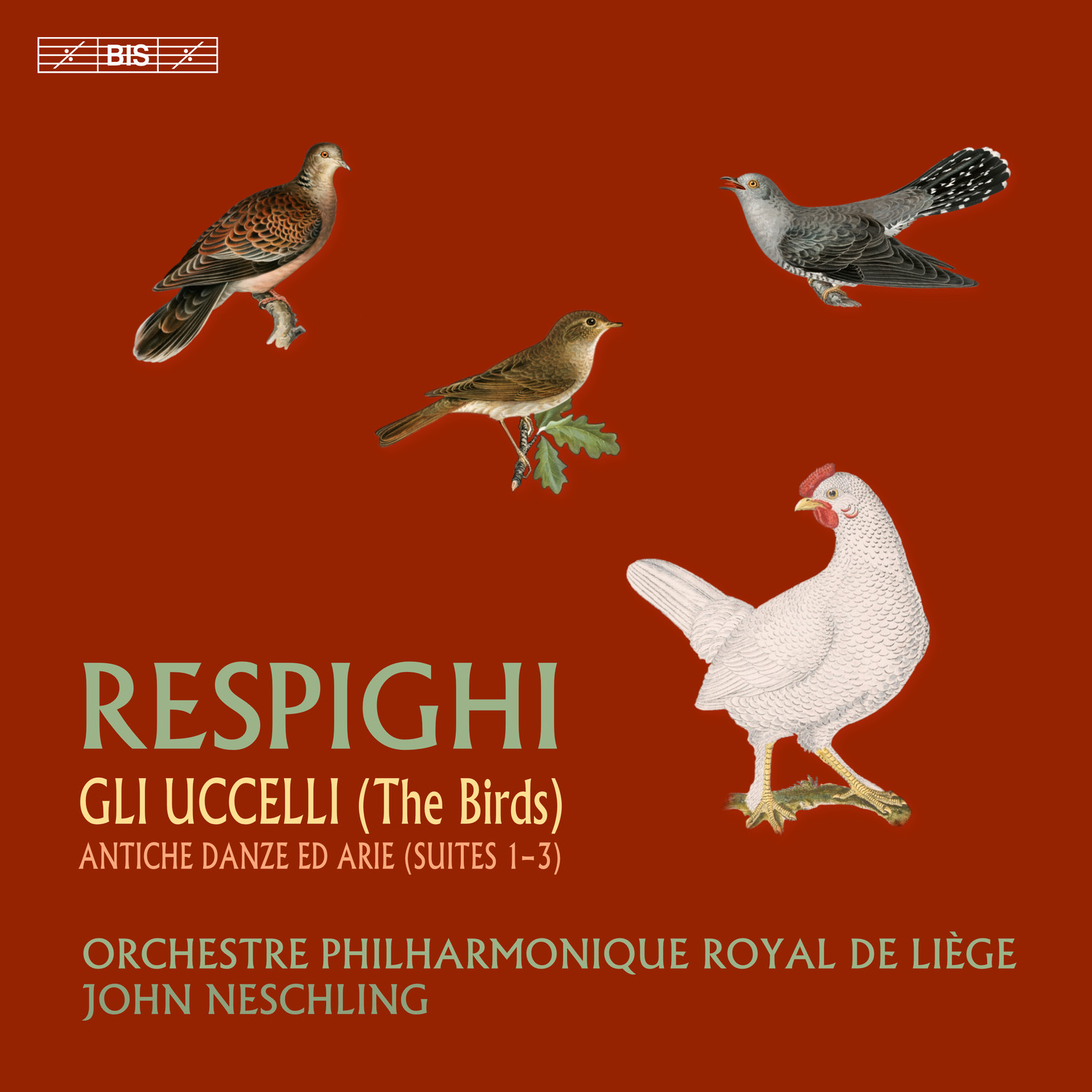
On record – Orchestre Philharmonique Royal de Liège / John Neschling – Respighi: The Birds & Ancient Dances and Airs (BIS)

Orchestre Philharmonique Royal de Liège / John Neschling

Respighi
Gli uccelli (The Birds) (1928)
Antiche danze ed arie (Ancient Airs and Dances):
Suite no.1 (1917)
Suite no.2 (1923)
Suite no.3 (1931)

BIS BIS 2540 SACD [75’30”]

Producer Ingo Petry
Engineer Fabian Frank

Recorded 5-9 July 2021 at Salle Philharmonique, Liège, Belgium

Written by Ben Hogwood

What’s the story?

With this release, BIS add a seventh instalment to their richly productive survey of orchestral music by Italian composer Ottorino Respighi. Known primarily for his colourful Roman trilogy, Respighi’s output is often restricted in its exposure, and the BIS series is providing an excellent guide to his craft as a master orchestrator and expansive, often flamboyant melodist.

What’s the music like?

With this collection, John Neschling and the Orchestre Philharmonique Royal de Liège look with Respighi to the past. Gli uccelli (The Birds) is a wonderful work, a suite of five character pieces profiling birds as originally seen through the eyes of 17th and 18th century composers in works for harpsichord or lute. With a little extra musical material and plenty of imagination Respighi brings the various species to life through the colours of a medium-sized symphony orchestra, using contemporary techniques but always letting the winsome melodies shine through.

The three suites of Ancient Airs and Dances show his knowledge and love of music from a more distant past, being orchestrations of works originally written for lute by Italian and French composers in the 16th and 17th centuries. They provide a wide emotional range, too, from the exuberance of the first two suites to the more solemn intonations of the third, which is for string orchestra only. Each suite is a progression of dance movements, meaning the listener’s foot will often be tapping, while by contrast the slower dances have an elegance and solemnity that gives them extra emotional impact.

Does it all work?

It does, especially in these performances, where Neschling leads the Liège orchestra in strongly characterized accounts. The Birds that is notable for its affection and flair, and listeners could easily play ‘guess the bird’ and be right more often than not! A beautiful oboe solo sets La colomba (The dove) aside, while flute, bassoon and horn are affectionate companions as they portray L’usignuolo (The nightingale). These contrast with the perky steps of La gallina (The hen), clucking as it struts around, not to mention a bracing Preludio and the wonderful ‘call and response’ of Il cucù (The cuckoo).

The Ancient Airs and Dances are just as good. Initially the tempo for Suite no.1 Balletto suggests it might be too slow, but the orchestral phrasing ensure this is not a problem and the ensuing Gagliarda has beautifully contrasting sections. The string soloists in the Villanella deserve credit for their obvious affection, while the brightly lit Passo mezzo e Mascherada closes an ideal performance.

The Suite no.2 begins with an alternately tender and exuberant Laura soave, which cuts to a bracing Danza rustica. The extended Campanae parisienses and Aria shows off Respighi’s talents as an orchestral painter, with emotive chorales for wind and strings, before a spirited Bergamasca.

The relatively sombre third suite is elegantly turned, with an attractive Italiana and Sicliana. These bisect the Arie di corte, where elegiac violas take the lead with brighter sections inbetween. The closing Passacaglia is increasingly dramatic, Neschling executing the darkness to light transition with power and panache.

Is it recommended?

Wholeheartedly. Collectors of the series will not hesitate, but this is also an ideal starting point for anyone interested in Respighi’s work. All concerned deserve a vote of thanks for versions of these works that go right to the top of the digital pile.

Stream

Buy

For more information on this release visit the BIS website

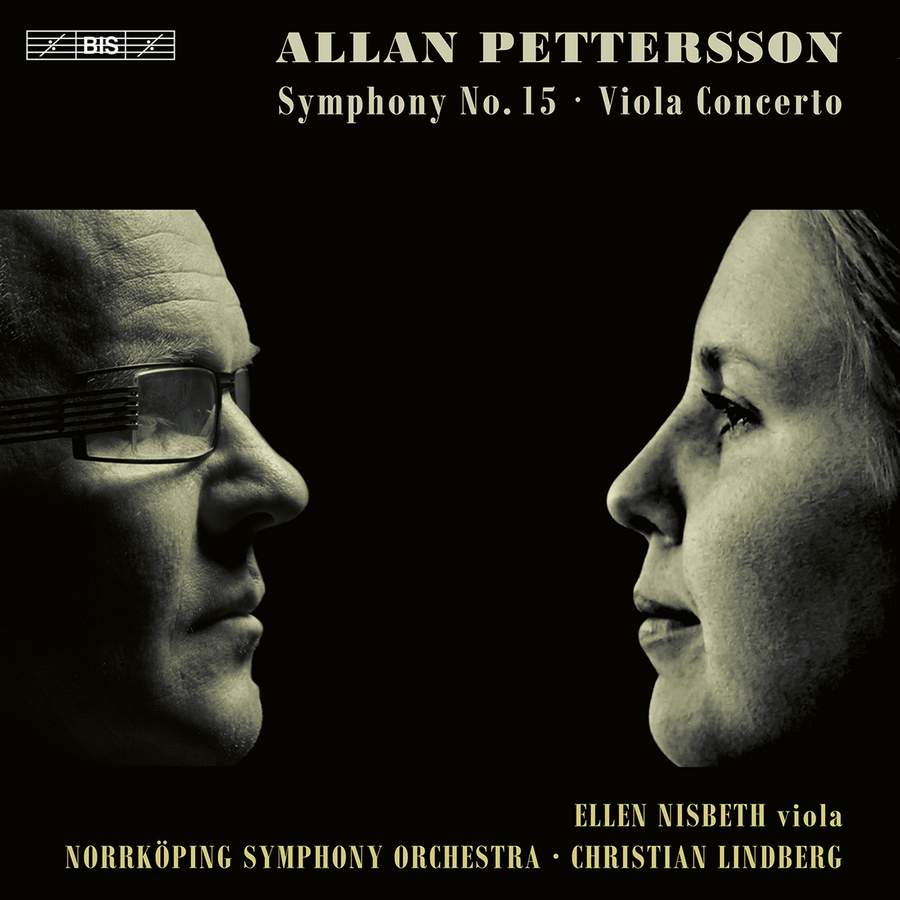
On record – Ellen Nisbeth, Norrköpping Symphony Orchestra / Christian Lindberg – Pettersson: Symphony no.15, Viola Concerto, Fantaisie (BIS)

pettersson-15

Ellen Nisbeth (viola), Norrköpping Symphony Orchestra / Christian Lindberg

Pettersson
Symphony no.15 (1978)
Viola Concerto (1979)
Fantaisie for solo viola (1936)

BIS BIS 2480SACD [67’37”]

Producers Stephan Reh, Marion Schwebel
Engineers Bastian SchickMarion Schwebel

Recorded 13-17 January 2020 at Louis de Geer Concert Hall, Norrköpping (Symphony & Viola Concerto); 29 May 2020 at Petruskyrkan, Danderyd, Sweden (Fantaisie)

Written by Richard Whitehouse

What’s the story?

Christian Lindberg nears the close of his Allan Pettersson cycle for BIS with this coupling of two of the composer’s late works, both of which had previously been issued on this label and are now added to its extensive series of recordings with the Norrköping Symphony Orchestra.

What’s the music like?

Although following-on directly from the Second Violin Concerto [BIS2290], Pettersson’s 15th Symphony might be thought of as forming the end of a trilogy with its predecessors (1976 and 1978) – a sequence becoming more compressed in scale as it becomes less volatile in content. At barely 36 minutes No. 15 was its composer’s shortest symphony since the 11th, but this is not to suggest any lack of drama or eventfulness in a score as finds Pettersson grappling with existential issues key to his thinking since at least the Second Symphony of 25 years earlier.

As so often in this cycle, the salient ideas are heard at the outset: here, ejaculatory chords on brass over side-drum, then wistful lines for viola and violin over lower strings. What follows seems less an extended evolution than an elaboration and intensification – during the course of which a more conciliatory mood takes precedence, though the coda proves to be as tonally oblique as it is emotionally ambivalent. Dividing the present recording into 11 tracks enables listeners to navigate their own route through this absorbing and wholly characteristic piece.

The Viola Concerto has a curious history – its existence not even known about until after the composer’s death; its manuscript suggesting a work complete as a formal entity if lacking in textural detail. Whether or not Lindberg had any input in this latter respect, the solo part has been edited by Ellen Nisbeth and hence sounds appreciably more integrated into the musical content than hitherto. Conceptually the work continues from the Second Violin Concerto and 16th Symphony with saxophone [BIS2110] in its eliding between concertante and symphonic domains; such that the viola line can be heard as a motivic ‘backbone’, affording focus to the sparse orchestral texture and channelling its expressive essence to an ending at once forceful yet provisional. Concerto or not, this is a notable as well as valuable addition to its repertoire.

In between these works comes Fantasie for solo viola, composed when Pettersson was in his mid-20s and still a practitioner on this instrument rather than a composer. Alternately soulful and incisive, this is eloquently rendered by Nisbeth and makes a worthwhile inclusion here.

Does it all work?

Yes, assuming familiarity with at least several of Pettersson’s earlier symphonies. In the 15th, Lindberg steers a more cohesive course than does Leif Segerstam [BIS680] or Peter Ruzicka [CPO9990952] with more idiomatic orchestral playing than either. As to the Viola Concerto, Nobuko Imai [BIS480] is no less sympathetic an advocate but her tone is a little too rounded for this music, whose idiom Nisbeth has down to a tee. Sound is comparable to earlier issues from this source in clarity and perspective, with decent booklet notes by Per-Henning Olsson.

Is it recommended?

Indeed. Those who have been following this cycle will be pleased Lindberg has been given the go-ahead to record all the symphonies. With just Nos. 3, 8, 10 and 11 to go, the end is in sight for this traversal of one of the most significant symphonic cycles from the post-war era.

Stream

Buy

For more information on this release visit the BIS website

On Record: Sueye Park, Seoul Philharmonic Orchestra / Osmo Vänskä – Isang Yun: Violin Concerto III, Chamber Symphony I & Silla

Isang Yun
Silla (1992)
Violin Concerto III (1992)
Chamber Symphony I (1987)

Sueye Park (violin), Seoul Philharmonic Orchestra / Osmo Vänskä

BIS 2642SACD [67’13″]

Producer Robert Stiff Engineer Jin Choi

Recorded 30 August-3 September 2021, Lotte Concert Hall, Seoul, South Korea

Reviewed by Richard Whitehouse

What’s the story?

BIS makes a notable contribution to the growing Isang Yun discography with a judiciously chosen collection of orchestral pieces from his last years, performed with commitment and insight by the Seoul Philharmonic Orchestra under its recently departed music director Osmo Vänskä.

What’s the music like?

Most famous for his fractious relationship with the then military dictatorship of South Korea, Yun (1917-95) resided mainly in West Berlin from 1964 and built a sizable catalogue which effected a far-reaching synthesis of European modernist techniques with traditional Korean elements. At the forefront of the Western avant-garde during the 1960s, he latterly embraced more traditional genres – composing numerous symphonies, concertos and ensemble works such as extend and enrich this synthesis with engaging while frequently provocative results.

The First Chamber Symphony premiered in Güttersloh by the Deutsche Kammerphilharmonie Bremen and scored for early-Classical forces with pairs of oboes and horns alongside strings. Its three continuous sections outline an expected fast-slow-fast format – offset by the interplay of string groupings in the first section, then the emphasis on solo or chamber formations and contrasts of motion in those that follow. The final section moves towards a sustained passage of exquisite poise, before a sudden upsurge concludes the whole piece with terse decisiveness.

Premiered in Amsterdam by Vera Beths, the Third Violin Concerto follows a similar formal trajectory whose continuity is largely determined by greater or lesser contrasts in motion and emotion between its constituent episodes. Those of the opening section build to an intensive central climax, subsiding into a restive calm which takes on greater serenity in its successor; before the final section unfolds impulsively and with martial undertones towards the closing series of exchanges between violin and orchestra: the soloist has the conciliatory last word.

Subtitled ‘Legend for Orchestra’, Silla was Yun’s final such piece and premiered in Hanover by the Niedersächsisches Staatsorchester. Its title evokes connotations of home and origin – not least Korean court music from the earlier Medieval era, here alluded to within a context of nocturnal celebration. There are again three sections, though here the follow-through feels all but seamless while the orchestration enables a wide range of timbral and textural nuances – not least in a peroration as suggests an affirmation (understandably) rare in this composer.

Does it all work?

It does. Many of Yun’s latter works evince sufficient connections with the Western classical music of earlier eras to be accessible for mainstream audiences, with the pieces here being no exception. Sueye Park is assured and insightful in the concerto, while Vänskä secures playing that emphasizes the allure and iridescence of Yun’s orchestral writing. Over a quarter-century after the composer’s death and his music remains on the periphery of the modern repertoire, but releases such as this will secure it greater advocacy from younger musicians and listeners.

Is it recommended?

Very much so. The recording is as commendable in its clarity and definition as expected from BIS, as are Walter-Wolfgang Sparrer’s notes. One can only hope a follow-up release, perhaps featuring Konturen, the Oboe Concerto and the Second Chamber Symphony, is forthcoming.

Listen & Buy

For buying options, and to listen to clips from the album, visit the BIS website. For more information on Isang Yun, visit the Isang Yun International Society, and for more on the artists click on the names Sueye Park, Osmo Vänskä and the Seoul Philharmonic Orchestra.