Listening to Beethoven #205 – Der Wachtelslag WoO 129

peanuts-birds

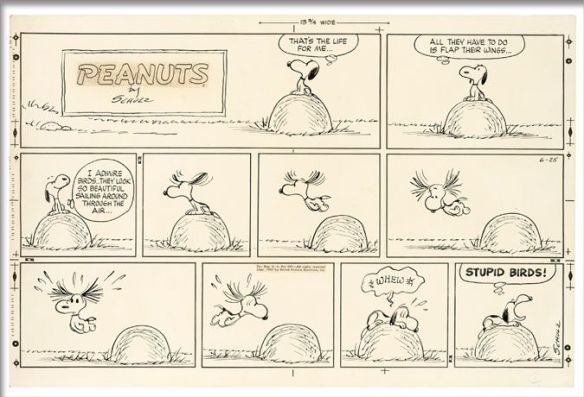
Peanuts comic strip, drawn by Charles M. Schulz (c)PNTS

Der Wachtelslag WoO 129 for voice and piano (1803, Beethoven aged 32)

Dedication not known
Text Samuel Friedrich Sauter

Duration 3’45”

Listen

Background and Critical Reception

The guide to this song on the website of the Beethoven-Haus Bonn lists it as a ‘box office hit’. Certainly Beethoven was aware of the popularity of Der Wachtelschlag (The Call of the Quail), informing the publisher Breitkopf & Härtel in Leipzig, “I am offering you the following works for 300 gulden: A quail song, the text of which you may know. It consists of three verses, but my setting is entirely durchkomponiert (through-composed)”

For some reason the publishers did not take the song and it was released the following year by Kunst- und Industrie-Comptoir in Vienna. The autograph score hints at another dedication to Count Browne, but this did not carry over to the original.

For Susan Youens, writing booklet notes for Signum Classics, the song “belongs to the antique tradition of bird calls in music…a bird whose calls invoke God”. She compares Beethoven’s setting with a later one from Schubert. “Both men inevitably devised the same dotted rhythmic figure for the quail’s calls”. Beethoven, however, “takes the poem far more seriously and from the perspective of the human being who listens to these worshipful injunctions. Ranging farther afield tonally than his younger contemporary, Beethoven’s storms are more tempestuous (the low bass rumble of thunder is a particularly wonderful detail), his acclamations of God’s praise grander, and his pleas for God’s aid more plangent.”

Thoughts

This is surely one of Beethoven’s most descriptive and dramatic songs – and is an indication of his development into a song composer of greater experimentation. The form of the song is quite unusual, being through-composed and taking an operatic air at times. Beethoven also brings the piano and voice close together in a shared depiction of the source material.

As Youens notes above, the rumble of the piano, low in the left hand, is a brilliant dramatic touch, while the ‘recitative’ nature of some of his vocal writing brings Handel to mind (to this ear at least!). Around the time of this song Beethoven had been working on a large, dramatic score (Christus am Ölberge, to be covered shortly) and this may be a fruitful result of the inspiration from that stage work.

It certainly makes a strong impact!

Recordings used

Dietrich Fischer-Dieskau (baritone), Jörg Demus (piano) (Deutsche Grammophon)
Peter Schreier (tenor), András Schiff (piano) (Decca)
Barbara Hendricks (soprano), Love Derwinger (piano) (Arte Verum)
Christopher Maltman (baritone), Iain Burnside (piano) (Signum Classics)
Hermann Prey (baritone), Leonard Hokanson (Capriccio)

Dietrich Fisher-Dieskau is the ideal singer for this song, forcefully bringing it to life with the equally fervent tones of Jörg Demus. Yet his is not the only way to express Beethoven’s thoughts – Peter Schreier and András Schiff may be higher up the register (F major rather than D), and they glower less, but they still invest plenty of feeling in the text. The other versions listed are also very fine – including soprano Barbara Hendricks and Love Derwinger, at the same higher pitch but with a sharper tone from the singer. Christopher Maltman and Hermann Prey complete a formidable discography.

Also written in 1803 Krommer Symphony no.2 in D major Op.40

Next up Christus am Ölberge (Christ on the Mount of Olives), Op.85
Listening to Beethoven #206 – 3 Marches for piano duet Op.45

ballesio-duet
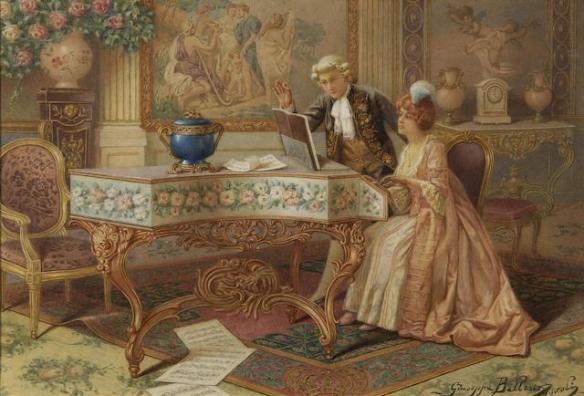
The duet by Giuseppe Ballesio

3 Marches for piano duet Op.45 (1803, Beethoven aged 32)

Dedication Princess Esterházy
Duration 14′

no.1 in C minor
no.2 in E flat major
no.3 in D major

Listen

Background and Critical Reception

Beethoven’s return to the piano duet came through a commission from Count von Browne, the dedicatee of his three String Trios Op.9. Peter Hill, writing booklet notes for one of his last recordings for Delphian in 2020 (with Benjamin Frith), refers to a story given by Beethoven’s pupil Ferdinand Ries. Ries had been entertaining the Browne house with music by Beethoven, and mischievously included a march of his own which he passed off as a piece by his teacher. It was well received, but the joke backfired when he had to repeat the piece in the company of Beethoven himself.

Fortunately Beethoven saw the funny side, and also got the commission. As Hill notes, the three marches bear no resemblance to another famous march from later in the year – the funeral march second movement of the Eroica symphony – being substantial works in their own right.

Thoughts

These are really meaty pieces, close on five minutes each in duration. They are clearly structured with bold, contrasting ‘trio’ sections, too – much more so than the relatively slight collections of dances we have had from Beethoven to date.

The first piece has a grand stature, very upright and noble as the first theme is vigorously announced. As it progresses, however, Beethoven introduces a few subtle doubts, playing with major and minor tonality in a way Schubert might have done. There is quite a substantial middle section, which possibly hints at the forthcoming Fifth symphony.

The second march retains a heroic air, due partly to its key of E flat major, though its trio moves into A flat major for a playful section powered entirely by a rumbling bass note low down in the register of the piano. There are some unpredictable, fantasia-like elements here, but the familiar rumble is never far away.

The bracing third march is also powered by the bass, Beethoven moving into D major for a triumphant finale which is notable for its staccato, sharply dotted rhythms.

Recordings used and Spotify playlist

Peter Hill & Benjamin Frith (Delphian)
Amy and Sara Hamann (Grand Piano)
Jörg Demus & Norman Shetler (Deutsche Grammophon)

Amy and Sara Hamann have recorded the marches twice – once on a modern Yamaha instrument and again on an instrument from Nanette Streicher, née Stein, ca. 1815. Both interpretations are lively, though on the original instrument there is extra bite to the rhythms. Peter Hill and Benjamin Frith clearly enjoy their account, with a natural give and take between the two. Demus and Shetler go slower on the first march, to good effect, before an extra snap to the rhythms of the second and third.

Also written in 1803 Viotti Trio for two violins and cello in E major

Next up Der Wachtelschlag WoO 129

Listening to Beethoven #205 – Das Glück der Freundschaft (Vita felice) Op.88

schulz-friendship

Peanuts comic strip, drawn by Charles M. Schulz (c)PNTS

Das Glück der Freundschaft Op.88 (Vita felice) for voice and piano (1803, Beethoven aged 32)

Dedication not known
Text Anon / Christian Tiedge
Duration 2’30”

Listen

Background and Critical Reception

Slightly confusingly, this song has a title in German but the words are in Italian. This is because the original text from which the words are taken is the anonymous Vita felice – which were then seemingly adapted by Christian Tiedge.

The date of composition, and the language, suggest this song to be a product of Beethoven’s studies with Salieri in Vienna, which were just coming to an end.

Thoughts

A flourish from the piano begins this ode to the joy of friendship, ‘offering its hand in these hard times’. The vocal line has a largely stepwise movement, closely shadowed by the piano – but Beethoven does take the opportunity with the key of E major to use some more exotic harmonies.

The profile of the song is quite expansive. Its flowing nature and characterisation are close to Schubert in style, suggesting an influence on the latter composer’s Lieder that is not considered very often.

Recordings used

Pamela Coburn (soprano), Leonard Hokanson (piano) (Capriccio)
René Jacobs (countertenor), Jos Van Immerseel (fortepiano) (Accent)
Dietrich Fischer-Dieskau (baritone), Jörg Demus (piano) (Deutsche Grammophon)

Pamela Coburn has a bright sound in her version, which is transposed up from E major. René Jacobs, full of tone, sings at ‘period’ pitch with Jos van Immerseel giving flowing support on the fortepiano, Perhaps inevitably the version to treasure is from Dietrich Fischer-Dieskau, commanding but elegant and with fulsome support from Jörg Demus.

Also written in 1803 Salieri Gesù al limbo

Next up 3 Marches for piano four hands, Op.45

Listening to Beethoven #204 – Minuet in E flat major WoO 82

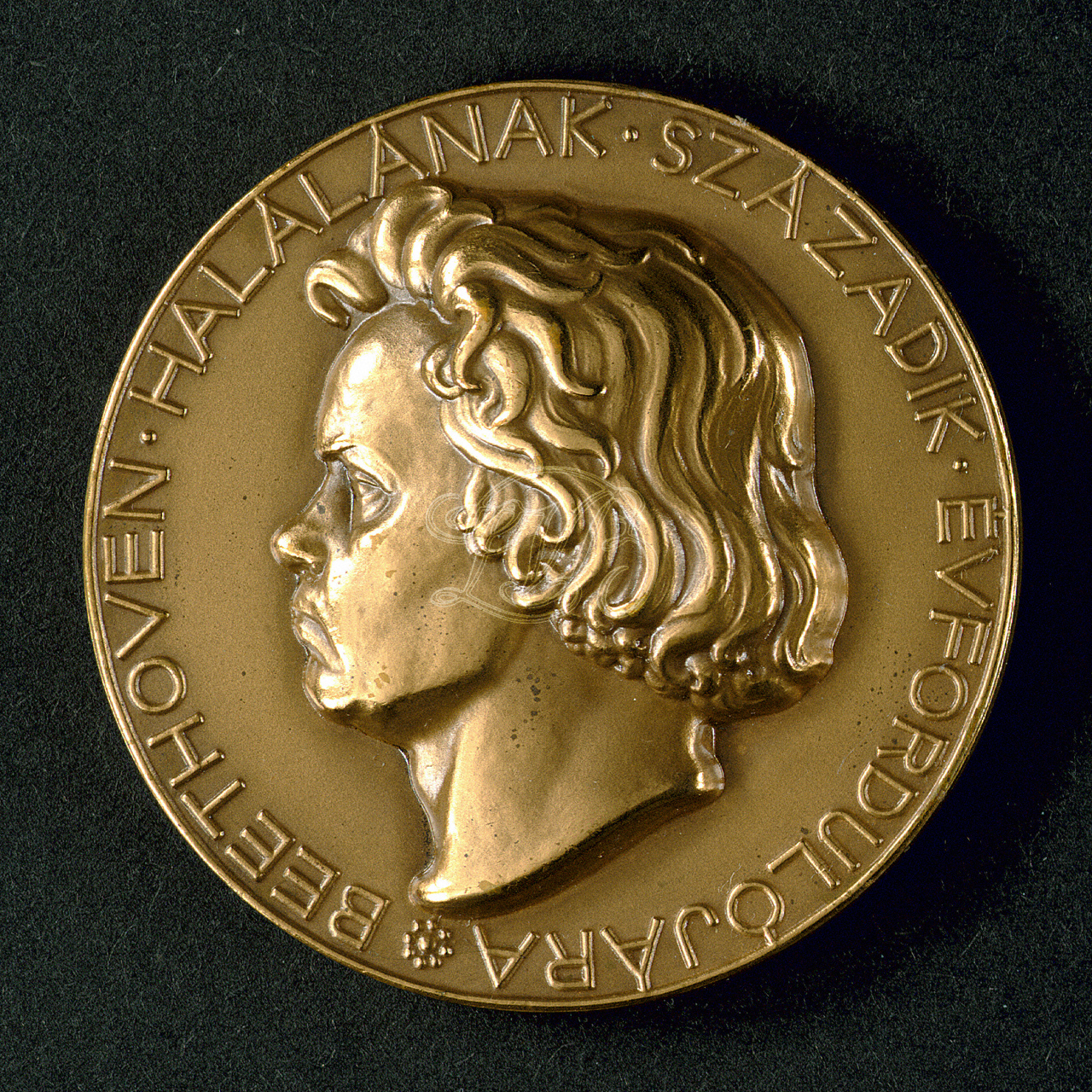
Commemorative medal for Ludwig van Beethoven, 1927 – Bronze medal from the Hungarian Ministry of Culture based on a design by József Reményi

Minuet in E flat major WoO 82 for piano (1803, Beethoven aged 32)

Dedication not known
Duration 4′

Listen

written by Ben Hogwood

Background and Critical Reception

There is some doubt around when this piece was first written. In his notes for Ronald Brautigam’s BIS recording of the Minuet, Roeland Hazendonk notes how an early Beethoven scholar found an early edition of the piece seemingly dating from Beethoven’s time in Bonn in his early teens.

It was however published in 1805, and has proved to be a hit with students starting out on the piano. Hazendonk says this is due to its ‘full, orchestral sonority’.

Thoughts

This is a very easy-going dance, with a repetitive theme that becomes quite an earworm. It is a relatively slow tempo, almost Andante, with poise and a hint of humour. The middle section moves to A flat major, encouraging the pianist to take flight in the right hand a little more, before returning to the easy charm of the first theme.

A simple but enjoyable piece.

Recordings used and Spotify playlist

Ronald Brautigam (BIS)
Jenő Jandó (Naxos)
Gianluca Cascioli (Deutsche Grammophon)
Martino Tirimo (Hänssler)
Olli Mustonen (Decca)

Olli Mustonen plays this piece a little impishly, and is the fastest of the five interpretations considered here. Martino Tirimo is very slow, while in Ronald Brautigam’s hands the dance feels rather earthbound and foursquare.

You can chart the Arcana Beethoven playlist as it grows, with one recommended version of each piece we listen to. Catch up here!

Also written in 1803 Pleyel 3 Keyboard Trios, B.474–476

Next up Das Glück der Freundschaft Op.88

Listening to Beethoven #203 – Prelude in F minor WoO 55

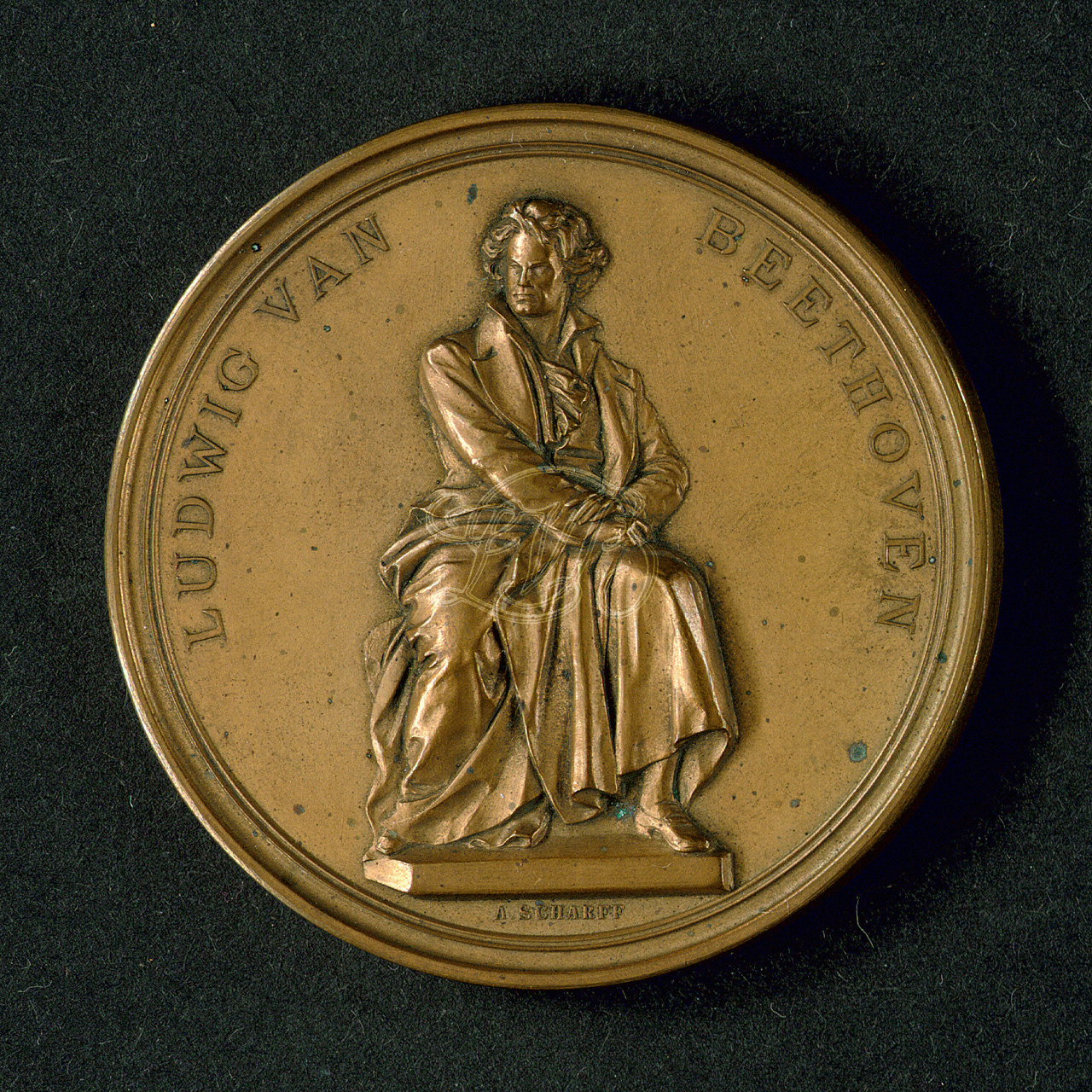
Commemorative medal for the unveiling of the Beethoven monument in Vienna – bronze medal based on a design by Anton Scharff depicting the Beethoven sculpture by Caspar von Zumbusch

Prelude in F minor WoO 55 for piano (1803, Beethoven aged 32)

Dedication not known
Duration 3′

Listen

written by Ben Hogwood

Background and Critical Reception

Roeland Hazendonk, writing booklet notes for the recording made by Ronald Brautigam for BIS, describes this piece as ‘an almost perfect pastiche of a prelude by Bach’, drawing attention to its similarity with the Prelude in the same key from the first book of Bach’s Well-Tempered Clavier.

Thoughts

If you heard this piece without knowing, your first guess at a composer would surely not be Beethoven, for this is a piece of incredibly accurate pastiche. It is remarkably similar in both mood and profile to the F minor prelude of Bach referred to above, yet it is clearly not a copy as you will hear by comparing the two:

Beethoven starts the Prelude confidently, and it evolves naturally in a series of arpeggios that pass instinctively between the hands. For much of the piece he keeps the tonality close to F minor, though the central section starts wandering towards further flung keys. It all comes back together for a poised conclusion.

Perhaps this was a study for one of Beethoven’s teachers at the time, but it expresses his knowledge and love of Bach better than words could possibly manage!

Recordings used and Spotify playlist

Jenő Jandó (Naxos)
Olli Mustonen (Sony BMG)
Ronald Brautigam (BIS)

Gianluca Cascioli adopts a slow and steady tempo, but gives great feeling to his performance. Ronald Brautigam is much quicker but still allows the notes to breathe, pausing at strategic points in the music to give the phrasing a natural structure.

You can chart the Arcana Beethoven playlist as it grows, with one recommended version of each piece we listen to. Catch up here!

Also written in 1802 Reichardt Das Zauberschloss

Next up 6 Ländler WoO15