
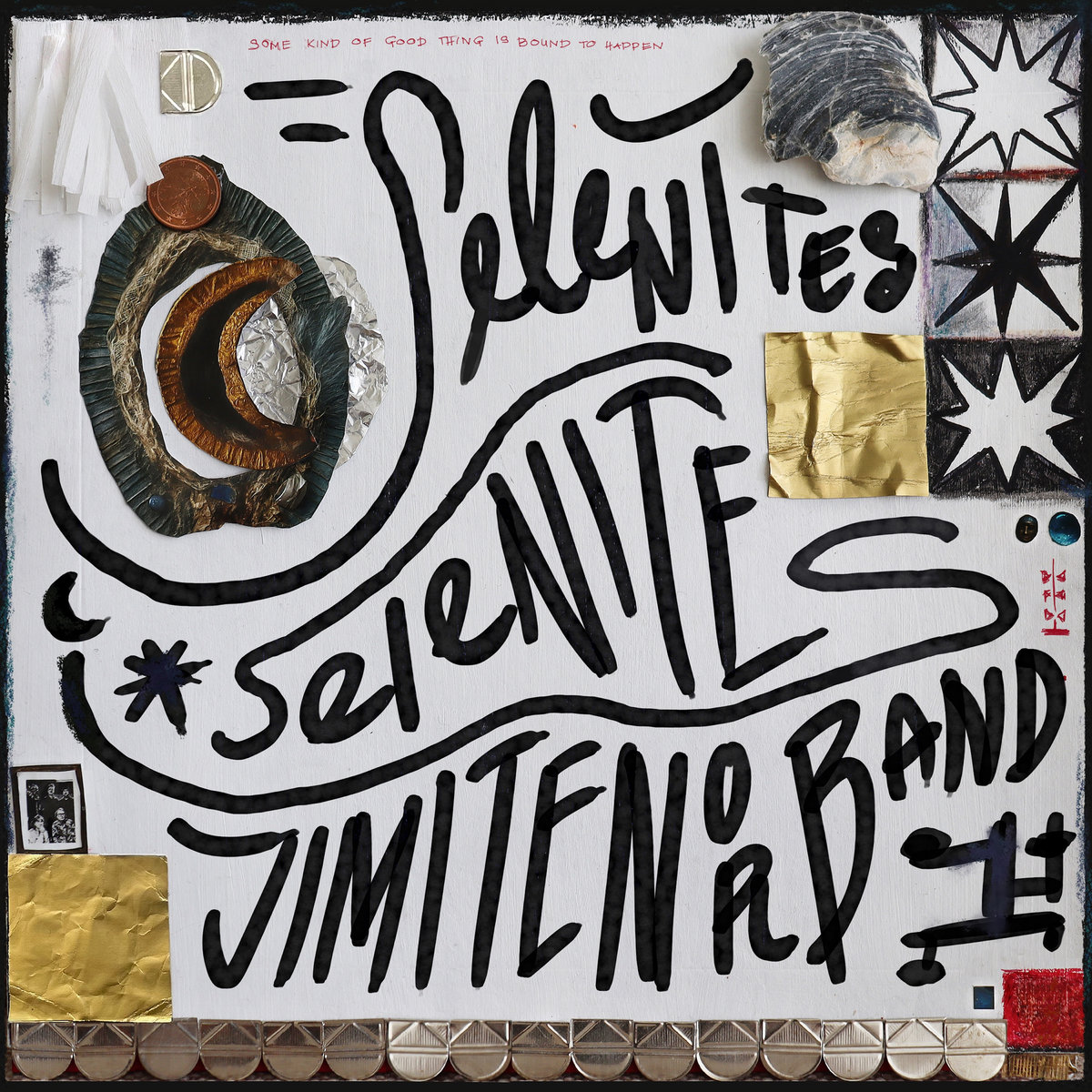
Reviewed by Ben Hogwood
What’s the story?
The Jimi Tenor Band has its roots in the early years of this decade, and a group of msuicians rehearsing in Jimi’s kitchen while rehearsal venues were unavailable during the pandemic.
Initially a live concern, the group of Eeti Nieminen, Heikki Tuhkanen, Ekow Alabi Savage and Lauri Kallio honed their craft in Helsinki, in thrall to Afro-jazz but leaning on their experience in a myriad of musical forms. The album was recorded in Kiikala, Finland, then finished at producer Tobias Levin’s Hamburg studio.
What’s the music like?
Jazz is certainly the prevalent style here, but there is a refreshing freedom that allows the music to evolve naturally.
The title track and Some Kind Of Good Thing both delight in joyful singalongs, while Shine All Night brings in Ghanaian vocalist Florence Adooni to front a song full of persuasive rhythms.
Universal Harmony sings of brighter hopes for humanity – something we can all get behind – while Alice In Kumasi has some lovely, grainy textures to the slow introduction from the band, before branching out into syncopated exchanges – which Furry Dice picks up, while heavy on the funk.
Does it all work?
Yes, thanks to the instinctive approach the instrumentalists bring to the table, and the airy choruses that raise a smile.
Is it recommended?
It is – and though released in November, the Jimi Tenor Band make music to bring light to the darker months.
Listen / Buy
Published post no.2,779 – Monday 26 January 2026





 Arcana.fm