In concert – Mahan Esfahani, CBSO / Ludovic Morlot: A Journey Through Time

Mahan Esfahani (harpsichord), City of Birmingham Symphony Orchestra / Ludovic Morlot

Ravel Le Tombeau de Couperin (1914-17, orch. 1919)
Sørensen Sei Anime (2020) [CBSO Centenary Commission: UK premiere]
C.P.E. Bach Harpsichord Concerto in D major, H421 (c1745)
Stravinsky Pulcinella – Suite (1922)

Symphony Hall, Birmingham
Thursday 28 April 2022

Written by Richard Whitehouse

A concert with a difference this evening from the City of Birmingham Symphony Orchestra, featuring harpsichord concertos ‘ancient and modern’ alongside two staples of the chamber-orchestra repertoire from the early 20th century in a programme as balanced as it was equable.

His final major work for solo piano, Ravel’s Le Tombeau de Couperin (or at least four of its six movements) is more often heard in the orchestral transcription that accentuates its mood of searching pathos. Not least the Prélude, its liquid motion unerringly conveyed, or in the astringent humour of the Forlane. The Menuet featured a melting oboe contribution from Oliver Nordahl, then in the final Rigaudon Ludovic Morlot avoided an unduly rapid tempo – vividly characterizing the outer sections while drawing confessional intimacy from its trio.

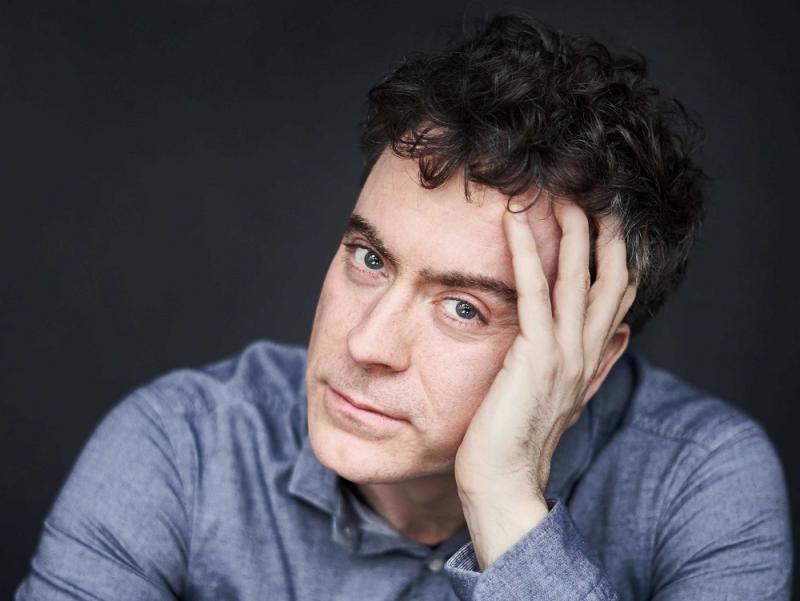
Harpsichordists are infrequent visitors to orchestral concerts, so credit to Mahan Esfahani (above) for tackling two very different yet strikingly complementary works – including the first hearing in this country of another CBSO Centenary Commission. Inspired by matters mundane and metaphysical, the six short movements of Sei Anime have been likened by Bent Sørensen to a French Suite in its expressive contrasts. Unforced alternation of (relatively) slow and fast dances drew an always inquisitive response from the soloist, heard in the context of reduced yet diverse forces that included a range of percussion adeptly handled by Adrian Spillett and the ethereal tones of an accordion played by violinist Kirsty Lovie. By turns enchanting and disquieting, the piece raised many more questions than could be answered at a first hearing.

Esfahani was on familiar ground after the interval with a Harpsichord Concerto in D major by C.P.E. Bach (which this reviewer recalls last hearing at a 70th birthday concert by George Malcolm). If not among his more exploratory works in the medium, this certainly ranks among his most appealing – its three movements perfectly balanced as to form and content such that the lively interplay between soloist and strings in the initial Allegro is complemented with the urbanity and poise of its central Andante, the final Allegro maintaining a scintillating onward motion though to its close. Music such as this most engaging of present-day harpsichordists rendered with unceasing clarity and verve, not least in those cadenzas where the figured-bass writing brought an extemporization whose immediacy never drew attention from the music at hand.

Having proved the deftest of accompanists, Morlot presided over a sparkling account of the suite Stravinsky took from his ballet Pulcinella. Again, it was the lucidity of the woodwind that really came through – not least in the plaintive Serenata or the elegant Gavotta with its two graceful variations. Nor was there any lack of robustness in the opening Sinfonia or, thanks to trombonist Richard Watkin, deadpan humour in the Duetto. An eloquent take on the ensuing Menuetto prepared ideally for the Finale to bring about the uproarious close.
A rewarding concert which deserved a bigger attendance than it received. Those deterred by this ‘journey through time’ will no doubt feel on safer ground next Wednesday, when future chief conductor Kazuki Yamada directs a programme of Prokofiev, Bruch and Mendelssohn.

For more information on the CBSO’s 2021-22 season, click here

Meanwhile for more information on composer Bent Sørensen, click here – and for the artists, click on the names to access the websites of Mahan Esfahani and Ludovic Morlot

In concert – Paul Lewis, CBSO / Christoph König: Mozart & Mahler

Paul Lewis (piano), City of Birmingham Symphony Orchestra / Christoph König

Mozart Piano Concerto No. 27 in B flat major, K595 (1788-91)

Mahler Symphony No. 5 in C sharp minor (1901-02)

Symphony Hall, Birmingham
Wednesday 21 April 2022, 2.15pm

Written by Richard Whitehouse

Back from a first European tour since the pandemic and following the Easter break, the City of Birmingham Symphony Orchestra hit the ground running with a programme of contrasts featuring Mozart’s last piano concerto and what is likely Mahler’s most popular symphony.

It may have been finished early during his final year, but Mozart’s 27th Piano Concerto was drafted several years earlier, while its relative inwardness as compared to those from 1785-6 need not be read as fatalistic; still less be taken for valediction. This was certainly how Paul Lewis approached it with a poised but never flaccid opening Allegro – its subtle contrasts of themes and dynamics creating their own, discreet momentum with an eloquent rendering of the development then a lucid cadenza such as brought the whole movement deftly full circle.

Might it be that this concerto is only as good as the best performances? Thanks to Lewis the central Larghetto never risked seeming plain spun or uniform, piano dovetailing into strings and woodwind to ingratiating effect. In the closing Allegro, Christoph König pointed up the dance-like robustness of its rondo theme with a lilting impetus as never faltered. This is one of Mozart’s few concertos where his own cadenzas survive; Lewis’s probing manner in the finale setting the seal on a reading as thoughtfully conceived as it was insightfully realized.

His recent recordings of Louise Farrenc having gained widespread praise, König is evidently a conductor in demand and his account of Mahler’s Fifth Symphony provided a decisive, no-nonsense take on this much-played piece. Not least an initial Funeral March whose bracing objectivity did not preclude a more visceral response to its frenzied climax or ominous close. Its successor’s competing strands of violence and resignation were purposefully juxtaposed, through to the as-yet provisional emergence of the chorale then a tellingly speculative coda.

Time and again the central Scherzo fails to fulfil its role as this work’s formal or expressive crux, and if König’s approach fell short of the ultimate conviction, it was more than usually cohesive – whether in the discursive unfolding of its ländler-informed sections or the central trio with its rustically evocative overtones. Equally persuasive were those transitions either side, thereby endowing the movement with a cohesive follow-through which paid dividends during a coda whose unalloyed ebullience more than usually indicated what was to follow.

Most conductors now make the famous Adagietto a soulful interlude rather than full-blown slow movement, König going further by making it an extended introduction to the closing Rondo. This evolved almost seamlessly through the gradual intensification of ideas already heard towards the re-emergence of that chorale, here blazing forth with an affirmation that did not pre-empt those final bars in their almost nonchalant affirmation. Mahler might have written deeper finales, but not one whose triumph over adversity was so potently achieved.

An impressive demonstration, too, of the CBSO’s collective prowess (while not neglecting that of trumpeter Matthew Williams) for what is well worth catching in Saturday’s repeat performance; before this orchestra offers ‘something completely different’ next Thursday.

For more information on the CBSO’s 2021-22 season, click here

Meanwhile for more information on the artists, click on the names to access the websites of Paul Lewis and Christoph König

In concert – Sheku Kanneh-Mason, CBSO / Charlotte Politi: Tchaikovsky, Shostakovich & Weinberg

16-March-Sheku-KM

Tchaikovsky Swan Lake, Act 2 – Scène, Op. 20 No. 10 (1875-6)
Shostakovich
Cello Concerto No. 2 in G, Op. 126 (1966)
Weinberg
Symphony No. 3 in B minor, Op. 45 (1949-50, rev. 1959)

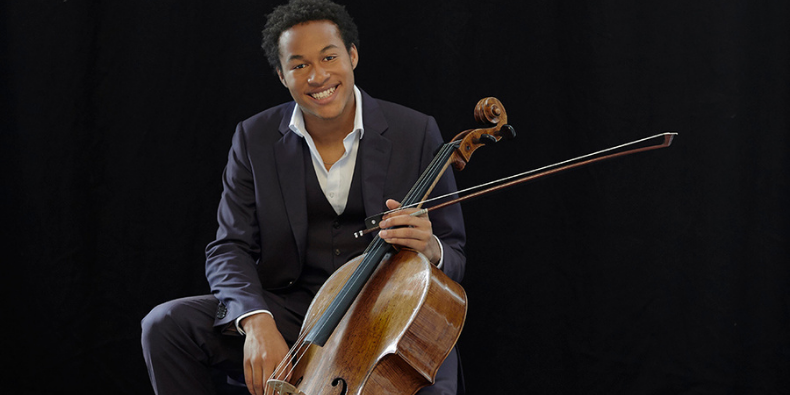
Sheku Kanneh-Mason (cello, above), City of Birmingham Symphony Orchestra / Charlotte Politi (below)

Symphony Hall, Birmingham
Wednesday 16 March 2022

Written by Richard Whitehouse

This evening’s concert by the City of Birmingham Symphony Orchestra should have been a Weinberg double-bill but the last-minute indisposition of Mirga Gražinytė-Tyla (having tested positive for Covid) brought to the podium one of the orchestra’s assistant conductors, Charlotte Politi.

Something in the programme had to give and that was only the second hearing in the UK for Weinberg’s Fourth Symphony, an incisively neo-classical piece long familiar to enthusiasts through the Melodiya recording issued in the 1970s and which, while it lacks the gravitas of later symphonies, is never less than engaging in its own right. Instead, the programme began with the ‘Scène’ from Act Two of Tchaikovsky’s Swan Lake (itself the opening number of the suite) – its fraught pathos enticingly realized, if making for an all-too brief curtain-raiser.

Sheku Kanneh-Mason was still present for Shostakovich’s Second Cello Concerto, among the first products of his final creative period and one of his most equivocal works in any medium. Most accounts over-stress its introspection, but Kanneh-Mason gauged the varied expressive shades of its Adagio with unforced rightness; its wrenching climax finding acute contrast with the sombre rumination from which it emerges and to which it returns. The ensuing Allegrettos could not be more dissimilar – a tensile and sardonic scherzo culminating in raucous fanfares as set into motion the finale. If coordination of soloist and orchestra in the former was a little tentative, Kanneh-Mason adroitly negotiated the latter’s gnomic dialogue – afforded focus by an easeful refrain and with a culmination of defiant exasperation, then a coda of furtive repose.

With its unshowy virtuosity and its concertante-like solo writing, this is a hard piece to bring off, but Kanneh-Mason rendered it with some conviction. He returned for an eloquent encore of what sounded to be a (Ukrainian?) folksong with the front four desks of the CBSO cellos.

After the interval, another chance to hear the Third Symphony by Weinberg this orchestra has rather made its own in recent seasons. Ostensibly a response to the anti-formalist campaign as spearheaded by Andrei Zhdanov, with the intention of making Soviet art more accountable to the public, its citing Belorussian and Polish folksongs is offset by the opening Allegro’s often ambivalent progress to a coda shot through with foreboding. Politi was often persuasive here, then not at all fazed by the Allegretto’s interplay of whimsical with a more sardonic humour.

Even better was to come in the Adagio’s finely sustained progress towards a climax of stark tragedy, only slightly mediated by the pensive close. An energetic final Allegro duly set out to secure an affirmative end, only to culminate in marked desperation, and it was a measure of Politi’s insight that the coda maintained its uncertainty even as those decisive closing bars echoed to silence. The CBSO responded impressively throughout a piece it must know better than any other orchestra, and it was to Politi’s credit that her own input was so often evident.

Hopefully MG-T will recover in time for the CBSO’s forthcoming European tour, such that Weinberg’s Fourth Symphony will gain the hearings it deserves. And if next season she can schedule the Fifth, arguably his finest purely orchestral symphony, then so much the better.

For more information on the CBSO’s spring tour, visit their website. Meanwhile for more information on the artists, click on the names to access the websites of Charlotte Politi and Sheku Kanneh-Mason. Meanwhile for more on composer Mieczysław Weinberg, click here

In concert – Clare Hammond, CBSO / Michael Seal: Nielsen, Grieg & Sibelius

clare-hammond-grieg

Nielsen Helios Overture FS32 (1903)
Grieg
Piano Concerto in A minor Op. 16 (1868)
Sibelius
Symphony No. 1 in E minor Op. 39 (1898-9)

Clare Hammond (piano, above), City of Birmingham Symphony Orchestra / Michael Seal

Symphony Hall, Birmingham
Wednesday 9 March 2022 (2.15pm)

Written by Richard Whitehouse

A Scandinavian programme this afternoon from the City of Birmingham Symphony Orchestra, featuring music by the three most famous of this region’s composers (so no representation for Sweden), and presided over with his customary authority by CBSO’s associate conductor Michael Seal.

Unusual nowadays to have a programme consisting of overture, concerto and symphony – but Nielsen’s Helios is as fine a curtain-raiser as any, its ‘sunrise to sunset’ scenario captured with one of the most graphic crescendos and diminuendos in the literature. Seal ensured this gradual emergence, and its faster evanescence, were unerringly paced – the horns’ echoing sonorities enfolded into the orchestral texture; and if the intervening intermezzo and fugato rather tread water by comparison, their role within the formal scheme made for a cohesive overall entity.

Whether or not Grieg tired of hearing or at least playing his Piano Concerto, he would surely have appreciated Clare Hammond’s take on its solo part. The inedible opening gesture might have been less than usually arresting, but the opening movement proceeded methodically and often poetically so its structural seams were barely in evidence – culminating in a resourceful account of the cadenza with the composer’s motivic ingenuity much in evidence. Easy to pass off as a bland interlude, the Adagio had an appealing poise that opened into keen pathos at its height. Trenchant rather than impetuous, the outer sections of the finale were rarely less than engaging but it was the warm soulfulness at the centre that really struck home; its return for a triumphal apotheosis did not quite avoid portentousness, but it ensured a decisive conclusion.

A distinctive and, for the most part, convincing performance which Hammond followed with the caressing harmony of the eleventh from Szymanowski’s Op. 33 Etudes – music in marked contrast to the existential drama of Sibelius’s First Symphony which came after the interval.

The latter work’s emergence against a background of fraught self-determination has inevitably taken on far greater resonance during recent weeks, and it was to Seal’s credit that he played down any tendency to overt sentiment – rendering the first movement, its sombre introduction limpidly realized by Oliver Janes, as the striking and frequently innovative study in expressive contrasts it should be. Nor was there any lack of Tchaikovskian pathos in the Andante, whose whimsical passages were as vividly delineated as those eruptive outbursts towards its climax.

The ensuing Scherzo had the right rhythmic tensility and, in its central trio, enticing whimsy – but it was the Finale as set the seal on this performance. The ‘Quasi una fantasia’ marking can result in emotional overkill but Seal kept its prolix follow-through in focus at all times – whether with the anguished recall of the work’s initial theme, surging impetus of its swifter sections, or the heart-on-sleeve immediacy of its ‘big tune’; pervaded by an ambivalence to the fore in a peroration which (almost) avoided histrionics on the way to its fatalistic close.

A fine response from the CBSO, playing here with burnished eloquence and Matthew Hardy making the most of a timpani part that has structural as well as expressive significance. Few having heard it are likely to underestimate this work’s status in Sibelius’s symphonic output.

For more information on the CBSO’s current season, visit their website. Meanwhile for more information on the artists, click on the names to access the websites of Clare Hammond and Michael Seal

In concert – Patricia Kopatchinskaja, CBSO / Mirga Gražinytė-Tyla: Tchaikovsky & Stravinsky

CBSO-mirga-patricia

Tchaikovsky Romeo and Juliet (1869, rev. 1880)
Stravinsky
Violin Concerto in D (1931)
Tchaikovsky
Symphony No. 4 in F minor Op. 36 (1877-8)

Patricia Kopatchinskaja (violin), City of Birmingham Symphony Orchestra / Mirga Gražinytė-Tyla

Symphony Hall, Birmingham
Wednesday 2 March 2022

Written by Richard Whitehouse

Coming toward the end of her tenure as music director of the City of Birmingham Symphony Orchestra, Mirga Gražinytė-Tyla presided over this orthodox programme of Tchaikovsky and Stravinsky given additional resonance by the geopolitical context against which it was heard.

At its centre was the Violin Concerto which Stravinsky wrote for his then duo partner Samuel Dushkin, whose four succinct movements nominally correspond to what is frequently thought a typical work from his neo-classical years, but with Patricia Kopatchinskaja involved this was anything but a straightforward rendering. From the start, a theatrical burlesque undercut any notions of Classical or even Baroque poise – those acerbic contrasts of its opening Toccata complemented by the speculative ambivalence of its First Aria or plangent eloquence of its Second Aria; the final Capriccio no less provocative in its constantly changing harmonic and rhythmic emphases. Regretting the absence of a cadenza, Kopatchinskaja instead gave Ligeti’s early Ballad and Dance – the latter in partnership with leader Eugene Tzikindelean.

Ambivalence in Tchaikovsky’s Romeo and Juliet is more to do with what sort of piece it is – the composer taking over a decade to get the formal balance of this ‘fantasy overture’ right. While there was no lack of evocative immediacy, MG-T was more concerned with bringing out its symphonic logic; not least in a sombre introduction and notably circumspect take on the ‘love theme’. For all the ensuing cumulative impetus, it was the woodwind chorale near the end – Tchaikovsky’s empathy with his subjects made explicit – as proved most affecting.

It was with Tchaikovsky’s Fourth Symphony that MG-T concluded her first concert in charge of the CBSO at the 2016 Proms, which memory recalls as similar in approach to that heard this afternoon. The complex formal trajectory of the first movement (tempo markings given inadvertently in the programme as being those for the whole piece) was adroitly negotiated – audibly intensifying when the pervasive ‘fate’ motto emerges at the start of the development and reprise, then a coda whose ultimate implacability never descended into mere histrionics.

Its oboe melody limpidly rendered by Steve Hudson, the Andantino unfolded audibly as ‘in modo di canzona’ – the emotional surge of its central section (rightly) held in check and the closing pages suffused with pathos. Neither was the Scherzo treated as an excuse for empty virtuosity – strings articulating its ‘pizzicato ostinato’ outer sections with delectable humour, and woodwind relishing the ‘harmonien’ writing of its Allegro trio. Following on apace, the Allegro con fuoco found viable balance between untrammelled exuberance and a methodical progress such as makes the climactic return of the ‘motto’ structurally as well as emotionally inevitable. If MG-T (purposely?) underplayed this crucial episode, then there was no lack of resolve in her handling of a peroration which brought a defiant rather than triumphal close. Ukrainian flags on and above the platform were ample evidence of just where the thoughts of musicians and audience alike were directed. As postscript to this concert, MGT’s choice of a soulful Melody in A minor by the late Myroslav Skoryk could hardly have been more apposite.

This concert is repeated on Thursday 3 March at 7.30pm. For details and tickets click here

Meanwhile for more information on the artists, click on the names to access the websites of Patricia Kopatchinskaja and Mirga Gražinytė-Tyla – and for more information on Myroslav Skoryk, click here